.avif)
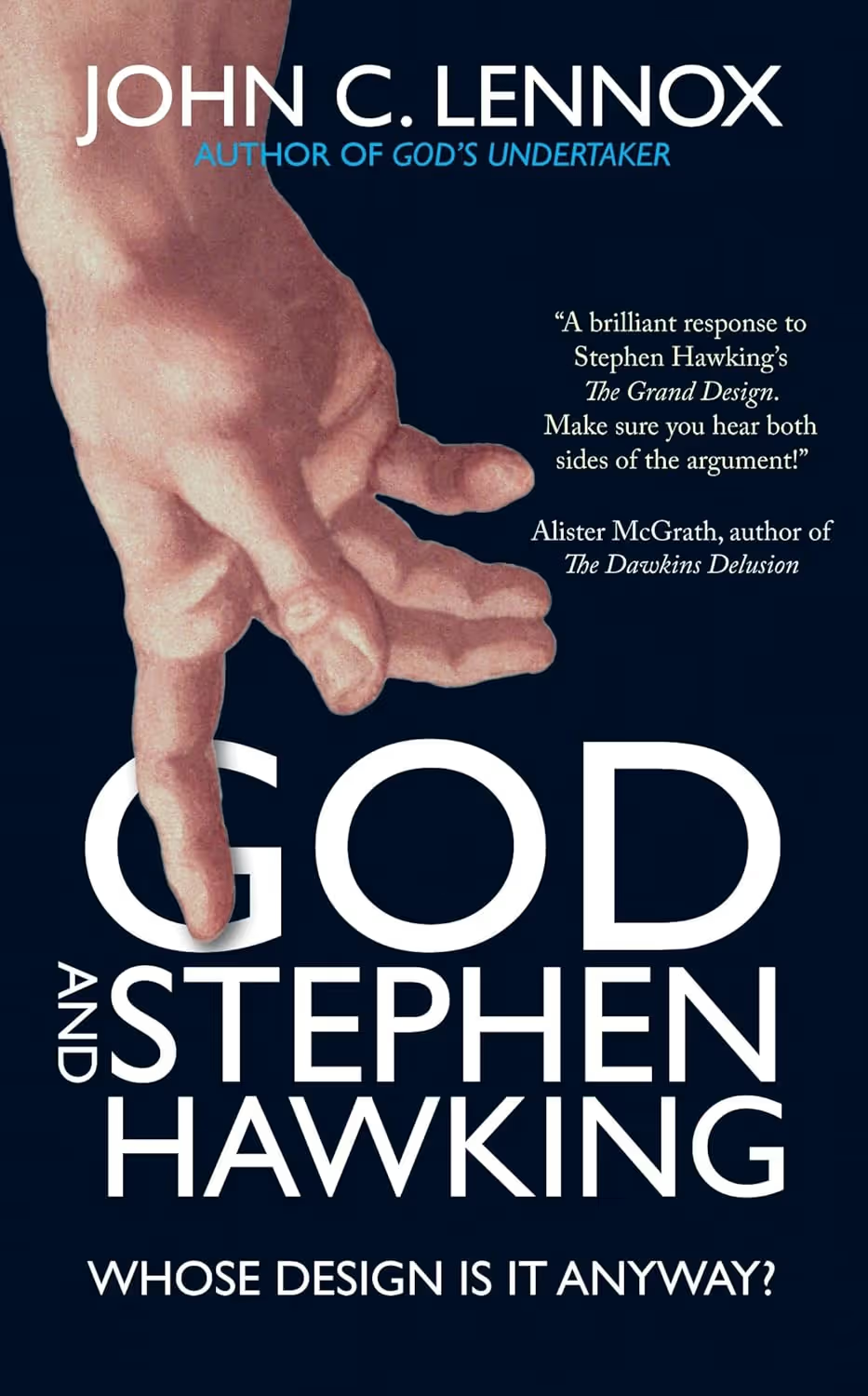
God and Stephen Hawking: Whose Design is it Anyway?
Многие ученые рассматривают Вселенную как замкнутую систему, управляемую неизменными причинно-следственными связями, которые, по их мнению, лучше всего описываются научными законами. Эти законы позволяют нам с высокой точностью предсказывать будущие события, такие как орбиты спутников или посадки в космос, и составляют основу нашего понимания Вселенной.
Поэтому идея о том, что божественное существо может вмешаться и изменить эти законы, по-видимому, противоречит самому принципу их неизменности. Такие вмешательства или чудеса, похоже, подрывают научное мировоззрение, предполагая, что законы природы не абсолютны, но их можно приостановить или нарушить.
Однако эта точка зрения часто связана с неправильным пониманием того, что такое чудо, и природы научных законов. Чудеса — это не просто нарушение законов природы, а необычные события, которые выделяются на фоне наблюдаемых нами закономерностей. Чтобы распознать чудо, необходимо понять, что считается нормальным явлением, и это признавали даже древние культуры. Например, возражение еврейских первосвященников против воскресения Иисуса было вызвано их мировоззрением, которое отрицало телесное воскресение, а не незнание законов природы.
По сути, аргумент о том, что чудеса невозможны из-за научных законов, игнорирует тот факт, что эти законы описывают закономерности, а не абсолютные пределы, и что необычные события все еще могут соответствовать рациональному пониманию Вселенной.
Understanding that God is the Creator of both the known and the unknown parts of the universe deepens our appreciation of His omnipotence and wisdom. The parts we understand serve as evidence of His activity, increasing our faith and worship.
As we learn more about the universe through science, our admiration for the Creator grows, because knowledge reveals His intricate design and sovereignty. Recognizing that God is the origin of all, including mysteries yet to be uncovered, encourages humility and awe in our pursuit of truth.
Hawking's claim that the universe can create itself from nothing due to gravity relies on a misunderstanding of the nature of 'nothing' and the role of physical laws. While gravity and natural laws are powerful, they are not autonomous forces that can generate existence independently.
Theologically and philosophically, creation ex nihilo—creation out of nothing—requires a divine act by God. Scientific laws describe how the universe operates but do not explain the origin of the universe itself. Therefore, the idea that natural laws alone can account for the universe's existence diminishes the divine role and overlooks the necessity of a Creator.
Do you see how understanding the limits of scientific explanations can deepen your appreciation for divine creation?
Yes, the Bible has long asserted that the universe had a beginning, a truth that only became evident to science in the early 1900s. This demonstrates how divine revelation has consistently pointed to the origin of creation, affirming the biblical account as trustworthy and insightful.
This alignment between Scripture and scientific discovery invites us to recognize the divine wisdom embedded in God's Word. It reminds us that God's truth is eternal and that His revelation is often ahead of human understanding.
How do you experience God's truth guiding your understanding of the universe today?
Ludwig Wittgenstein pointed out that the laws of nature are not explanations but descriptions of structural patterns within the universe. This distinction is crucial because it reminds us that understanding the universe's laws does not necessarily reveal why they exist or who set them in place.
The laws of nature are like the rules of a game—they tell us what to expect and how to predict outcomes, but they do not tell us about the origin or purpose behind those rules. This is where philosophy and faith come into play, guiding us to consider deeper questions about the ultimate cause and meaning.
How do you personally experience the difference between understanding the patterns of nature and seeking the deeper cause behind them?
The Bible clearly affirms that God is the Creator of the universe. In the opening chapter of Genesis, it states, "In the beginning, God created the heavens and the earth" (Genesis 1:1). This foundational truth underscores that the universe is not a product of random laws alone but the deliberate act of a loving and purposeful Creator.
Throughout Scripture, God's creative power is emphasized, and His ongoing sovereignty over creation is reaffirmed. The biblical account invites us to see the universe as a reflection of God's divine wisdom, goodness, and intentional design.
How does understanding the biblical view of creation influence your perspective on science and the universe?
Many renowned scientists, including Albert Einstein and Richard Feynman, have recognized that science alone cannot establish moral values or principles. Einstein pointed out that our sense of beauty and religious instincts help guide reasoning but do not serve as scientific foundations for morality.
Similarly, Feynman emphasized that ethical values are beyond the scope of scientific inquiry, asserting that science does not tell us what is good or bad. Morality involves questions of right and wrong that are rooted in human conscience, tradition, and divine guidance, rather than purely scientific facts.
How do you see moral values influencing your own life and decisions?
Attempting to explain all aspects of the universe solely through science can lead to an incomplete and sometimes misleading picture. While science is essential for understanding the physical laws and mechanisms of nature, it does not encompass the full scope of human experience, such as purpose, morality, and spiritual meaning.
Stephen Hawking, for instance, sometimes implied that science could answer questions about the existence of God or the ultimate purpose of the universe. However, as many thinkers have pointed out, such questions are metaphysical and philosophical in nature. They require reasoning beyond empirical data and involve concepts of divine purpose and moral values.
Do you believe that science and faith can complement each other in understanding life’s big questions?
Хотите узнать больше? Задайте вопрос о вере
У вас есть вопросы, опасения или надежды? Чувствуете себя потерянным, обремененным или одиноким? «Задайте вопрос о вере» — это мягкое руководство, основанное на Священном Писании и мудрости Церкви. Найдите надежду и силу уже сегодня!

Нужна консультация или беседа со священником?
Напишите нам, и мы постараемся ответить на все ваши вопросы.

