.avif)
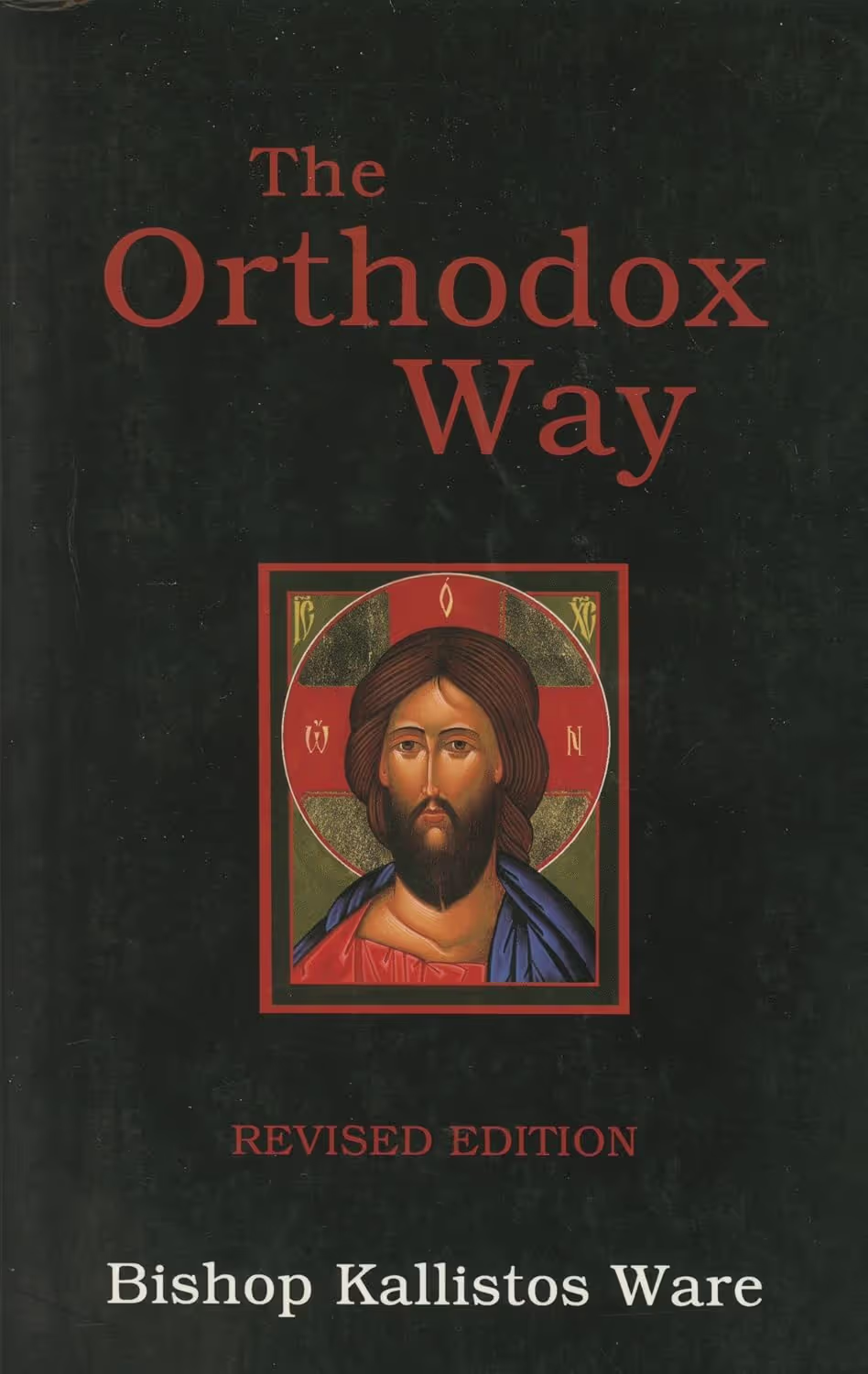
The Orthodox Way
A concise, devotional guide to Orthodox faith and life, this classic frames theology as a lived encounter with God. Ware walks readers through six movements—God as Mystery, Trinity, Creator, Man (Incarnation), Spirit, and Prayer—showing how doctrine leads to communion with God in the Church. Hallmarks include apophatic reverence (God beyond concepts), worship centered on the Trinity, salvation as participation in Christ (theosis), and prayer as the heart’s ascent. Clear, accessible, and widely used for catechesis.
Учение утверждает, что при покре ни структура, ни сущность творения не разрушаются. Навісів, это внешковая форма— слова, вызванные падом, — которое проходит. Это говорит о том, что основная религия творения остается неопределённой, но она обворачивается и возвращается к своему первому достоянию.
Святой Ириней учит нас, что после этой кончины внеземного облика вершится в состояние вечной молодости и неплотности, живая в гармонии с новое небо и новая земля описано в Начало 21:1. Это обозрение опознает глубокое примирение всего творения, в котором люди и мир природы участвуют в боевой жизни.
This teaching emphasizes that salvation is not about escaping the material world but about being redeemed with it. Humanity is seen as a microcosm and mediator of creation, meaning that our salvation involves the reconciliation and transfiguration of all that exists—both animate and inanimate.
In this divine plan, animals, plants, rocks, water, and fire will also share in the gift of immortality, reflecting the harmony and unity of God's creation. This underscores the profound interconnectedness of all things and the hope that the entire cosmos will be renewed and glorified in God's eternal kingdom.
In the resurrection, our bodies will be raised in a transformed state, no longer weak or dependent on food or physical stairs. They will become spiritual and marvelous, surpassing our current understanding. This transformation means that our earthly limitations will be replaced by a divine, incorruptible state, where the body is glorified and perfected.
This change signifies a profound renewal, where the body is no longer subject to decay or weakness, but shares in the divine life. As Saint Paul writes in 1 Corinthians 15:53, our bodies will 'put on incorruption,' becoming eternal and glorious.
The question of eternal separation from God, despite His boundless love, is indeed a profound mystery. From our limited perspective, it is difficult to fully comprehend how divine love and eternal punishment coexist. The key lies in the gift of free will given to humanity; God respects our freedom to accept or reject His love.
While God's love is everywhere and includes even those in hell—since, as Psalm 139:7 reminds us, 'If I go down to hell, thou art there also'—the tragedy is that individuals can choose to reject divine love. The doors of hell are often described as 'locked from the inside,' indicating that those there have chosen to be apart from God.
This mystery invites us to reflect on the importance of freely embracing God's love in our lives.
Judgment is an ongoing process that occurs throughout our earthly life, as highlighted in the Gospel of John. Every act of choosing good or evil is a step toward our eternal destiny. When we choose good, we experience a foretaste of heaven; when we choose evil, we encounter a preview of hell.
The final judgment is the ultimate moment of truth, where everything is brought into the light. It reveals the full implications of our choices and helps us understand who we truly are. Ultimately, Christ is the judge, but it is also true that we judge ourselves through our actions. If someone ends up in hell, it is because they have chosen to be there, not because God has condemned them.
The precise timing of the Second Coming is hidden from us by divine design, as Jesus Himself teaches in Acts 1:7. This means we are called to live in a state of constant readiness, always expectant and spiritually alert. The Lord's coming is described as 'as a thief in the night' in 1 Thessalonians 5:2, emphasizing the need for vigilance rather than speculation.
We are to maintain a sense of urgency in our spiritual lives, knowing that whether the end comes soon or late, it is always imminent in a spiritual sense. The words of the Great Canon of St Andrew of Crete remind us to wake up and be watchful, for Christ is present everywhere and fills all things.
Saint Isaac the Syrian teaches us that the Cross is not merely a symbol of suffering but the gateway to divine mysteries. It is through the daily Cross—our struggles, sacrifices, and self-denial—that we come to know God intimately.
The Cross embodies the path of humility, obedience, and love, leading us into the divine life. It is the means by which we participate in Christ's suffering and, consequently, His resurrection and glory. Embracing the Cross with faith transforms suffering into a sacred encounter with God's love.
Spiritual growth requires perseverance through struggle, as the soul advances in purity and holiness. The further we go in our spiritual journey, the more opposition we encounter—this is a sign of genuine progress.
Saint Mark the Monk emphasizes that true victory involves embracing suffering and the Cross, which are the gateways to divine mysteries. Suffering, humility, and self-denial are essential for becoming truly Christ-like. Without enduring these trials with joy, we cannot fully participate in Christ's glory.
Хотите узнать больше? Задайте вопрос о вере
У вас есть вопросы, опасения или надежды? Чувствуете себя потерянным, обремененным или одиноким? «Задайте вопрос о вере» — это мягкое руководство, основанное на Священном Писании и мудрости Церкви. Найдите надежду и силу уже сегодня!

Нужна консультация или беседа со священником?
Напишите нам, и мы постараемся ответить на все ваши вопросы.

