.avif)
The Faith journey of the early Christians
How the early Christians lived, believed and prayed, and how this living tradition has been preserved in the Orthodox Church to this day.

The Roots of Faith in the Early Church
The early history of the Church laid the living foundation of the Orthodox faith.
During those centuries, the truth for which martyrs died, which was explained by the Ecumenical Councils, and which the holy ascetics lived by, was formed. This experience did not remain in the past – the Orthodox Church preserves and transmits it to this day.
The Apostolic Era
- The apostles – the closest disciples of Jesus Christ –became the first witnesses of His life, death, and Resurrection.
- They preached the Gospel, wrote the books of the New Testament, and laid the foundations of church life and worship.
- Apostolic succession, as attested by Church Fathers such as Ignatius of Antioch, became the foundation of the episcopal ministry. Even at that time, it became clear that faith in Christ could grow even in the face of persecution and external pressure.
The Age of Martyrs
- In the first centuries, Christianity existed under the threat of persecution.
- Martyrs, the word means "witnesses", openly confessed their faith in Christ, accepting suffering and death.
- Their heroic deeds became a living testimony to Christ’s victory over sin and death. It was during this period that the veneration of saints and the practice of prayer in the catacombs – places of secret worship and Christian burial – began to take shape.
The Age of Ecumenical Councils
- After the end of persecutions, the Church gained the opportunity to openly confess and clarify its faith.
- The Ecumenical Councils formulated the fundamental dogmas of Christianity, including the Nicene Creed, which the Church confesses to this day.
- It was clearly affirmed that Jesus Christ is true God and true Man, and that God is One in essence and triune in Persons: the Father, the Son and the Holy Spirit.
- During this period, the system of ancient patriarchates – Rome, Constantinople, Alexandria, Antioch, and Jerusalem – was also established as centres of church life.
Desert Fathers
- It was at this time that the monastic movement emerged. Christians withdrew to the desert not to flee from the world, but to pursue a deep inner life with God.
- The Desert Fathers taught the power of prayer, repentance, silence and a sober heart. It is here that the foundations of the Jesus Prayer and the spiritual experience that would later come to be known as Hesychasm were laid.
- Monasteries became places of spiritual healing – schools of humility, love and living holiness, open to all who seek God.
When Faith Becomes Personal Experience
This is neither magic nor esotericism, but a living encounter with God that every Christian can experience.
The Orthodox tradition:
- is confirmed within the life of the Church.
- is based on the Gospel and the teachings of the Holy Fathers.
- leads not to self-exaltation, but to humility, love, and union with Christ.
Sacraments: The Living Life of the Church
In the Orthodox Church, the Sacraments are not merely rituals or symbolic acts. Through them, God Himself acts in a person’s life, granting His Grace. Through the Sacraments, we are brought into communion with life in Christ and are gradually transformed by the working of the Holy Spirit.
Baptism
Baptism marks the beginning of Christian life and a person’s rebirth into a new life in Christ.
Through the Sacrament of Baptism, a person is cleansed of sin, united with Jesus Christ, and becomes a member of His Body – the Church.
"As many have been baptized into Christ, have put on Christ" (Gal. 3:27)
The Eucharist
The Eucharist (Holy Communion) is the heart of church life and the Church’s principal sacrament.
During the Divine Liturgy, through the Power of the Holy Spirit, the bread and wine become the true Body and Blood of Christ. By receiving Communion, Christians are united with Christ and receive the strength for eternal life.
"Whoever eats my flesh and drinks my blood has eternal life"(John 6:54)
Confession (Repentance)
Confession is the Sacrament of spiritual healing and renewal of a person. Acknowledging his sins, a person confesses them before God in the presence of a priest with repentance and receives forgiveness and help to begin a new life.
"If we confess our sins, He is faithful and just to forgive us our sins" (1 John 1:9)
Orthodoxy vs. Mysticism
The Orthodox Faith and False Spirituality
Want to learn more about the Early Church?
Let us turn back the origins of the Christian faith
The Wellspring of Divine Encounter
The Orthodox Christian tradition, at its heart, is deeply intertwined with the mystical experiences and theological insights of the Early Church Fathers and Mothers.
Knowing God – Not just through reason
On the Living Experience of Faith
The early Fathers and Mothers of the Church emphasised that knowing God is not merely a matter of reflection and intellectual understanding, but above all a living encounter that transforms a person. They spoke of "knowledge of the heart" – a kind of knowledge that springs from prayer, a life of repentance, love for one’s neighbour, and participation in the Sacraments of the Church.
This knowledge does not replace reason, but transcends mere reasoning, leading a person to a deeper life with God.
The Language of Faith
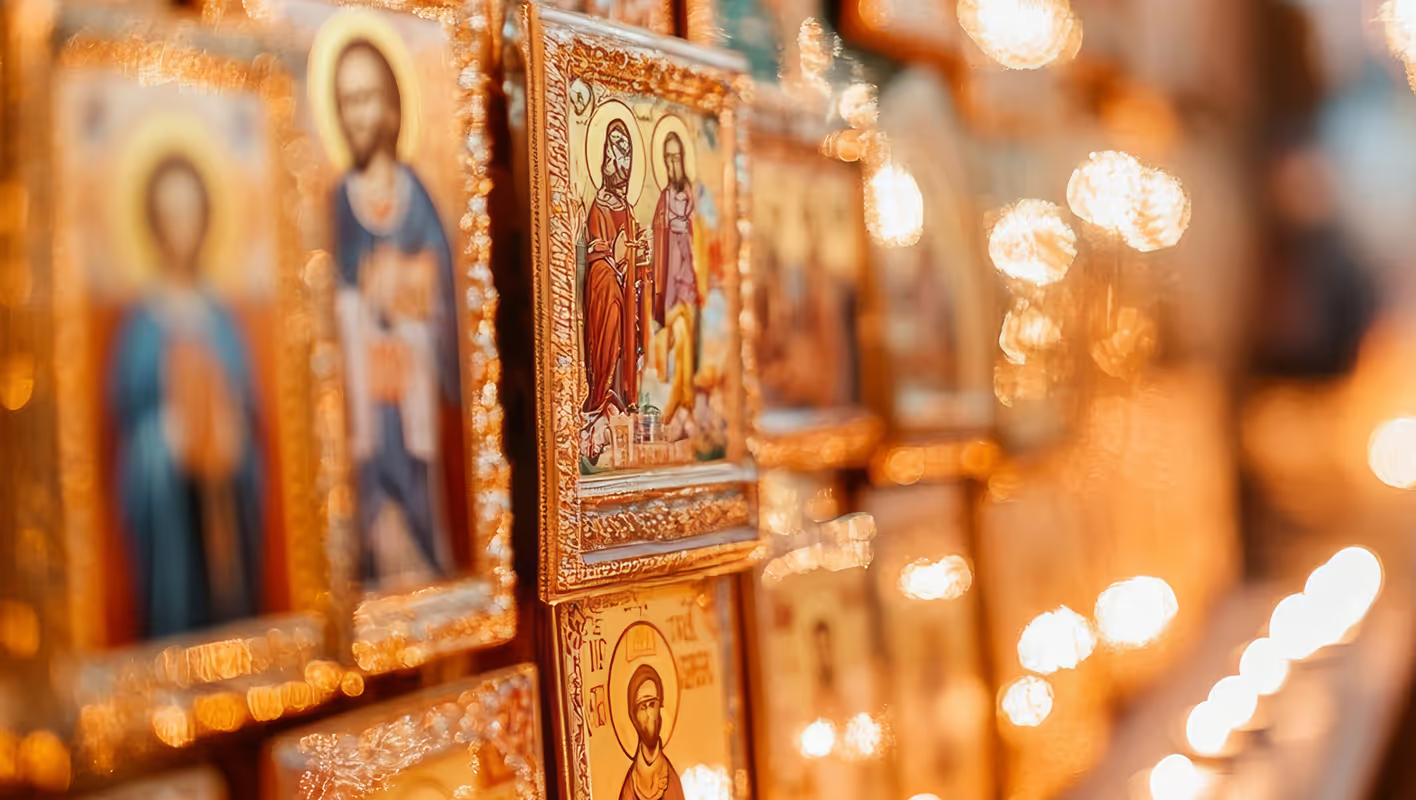
The early Church utilized rich symbolism in its worship and teachings, recognizing that the finite human mind could only grasp the infinite God through analogy and sacred signs. Icons, for example, were not simply religious art but windows into the heavenly realm, facilitating a mystical connection with the saints and the divine.
The liturgical life, with its incense, chanting, and ritual actions, was designed to engage the whole person – body, soul, and spirit – drawing them into the mystery of God's saving work.
Spiritual Guides and the Path of Discipleship
Explore key mystical themes that shaped the early Church and continue to resonate in the Holy Orthodox Mysteries:
Marriage of Christ and the Soul
- The Song of Songs was seen as an allegory of the soul's yearning for Christ.
- Emphasizes an intimate, loving relationship between the soul and God.
- This imagery shaped understanding of prayer and spiritual goals.
Theology of Light
- God was often described as uncreated, illuminating Light.
- This Light is a divine energy that transforms the soul

Incarnation
- The Incarnation made human participation in the divine nature possible
- Christ's union with humanity is the basis for theosis
- This mystery is experienced through faith and sacraments
The Timeless Echo of Mystical Encounter
The profound mystical insights of the Early Church continue to resonate within the Orthodox tradition, offering a timeless path towards experiencing the living God. This heritage reminds us that faith is not merely intellectual assent but a journey of the heart, a pursuit of intimate communion with the Divine.
The glory of God is a human being fully alive; and the life of a human being is the vision of God."

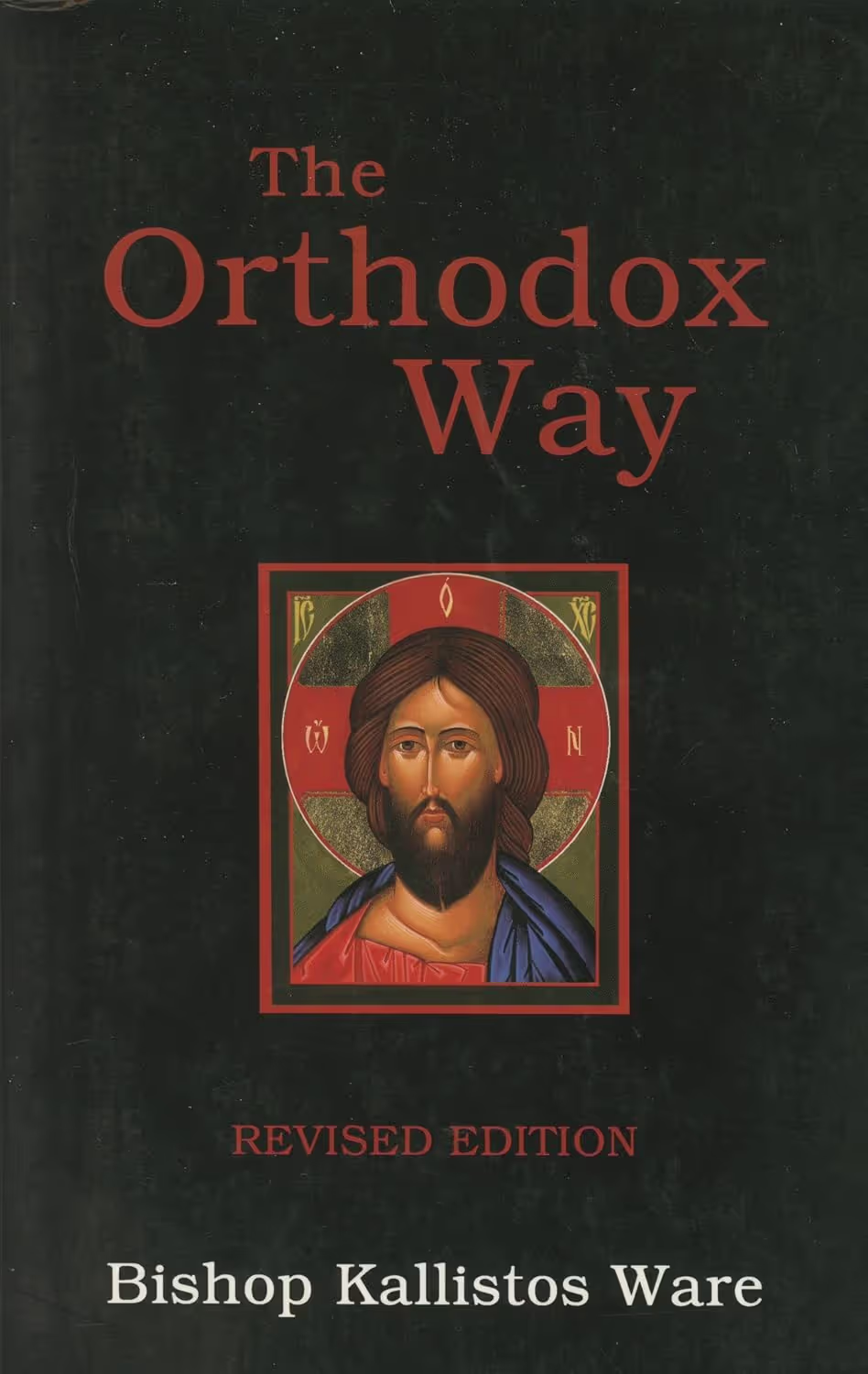
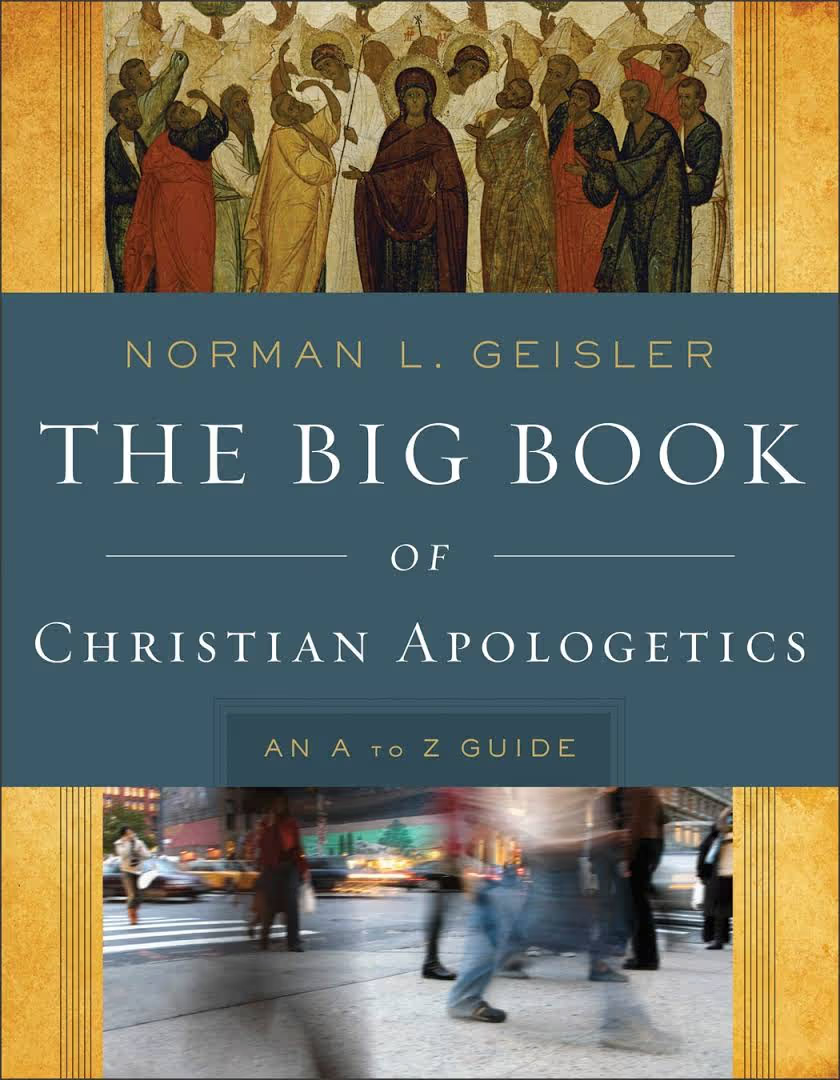


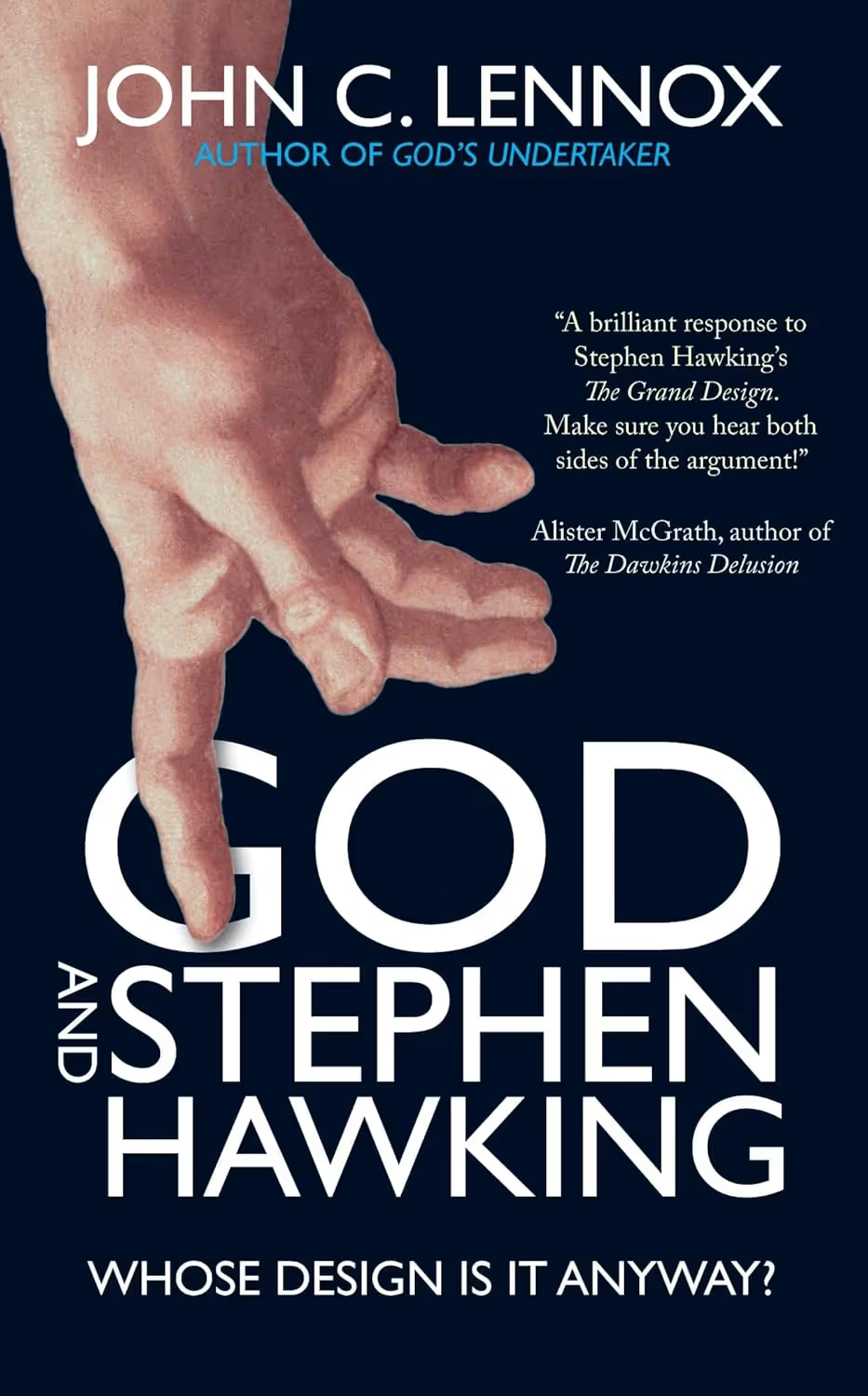

Do you want to know More? Ask God’s Word!
Do you have questions, worries, or hopes? Feeling lost, burdened, or alone? "Ask God’s Word" brings you gentle guidance rooted in Scripture and the wisdom of the Church. Find hope and strength today!

Need a consultation or conversation with a priest?
Write to us and we will try to answer all your questions.

