.avif)
Can Anyone Be Russian Orthodox? Discover the Truth!
I've watched it happen more times than I can count. Someone slips in during the Cherubic Hymn, stands near the back wall, and looks around like they've wandered into the wrong building. And honestly? I remember that feeling myself, years before I was ever ordained. When people quietly wonder, can...

Can Anyone Be Russian Orthodox? Every Sunday, Someone Walks Into a Russian Parish Feeling Like a Stranger
I've watched it happen more times than I can count. Someone slips in during the Cherubic Hymn, stands near the back wall, and looks around like they've wandered into the wrong building. And honestly? I remember that feeling myself, years before I was ever ordained. When people quietly wonder, can anyone be russian orthodox, they're usually not asking about paperwork first. They're asking whether there's really a place for them. In my years serving as an Orthodox priest in the Russian Orthodox tradition, I've met many seekers who quietly ask whether they're even allowed to enter a Russian parish if they aren't Russian. Not out loud, usually. You can just see it on their faces.
Here's what almost every article about this topic gets wrong, or at least leaves half-finished: yes, canonically, anyone can become Russian Orthodox. That part is easy to answer. What's harder, and more honest, is admitting that some Russian parishes have become something closer to cultural enclaves than universal Christian communities, especially in the last few years. I'm not going to pretend that tension doesn't exist. It does. But it doesn't mean the door is closed. In other words, if your question is can anyone be russian orthodox, the answer in the life of the Church is yes, even if parish culture sometimes makes that harder to feel at first.
What most online articles miss is that in a real Russian Orthodox parish, people usually begin to feel at home not when they understand every word, but when they establish a rhythm, showing up, standing quietly, venerating an icon, having a short conversation with the priest after coffee hour. Belonging in Orthodoxy is liturgical before it's ever verbal. That's not a theory. I've seen it happen.
Quick Answer: Yes, anyone can become Russian Orthodox, because the Church receives people through faith, catechesis, and sacramental life, not through ethnicity, blood, or nationality.
In This Article:
- Can Anyone Be Russian Orthodox? Every Sunday, Someone Walks Into a Russian Parish Feeling Like a Stranger
- Can Anyone Be Russian Orthodox? What Does "Russian Orthodox" Actually Mean?
- What Does Scripture Say About Can Anyone Be Russian Orthodox and Belonging to the Church?
- How Does Someone Actually Become Russian Orthodox?
- What Should You Expect Inside a Russian Orthodox Parish?
- Father Victor's Perspective: Why Belonging in Orthodoxy Is More Than Culture
- Common Misconceptions About Becoming Russian Orthodox
TL;DR — Key Takeaways
- Anyone, regardless of ethnicity or nationality, can become Russian Orthodox through catechesis and baptism or chrismation.
- "Russian Orthodox" usually names a jurisdiction and liturgical tradition, not an ethnic requirement, though real cultural and even political friction can exist in some parishes.
- Becoming Orthodox is gradual: inquirer, catechumen, then reception, often taking six months to a year.
- You don't need to speak Russian to attend, though language will shape how quickly you feel at home, and it's fair to ask a parish honestly about this before committing.
Can Anyone Be Russian Orthodox? What Does "Russian Orthodox" Actually Mean?
Let's start here, because this is where most confusion begins. In English, "Russian Orthodox" sounds like an ethnic category, the way "Russian cuisine" or "Russian literature" would. But that's not quite right. Or actually, let me put it differently: the word "Russian" here is historical, not sacramental.

What I mean is this. The phrase names a specific bishop, a specific liturgical inheritance (much of it in Church Slavonic), and a specific parish lineage tracing back through the Russian church's history. It does not name a blood requirement. Theologically, the adjective is historical. Sacramentally, the identity underneath it is simply Orthodox Christian. So when someone asks, can anyone be russian orthodox, the real issue is whether they understand that jurisdiction and ethnicity are not the same thing.
According to Pew Research Center's 2011 Global Christianity report, there are roughly 274 million Orthodox Christians worldwide, about 11 percent of all Christians globally, spread across more than 50 countries. That's not a small ethnic subculture. That's a global communion. The Russian Orthodox Church itself, according to figures cited by Wikipedia's overview of Eastern Orthodoxy, counted 382 bishops, over 40,000 clergy, and nearly 39,000 parishes as of 2019. Big as that is, size was never the point. The point is that this is one branch of a Church meant for every nation under heaven.
Ethnicity, Jurisdiction, and Sacramental Membership
I find it helps to separate three things people often blur together: ethnicity, jurisdiction, and sacramental membership. Ethnicity is who your ancestors were. Jurisdiction is which bishop and synod a parish answers to, Moscow Patriarchate, ROCOR, OCA, Antiochian, Greek, and so on. Sacramental membership is whether you've been baptized or chrismated into the Body of Christ.
A Russian jurisdiction parish belongs to the second category. It says nothing at all about the first or, honestly, very little about who is welcome into the third. Does that distinction matter in practice? I think it matters enormously, because it's exactly the confusion that keeps sincere seekers standing at the back wall instead of walking up to the priest. It also clears up common questions about Russian Orthodox religion, Russian Orthodox beliefs, and Russian Orthodox rules, which are ecclesial and sacramental matters, not ethnic tests.
Why a Russian Parish Is Still the Orthodox Church
Here's the thing though. A Russian Orthodox parish isn't a separate religion. It's not "Russian Orthodox Catholic" (that's not a real category, by the way, despite what search engines sometimes suggest). It's Eastern Orthodox Christianity, full stop, celebrated with a particular liturgical accent. The same Eucharist. The same creed. The same apostolic faith that a Greek or Antiochian or Serbian parish celebrates.
As St. Irenaeus of Lyons writes in Against Heresies, the Church, though dispersed throughout the whole world, has received from the apostles and their disciples one faith. One faith, dispersed everywhere. Not a Russian faith and a Greek faith sitting side by side. One faith, worn in different liturgical clothing.
What Does Scripture Say About Can Anyone Be Russian Orthodox and Belonging to the Church?
I want to be careful here, because Scripture doesn't just support this answer, it demands it. Christ's final words in the Gospel send the apostles to all nations: teaching and baptizing them in the name of the Father, the Son, and the Holy Spirit. That's not a regional mission. That's the whole world. If someone asks can anyone be russian orthodox, Scripture pushes us to answer from the Church's universal calling, not from inherited social habits.
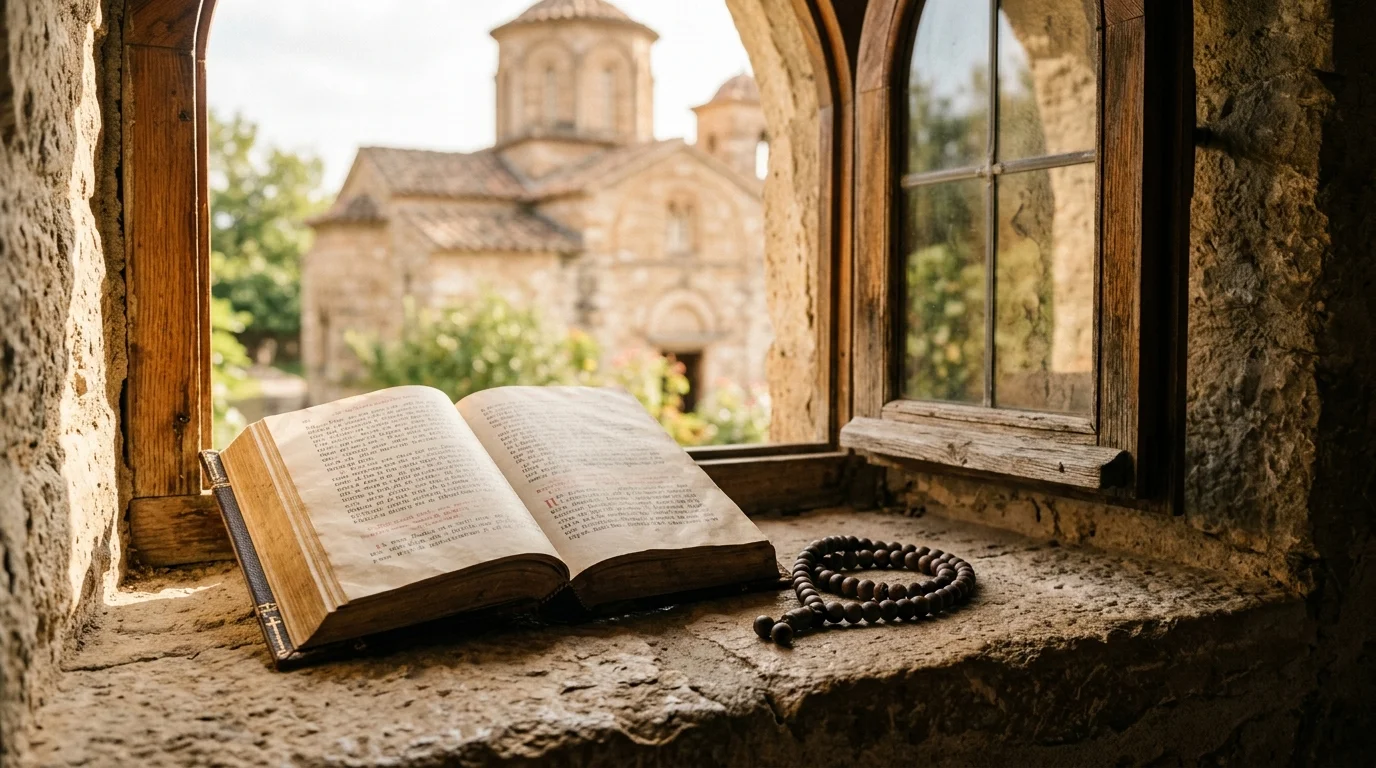
Peter learns the same lesson the hard way in Acts, standing in Cornelius's house realizing God shows no partiality, and that in every nation, whoever fears Him and works righteousness is accepted by Him. I do not say this lightly: if Peter, an apostle, had to be corrected on this point, we should hold our own assumptions about who belongs a little more loosely. Read more: Orthodox Beliefs: More Than Just Creed.
St. Paul goes further still. In Galatians, he writes that as many as were baptized into Christ have put on Christ, and there's neither Jew nor Greek, slave nor free, male nor female, for we're all one in Christ Jesus. Baptism doesn't erase who you were before. But it does relocate your deepest identity. You become, first and foremost, someone in Christ.
Ephesians paints this even more vividly: Christ has broken down the dividing wall of hostility, making those who were strangers and foreigners into fellow citizens with the saints and members of the household of God. And 1 Corinthians reminds us that we were all baptized into one body by one Spirit, whether Jews or Greeks, slaves or free. One body. Many members. Revelation gives us the final picture, a multitude from every nation, tribe, people, and language, standing before the throne. That's the Church's true shape. Not a nation. A gathering of nations.
What the Church Fathers Teach About One Faith
As St. Basil the Great teaches in On the Holy Spirit, we confess one faith and one baptism. Not a Russian baptism and a separate Greek baptism. One. And as St. John Chrysostom writes in his Homilies on the Gospel of Matthew, the Church is not a barrier but a harbor, not a wall but a door. I've always loved that image. A harbor doesn't ask where your ship is from before it lets you dock.
St. Gregory the Theologian, writing in Epistle 101, puts it even more starkly: what has not been assumed has not been healed. Christ took on human nature itself, not one ethnic strand of it. That single sentence carries the whole argument. Salvation is for humanity. Full stop.
How Does Someone Actually Become Russian Orthodox?
So what does this actually look like in practice? Not theoretically, but on a Tuesday evening when you're standing outside a parish hall wondering if you should knock.
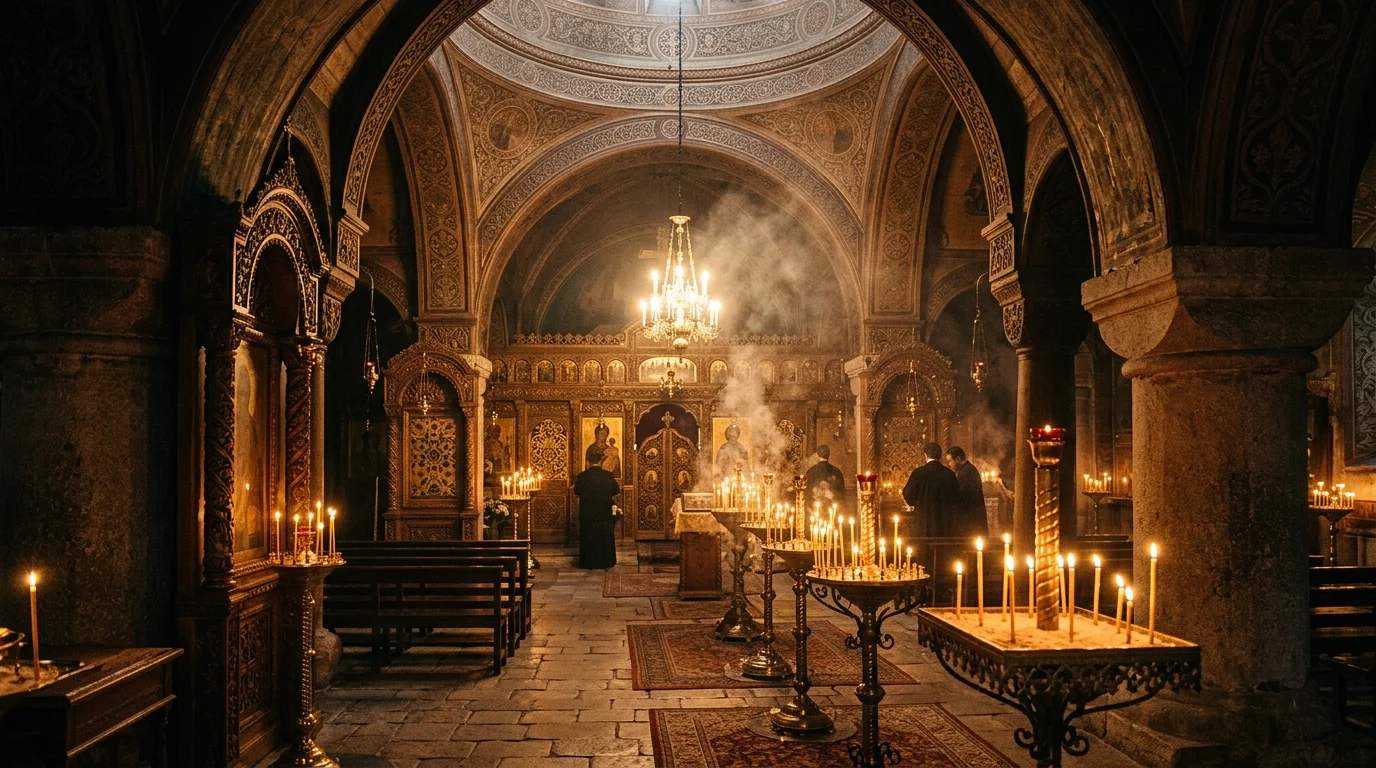
Most parishes follow a rhythm the Church has used for centuries. First, you're an inquirer. You show up, you ask questions, maybe you sit through a few Liturgies without fully understanding what's happening. As St. Cyril of Jerusalem addresses those preparing for baptism in his Catechetical Lectures, entry into the Church is formed through instruction and spiritual preparation, not a single decision made overnight.
After that, if things feel right, you become a catechumen. According to Orthodox Delmarva's FAQ, this mirrors an ancient practice: catechumens historically attended the Liturgy of the Word and were then dismissed before the Eucharist, a gentle, gradual initiation rather than an instant admission. You're not thrown into the deep end. You're walked in, slowly, by someone who knows the water. For those still wondering can anyone be russian orthodox, this slow process is part of the answer: the Church receives human beings patiently, not mechanically.
How Long Does Catechesis Usually Take?
According to Peter and Paul Cathedral's catechesis history page, formation typically lasts six to twelve months, depending on the bishop and the parish's own discernment. Our guide to converting to Orthodox Christianity describes the same basic rhythm many seekers experience. Holy Apostles Antiochian Orthodox Parish describes something similar: an inquiry period of two to three months before catechumen enrollment, with catechesis generally continuing around a year.
I know that sounds long to someone who found their answer this afternoon and wants to act on it tonight. I understand that impulse. But the Church has never rushed conversion, and there's wisdom in that patience. You're not signing a form. You're being formed.
Whether someone is received by baptism or by chrismation depends on their prior baptism and the discernment of the local bishop. This isn't decided by a website. It's decided in conversation with your priest, case by case, person by person.
What Should You Expect Inside a Russian Orthodox Parish?
Let me be honest about something the polished conversion guides tend to skip. Yes, canonically, the door is wide open. Socially? That's a more complicated conversation, and I think seekers deserve the truth rather than a brochure.
I've read the online discussions, the ones where someone describes walking into a Russian parish, everyone around them white, the service entirely in Church Slavonic, and admits, quietly, "I was super scared." I take that fear seriously. It's not paranoia. In the current climate, with the Moscow Patriarchate's public ties to state politics weighing on many people's minds, some Russian-jurisdiction parishes do function partly as cultural and linguistic enclaves, not only as universal Christian communities. I won't pretend otherwise. That would be dishonest, and honestly, unhelpful to you.
So here's my actual pastoral advice, not a theological abstraction: visit more than one parish if you can. ROCOR parishes, in particular, according to St. Herman of Alaska Orthodox Church's own materials, often welcome converts explicitly and increasingly offer services in English. But if you find a Russian parish where the language, the politics, or the unspoken cultural expectations leave you feeling perpetually on the outside, you're allowed to look elsewhere. The Orthodox faith is fully present in Greek, Antiochian, Serbian, and OCA parishes too. Canonically welcome and socially welcomed aren't always the same thing, and pretending they are does seekers a disservice. That is also why the question can anyone be russian orthodox has both a simple theological answer and a more nuanced pastoral one.
What If You Don't Speak Russian?
You don't need to. Truly. What I've noticed, watching newcomers over the years, is that the first real translation isn't linguistic at all. It's existential. A seeker moves from observer to participant long before they can conjugate a single Slavonic verb. The body learns reverence, when to bow, when to be still, before the mind ever catches up with the vocabulary. Related: What Is the Difference Between Orthodox and Catholic?.
Not what I expected to learn from parish life, honestly, but it's true every single time. So bring a translated service book if the parish has one. Ask the priest afterward what a particular hymn meant. Most will be delighted you asked. If you're also sorting through broader comparisons like Russian Orthodox religion vs Catholic or Russian Orthodox vs Christianity, those questions can be brought into the same conversation with the priest, because they usually arise from the same sincere desire to understand where this parish fits within the wider Christian world.
Here's a short video from Roots of Orthodoxy that speaks directly to this, living an Orthodox life outside a traditionally Orthodox setting, which touches on exactly this kind of cultural in-between feeling.
[YOUTUBE_VIDEO]
Can Anyone Join? Russian Orthodox, Catholic, and Protestant Comparison
[COMPARISON_TABLE]
Father Victor's Perspective: Why Belonging in Orthodoxy Is More Than Culture
I've gone back and forth on how to explain this, and here's where I've landed. The word "Russian" in "Russian Orthodox" functions almost like a name plate on a door, telling you which bishop and which liturgical inheritance stand behind it, but it says nothing about who's allowed to walk through. I wish more articles made this distinction clearly, because it's the single clarification that removes the most fear.
Our small analysis of the current search results for this exact question found something striking: the average competing article runs about 209 words. Two hundred and nine. That's barely enough to state the answer, let alone explain it. A question this tender, one people carry quietly for months before typing it into a search bar, deserves more than a paragraph.
Second, and this comes from years of watching people walk through catechesis, belonging in a parish is embodied before it's intellectual. You learn reverence with your knees before you learn it with your mind. I've watched people who understood not one word of the Liturgy stand in genuine, tearful awe by the sixth week. Hard to explain, but real.
And third, a good Russian parish, the kind I'd actually recommend, doesn't erase your own culture. It doesn't ask you to become Russian. It asks you to become Orthodox, and then teaches you how your own life, wherever you're from, can carry the Gospel within this particular liturgical house. As Fr. Thomas Hopko put it, conversion to Orthodoxy isn't becoming Greek, Russian, or Serbian, it's becoming Christian in the fullness of apostolic faith. Not cultural replacement. Something closer to transfiguration. If you want more background on that larger spiritual journey, our introduction to Orthodox Christianity may help situate the question in a wider frame.
Common Misconceptions About Becoming Russian Orthodox
"You have to be ethnically Russian to be Russian Orthodox." Not true. The Church receives people by faith, repentance, catechesis, and sacramental reception. Many parishes historically grew out of immigrant communities, which is exactly why outsiders sometimes mistake a cultural majority for a theological requirement. It isn't one.
"If services are in Russian or Slavonic, I shouldn't attend." You may attend respectfully regardless of language. Some ROCOR parishes conduct services fully or partly in English. Even where they don't, most newcomers begin by simply showing up and learning gradually, service book in hand.
"Becoming Russian Orthodox means becoming Russian politically or culturally." It doesn't, and I want to be direct about this given how often headlines blur church and state. Church membership isn't political endorsement. The real question is whether you seek Christ, not whether you agree with any government.
"Russian Orthodoxy is a different religion entirely." It's Eastern Orthodox Christianity, plain and simple, expressed through a particular historical and liturgical tradition. What feels unfamiliar is usually style, icons, incense, unfamiliar chant, not a different God or a different Gospel. Read more: Eastern Orthodox Baptism: A Soul-Stirring Mystery.
"You need to know all the customs before you belong." Not even close. This is precisely why the Church has inquirers and catechumens in the first place. You're not expected to perform expertise on day one. Humble attention is a far better beginning than forced confidence.
So if you came here wondering can anyone be russian orthodox, I hope the answer now feels both clearer and more human: yes, the Church receives people from every people, and the deeper question is not your ethnicity but whether you are ready to seek Christ in the sacramental life of His Church.
Frequently Asked Questions
Can anyone go to the Russian Orthodox Church?
Yes. Anyone may attend, observe, and speak with the priest afterward, regardless of ethnicity or background. Attendance itself has no requirement attached. Formal membership, through baptism or chrismation, follows a period of inquiry and catechesis guided by the local priest and bishop.
What's the difference between Orthodox and Russian Orthodox?
"Orthodox" refers to the whole Eastern Orthodox Church, one faith spread across Greek, Russian, Antiochian, Serbian, Romanian, and many other traditions. "Russian Orthodox" refers specifically to the jurisdiction and liturgical tradition tied historically to the Russian church, one branch of that same universal tree, not a separate faith.
Do I need to speak Russian?
No. Plenty of Russian-jurisdiction parishes, especially ROCOR communities abroad, offer English services or bilingual liturgies. Even in fully Slavonic parishes, newcomers typically start with translated service books and grow into the language over time, not before arriving.
Do I have to be baptized again?
It depends. Reception into Orthodoxy is either by baptism or by chrismation, decided by your priest and bishop based on your prior baptism and its form. This is a pastoral and canonical judgment made person by person, not something an article online can settle for you.
What if the only Orthodox church near me is Russian?
Then visit it, and be honest with yourself about how it feels after a few weeks. Many Russian parishes are warm, welcoming, and genuinely universal in spirit. Some, given current geopolitical tensions, lean more culturally insular. If it doesn't feel like home after real effort, seeking out an OCA, Antiochian, or Greek parish nearby, even if it's farther away, is a perfectly legitimate choice.
Is Vladimir Putin an Orthodox?
Public self-identification with Orthodoxy isn't the same thing as the Church verifying someone's spiritual life. I won't speculate about any individual's private faith or repentance, and frankly, no article should. What matters far more for your own question is your own sincere seeking, not the public religion of any politician.
Does Orthodox accept LGBT?
The Church welcomes every person to repentance, prayer, and life in Christ, while teaching that sexual union belongs within marriage between a man and a woman. Orthodoxy distinguishes carefully between persons, temptations, and chosen behavior, and calls everyone, without exception, toward chastity and communion with God. I'd encourage anyone wrestling with this to speak honestly and privately with a priest rather than search for a verdict online.
About the Author
Father Victor Meshko is an Orthodox priest serving at the Cathedral of the Holy New Martyrs and Confessors of Russia in Munich under the Russian Orthodox Church Abroad, Diocese of Berlin and Germany. A priest since 2013, he holds multiple theology degrees from Carpathian University, the Uzhhorod Ukrainian Theological Academy, and LMU Munich, where he completed a Diplom in Theology and pursued PhD studies. He's also the published author of a book on Archbishop Filaret of Chernigov and a theological study on the Book of Revelation. His background in psychology as well as theology allows him to address seekers' questions with both doctrinal precision and pastoral sensitivity.
Researched and written by Father Victor Meshko. AI tools were used during the research process, in line with EU AI Act transparency expectations; theological review and final responsibility remain with Father Victor Meshko and Find to God.
<table class="seo-table comparison-table"><caption>Can Anyone Join? Russian Orthodox, Catholic, and Protestant Comparison</caption><thead><tr><th>Aspect</th><th>Orthodox</th><th>Catholic</th><th>Protestant</th></tr></thead><tbody><tr><td>Who may join?</td><td>Anyone may be received through catechesis and sacramental reception; ethnicity is not a barrier.</td><td>Anyone may enter through baptism or reception into full communion.</td><td>Anyone may usually join by profession of faith, though practices vary by denomination.</td></tr><tr><td>Does nationality matter?</td><td>No. 'Russian Orthodox' usually names jurisdiction, liturgical tradition, or heritage.</td><td>No. Catholic identity is universal rather than national.</td><td>Usually no; denominations are not generally organized by ethnic jurisdiction.</td></tr><tr><td>How is one received?</td><td>By local priest and bishop through inquiry, catechesis, baptism or chrismation, and Eucharistic life.</td><td>By parish process under priest and bishop, usually with catechesis and sacramental reception.</td><td>Varies widely: profession of faith, baptism, membership class, or local church process.</td></tr><tr><td>What is distinctive?</td><td>Belonging is deeply sacramental, liturgical, and tied to apostolic continuity in a concrete parish community.</td><td>Belonging is also sacramental and universal, but within Catholic structures and papal primacy.</td><td>Belonging is often more congregational and doctrinally diverse across denominations.</td></tr></tbody></table>


Help us bring the christian faith to modern seekers worldwide.
Godfinder relies on generous souls to sustain our multilingual platform, develop new tools like the Magic Cube, and support struggling believers. If our work has touched your heart, consider contributing to our nonprofit partner

Do you want to know More? Ask God’s Word!
Do you have questions, worries, or hopes? Feeling lost, burdened, or alone? “Ask God’s Word” brings you gentle guidance rooted in Scripture and the wisdom of the Church. Find hope and strength today!
