.avif)
Do Eastern Orthodox Believe in Purgatory? Find Out!
Someone asked me once, after a funeral, whether her father was "in purgatory now." She wasn't Catholic. She'd just absorbed the word somewhere, the way most of us do, and assumed every Christian tradition must have some version of it. Questions like do eastern orthodox believe in purgatory usually...

The Question Behind “do eastern orthodox believe in purgatory”
Someone asked me once, after a funeral, whether her father was "in purgatory now." She wasn't Catholic. She'd just absorbed the word somewhere, the way most of us do, and assumed every Christian tradition must have some version of it. Questions like do eastern orthodox believe in purgatory usually arise just like that, in grief, in love, and in the honest confusion that follows loss. I paused before answering. And honestly, that pause is kind of the whole point of this article.
Asking whether the Orthodox Church believes in purgatory is a bit like handing a mystic a legal contract and asking him to sign on the dotted line. The question itself assumes a framework, penalties, timelines, a defined third place, that Orthodoxy has spent close to a thousand years quietly resisting. Not because we're evasive. Because we've come to believe some things are better left in the hands of God's mercy than mapped out on paper. So if you're wondering, do eastern orthodox believe in purgatory, the short answer is no, not in the Roman Catholic sense.
In my years of serving as an Orthodox priest since 2013, I've found that many seekers ask about purgatory not because they want an argument, but because they're grieving someone they love and want to know whether prayer still matters after death. That's the real question underneath the theological one. And it deserves a real answer, not just a comparison chart.
Quick Answer: No, Eastern Orthodox Christians do not officially teach the Roman Catholic doctrine of purgatory, though they do affirm an intermediate state after death and the enduring value of prayer for the departed.
In This Article:
- The Question Behind “do eastern orthodox believe in purgatory”
- What Does the Orthodox Church Actually Teach About Life After Death, and do eastern orthodox believe in purgatory?
- Why Does Orthodoxy Reject the Roman Catholic Doctrine of Purgatory, and do eastern orthodox believe in purgatory?
- Why Do Orthodox Christians Pray for the Dead?
- What Do Scripture and the Church Fathers Actually Say?
- Father Victor's Perspective: What This Question Reveals About How We Imagine God
- Common Misconceptions About Orthodoxy and Purgatory
TL;DR — Key Takeaways
- Orthodoxy rejects purgatory as a dogmatically defined third place of temporal punishment.
- We teach an intermediate state where souls await the resurrection and Final Judgment, experiencing a foretaste of joy or distress.
- Orthodox Christians pray fervently for the departed, through panikhidas, Soul Saturdays, and daily prayer.
- The deeper difference isn't whether purification matters. It's whether salvation looks like a courtroom or a hospital.
What Does the Orthodox Church Actually Teach About Life After Death, and do eastern orthodox believe in purgatory?
Here's where I have to slow down, because this gets flattened online into a simple yes-or-no far too often. Orthodoxy teaches what we call an intermediate state, the condition of the soul after death and before the resurrection and Final Judgment, in which the departed await the fullness of Christ's coming kingdom. It's real. It's not nothing. But it's also not a fully furnished waiting room with a floor plan and an exit door marked "heaven." For readers asking do eastern orthodox believe in purgatory, this distinction is where the Orthodox answer really begins.

The Intermediate State
What strikes me about this teaching is how comfortable it is with not knowing everything. St. Paul writes of his own desire “For to me to live is Christ, and to die is gain. But if I live in the flesh, this is the fruit of my labour: yet what I shall choose I wot not. For I am in a strait betwixt two, having a desire to depart, and to be with Christ; which is far better:” (Philippians 1:21-23, KJV), which tells us something crucial: the soul remains conscious, aware, in relationship with Christ after death. It doesn't sleep. It doesn't vanish. But Paul doesn't hand us a diagram either.
Metropolitan Kallistos Ware put it well when he noted that Orthodoxy generally refuses to define the exact mechanics of the soul's condition after death beyond what the Church has received in worship and tradition. I've sat with that statement for years now, honestly. And the longer I sit with it, the more I think that refusal is itself a form of theological honesty rather than a gap to be filled. If you're comparing traditions and wondering do eastern orthodox believe in purgatory, that Orthodox restraint is important to understand.
Foretaste, Judgment, and Resurrection
So what do we actually affirm? We affirm what's sometimes called a particular judgment, a way of describing the soul's condition after death as a real encounter with truth and with God, while still awaiting the Final Judgment. Christ himself frames this clearly: “Verily, verily, I say unto you, He that heareth my word, and believeth on him that sent me, hath everlasting life, and shall not come into condemnation; but is passed from death unto life. Verily, verily, I say unto you, The hour is coming, and now is, when the dead shall hear the voice of the Son of God: and they that hear shall live. For as the Father hath life in himself; so hath he given to the Son to have life in himself; And hath given him authority to execute judgment also, because he is the Son of man. Marvel not at this: for the hour is coming, in the which all that are in the graves shall hear his voice, And shall come forth; they that have done good, unto the resurrection of life; and they that have done evil, unto the resurrection of damnation.” (John 5:24-29, KJV). The final word belongs to the resurrection, not to some intermediate mechanism.
Revelation gives us the same horizon: "And I saw the dead, small and great, standing before God, and books were opened... And the sea gave up the dead who were in it, and Death and Hades delivered up the dead who were in them" (Revelation 20:11-15). That's the moment everything gets settled. Not before. Worth repeating, actually, because so much confusion comes from collapsing the intermediate state into the final one.
Why Does Orthodoxy Reject the Roman Catholic Doctrine of Purgatory, and do eastern orthodox believe in purgatory?
I knew the Catholic tradition quite well before my conversion, and I say that with real respect, not distance. Purgatory, as Rome defines it, rests on a particular grammar: sin as a debt, temporal punishment that must be satisfied, a purifying fire that pays down what's owed before a soul enters heaven. It's coherent within its own system. But it's not our system. For a broader overview of Eastern Orthodoxy, it helps to see how often Orthodox theology prefers mystery and healing over strict legal categories.

Sin as Sickness Rather Than Debt
During my theological studies at LMU Munich and in parish conversations here in Munich, I've seen that the real confusion usually begins when Western categories of punishment and debt get assumed as the only Christian way to speak about judgment. Orthodoxy starts somewhere else entirely. We see sin primarily as an illness of the soul, a distortion of the image of God within us, something to be healed rather than a crime to be punished and paid for.
This isn't just semantics. Metropolitan Hierotheos Vlachos frames Orthodox soteriology as purification understood as healing of the person and preparation for communion with God, not satisfaction of temporal penalties. That distinction changes everything about how you imagine the afterlife, and honestly, how you imagine God himself. Is he a judge tallying debts, or a physician tending wounds? I don't think that's a small question. It's also one reason the answer to do eastern orthodox believe in purgatory cannot be reduced to a simple word match between East and West.
Why Orthodoxy Avoids Defining a Third Place
We simply don't dogmatize a third place. Not because we're being coy, but because Scripture and the Fathers don't hand us one. As St. Gregory of Nyssa reflects in On the Soul and the Resurrection, purification after death belongs to the mystery of God's healing action toward the soul, something closer to therapy than to litigation. I find that framing genuinely moving, even after years of studying it. If you'd like a concise Orthodox presentation of this difference, this brief video explanation is a helpful supplement.
Council of Florence and St. Mark of Ephesus
At the Council of Florence in the fifteenth century, Rome tried to bring East and West together on this exact point, and the attempt largely failed. As St. Mark of Ephesus argued in his anti-Florentine writings, the Latin formulation of purgatory, with its defined purifying fire and juridical satisfaction, simply couldn't be squared with what the Eastern Church had received. He wasn't rejecting the idea that God purifies souls. He was rejecting the specific legal machinery Rome had built around it. That distinction matters more than most summaries let on. In other words, when people ask do eastern orthodox believe in purgatory, the Orthodox objection is not to mercy after death, but to a specific doctrine about how that mercy must operate. Explore: Do Orthodox Believe in Purgatory? Understand Now.
Why Do Orthodox Christians Pray for the Dead?
This is where the pastoral heart of the whole question actually lives. I recall a woman in my parish, not long after her mother's passing, coming to a panikhida for the first time in her life. She sat in the back, unsure whether she even belonged there. Afterward she asked me, almost apologetically, "If you don't believe in purgatory, why are you praying for someone who's already died? What's it actually doing?"

I told her what I tell most people who ask that question. We're not managing an afterlife mechanism. We're not pulling a lever to move a soul from one waiting room to another. We're doing what love does. We're refusing to let death end our communion with someone we still hold in our hearts before Christ.
Prayer as Love, Communion, and Hope
Orthodox prayer for the dead is best understood not as a technique for changing God's mind, but as the Church's refusal to treat death as the end of communion in Christ. That's not just a nice sentiment I came up with for this article. It's something I've watched play out at funeral after funeral, year after year, in this cathedral in Munich.
Scripture gives us real footing here too. In 2 Maccabees we read of Judas Maccabeus making atonement offerings for fallen soldiers, "that they might be delivered from their sin" (2 Maccabees 12:43-46), a text long treasured in the Church as evidence that prayer for the departed reaches back into the earliest Jewish and Christian consciousness. And in the New Testament, St. Paul prays for the household of Onesiphorus, asking “The Lord give mercy unto the house of Onesiphorus; for he oft refreshed me, and was not ashamed of my chain: But, when he was in Rome, he sought me out very diligently, and found me. The Lord grant unto him that he may find mercy of the Lord in that day: and in how many things he ministered unto me at Ephesus, thou knowest very well. ” (2 Timothy 1:16-18, KJV), a prayer many Fathers read as prayer for someone already departed.
Panikhida, Soul Saturdays, and Liturgical Memory
In practice, this looks like the panikhida, an Orthodox memorial service for the departed, offered in hope, repentance, and love. It looks like Soul Saturdays throughout the year. It looks like names read quietly before the altar during the Divine Liturgy, week after week, sometimes for decades.
Fr. Thomas Hopko once said that prayer for the dead belongs to the Church's living communion and doesn't require belief in a juridically defined purgatory. I think that's exactly right. And it's why, when someone comes to a memorial service for the first time, I want them to feel not superstition, but love that simply refuses to stop. For readers also exploring Do eastern Orthodox believe in praying to saints or Do eastern Orthodox believe in saints, the same logic of communion in Christ helps make sense of both practices.
How Orthodoxy, Catholicism, and Protestantism Approach Purgatory and Prayer for the Dead
[COMPARISON_TABLE]
What Do Scripture and the Church Fathers Actually Say?
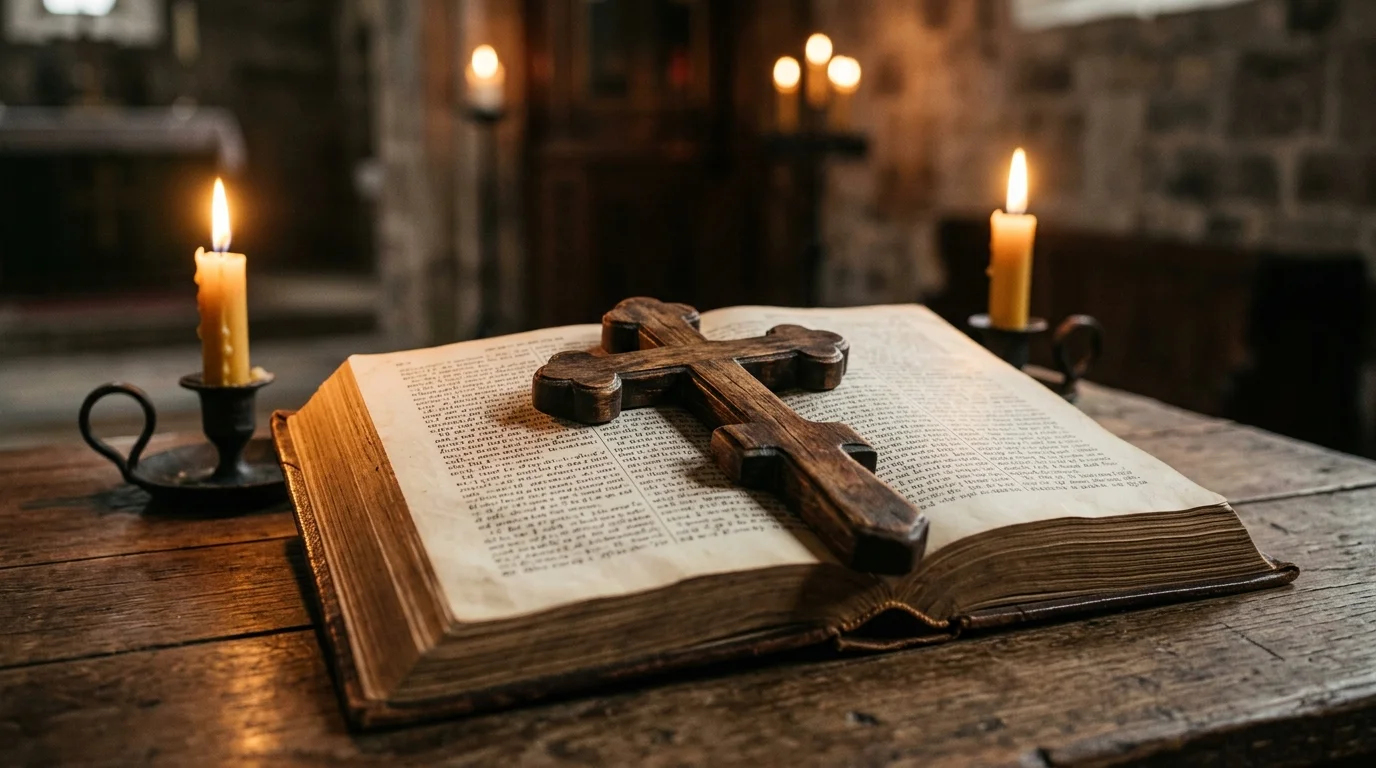
I want to be careful here, because 1 Corinthians 3:11-15 gets pulled into this debate constantly, sometimes more than it can bear. Paul writes that each person's work “For other foundation can no man lay than that is laid, which is Jesus Christ. Now if any man build upon this foundation gold, silver, precious stones, wood, hay, stubble; Every man’s work shall be made manifest: for the day shall declare it, because it shall be revealed by fire; and the fire shall try every man’s work of what sort it is. If any man’s work abide which he hath built thereupon, he shall receive a reward. If any man’s work shall be burned, he shall suffer loss: but he himself shall be saved; yet so as by fire.” (1 Corinthians 3:11-15, KJV). Catholic tradition has read this as pointing toward purgatorial fire. Orthodoxy reads it more cautiously, as an image of testing and judgment rather than a blueprint for a specific postmortem location. Same verse, different theological grammar.
Early Christian Witness to Prayer for the Dead
As St. Cyril of Jerusalem explains in his Catechetical Lectures, the Church commemorated the departed by name during the eucharistic liturgy from a remarkably early period, believing that great benefit comes to souls for whom prayer is offered while the holy sacrifice lies present. That's fourth-century testimony to a practice that clearly predates any developed doctrine of purgatory as such.
As St. John Chrysostom teaches in his Homilies on Philippians, it's not in vain that we make mention of the departed at the divine mysteries and approach God on their behalf, entreating for them. He doesn't frame this as releasing souls from a specific punitive location. He frames it as intercession born of ongoing love. I find that framing quietly powerful, honestly, every time I return to it.
Patristic Caution About Defining the Afterlife
As St. John of Damascus writes in the Exact Exposition of the Orthodox Faith, the Church holds together confidence about the resurrection and judgment with real restraint about the exact state of souls in between. That restraint isn't weakness. It's fidelity to what's actually been handed down, rather than filling in gaps with speculation dressed up as dogma. That is another reason why the question do eastern orthodox believe in purgatory has to be answered with care rather than with slogans.
Father Victor's Perspective: What This Question Reveals About How We Imagine God
Here's what I've come to believe after years of sitting with grieving families, and I don't say this lightly. The deepest Orthodox objection to purgatory isn't simply that it sounds too Western. That's too easy an answer, and honestly, a bit unfair to our Catholic brothers and sisters. The real objection is that a legal-punitive model can quietly tempt us to imagine salvation as the management of penalties rather than the healing of love-distorted persons standing before the face of Christ. Related: Orthodoxy and Catholicism: Understanding the Divine....
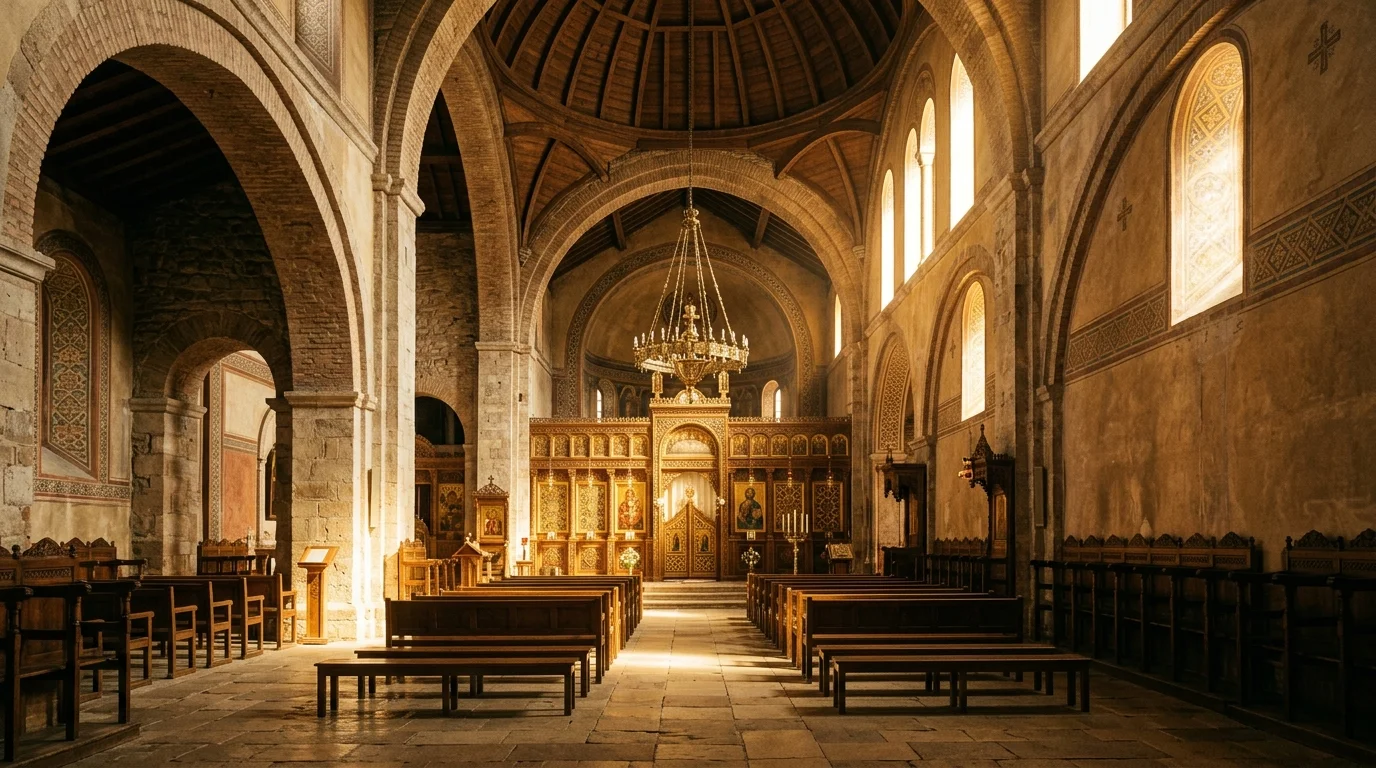
Think about what that does to a person's inner life. If salvation is fundamentally about debts and their payment, then repentance becomes bookkeeping. But if salvation is about healing a soul twisted by sin back toward its true shape, then repentance becomes something closer to therapy under grace, which is honestly closer to how the Fathers describe theosis, union with God by grace, the Orthodox understanding of salvation as transformation, healing, and participation in divine life. Readers who also ask Do eastern Orthodox believe in confession or Do Eastern Orthodox believe in Trinity often discover the same underlying pattern: Orthodoxy consistently speaks about salvation as communion with the living God.
I'll also say this, and it's a danger I watch for on both sides of the debate. Both anti-purgatory polemics and pro-purgatory systems can distract from the same urgent thing: repentance right now, in this life, while we still can. Orthodoxy answers the whole purgatory question by turning us back toward prayer, confession, mercy, and preparation for a holy death, rather than toward winning an argument about the furniture of the afterlife.
Why the Debate Is Really About Healing, Repentance, and Communion
Orthodox prayer for the dead isn't a side topic tucked into a footnote of doctrine. It's a lived theology of love stronger than death, and I've watched it play out at Soul Saturdays and quiet panikhidas more times than I could count. Our analysis of how seekers actually approach this question shows most aren't looking for a winning argument against Rome. They're looking for permission to keep loving someone who's died. And Orthodoxy gives them exactly that.
Common Misconceptions About Orthodoxy and Purgatory
"Orthodox Christians believe in nothing between death and the Final Judgment." Not quite. We teach a real intermediate state, a foretaste of joy or distress, awaiting resurrection. People assume there are only two options, Catholic purgatory or an immediate final verdict, and miss the Orthodox middle ground entirely.
"If Orthodoxy rejects purgatory, praying for the dead makes no sense." This one comes up constantly. We pray for the departed for the same reason we pray for the living, because love, mercy, and communion in Christ are real and don't stop at the grave.
"Orthodox teaching is basically Catholic purgatory with softer language." There's overlap in practice, especially prayer for the dead, so outsiders flatten the deeper differences. But the theological grammar really is different. We emphasize healing, mystery, and communion far more than legal satisfaction.
"Orthodox Christians have a detailed map of the afterlife." We don't, and I don't think we're trying to hide anything by admitting that. Popular discussions online sometimes turn devotional or symbolic language, including toll house imagery found in some ascetical writings, into settled cosmology. That imagery reflects a real theological tradition of imagery and differing emphasis among Orthodox writers, not universal dogma.
"Rejecting purgatory means denying any postmortem purification." We reject the Roman Catholic dogma specifically. We don't reduce God's mercy to a simple binary, and we leave room for mystery about how his healing reaches the departed.
"This is mainly a competition over the better afterlife system." I really hope this article hasn't read that way. The actual goal isn't winning a debate. It's learning how the Church teaches us to die well, and to hope in Christ while we're still breathing. And if someone leaves this article still asking do eastern orthodox believe in purgatory, I hope they at least now hear the answer within the larger Orthodox language of healing, prayer, and trust in God's mercy.
Frequently Asked Questions
Why do Orthodox pray for the dead if they don't believe in purgatory?
Orthodox Christians pray for the departed because love and communion in Christ continue beyond death, not because a soul needs releasing from a specific purgatorial location. As 2 Maccabees 12:43-46 and St. John Chrysostom's homilies both show, this practice predates any developed doctrine of purgatory by centuries. Related: Eastern Orthodox vs Roman Catholic: Key Differences.
Do Orthodox believe in an intermediate state?
Yes. Orthodoxy teaches that souls enter an intermediate state after death, experiencing a foretaste of joy or distress while awaiting the resurrection and Final Judgment described in John 5:24-29 and Revelation 20:11-15.
Do Russian Orthodox believe in purgatory?
No. Russian Orthodox Christians, along with all Eastern Orthodox jurisdictions, reject the Roman Catholic dogma of purgatory while affirming prayer for the departed and an intermediate state, a position shared across the whole Orthodox communion regardless of national church.
Does Orthodoxy teach toll houses instead?
Toll houses appear as an ascetical and devotional image in some Orthodox spiritual writings, but they aren't a universally binding dogma of the Church. I'd encourage treating this as one theological image among others rather than a required afterlife map, and honestly, it's worth discussing with your own spiritual father if it troubles you.
Do Orthodox believe in confession?
Yes, confession is one of the Holy Mysteries in Orthodoxy, a regular practice of repentance before God with a priest as witness, central to the healing model of sin we've discussed throughout this article.
Do Orthodox believe in saints and praying to saints?
Yes. Orthodox Christians venerate the saints and ask for their intercession, understanding the Church as a living communion that includes both the living and the departed in Christ.
Do Orthodox believe in the Trinity?
Yes, absolutely. Orthodoxy holds the ancient Nicene faith in one God in three persons, Father, Son, and Holy Spirit, as defined by the early ecumenical councils.
Do Eastern Orthodox believe in transubstantiation?
Orthodox Christians affirm the real presence of Christ's Body and Blood in the Eucharist but generally avoid the specific Aristotelian philosophical language of transubstantiation, preferring to speak of this as a Holy Mystery rather than defining its metaphysics precisely.
Do Orthodox believe in the Rapture?
No. Orthodoxy doesn't teach a pretribulation rapture as understood in some Protestant traditions, holding instead to a single, visible return of Christ, general resurrection, and Final Judgment as described in Scripture.
About the Author
Father Victor Meshko is an Orthodox priest of the Russian Orthodox Church Abroad, serving at the Cathedral of the Holy New Martyrs and Confessors of Russia in Munich. Ordained since 2013, he holds multiple degrees in philosophy, theology, and psychology, including advanced theological study at LMU Munich's Institute for Orthodox Theology, and is the published author of Erzbischof Filaret (Gumilevskij) von Cernigov und Nezin. At Find to God, he writes with both academic depth and pastoral sensitivity for seekers exploring the Orthodox Christian faith.
Researched and written by Father Victor Meshko. AI tools were used during the research process, with full human theological review in line with EU AI transparency expectations.
<table class="seo-table comparison-table"><caption>How Orthodoxy, Catholicism, and Protestantism Approach Purgatory and Prayer for the Dead</caption><thead><tr><th>Aspect</th><th>Orthodox</th><th>Catholic</th><th>Protestant</th></tr></thead><tbody><tr><td>Purgatory</td><td>Rejects purgatory as a dogmatically defined third place or system of temporal punishment</td><td>Affirms purgatory as postmortem purification for the saved</td><td>Often rejects purgatory entirely</td></tr><tr><td>Prayer for the dead</td><td>Yes; strongly affirmed in liturgy and personal prayer</td><td>Yes; strongly affirmed</td><td>Varies; often rejected or minimized</td></tr><tr><td>State after death</td><td>Intermediate state awaiting resurrection and Final Judgment</td><td>Heaven, hell, or purgatory depending on the soul's condition</td><td>Usually immediate heaven/hell or soul sleep, depending on tradition</td></tr><tr><td>Main theological framework</td><td>Healing, communion, mystery, theosis</td><td>Purification, justice, and sanctification using defined doctrinal categories</td><td>Often forensic justification or immediate judgment categories</td></tr><tr><td>Why pray for the departed?</td><td>Because love continues in Christ and the Church intercedes in hope</td><td>Because prayer can aid souls undergoing purification</td><td>Often seen as unnecessary if eternal destiny is fixed at death</td></tr></tbody></table>


Help us bring the christian faith to modern seekers worldwide.
Godfinder relies on generous souls to sustain our multilingual platform, develop new tools like the Magic Cube, and support struggling believers. If our work has touched your heart, consider contributing to our nonprofit partner

Do you want to know More? Ask God’s Word!
Do you have questions, worries, or hopes? Feeling lost, burdened, or alone? “Ask God’s Word” brings you gentle guidance rooted in Scripture and the wisdom of the Church. Find hope and strength today!
