.avif)
Do Greek Orthodox Believe in Purgatory? Learn Here
If you're asking whether the Greek Orthodox Church believes in purgatory, I'd gently push back on the question itself. Not to dodge it, but because Orthodoxy has spent a thousand years refusing to answer it on Western terms. And that refusal, I've come to believe, is itself the theological point....
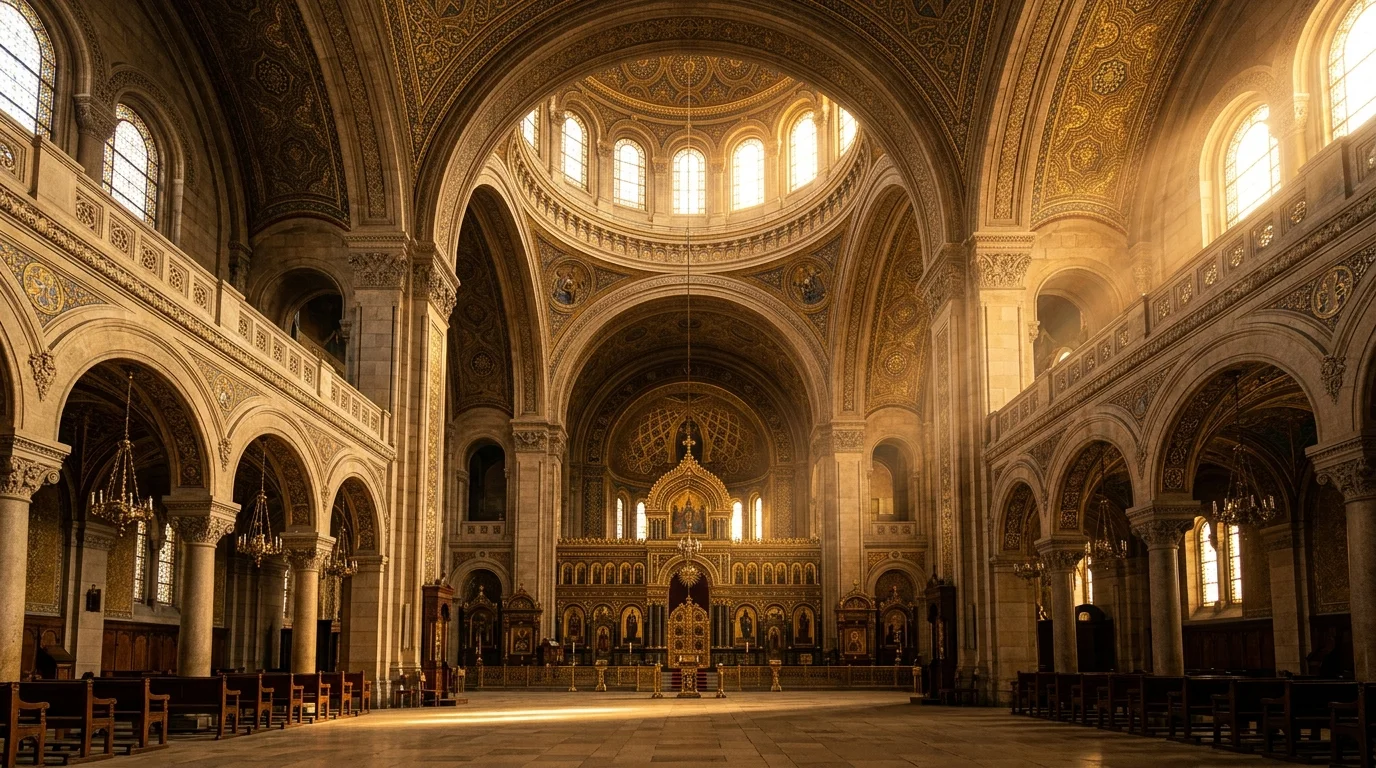
Do Greek Orthodox Believe in Purgatory? A Direct Answer
If you're asking whether the Greek Orthodox Church believes in purgatory, I'd gently push back on the question itself. Not to dodge it, but because Orthodoxy has spent a thousand years refusing to answer it on Western terms. And that refusal, I've come to believe, is itself the theological point. In other words, when people ask, do greek orthodox believe in purgatory, the most honest Orthodox answer begins by clarifying what we mean by purgatory in the first place.
In my years of serving as an Orthodox priest since 2013, I've found that the question of purgatory usually comes from grief, not curiosity alone. Someone loses a parent. Someone stands at a graveside wondering if their prayers still reach the person they loved. And somewhere along the way, they read that Orthodox reject purgatory, and they wonder: does that mean we've abandoned the dead to silence?
Not at all. What most online articles about purgatory miss is the lived experience of Orthodox memorial prayer. The naming of names at the Proskomedia, the kollyva offered after a funeral, the panikhida sung on a cold November evening. These aren't speculative add-ons to a doctrine. They're how Orthodox Christians actually carry grief before God. If you're exploring broader Orthodox questions alongside do greek orthodox believe in purgatory, it may also help to read about do Orthodox believe in praying to Saints and do Orthodox believe in saints, since all three questions touch the Church's understanding of communion in Christ.
Quick Answer: Greek Orthodox Christians do not believe in purgatory as the Roman Catholic Church defines it, a distinct third state with measured temporal punishment, but they do affirm particular judgment, an intermediate state, and the real value of praying for the departed.
In This Article:
- Do Greek Orthodox Believe in Purgatory? A Direct Answer
- What Does the Orthodox Church Actually Teach About Death and Judgment in Do Greek Orthodox Believe in Purgatory?
- Why Does Orthodoxy Reject the Roman Catholic Doctrine of Purgatory When People Ask, Do Greek Orthodox Believe in Purgatory?
- Why Do Orthodox Christians Pray for the Dead?
- Tollhouses, Foretaste, and the Mystery of the Soul After Death
- How Do Orthodox, Catholic, and Protestant Views Compare?
- Father Victor's Perspective: What Is This Question Really About?
- What People Often Get Wrong About Orthodoxy and Purgatory
TL;DR — Key Takeaways
- Orthodoxy rejects the Roman Catholic doctrine of purgatory as a defined, quantified punishment.
- Orthodoxy still teaches particular judgment, an intermediate state, and purification understood as healing rather than debt payment.
- Praying for the dead, through the Divine Liturgy, panikhidas, and kollyva, remains central to Orthodox parish life.
- The Church deliberately leaves the mechanics of the afterlife as mystery rather than mapping them out like a legal contract.
What Does the Orthodox Church Actually Teach About Death and Judgment in Do Greek Orthodox Believe in Purgatory?
Here's where I think a lot of comparison articles get lost in abstraction. So let me try to say this plainly, the way I'd explain it to someone after coffee following Liturgy. When people ask do greek orthodox believe in purgatory, the better starting place is not medieval categories but the Church's actual teaching on death, judgment, and prayer.
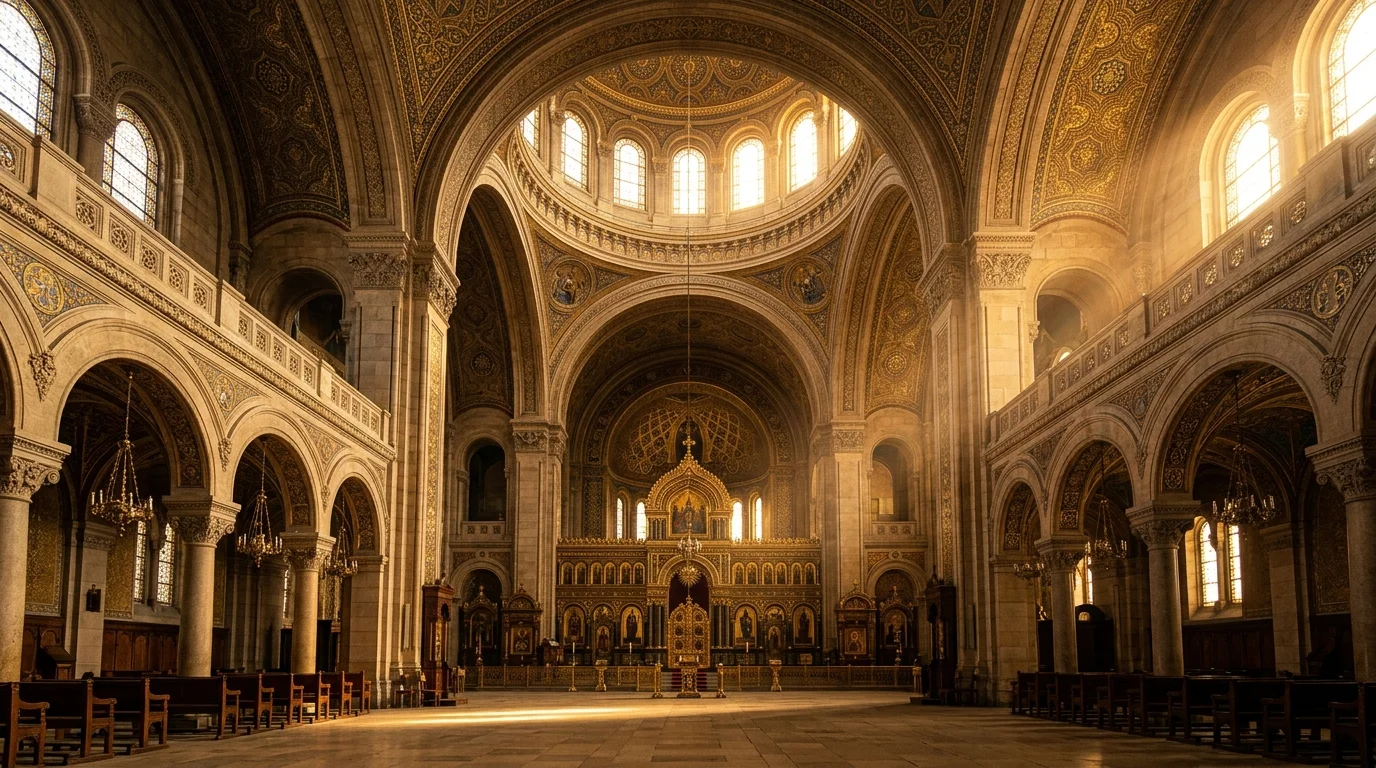
Particular Judgment
Orthodoxy teaches that each person faces a personal judgment right after death, before the universal resurrection and final judgment at the end of history. Scripture grounds this directly. As Hebrews 9:27 reminds us, it's appointed for each person to die once, and after that, to face judgment. There's no cycle, no second chance through reincarnation, no repeated earthly lives. Just one life, one death, one judgment, and then the fuller judgment still to come.
I studied this carefully during my doctoral work in Munich, and honestly, the more I sat with it, the more I noticed how seriously the Fathers took this moment, without turning it into a courtroom scene with a ledger of sins.
The Intermediate State
Between death and the final resurrection, the soul exists in what we call an intermediate state. This isn't a fully manifested heaven or hell yet. It's more like a foretaste, a real but not final experience of one's condition before God.
The parable of the rich man and Lazarus in Luke 16:19-31 shows us this vividly. Both men remain conscious after death. Both experience something real, something that anticipates their final destiny without yet being the last word. I find this parable does more theological work than most systematic explanations ever could.
Final Judgment and Resurrection
At Christ's Second Coming, everyone rises bodily and stands before Him. Matthew 25:31-46 anchors this final judgment in something very concrete: love shown, or love withheld, toward the hungry, the imprisoned, the stranger. Not abstract theological correctness. Mercy, lived out.
What strikes me about this passage, every time I preach on it, is how ordinary the criteria are. No mention of complex doctrine. Just, did you feed him? Did you visit her? That's the standard. For readers also asking related questions like Do Orthodox believe in transubstantiation, the pattern is similar: Orthodoxy teaches firmly where the Church must, but often without the same kind of scholastic over-definition.
Why Does Orthodoxy Reject the Roman Catholic Doctrine of Purgatory When People Ask, Do Greek Orthodox Believe in Purgatory?
Let me try to explain this in a way that goes beyond the usual line you'll read everywhere, that Orthodoxy uses "therapeutic" language while Catholicism uses "legal" language. That's true, but it's not the whole story. Or actually, let me put it differently, that distinction alone doesn't tell you why it matters.

Legal Satisfaction vs. Spiritual Healing
The deepest Orthodox objection to purgatory isn't simply that it sounds too Catholic. It's that the framework can quietly tempt people to imagine salvation as debt management instead of communion restored. Once you picture God as an accountant tallying temporal punishments owed for sin, you've already lost something essential about who He is.
Metropolitan Kallistos Ware put this beautifully: Orthodoxy doesn't accept the Roman Catholic doctrine of purgatory in its precise juridical form, yet it does affirm purification and growth in love after death, sustained by the prayers of the Church. That's the key distinction. Purification, yes. A legal sentence with a defined term, no.
Fr. Dumitru Stăniloae said something that's stayed with me for years: post-mortem suffering should be understood as the soul's experience of its own lack of love, not as a legal penalty God imposes from outside. Sin as sickness, not sin as debt. And honestly, once you see it that way, so much of the rest of Orthodox theology starts making sense. That is also the heart of the question, Why does the Orthodox Church not believe in purgatory, at least not in the Roman Catholic sense.
Why Orthodox Theology Leaves the Mechanics as Mystery
I'll be honest here. I'm not entirely sure there's a tidy answer to how purification after death actually works, mechanically speaking. And I don't think the Church claims to know either.
As St. Gregory of Nyssa reflects in On the Soul and Resurrection, the soul's purification from its attachment to evil comes through suffering that heals rather than punishes. Medicinal, not vindictive. As St. Isaac the Syrian writes in the Ascetical Homilies, we shouldn't even say God is simply just, because His love exceeds justice, His justice IS His mercy. That's a strange sentence if you've grown up thinking of divine justice as a courtroom. But it's exactly the point Orthodoxy keeps returning to. For a wider look at contemporary Orthodox life and interest in the tradition, see this report on rising Orthodox conversions.
Why Do Orthodox Christians Pray for the Dead?
This is where people often get confused, and fair enough. If there's no purgatory, why bother praying for someone who's already died? Doesn't that assume something's being shortened or released? Often, this is simply another way of asking do greek orthodox believe in purgatory without using the formal theological terms.

Scripture Foundation
Prayer for the departed has real biblical grounding. 2 Maccabees 12:44-46 describes prayer and offerings made for those who'd fallen in battle, precisely because the living believed it mattered for the dead. And Romans 14:7-9 tells us that whether we live or die, we belong to the Lord. Christ is Lord over both the living and the dead. That single truth carries enormous weight in Orthodox funeral theology.
The Church Fathers on Prayer for the Departed
As St. John Chrysostom teaches in his Homily on Philippians, let us help the departed as much as we can, offering our commemorations and assistance, because if the sacrifice of a father could purify his children, why would we doubt that our own offerings bring the dead some real consolation? As St. Gregory the Theologian says in his Funeral Oration for St. Caesarius, he was fully aware of the power of intercession by the living for the dead, and he wouldn't neglect it. And as St. John of Damascus explains in the Exact Exposition of the Orthodox Faith, there's still room for change through the prayers of the Church before the general resurrection arrives.
That's not a medieval invention tacked onto early Christianity. It's early Christianity itself.
Memorial Services, Kollyva, and the Divine Liturgy
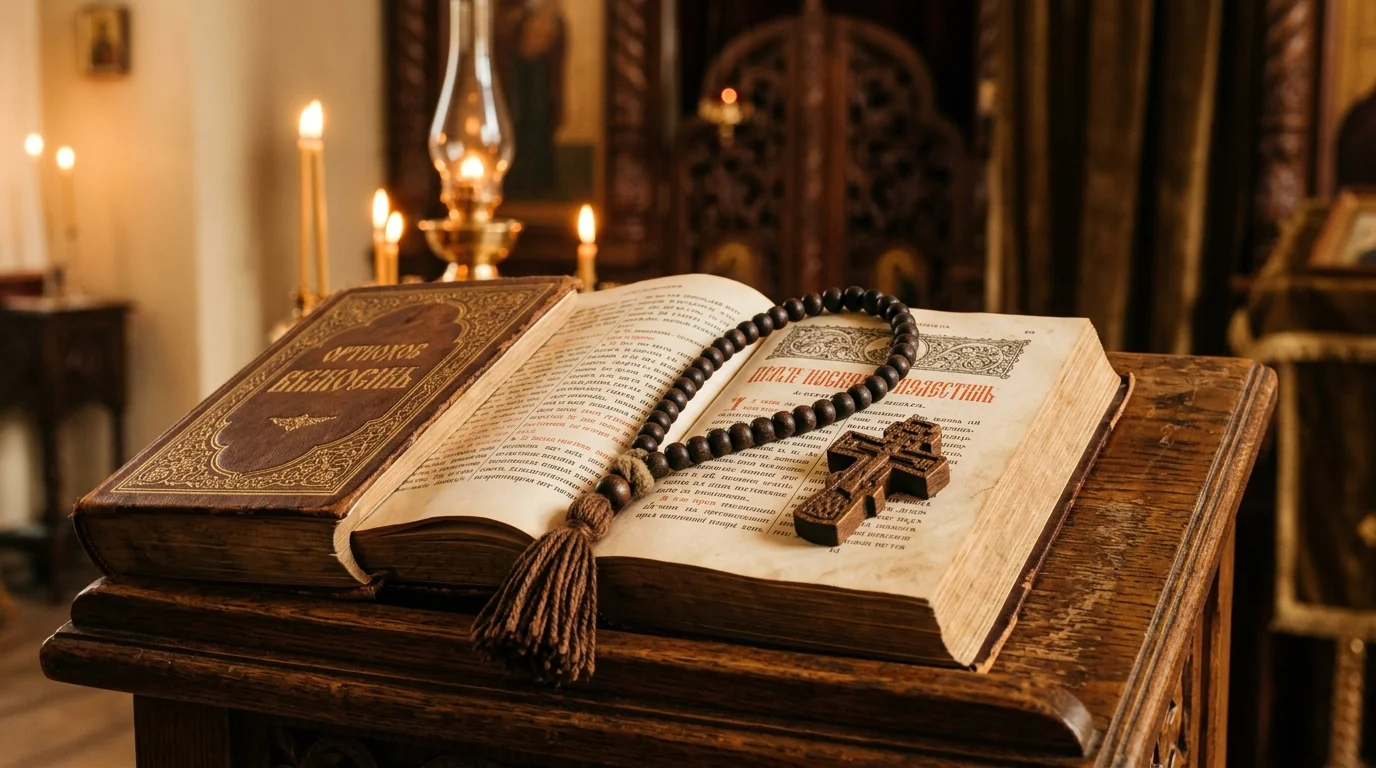
In my parish in Munich, I've watched grieving families bring kollyva, boiled wheat mixed with sugar and pomegranate, to the panikhida for a loved one. It's a small, humble offering. But it says something enormous: this person still matters to us, and we trust they still matter to God.
At every Divine Liturgy, the priest commemorates the departed by name at the Proskomedia. Not once. Every single time. That's not sentiment. That's the Church acting on the conviction that love in Christ is stronger than biological death, even without mapping out exactly how the mechanics work. In that sense, the practical answer to do greek orthodox believe in purgatory is found less in diagrams of the afterlife and more in the Church's prayer.
Tollhouses, Foretaste, and the Mystery of the Soul After Death
Some Orthodox writers describe the soul's journey after death using the image of tollhouses, aerial stations where the soul encounters its sins in the presence of angels and demons. You'll find this imagery in certain patristic and later ascetical texts.

Here's what I want to say clearly, though. Tollhouses aren't a dogma required of every Orthodox believer. They're a traditional spiritual image, meaningful to many, treated with more caution by others. Some clergy and faithful hold to this picture quite seriously. Others stress that it's symbolic, not a schematic map of the afterlife. I've gone back and forth on how much weight to give this imagery myself, and I've landed on treating it the way the Church generally does, as a legitimate area of emphasis rather than a test of Orthodox faith.
What matters more, I think, is the underlying conviction behind the image: our sins follow us, we should live watchfully, and repentance is not something to postpone indefinitely.
How Do Orthodox, Catholic, and Protestant Views Compare?
I find comparison tables risky, because they can flatten real theological differences into simple checkboxes. But used carefully, this one might help you see where the real distinctions lie.
How Greek Orthodox, Catholic, and Protestant Christians Differ on Purgatory and Prayer for the Dead
[COMPARISON_TABLE]
I knew the Catholic tradition quite well before I converted, and I want to be fair here. Catholic teaching does emphasize purification, mercy, and the communion of saints in ways that overlap with Orthodox practice. The difference isn't that Catholics care more or less about the dead. It's that Orthodoxy resists the scholastic-juridical framework, the quantified temporal punishments, the detailed dogmatic specification. Where Catholicism defines, Orthodoxy tends to hold back and simply pray. Readers sometimes also ask, Do russian Orthodox believe in purgatory or Do Coptic Orthodox believe in purgatory; the traditions differ in language and emphasis, but Russian Orthodoxy broadly shares the same rejection of a defined Roman purgatory, while Coptic teaching follows its own Oriental Orthodox framework and should be treated on its own terms rather than assumed identical.
Father Victor's Perspective: What Is This Question Really About?
I've sat with enough grieving families to notice a pattern. When someone asks me, "Do Orthodox believe in purgatory?" they're rarely asking for a systematic theology lecture. What's underneath the question, almost always, is something more personal: does repentance end at death? Does the Church's love still matter after burial? Is my mother, my father, my child, still reachable by my prayers?
That's the real question. And I think it deserves a real answer, not just a doctrinal comparison chart.
Here's an insight I've come to through years of catechetical teaching, not from a textbook: the deepest Orthodox objection to purgatory isn't that it sounds too Catholic. It's that it can tempt us to picture salvation as debt management instead of communion restored. Once God becomes an accountant in our imagination rather than a physician and Father, something essential breaks down, even if our doctrine stays technically correct.
My background in psychology has taught me something related. Grief wants certainty. It wants a map, a timeline, a clear "here's what happens next." Purgatory, as a defined system, offers that kind of comfort. Orthodoxy offers something different, and maybe harder to sit with at first: it says, we don't fully know the mechanics, but we know love doesn't stop at the grave, and we act on that conviction liturgically, every single day, at every Liturgy, for every name we whisper at the altar.
Our analysis of how Orthodox parishes actually practice memorial prayer shows something consistent across Greek, Slavic, and Antiochian communities alike: the theology gets taught through worship far more than through debate. You learn what the Church believes about death by standing at a panikhida, not by reading a catechism entry. In that same lived sense, if you still ask do greek orthodox believe in purgatory, the answer is no to a defined Roman doctrine, yes to prayer for the departed, and above all yes to the mystery of God's mercy. For another window into the wider Orthodox world and the suffering of many faithful today, see this report on persecuted Christians in Syria.
What People Often Get Wrong About Orthodoxy and Purgatory
Misconception 1: Orthodox Christians simply don't believe in anything between death and the final judgment.
Not true. Orthodoxy teaches a particular judgment and an intermediate state where the soul experiences a foretaste of its condition before the final resurrection. Rejecting Catholic purgatory doesn't mean rejecting the broader Christian conviction that the soul remains alive before God after death.
Misconception 2: Orthodox teaching is basically Catholic purgatory with different vocabulary.
There's real overlap, prayer for the dead, purification language, but Orthodoxy generally rejects a defined third place, quantified temporal punishments, and the scholastic-juridical framework. Similar practices, different underlying vision of salvation.
Misconception 3: If Orthodox pray for the dead, they must believe prayers shorten a sentence in the afterlife.
Orthodox prayer for the departed isn't usually framed as reducing a measurable penalty. It's entrusting souls to God's mercy within the communion of the Church. Love doesn't end at death, even when the exact mechanics of how that help works remain mostly mystery.
Misconception 4: Tollhouses are just the Orthodox version of purgatory.
Tollhouses are a traditional image some Orthodox writers use, not a universal dogma, and they don't function as a standardized doctrine of temporal punishment. Online debates tend to flatten every post-mortem image into an equivalent system, which isn't fair to how the tradition actually holds this imagery.
Misconception 5: Orthodoxy is vague because it has no real teaching authority on this question.
Orthodoxy isn't silent here. It's careful. The Church teaches what's necessary about judgment, prayer, and the intermediate state, while refusing speculative detail where Tradition doesn't compel it. Precision and authority aren't the same thing.
Misconception 6: Because Orthodoxy emphasizes mercy, it downplays judgment or implies universalism.
Orthodoxy teaches both real judgment and real hope. Judgment is real, prayer is meaningful, and mercy is never cheap. Avoiding both despair and presumption, that's the balance the Fathers were always trying to strike.
Frequently Asked Questions
Why do Orthodox pray for the dead if they don't believe in purgatory?
Orthodox Christians pray for the dead because the Church remains one in Christ across death, and prayer for the departed flows from love and hope in God's mercy rather than from reducing a measured punishment. Fr. Thomas Hopko put it simply: Orthodoxy doesn't have a doctrine of purgatory, but it does have a doctrine of death, judgment, and prayer for the dead. That's practically a perfect summary. Romans 14:7-9 reminds us that Christ is Lord of both the living and the dead, which is really the theological foundation underneath every panikhida ever sung.
What do Greek Orthodox believe happens after death?
Greek Orthodox believe the soul separates from the body at death, faces a particular judgment, and enters an intermediate state that's a foretaste of its final destiny before the resurrection and final judgment at Christ's Second Coming. This isn't a fully settled eternal state yet. It's more like a preview, real but not final, described in Scripture through the parable of the rich man and Lazarus in Luke 16.
Why can't Orthodox be cremated?
Most Orthodox jurisdictions strongly discourage or prohibit cremation because the body is honored as part of the human person, destined for bodily resurrection, following the pattern of Christ's own burial. That said, pastoral handling can vary by bishop and local circumstance, so this is genuinely a conversation to have with your own priest rather than assuming one rule fits every situation everywhere.
Do Orthodox say the Hail Mary?
Orthodox don't typically use the Latin Hail Mary in its Catholic form, but they offer similar veneration to the Theotokos through prayers like "Rejoice, O Virgin Theotokos" and hymns such as the Akathist and the Paraklesis. The devotion is deeply present. It's just expressed through different liturgical language.
Do Orthodox pray the rosary?
No, the rosary as a devotional form belongs to Western Catholic piety rather than Orthodox tradition. Orthodox Christians use the prayer rope (komvoskini) instead, typically for repeating the Jesus Prayer, "Lord Jesus Christ, Son of God, have mercy on me," which I pray myself every single day, and honestly, still find it does something words alone can't explain.
Do Orthodox believe in the rapture?
No, Orthodox theology doesn't teach a separate rapture event distinct from the general resurrection. Passages like 1 Thessalonians 4:13-18, often used to support rapture theology in some Protestant circles, are understood in Orthodoxy as describing the one general resurrection at Christ's Second Coming, not a secret or separate removal of believers beforehand.
About the Author
Father Victor Meshko is an Orthodox priest of the Russian Orthodox Church Abroad serving at the Cathedral of the Holy New Martyrs and Confessors of Russia in Munich. Ordained to the priesthood in 2013, he holds multiple theology degrees from the Uzhhorod Ukrainian Theological Academy, Carpathian University, and the Institute for Orthodox Theology at LMU Munich, where he also pursued doctoral studies. He's the published author of a book on Archbishop Filaret of Chernigov and brings together patristic scholarship, liturgical theology, pastoral counseling, and a master's background in psychology.
Researched and written by Father Victor Meshko. AI tools were used during the research and drafting process to help organize sources; all theological review, fact-checking, and final pastoral judgment were completed personally by Father Victor Meshko, in keeping with EU AI Act transparency expectations.
<table class="seo-table comparison-table"><caption>How Greek Orthodox, Catholic, and Protestant Christians Differ on Purgatory and Prayer for the Dead</caption><thead><tr><th>Aspect</th><th>Orthodox</th><th>Catholic</th><th>Protestant</th></tr></thead><tbody><tr><td>Purgatory as a defined doctrine</td><td>No defined doctrine of purgatory as a third place of temporal punishment</td><td>Yes, purgatory is a defined state of purification for those destined for heaven</td><td>Usually no; most Evangelicals reject purgatory entirely</td></tr><tr><td>Intermediate state</td><td>Yes; particular judgment and a foretaste of one's condition before final judgment</td><td>Yes; includes heaven, hell, and purgatory in Catholic theology</td><td>Usually yes in some form, but often without prayer for the dead</td></tr><tr><td>Prayer for the dead</td><td>Yes; integral to liturgical and pastoral life</td><td>Yes; includes Masses and other suffrages for souls in purgatory</td><td>Usually no in Evangelical traditions; some historic traditions are more open</td></tr><tr><td>How purification is understood</td><td>Primarily as healing, encounter, and growth in love before God</td><td>Often described as purification from the temporal effects of sin</td><td>Usually not emphasized after death</td></tr><tr><td>Approach to afterlife detail</td><td>Mysterious, apophatic, and resistant to over-definition</td><td>More dogmatically specified</td><td>Often simpler and less sacramental in popular teaching</td></tr></tbody></table>


Help us bring the christian faith to modern seekers worldwide.
Godfinder relies on generous souls to sustain our multilingual platform, develop new tools like the Magic Cube, and support struggling believers. If our work has touched your heart, consider contributing to our nonprofit partner

Do you want to know More? Ask God’s Word!
Do you have questions, worries, or hopes? Feeling lost, burdened, or alone? “Ask God’s Word” brings you gentle guidance rooted in Scripture and the wisdom of the Church. Find hope and strength today!
