.avif)
Does the Mormon Church Believe in the Trinity?
Go ahead and try it sometime. Ask ten people in any Sunday pew, Orthodox, Catholic, Protestant, doesn't matter, to explain the Trinity without using the word "mystery." I've done this, informally, over coffee after Liturgy more times than I can count. And honestly? Most people stumble. Not because...
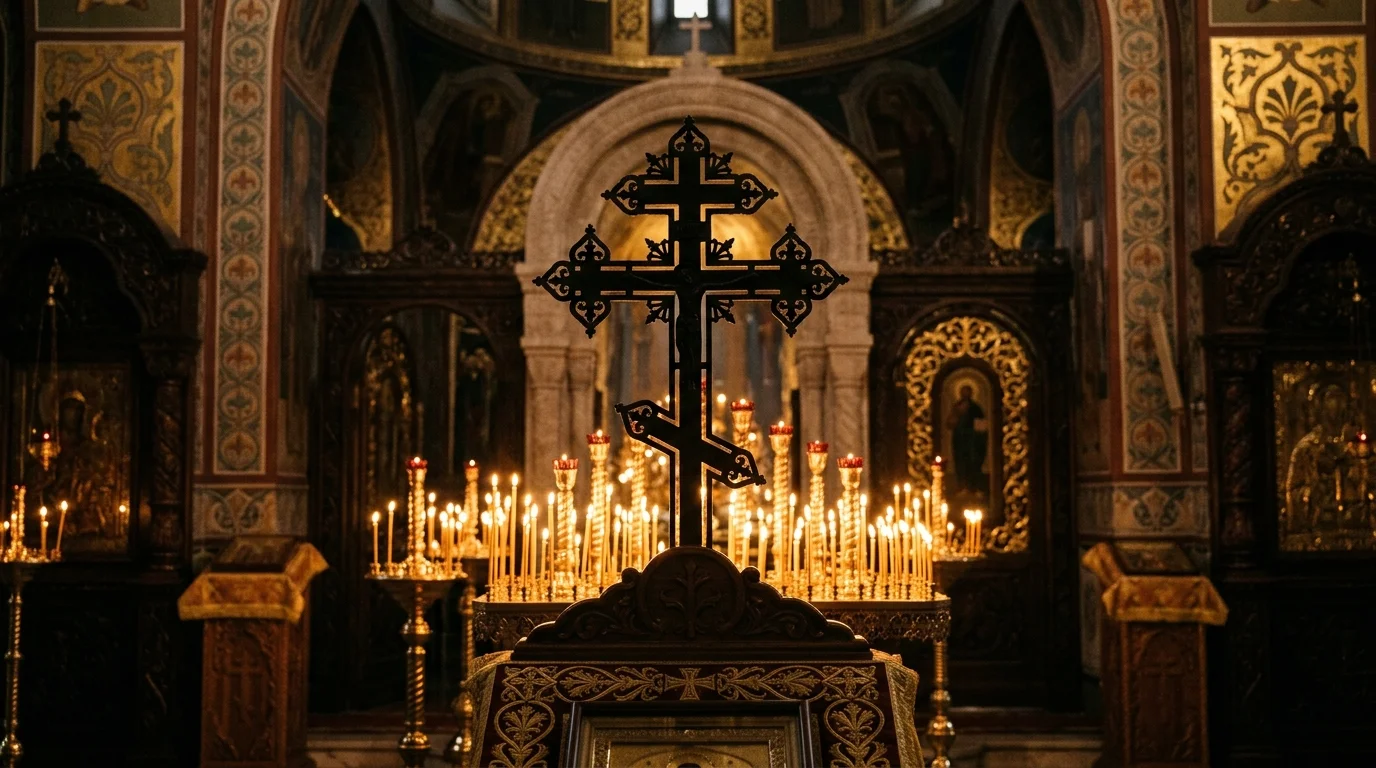
Ask Ten Christians to Explain the Trinity, and Watch What Happens
Go ahead and try it sometime. Ask ten people in any Sunday pew, Orthodox, Catholic, Protestant, doesn't matter, to explain the Trinity without using the word "mystery." I've done this, informally, over coffee after Liturgy more times than I can count. And honestly? Most people stumble. Not because they lack faith. Because the doctrine is hard, and most of us were never really taught how to hold it.
So when someone asks me, "does the mormon church believe in the trinity," I understand why the question feels bigger than it looks. In my years of serving as an Orthodox priest since 2013, I've found that many seekers ask this question because they hear the same words, Father, Son, and Holy Spirit, and don't realize those words can describe very different understandings of God. What strikes me about this is that the answer is actually simple to state. What's hard is explaining why it matters. And that's the part almost nobody covers.
Here's what most competitors miss entirely: they'll tell you Mormons reject the Trinity and believe in three separate beings, full stop, doctrinal classification complete. But that's where the real conversation should start, not end. What most online articles miss is that this question becomes spiritually decisive at the level of prayer and worship. In Orthodox life, we don't merely define the Trinity conceptually. We address one God in doxology, baptism, the Divine Liturgy, and every blessing we give. A priest sees immediately that doctrine and worship stand or fall together.
Quick Answer: No, the Mormon Church (The Church of Jesus Christ of Latter-day Saints) does not believe in the historic Christian Trinity; it teaches instead that the Father, Son, and Holy Ghost are three separate divine beings united in purpose, not one God sharing a single divine essence.
In This Article:
- Ask Ten Christians to Explain the Trinity, and Watch What Happens
- What Do Latter-day Saints Actually Mean by the Godhead, and does the mormon church believe in the trinity?
- What Does the Orthodox Church Actually Mean by the Trinity, and does the mormon church believe in the trinity?
- Why Does This Difference Matter Spiritually, Not Just Academically?
- How Does Orthodoxy Compare to Catholicism, Protestantism, and Mormonism?
- Father Victor's Perspective: What Seekers Often Miss
- Common Misconceptions About Mormons and the Trinity
TL;DR — Key Takeaways
- LDS teaching describes a "Godhead" of three distinct beings united in will, not the Nicene Trinity of one essence in three Persons.
- Orthodox Christianity confesses one God in three hypostases, sharing one essence, will, and glory, a teaching rooted in Scripture and clarified at the Ecumenical Councils.
- The difference isn't about vocabulary. It reshapes what salvation, worship, and human destiny actually mean.
- Orthodox theosis and LDS exaltation sound similar on the surface but rest on entirely different foundations.
What Do Latter-day Saints Actually Mean by the Godhead, and does the mormon church believe in the trinity?
Let's start where the LDS Church itself starts, because to be fair, they're not hiding the ball here. Their own materials state plainly: "We don't believe in the traditional concept of the Trinity. We believe that the Father, the Son, and the Holy Ghost are three separate beings who are one in purpose." That's according to LDS belief summaries cited in Pacific Brief. Clear enough, right?
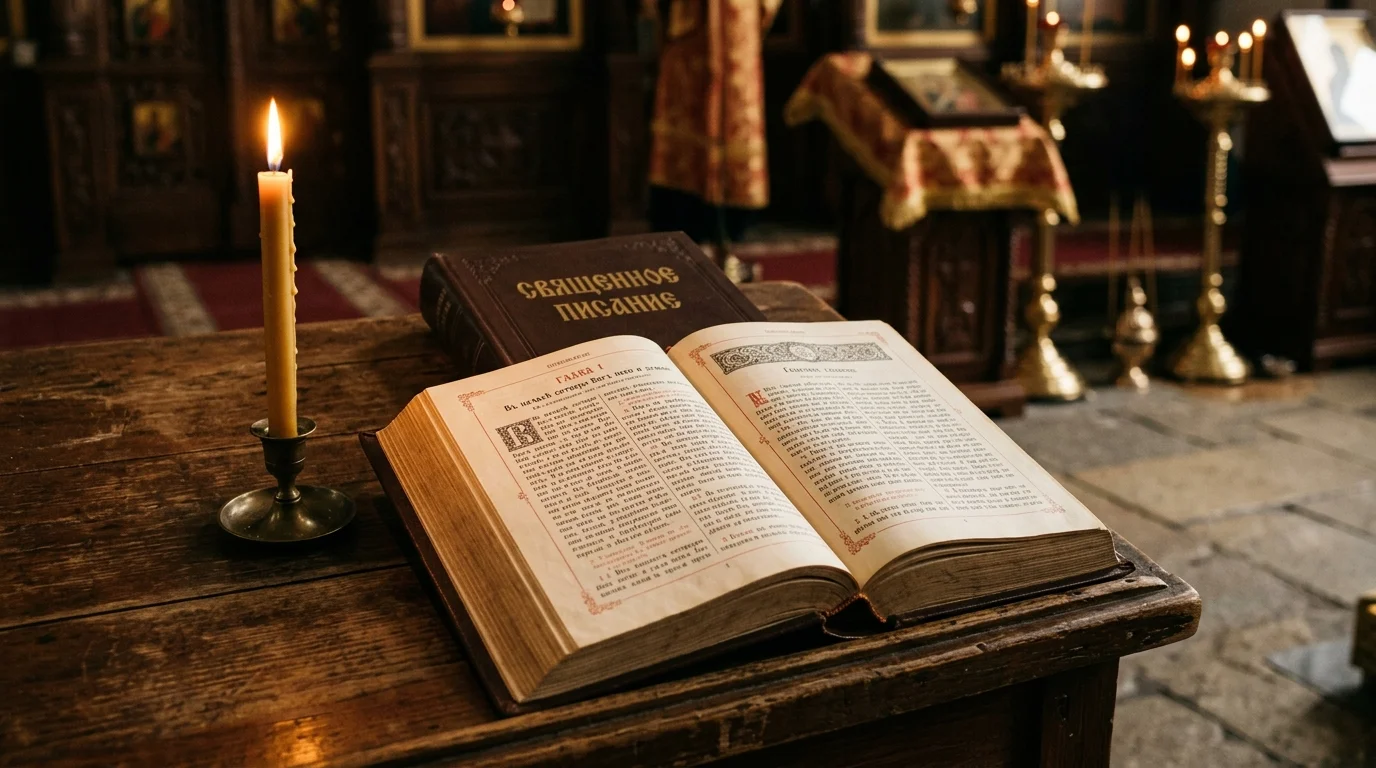
Three Separate Beings United in Purpose
In LDS theology, God the Father has a tangible, glorified body of flesh and bone. So does the resurrected Jesus Christ. The Holy Ghost, by contrast, remains a spirit personage without a physical body. These aren't three modes of one being. They're three distinct individuals, cooperating in love and covenant, but not sharing one divine substance.
As FAIR Latter-day Saints explains, Latter-day Saints believe the members of the Godhead are separate beings, and so "in a sense we believe in more than one God." I appreciate that honesty, actually. It's rare to find a tradition state its own position that directly. Grant Underwood, a professor of history at Brigham Young University, has described this as a kind of "separate-being Trinitarianism," acknowledging real overlap with Christian language while being candid that LDS teaching isn't on board with Father, Son, and Spirit sharing one essence or substance. If someone is asking about Mormon Godhead vs Trinity, this is really the heart of it.
Why This Isn't the Nicene Trinity
Here's the thing. When Jesus says in John 10:30, "I and my Father are one," Orthodox Christians read that as a statement about shared essence, not just shared intention. LDS interpretation reads it more like a marriage, unified in purpose, distinct in being. Two very different readings of the same verse. For readers wondering Why do Mormons not believe in the Trinity, the answer lies in this different view of divine unity itself.
Cardinal Joseph Ladaria, former Prefect of the Congregation for the Doctrine of the Faith, put it plainly from a Roman Catholic vantage point: LDS baptism isn't a true invocation of the Trinity, because the Father, Son, and Holy Spirit, according to LDS teaching, aren't three Persons in one Godhead but three gods forming one divinity. I don't say this to be harsh. I say it because clarity matters more than comfort when we're talking about who God actually is. You can also see how ordinary Christians wrestle with this in public discussion threads like this conversation about why Latter-day Saints are not considered Trinitarian.
What Does the Orthodox Church Actually Mean by the Trinity, and does the mormon church believe in the trinity?
Now let me tell you what we mean, because this is where I think a lot of explanations, even well-intentioned ones, fall short.

One Essence, Three Persons
The Orthodox Church confesses one God, eternally existing as three distinct Persons, Father, Son, and Holy Spirit, who share one divine essence, one will, and one glory. Not three gods cooperating. Not one God wearing three masks. One God, fully present in three hypostases (a Greek theological term meaning "Person").
As St. John of Damascus states in his Exposition of the Orthodox Faith, Book I, "We believe in one God... known in three hypostases and adored in one worship." That last phrase, adored in one worship, is the part people skip past too quickly. It's not academic. It's what happens every single Liturgy. For a concise Orthodox overview, the Orthodox Church in America on the Holy Trinity gives a clear summary rooted in the Creed.
Scripture Foundations
Christ himself gives us the pattern in Matthew 28:19, commanding baptism "in the name of the Father, and of the Son, and of the Holy Ghost" — one name, not three. At His own baptism, described in Matthew 3:16-17, we see the Son baptized, the Spirit descending like a dove, and the Father's voice from heaven declaring His pleasure. Three Persons, distinctly present, yet never described as three separate gods acting independently. Discover: Orthodoxy and Catholicism: Understanding the Divine....
John 1:1-3 tells us the Word was with God and was God from the beginning, not a lesser deity who developed into divinity over time. And 2 Corinthians 13:13 gives us the apostolic blessing we still use liturgically today: the grace of Christ, the love of the Father, and the communion of the Holy Spirit, together, in one breath. Isaiah 44:6-8 anchors all of this in the older witness: there is no other God, no rival, no plurality of divine beings competing for worship. If someone asks, Do Christians believe in the Trinity, this is the scriptural and liturgical world historic Christianity points to.
The Church Fathers on the Trinity
I've spent years with these texts, first as a student, now as a parish priest trying to make them breathe for real people. As St. Gregory the Theologian writes in his Oration 40 (On Holy Baptism), "No sooner do I conceive of the One than I am illumined by the splendor of the Three; no sooner do I distinguish Them than I am carried back to the One." I still find that sentence stunning. Not a formula to memorize. A description of what it's actually like to pray.
As St. Gregory of Nyssa teaches in Against Eunomius, "We do not speak of three Gods, but of one God, because the dominion is one, and the goodness and the power are the same." And as St. Athanasius writes in his Letters to Serapion on the Holy Spirit, "The Father, the Son, and the Holy Spirit are one, not as one person, but as one essence and one nature." St. Basil the Great adds, in On the Holy Spirit, that we confess "one God from the Father, one Only-begotten Son, and one Holy Spirit... the same in honor and glory."
None of these men were writing abstract philosophy for its own sake. They were defending what happens at the font, at the altar, in the prayer of ordinary believers. If you're trying to understand How to explain the Trinity to a Mormon, the Fathers help by showing that Christian language about Father, Son, and Spirit has always been bound to one worship of one God.
Why Does This Difference Matter Spiritually, Not Just Academically?
This is where I think most articles stop too soon. They define the two positions, note the disagreement, and move on. But why should a seeker actually care?
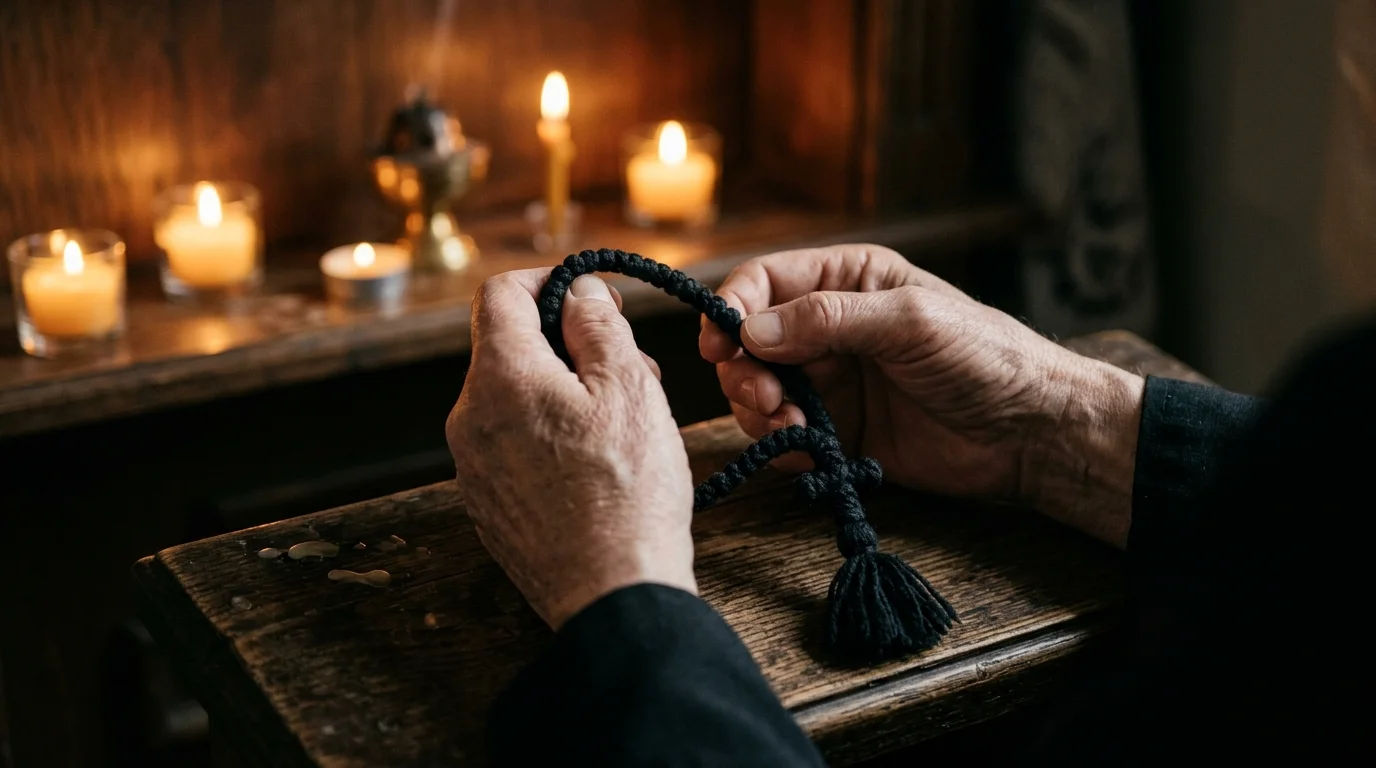
Worship, Prayer, and the Shape of Salvation
Here's an original thought I've sat with for a long time, informed by years of Orthodox dogmatics and pastoral catechesis. The deepest difference here isn't merely "one essence" versus "three beings." It's whether salvation means communion with the uncreated God, or advancement within a larger cosmos of divine beings. That changes the entire spiritual horizon of prayer, worship, and hope.
Think about what that means practically. If God is one uncreated essence, then union with Him is a gift beyond anything creation could produce on its own, sheer grace, sheer mystery. But if God the Father is himself an exalted, embodied being who progressed to that state, then human destiny becomes something more like a ladder to climb. Same religious vocabulary. Completely different spiritual universe.
Orthodox Christians don't defend the Trinity as an abstract puzzle. We defend it as the grammar of worship. If your theology leads you to imagine three cooperating divine individuals, your prayer life slowly becomes functionally tri-theistic, even if your language stays biblical. I've watched this happen, honestly, in conversations with people from various backgrounds who use all the right words but, when you press gently, describe praying to three different personalities rather than one God who is somehow, mysteriously, always three.
Theosis Is Not Mormon Exaltation
People sometimes ask me, since Orthodoxy teaches theosis, deification by grace, aren't we basically saying the same thing as LDS exaltation? I understand why the question comes up. Both traditions use elevated language about human destiny.
But no, we're not saying the same thing. Not even close. Theosis means participation in God's life by grace. It never means becoming divine by nature, and it never means joining a plurality of gods. The Creator-creature distinction stays intact forever, even in the deepest union with God. We become "partakers of the divine nature," as Scripture says, without ever ceasing to be creatures who owe our existence entirely to Him. LDS exaltation, by contrast, envisions faithful humans potentially becoming gods themselves, in a fuller, ontological sense, following a pattern the Father himself supposedly walked. That is why questions like Do Mormons believe God was once a man and Do Mormons believe they can become gods are not side issues. They flow directly from a different doctrine of God. Related: What Do Orthodox Christians Believe? The Main Truths of Our....
Same word, "theosis" versus "exaltation." Different universe underneath.
How Does Orthodoxy Compare to Catholicism, Protestantism, and Mormonism?
I think a table helps here more than paragraphs. So, here's how the major traditions line up on this specific question.

Trinity or Godhead? How Orthodox Christianity, Catholicism, Protestantism, and Mormonism Compare
[COMPARISON_TABLE]
What strikes me looking at this table is how much agreement exists across Orthodox, Catholic, and mainstream Protestant lines. We disagree with each other on plenty, the filioque, sacramental theology, church authority. But on this particular question, the Nicene doctrine of God, we stand together. As explained in Ancient Faith's overview of the Seven Ecumenical Councils, Orthodoxy is rooted in the doctrinal authority of those seven councils, and the confession of one God in three Persons is the bedrock all of them assume.
Orthodoxy represents roughly 220 million adherents worldwide, the second-largest Christian communion after Rome, according to demographic summaries of Eastern Orthodoxy by country. That's not a fringe opinion we're defending. It's the historic mainstream understanding of the Christian God, held continuously since the early centuries of the Church. Readers comparing this with other non-Trinitarian groups sometimes also ask, Do Jehovah Witnesses believe in the Trinity. They do not, but their reasoning and doctrine differ significantly from LDS teaching.
Father Victor's Perspective: What Seekers Often Miss
Let me be honest about something. I understand the appeal of LDS theology in a way that surprised me when I first studied it seriously.
Many seekers are drawn to LDS teaching because it makes God seem more imaginable, more humanly relatable. A God with a body. A God who was once like us and became something greater. There's something psychologically comforting about that picture. I say this with my training in psychology alongside theology, and I mean it sincerely, not as a rhetorical trick. The human longing to grasp God, to picture Him, to feel He's within reach, is real and deserves a real answer.
The Orthodox answer isn't to make God smaller or more manageable. It's to show that God's mystery is precisely what allows true worship without reducing Him to an exalted creature. I don't fully understand the Trinity myself, not in the sense of exhausting it intellectually. Nobody does. But I've knelt before it in prayer for over a decade now, and I've watched it hold up under the weight of real suffering, real joy, real death, and real resurrection hope in my parish. That's not nothing.
Our analysis of pastoral conversations over the years shows something consistent: seekers who come from LDS backgrounds rarely leave because someone won an argument about Greek philosophy. They stay, or they leave, based on whether the God being described actually meets them in prayer. So the real question isn't whether the word "Trinity" appears in Scripture, it doesn't, not literally. The question is whether the reality the word points to is there. And I believe, with the whole weight of the Church behind me, that it is. For readers who want more context, we explore related questions in Is Mormonism Christian? and What Do Orthodox Christians Believe About the Trinity?.
Common Misconceptions About Mormons and the Trinity
Let me clear up a few things I hear often, both from seekers and from well-meaning Christians who overstate the case.
Misconception 1: "Mormons believe in the Trinity just like other Christians; they simply use different terminology." Not quite. Orthodoxy teaches one God in three Persons sharing one essence. LDS teaching explicitly describes the Father, Son, and Holy Ghost as separate beings united in purpose, not essence. A gentle way to put it: we both speak about the Father, Son, and Holy Spirit, but the Orthodox Church means one eternal God in three Persons, while LDS teaching means three distinct divine beings.
Misconception 2: "The Trinity just means three beings who cooperate perfectly, so it's close enough to Nicene Christianity." This one I understand, honestly, because modern people tend to think of personhood as separate individual consciousness and project that onto theology. But Orthodoxy rejects the idea of three separate divine centers cooperating. Orthodox Christians also affirm real distinction of Persons, but not separation of being. The unity is deeper than teamwork. It's divine life itself. Read more: Is Jesus Truly Presented as God in the Bible? A Deep....
Misconception 3: "If Orthodoxy teaches theosis, it must also teach humans can become gods like in Mormon exaltation." We covered this above, but worth repeating here. Orthodox Christianity promises real union with God, but always as creatures transformed by grace, not as beings who become gods alongside Him.
Misconception 4: "The Nicene Trinity is just later Greek philosophy, while Mormonism restores the simpler biblical view." The Church did use philosophical language, but as a servant of Scripture, to protect the biblical confession that the Son and Spirit are fully and eternally divine, found already in Matthew 28:19, John 1:1-3, and 2 Corinthians 13:13. The councils clarified. They didn't invent.
Misconception 5: "Since LDS members sincerely love Jesus, the Trinity difference is secondary." We respect sincerity deeply. Genuinely. But Christians also believe that love of Christ includes receiving the truth about who Christ actually is and who the God He reveals actually is. This is also why questions like Do Mormons believe Jesus is God need careful answers: Latter-day Saints do affirm Jesus as divine, but not in the same Nicene sense confessed by the Orthodox Church.
Misconception 6: "Orthodox Christians dismiss everyone outside Orthodoxy." Not true, and I hope this article itself shows that. The Orthodox Church can firmly disagree with Mormon doctrine while still speaking with love and honesty to LDS neighbors, friends, and family members. Disagreement isn't dismissal.
If you return to the original question, does the mormon church believe in the trinity, the Orthodox answer is still no, not in the historic Nicene sense. And that matters not because we enjoy drawing boundaries, but because the God we worship shapes the whole life of prayer, salvation, and communion. Even thoughtful public conversations, such as this broader discussion of the Trinity and this LDS-focused discussion about Trinity language, show just how easily shared words can hide very different beliefs. So if someone asks me again, does the mormon church believe in the trinity, I would answer simply: no, and the reason it matters is that true doctrine is meant to lead us into true worship of the one uncreated God, Father, Son, and Holy Spirit.
Frequently Asked Questions
Do Mormons believe Jesus died on the cross?
Yes, Latter-day Saints affirm that Jesus Christ was crucified and died. The larger theological difference concerns who Jesus is in relation to the Father, specifically, whether He's eternally consubstantial (of one essence) with the Father, as Orthodox and Nicene Christianity teaches, or a separate divine being with His own distinct body and existence, as LDS theology holds.
How does Mormonism differ from Christianity?
Historic Christianity, Orthodox, Catholic, and mainstream Protestant alike, confesses one eternal, uncreated God in three Persons, along with the belief that God has always been God, without a body of flesh and bone. Mormonism teaches a Godhead of three separate beings, including a Father with a physical body who was once a man, and offers humans the possibility of eventual exaltation to godhood. As summarized in classifications of non-Trinitarian Christianity, LDS theology sits outside the Nicene consensus that has defined Christian orthodoxy since the fourth century.
What three gods do Mormons believe in?
LDS teaching describes a Godhead made up of God the Father, Jesus Christ the Son, and the Holy Ghost, three distinct, separate beings united in purpose and will rather than one shared divine essence. As FAIR Latter-day Saints itself acknowledges, this means, "in a sense," Latter-day Saints believe in more than one God, even while emphasizing the Father's supreme authority and the unity of the three in love and mission.
What is the most controversial Mormon belief from a historic Christian perspective?
From an Orthodox and broader Nicene Christian standpoint, the most theologically consequential belief is that God the Father was once a man who progressed to become God, and that faithful humans can likewise become gods through exaltation. This directly challenges the Creator-creature distinction that Orthodox theology, and historic Christianity generally, considers essential to a biblical doctrine of God, as reflected in passages like Isaiah 44:6-8.
About the Author
Father Victor Meshko is an Orthodox priest of the Russian Orthodox Church Abroad (ROCA), serving at the Cathedral of the Holy New Martyrs and Confessors of Russia in Munich since his ordination in 2013. He holds multiple degrees in philosophy, theology, and psychology, including theological study at LMU Munich, and is the published author of a book on Archbishop Filaret of Chernigov as well as scholarly work on the Apocalypse of John. At Find to God, he writes as both a practicing pastor and trained theologian, helping seekers approach difficult doctrinal questions with clarity and warmth.
Researched and written by Father Victor Meshko. AI tools were used during the research process.
I don't wish to hide or bury in the ground the treasure, the joy, and the happiness that were granted to me. I wish to share this with you, leaving each person the freedom of personal choice. My message is simple and sincere: trust in God, open your hearts to Him, participate in the Holy Mysteries of the Orthodox Church, and He will surely comfort you and lead you to a life that's deeper, more whole, and more joyful.
<table class="seo-table comparison-table"><caption>Trinity or Godhead? How Orthodox Christianity, Catholicism, Protestantism, and Mormonism Compare</caption><thead><tr><th>Aspect</th><th>Orthodox</th><th>Catholic</th><th>Protestant (Mainstream)</th><th>LDS (Mormon)</th></tr></thead><tbody><tr><td>Nature of God</td><td>One God in three Persons, one essence</td><td>Same Nicene doctrine</td><td>Most major traditions hold the same Nicene doctrine</td><td>Three separate beings united in purpose</td></tr><tr><td>Unity of Father, Son, and Spirit</td><td>Unity of essence, will, energy, and glory</td><td>Same in substance</td><td>Usually same in classical confessions</td><td>Unity mainly of purpose, love, and mission</td></tr><tr><td>Father and Son</td><td>Distinct Persons, never separate gods</td><td>Same</td><td>Same in historic confessions</td><td>Separate divine beings; Father and Son embodied in LDS teaching</td></tr><tr><td>Holy Spirit</td><td>Fully divine Person</td><td>Fully divine Person</td><td>Fully divine Person in mainstream traditions</td><td>Separate spirit personage</td></tr><tr><td>Human destiny</td><td>Theosis by grace without becoming God by nature</td><td>Divinization language exists, still creature by nature</td><td>Varies, but not becoming separate gods</td><td>Exaltation can include becoming gods in LDS thought</td></tr></tbody></table>


Help us bring the christian faith to modern seekers worldwide.
Godfinder relies on generous souls to sustain our multilingual platform, develop new tools like the Magic Cube, and support struggling believers. If our work has touched your heart, consider contributing to our nonprofit partner

Do you want to know More? Ask God’s Word!
Do you have questions, worries, or hopes? Feeling lost, burdened, or alone? “Ask God’s Word” brings you gentle guidance rooted in Scripture and the wisdom of the Church. Find hope and strength today!
