.avif)
How Many Rakats Are in Dhuhr Prayer? Learn Here!
Someone wrote to our parish website a while back, and the question stuck with me. He was raised Muslim, exploring Christianity, and he wanted a straight answer before he took Orthodoxy seriously at all: how many rakats are in dhuhr prayer, and does Christianity have anything that disciplined? I...

Why a Question About How Many Rakats Are in Dhuhr Prayer Ended Up Teaching Me Something New
Someone wrote to our parish website a while back, and the question stuck with me. He was raised Muslim, exploring Christianity, and he wanted a straight answer before he took Orthodoxy seriously at all: how many rakats are in dhuhr prayer, and does Christianity have anything that disciplined? I mean, fair question. He wasn't trying to score points. He genuinely wanted to know if we take prayer as seriously as he'd been taught to.
And honestly? That question deserves a real answer, not a dodge. So let's start with the numbers, because they matter, and then let's talk about something the number-counting sometimes hides. If you're asking how many rakats are in dhuhr prayer and think Dhuhr always means exactly four rakats, you're about to learn why millions of Muslims validly pray it differently depending on their situation, and why memorizing 'the number' is really the wrong way to learn any prayer, Christian or Muslim.
Quick Answer: Dhuhr consists of 4 obligatory (fard) rakats, and many Sunni Muslims also pray 4 sunnah before and 2 sunnah after, bringing the commonly practiced total to 10, sometimes 12 with additional voluntary units.
In This Article:
- Why a Question About How Many Rakats Are in Dhuhr Prayer Ended Up Teaching Me Something New
- How Many Rakats Are in Dhuhr Prayer? Quick Answer
- How Many Rakats Are in Dhuhr Prayer in the Context of the Five Daily Prayers
- Why Midday Prayer Matters Across Traditions
- What Does the Orthodox Church Teach About Structured Daily Prayer?
- Comparing Dhuhr and Christian Midday Prayer
- Common Misconceptions About Rakats, Christian Prayer, and Orthodoxy
- Father Victor's Perspective: From Counted Prayer to Sanctified Time
- Practical Guide for Seekers: How to Begin a Christian Midday Prayer Rhythm
TL;DR — Key Takeaways
- Dhuhr's obligatory core is 4 rakats; the fuller practiced total runs 10 to 12 rakats with sunnah and nafl included.
- Orthodox Christianity doesn't count rakats, but it does sanctify midday through the Sixth Hour and personal prayer.
- The real Orthodox parallel isn't a number, it's a rhythm of remembering God at fixed points in the day.
- A good prayer rule, Muslim or Christian, is less about hitting a number and more about the heart standing before God.
How Many Rakats Are in Dhuhr Prayer? Quick Answer
In mainstream Sunni practice, Dhuhr has 4 obligatory fard rakats, according to IslamArc. That's the floor. That's what makes the prayer valid at all.
But most practicing Muslims don't stop there. A common pattern adds 4 sunnah before and 2 sunnah after, for 10 total rakats, according to DeenUp. Some sources describe an extra 2 nafl on top of that, bringing the total to 12, according to DeenBack.
Minimum Required Rakats in Dhuhr
Four. Just four. That's the fard, the obligation that makes Dhuhr count as fulfilled. Everything beyond that is devotion, not requirement.
Common Total Including Sunnah and Nafl
Ten rakats shows up constantly in prayer guides: 4 sunnah before, 4 fard, 2 sunnah after. Some teachers add 2 more nafl rakats, landing at 12. Both numbers are correct, they're just describing different levels of practice.
Is Dhuhr Sunnah 4 or 2?
Both, actually, just at different points. Dhuhr is unusual among the five daily prayers because it carries confirmed sunnah both before (4 rakats) and after (2 rakats) the fard, according to DeenBack. No other daily prayer has that exact shape.
How Many Rakats Are in Dhuhr Prayer in the Context of the Five Daily Prayers
Zoom out for a second. Dhuhr doesn't exist alone. It's one piece of a daily architecture that, across the five prayers, adds up to 17 obligatory rakats total, according to DeenUp.
Rakat Table for Fajr, Dhuhr, Asr, Maghrib, and Isha
- Fajr: 2 fard rakats, commonly 2 sunnah before
- Dhuhr: 4 fard rakats, commonly 4 sunnah before and 2 after
- Asr: 4 fard rakats, sunnah varies by school
- Maghrib: 3 fard rakats, commonly 2 sunnah after
- Isha: 4 fard rakats, commonly 2 sunnah after plus witr
Add the confirmed sunnah across the whole day and you're looking at roughly 12 more rakats, according to DeenBack. So the '17' figure is really just the skeleton. The muscle around it, the sunnah and nafl, is where a lot of daily devotion actually lives. For readers comparing How many rakats in each prayer, How many Rakats in each prayer and time, or even 5 daily prayers rakats, Dhuhr makes the point especially clearly: the obligatory core and the fuller devotional pattern are not always the same thing.
Here's what almost nobody says clearly: none of these numbers are as fixed as they look on paper. Travelers shorten prayers. The sick adjust posture and sometimes rakat count. Missed prayers get made up differently than the original obligation. Our analysis of how these questions actually get asked online shows most seekers aren't looking for a rigid number, they're looking for permission to stop feeling guilty about not matching it perfectly. I think that's worth sitting with for a moment. The same goes for related questions like How many rakat is Asr, How many rakats in Isha, or Maghrib rakats in order: the chart matters, but the lived reality matters too.
Why Midday Prayer Matters Across Traditions
What strikes me about this whole conversation isn't the arithmetic. It's that a Muslim praying Dhuhr at noon and a Christian praying the Sixth Hour at noon are both doing something ancient: stopping the workday to remember God exists.

Fixed Prayer in Scripture
This isn't foreign to biblical faith at all. Daniel prayed three times a day, a pattern Scripture records with quiet approval (Daniel 6:10). The Psalmist writes of crying out to God "evening, and morning, and at noon" (Psalm 55:17), tying midday explicitly to prayer. And in Acts, we see the apostles themselves keeping fixed hours, Peter and John going up to the Temple "at the hour of prayer, being the ninth hour" (Acts 3:1). See also: How Many Rakats in Isha Prayer Sunni: Explained.
Then there's the verse I find most striking for this exact topic. Peter goes up on a rooftop to pray "about the sixth hour" (Acts 10:9), right around noon. That's the same hour, roughly, as Dhuhr. The early Church didn't invent midday prayer from nothing. It inherited a rhythm and baptized it into something new.
The Orthodox Sixth Hour as a Midday Prayer
In our tradition, we understand midday through the Sixth Hour, a short service in the Daily Office traditionally prayed around noon. It's tied to the remembrance of Christ's Passion, since tradition places the Crucifixion near that hour. No rakats. No fixed count of prostrations required. But it's still structured, still repeated daily by monastics and many devout laypeople, still a real interruption of the ordinary day. Readers interested in the Church's wider daily rhythm may also find help in our guide to the Orthodox daily prayer rule and this introduction to the Sixth Hour.
I recall with gratitude how this hit me during my own studies. When I was working through material on the Hours for my doctoral research at LMU Munich, I kept noticing how much the early Christian pattern of praying at the third, sixth, and ninth hours resembled other ancient traditions of fixed prayer, our own included, before Islam even existed. We're not competing traditions inventing rival schedules. We're both drawing, in different ways, from something older: the human need to mark the day with God.
What Does the Orthodox Church Teach About Structured Daily Prayer?
So does Orthodoxy take daily prayer seriously? Yes. Just, differently ordered.
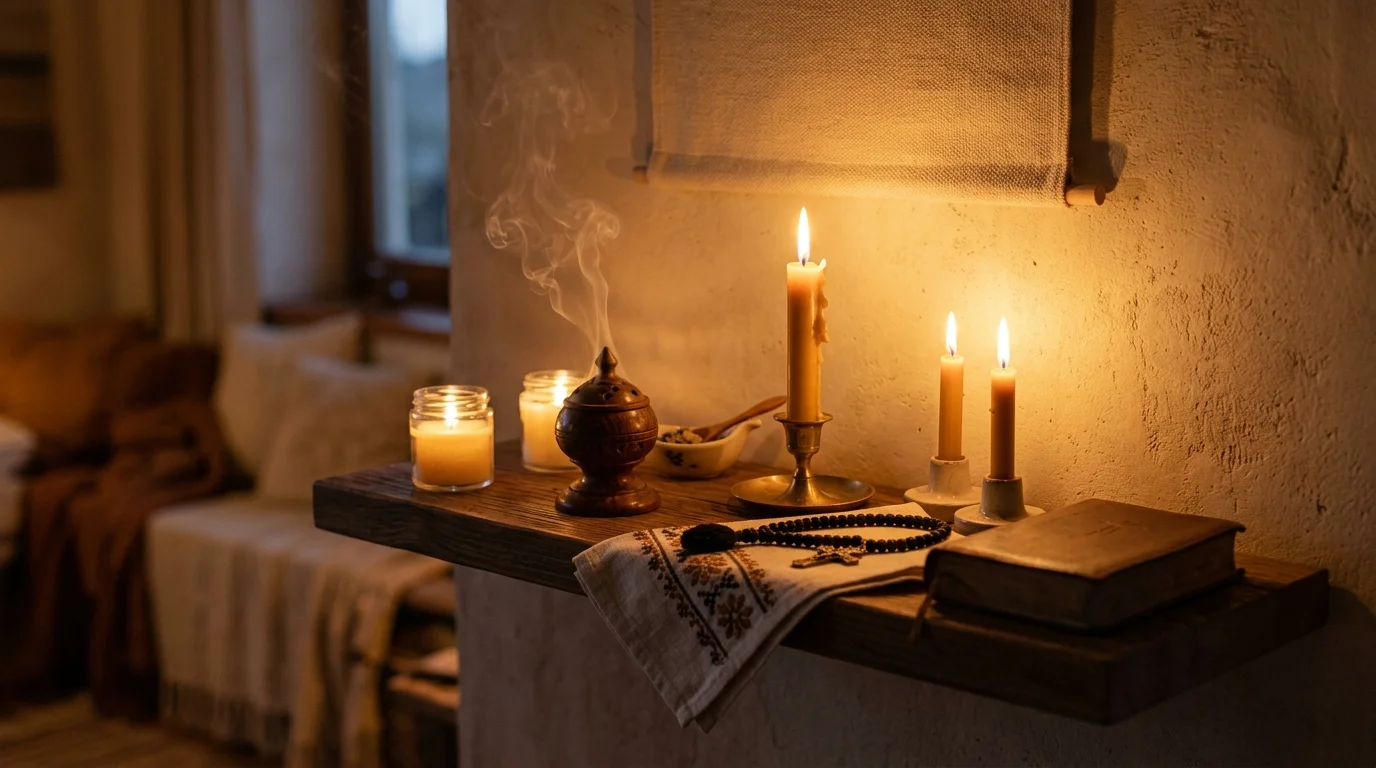
Prayer as Communion, Not Mere Completion
As St. John Chrysostom teaches in his Homilies on Prayer, prayer is the light of the soul. Not a box to check. A light. That distinction matters enormously in pastoral work, because I've watched what happens when people miss it.
As St. Basil the Great writes in his Homily on the Words 'Give Heed to Yourself,' we must remember God more often than we breathe. That's not a number you can count on your fingers. It's a posture of the whole life. And as St. John of Damascus teaches in the Exact Exposition of the Orthodox Faith, prayer is the raising of the mind and heart to God, which tells you the goal isn't repetition for its own sake, it's attention.
Metropolitan Kallistos Ware put it well: prayer is doxology, praise, thanksgiving, confession, supplication and intercession. Notice how many different things that is. Not one countable act repeated. Several movements of the soul, woven together.
The Role of a Personal Prayer Rule
In practice, most Orthodox Christians keep what we call a prayer rule, a stable pattern given or blessed by a priest. Morning prayers. Evening prayers. Often the Jesus Prayer repeated quietly through the day. Some add a brief midday pause. It's flexible in form but not casual in intention.
Fr. Thomas Hopko once said the first and most fundamental Christian act is prayer. I believe that. But I'd add, from years of pastoral conversations in Munich, that people often arrive asking how MUCH to pray when the better first question is HOW to pray attentively at all. Even when the starting point is how many rakats are in dhuhr prayer or a question about Namaz Rakat sunni, what many seekers are really asking is whether a disciplined prayer life can become living communion with God.
Comparing Dhuhr and Christian Midday Prayer
Midday Prayer Compared: Dhuhr and Christian Practice
[COMPARISON_TABLE]
To be fair, Catholicism's Midday Prayer within the Liturgy of the Hours resembles our Sixth Hour more closely than most Protestant practice does, at least structurally. The differences show up more in spirituality and theological framing than in the basic instinct to pause at noon.

Common Misconceptions About Rakats, Christian Prayer, and Orthodoxy
Misconception 1: Orthodox Christians have no meaningful equivalent to Dhuhr because we don't pray in rakats. Not quite. We have no rakat system, true, but we do have fixed daily prayer, especially the Sixth Hour, plus personal rules and the broader cycle of the Hours. The confusion usually comes from comparing Islamic prayer only to informal evangelical habits, which really isn't a fair comparison to Orthodox liturgical life. See also: How to Pray Istikhara: Orthodox Insights.
Misconception 2: No fixed number means less seriousness. I understand why this seems logical. If you come from a rule-based setting, countable obligation can feel like the only proof of seriousness. But Orthodoxy calls believers to pray without ceasing (1 Thessalonians 5:17), both through fixed services and through continual interior remembrance. That's not less demanding. Arguably, it's more.
Misconception 3: Orthodox prayer is purely inward, ignoring the body. Actually, we bow, we prostrate, we stand for long stretches, we fast, especially in penitential seasons. Our gestures just belong to the Church's life rather than to a standardized sequence. Different vocabulary, similar embodied instinct.
Misconception 4: More prayer units guarantee more salvation. Orthodox teaching holds that salvation comes by God's grace, and prayer bears fruit when joined to repentance, humility, and love. The desire for measurable assurance is human and understandable. I won't mock it. But quantity supports discipline; it doesn't replace the heart's actual posture before God.
Misconception 5: Orthodox prayer is only what happens in church, with no daily structure at home. Not true, though I get why people think it. The prayer rule at home and the parish church belong together, morning prayers, evening prayers, psalms, the Lord's Prayer said quietly at a kitchen table before work.
Misconception 6: Answering a Muslim's question about Dhuhr from an Orthodox site must be argumentative. It really doesn't have to be. Respect begins with accuracy. We can state plainly what Dhuhr is in mainstream Sunni practice, and then, separately, explain what our own tradition teaches. Both things can be true and honored at once.
Father Victor's Perspective: From Counted Prayer to Sanctified Time
I've gone back and forth on how to frame this section, honestly. Here's where I've landed.
Dhuhr and the Orthodox Sixth Hour aren't just two competing schedules. They're two different theological answers to the same question: what does it mean to make midday holy? One answer runs through prescribed rakat cycles, precise and repeatable. The other runs through Christ-centered remembrance inside the Church's larger liturgical life, less countable, but no less real. Neither is arbitrary. Both take the middle of an ordinary Tuesday and insist it belongs to God.
What most online articles about rakat counts miss entirely is the question underneath the question. People search "how many rakats in Dhuhr" or how many rakats are in dhuhr prayer and they think they want a number. But a priest hears something else in that search, whether it comes from a Muslim believer or a curious seeker: can disciplined, repeated prayer actually become personal? Can it heal anything? Or is it just math you perform to stay in good standing? I don't think the arithmetic is really the point. The heart learning to stand still is the point.
And here's the piece I want to be careful with, because I've seen it go wrong both directions. When someone moves from counting prayer as obligation toward experiencing prayer as relationship, Orthodoxy doesn't throw out the discipline. That would be spiritual vagueness, and vagueness rarely helps anyone grow. Instead, we baptize the discipline. It gets folded into repentance, into communion, into what we call theosis, the slow, grace-given transformation of a person into likeness with Christ. The structure stays. The reason for the structure changes completely. Discover: What Does the Bible Say About Prayer? Discover Now.
So if someone asks me, "if you're not counting units, how do you know you've really prayed?" I tell them what I tell catechumens who came from very rule-oriented backgrounds: Orthodox prayer still has form, repetition, bodily reverence. What it doesn't have is a finish line made of numbers. The goal is attention, thanksgiving, and union with Christ through the life of the Church, not a completed tally.
Practical Guide for Seekers: How to Begin a Christian Midday Prayer Rhythm
Last year, someone in my parish, a young professional who worked brutal hours, asked me almost exactly this: "Father, is there anything like Dhuhr for us? Something short I can actually do at my desk?" I hear versions of that question all the time.

Here's roughly what I suggested, and what I still suggest:
- Start with a short adaptation of the Sixth Hour, or even just the Lord's Prayer said slowly, deliberately, once at midday.
- Add a single line from Psalm 55:17 in your mind, "evening, and morning, and at noon," as a quiet reminder that this hour belongs to God too.
- Use the Jesus Prayer, "Lord Jesus Christ, Son of God, have mercy on me," for even thirty seconds between tasks.
- Keep it realistic. Two minutes done daily beats twenty minutes attempted once and abandoned.
- Speak with a priest before designing anything more ambitious. This isn't bureaucracy for its own sake, it's protection against burnout and against turning prayer back into a performance.
She learned, over a few months, that faith could integrate into work, fatigue, and ordinary daily annoyance without becoming one more task on a list. That's really all a prayer rule is meant to do. And in a quiet way, it's also my final answer to those who begin by asking how many rakats are in dhuhr prayer: the number matters, but the deeper question is how any tradition teaches the heart to return to God in the middle of an ordinary day.
Frequently Asked Questions
How many rakats are there in Dhuhr prayer?
Dhuhr has 4 obligatory fard rakats at minimum. Many Muslims add 4 sunnah before and 2 sunnah after, bringing common practice to 10 rakats, with some adding 2 more nafl for a total of 12.
How many rakats is Dhuhr in total?
The commonly practiced total is 10 to 12 rakats depending on whether extra voluntary nafl units are included, though only 4 rakats are strictly obligatory. There's no single "correct" total beyond that fard minimum; the rest reflects personal devotion and school of thought.
Is Dhuhr Sunnah 4 or 2?
Both. Dhuhr uniquely carries 4 confirmed sunnah rakats before the fard and 2 confirmed sunnah rakats after, according to Noor Academy. No other daily prayer follows this exact before-and-after pattern.
Who are the three people Allah will not accept?
This question falls outside what I can speak to with any authority, it belongs to Islamic hadith scholarship rather than Orthodox Christian teaching, and I'd rather not guess at something outside my competence. A qualified Islamic scholar would be the right person to ask.
About the Author
Father Victor Meshko is an Orthodox priest of the Russian Orthodox Church Abroad (ROCA), Diocese of Berlin and Germany, serving at the Cathedral of the Holy New Martyrs and Confessors of Russia in Munich. Ordained since 2013, he holds multiple theology degrees from the Uzhhorod Ukrainian Theological Academy, Carpathian University, and LMU Munich's Institute for Orthodox Theology, where he also pursued PhD studies; he additionally holds a master's degree in psychology. As the published author of Erzbischof Filaret (Gumilevskij) von Černigov und Nežin and a theological dissertation on the Book of Revelation, he brings both scholarly rigor and pastoral sensitivity to questions about prayer, spiritual practice, and Orthodox Christian life.
Researched and written by Father Victor Meshko. AI tools were used during the research process.
<table class="seo-table comparison-table"><caption>Midday Prayer Compared: Dhuhr and Christian Practice</caption><thead><tr><th>Aspect</th><th>Orthodox</th><th>Catholic</th><th>Protestant</th></tr></thead><tbody><tr><td>Midday prayer form</td><td>Sixth Hour or brief personal midday prayer</td><td>Midday Prayer in the Liturgy of the Hours</td><td>Varies widely; some liturgical traditions have noon prayer, others use informal devotion</td></tr><tr><td>Counted prayer units</td><td>No rakats; services are structured by psalms, prayers, and hymns</td><td>No rakats; structured offices rather than counted units</td><td>Usually no fixed prayer units; often flexible and personal</td></tr><tr><td>Theological emphasis</td><td>Union with Christ, remembrance of His Passion, sanctification of time</td><td>Participation in the Church's daily prayer and sanctification of the day</td><td>Personal relationship with God, Scripture reading, and spontaneous or scheduled prayer</td></tr><tr><td>Relationship to Dhuhr question</td><td>Answers the question respectfully, then points to the Sixth Hour as the closest analogue</td><td>Would point to Midday Prayer rather than a numeric equivalent</td><td>Often no direct equivalent, though some traditions maintain fixed prayer times</td></tr></tbody></table>


Help us bring the christian faith to modern seekers worldwide.
Godfinder relies on generous souls to sustain our multilingual platform, develop new tools like the Magic Cube, and support struggling believers. If our work has touched your heart, consider contributing to our nonprofit partner

Do you want to know More? Ask God’s Word!
Do you have questions, worries, or hopes? Feeling lost, burdened, or alone? “Ask God’s Word” brings you gentle guidance rooted in Scripture and the wisdom of the Church. Find hope and strength today!
