.avif)
How to Istikhara Prayer: Orthodox Perspectives
A young man came to my office in Munich last spring, not Orthodox, not even Christian yet, but seriously looking. He'd grown up praying istikhara before big decisions and now, exploring Orthodoxy, he wanted to know: when people ask about how to istikhara prayer, is there an Orthodox equivalent?...

Someone Asked Me If Orthodox Christians Have Our Own Version of How to Istikhara Prayer
A young man came to my office in Munich last spring, not Orthodox, not even Christian yet, but seriously looking. He'd grown up praying istikhara before big decisions and now, exploring Orthodoxy, he wanted to know: when people ask about how to istikhara prayer, is there an Orthodox equivalent? Something with the same structure, the same clear yes-or-no promise? I remember sitting with him for a long moment before answering, because the honest answer isn't simple.
And here's what I've noticed after years of these conversations. The question itself reveals something beautiful, a real hunger to know God's will rather than guess at it. But I've also noticed a pattern, and not just among Muslim seekers. People pray for guidance five times over the same decision, waiting for a dream, a feeling, a sign, anything to remove the weight of choosing. That's not really istikhara anymore, or Christian discernment either. That's anxiety wearing a religious label. I don't say this to criticize anyone; I say it because I've felt that same anxious grasping in my own prayer life, more times than I'd like to admit. In that sense, the deeper question behind how to istikhara prayer is usually a question about trust.
Quick Answer: Orthodox Christianity has no ritual identical to istikhara, but it offers a Christ-centered path to discerning God's will through the Lord's Prayer, Scripture, confession, the Divine Liturgy, and counsel from a priest or spiritual father.
In This Article:
- Someone Asked Me If Orthodox Christians Have Our Own Version of How to Istikhara Prayer
- What Istikhara Means in Islam and Why So Many People Search for How to Istikhara Prayer
- How Does Orthodox Christianity Actually Seek God's Will When People Ask About How to Istikhara Prayer?
- A Simple Orthodox Pattern for Praying When You Need Guidance
- Common Misconceptions About Istikhara and Orthodox Prayer for Guidance
- How Do You Know Your Prayer Was Heard?
- Father Victor's Perspective: Guidance Is the Healing of the Will, Not Only an Answer About an Event
- Orthodox, Catholic, Protestant, and Islamic Approaches to Guidance
- For Seekers Coming from Islam or Another Tradition
TL;DR — Key Takeaways
- There's no Orthodox "two rakahs and a dua" equivalent; guidance comes through a whole life of prayer, sacrament, and counsel.
- The Fathers warn against chasing signs and visions; St. Isaac the Syrian says guidance comes through tears, humility, and prayer instead.
- A missing dream doesn't mean God ignored you. Peace, sobriety, and open doors often count as real answers.
- The deepest insight? Guidance isn't only about picking correctly. It's about your will slowly being healed to match God's.
What Istikhara Means in Islam and Why So Many People Search for How to Istikhara Prayer
Istikhara is a specific Islamic prayer of guidance, two units of voluntary prayer followed by a set supplication, asking Allah to open the right path or close off the wrong one before a decision like marriage, a job, or a move. It's a sincere, structured practice, and I respect it. I've read enough about it, and talked to enough seekers, to know it isn't meant as divination. Scholars within Islam themselves teach that istikhara pairs with istishara, consultation with wise people, and with your own reasoned effort. It was never supposed to replace either one.

That is also why so many online searches for how to istikhara prayer, Istikhara dua, Istikhara Dua in English, or even Istikhara Dua transliteration are really about something larger than ritual wording. People want to know whether God guides concrete human choices, and if so, how.
So why does this search term pull in so many people, including Christians and seekers with no Islamic background at all? Because the longing underneath it is universal. Am I choosing the right person to marry? Should I take this job in another country? Is God even paying attention to my confusion? That longing doesn't belong to one tradition. It belongs to anyone who has ever stood at a fork in the road at two in the morning, unable to sleep.
How Does Orthodox Christianity Actually Seek God's Will When People Ask About How to Istikhara Prayer?
Here's where I want to be careful, because I don't want to hand you a formula and call it a day. In my years of serving as an Orthodox priest since 2013, I've often met seekers who ask for a step-by-step prayer for guidance, especially after searching how to istikhara prayer, but what they usually need even more is help learning how to recognize God's will without falling into fear or superstition. That's a harder thing to teach than a technique. But it's also more honest.
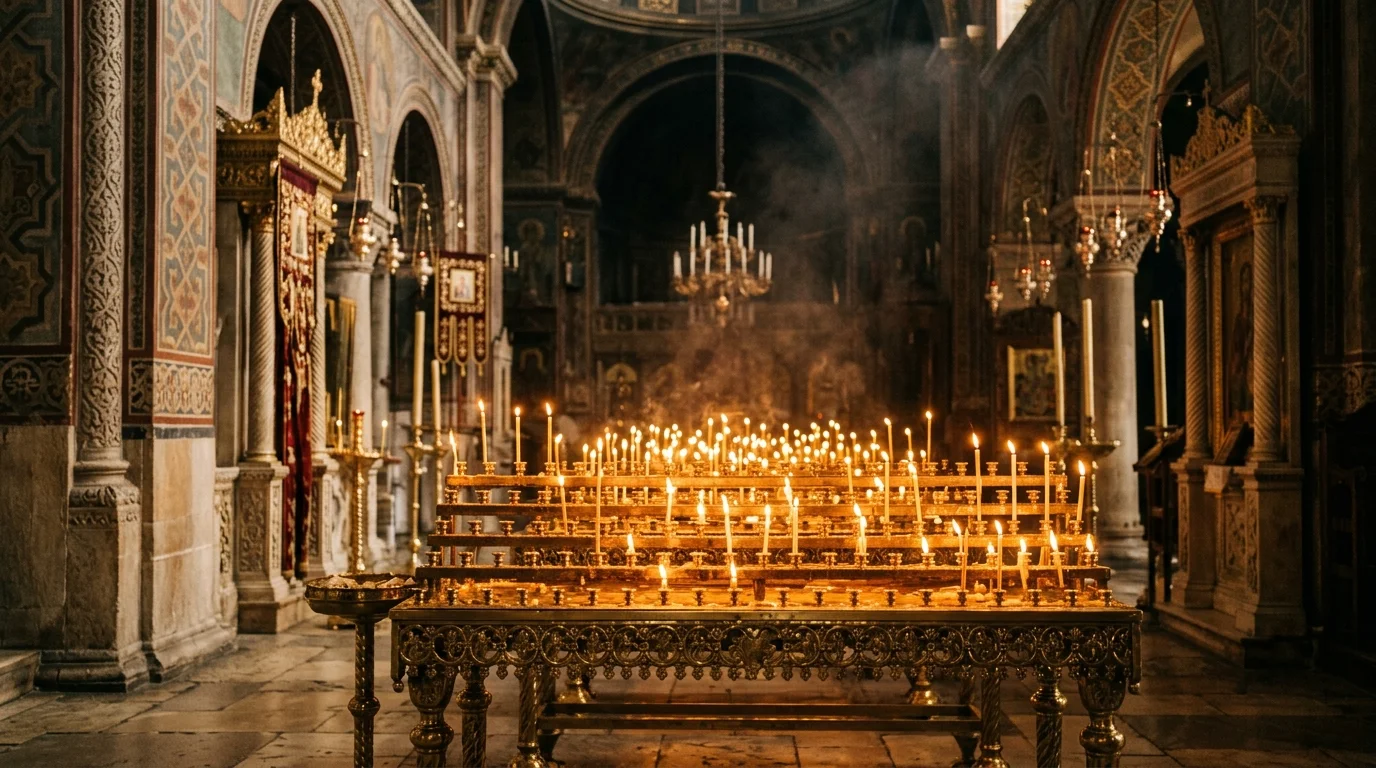
Begin with the Lord's Prayer and the Desire to Say 'Your Will Be Done'
Every Orthodox guidance-prayer begins, in a sense, before it even starts, with the words Christ Himself gave us. As it's written, “After this manner therefore pray ye: Our Father which art in heaven, Hallowed be thy name. Thy kingdom come. Thy will be done in earth, as it is in heaven. Give us this day our daily bread. And forgive us our debts, as we forgive our debtors. And lead us not into temptation, but deliver us from evil: For thine is the kingdom, and the power, and the glory, for ever. Amen.” (Matthew 6:9-13, KJV). Notice what's missing there. No request for a sign. No demand for certainty. Just surrender, offered first.
I know that sounds almost too simple for people wanting a concrete method. Believe me, I understand the impulse; I wanted formulas too, once. But this prayer resets the whole question. It's not "tell me the answer" so much as "make me able to receive whatever the answer turns out to be." Different posture entirely. If someone comes to Orthodoxy after reading about how to istikhara prayer, that shift in posture is often the first real surprise.
Pray the Psalms When You Need Guidance
When I studied theology at LMU Munich and later accompanied people pastorally in Munich, I saw that the deepest questions about prayer are rarely technical questions; they're questions about trust, patience, and whether God is truly near. The Psalms give words to exactly that ache. “Shew me thy ways, O Lord; teach me thy paths. Lead me in thy truth, and teach me: for thou art the God of my salvation; on thee do I wait all the day.” (Psalm 25:4-5, KJV). And again, “Teach me to do thy will; for thou art my God: thy spirit is good; lead me into the land of uprightness.” (Psalm 143:10, KJV). For a helpful overview of this broader Orthodox spirit of prayer, see this introduction to Orthodox prayer traditions.
Notice the verb in that second one. Teach. Not "tell me," but "teach me." There's a difference, and it's worth sitting with. Guidance, in Scripture, is almost always framed as formation, not information. That matters whether someone is searching for how to istikhara prayer, Istikhara Dua in Arabic, or simply a way not to panic in the face of a decision.
Bring the Decision into Confession, Liturgy, and Counsel
Again and again in parish life, I've watched people begin by asking for a sign about marriage, work, or moving, and end up discovering that the greater gift was a more obedient and peaceful relationship with Christ. This usually happens in confession, honestly. Something about naming your fears and hidden motives out loud, to a priest who isn't going to flatter you, clears the fog in a way that private speculation never does. If you're interested in related Orthodox counsel, we've also written about how to know God's will and an Orthodox prayer rule for beginners.
I think of a woman I met a few years back, deeply anxious over a proposal. She hadn't had a dream. No sudden certainty. She asked me, almost in tears, whether God had simply ignored her prayer. I told her no, that's not how this works. We looked instead for fruit: was there peace when she pictured the marriage? Was there sobriety in her thinking, not giddy fantasy, not dread, something steadier? Did wise, married people in her life see something good there? She started attending Liturgy more regularly, brought the question to confession twice more, and slowly, without fireworks, she found her footing. Not what she expected. But real. People often search How to pray Istikhara for marriage or Istikhara dua for marriage hoping for immediate certainty, but the Orthodox path is usually slower and more relational. Explore: How to Pray Istikhara: Orthodox Insights.
Why Orthodoxy Warns Against Chasing Signs
As St. Isaac the Syrian counsels in the Ascetical Homilies, one shouldn't seek God's will through visions but through humility, tears, and prayer. That's a striking line, isn't it? A monk known for deep mystical experience, telling us not to go looking for mystical experience when we're trying to decide something.
Why the caution? Because our own minds are remarkably good at manufacturing exactly the sign we were hoping for. I've watched a catechumen once, so anxious about hearing God correctly, that he began interpreting every coincidence, every stray thought, as a possible divine message. He asked me, "How do I know whether my thoughts are from God, from myself, or from fear?" Honestly? I don't think there's a shortcut answer to that. What helped him was learning to test his impressions against Scripture, the commandments, and what his confessor actually said, rather than trusting the first strong feeling that arrived. Slowly he grew steadier. Less anxious. More rooted in ordinary prayer rather than impulsive decision-making. That's one of the biggest differences between an Orthodox approach and a purely technical reading of how to istikhara prayer.
Orthodoxy has a word for the danger here: prelest, a Slavonic term for spiritual delusion, mistaking imagination, pride, or even something darker for the voice of God. It's not a comfortable topic. But it's honest, and I'd rather be honest with you than reassuring in a way that sets you up for disappointment.
A Simple Orthodox Pattern for Praying When You Need Guidance
So what does this actually look like in practice? I've gone back and forth on how to lay this out, because I don't want to hand you a checklist that becomes its own kind of superstition. But here's a pattern I've offered seekers over the years, adapted to the person in front of me. For someone arriving with questions about how to istikhara prayer, this kind of pattern usually helps more than a rigid formula.

Before Marriage, Work, Moving, or a Major Choice
- Start each day with the Lord's Prayer and a few minutes of the Jesus Prayer, asking simply for mercy and clarity.
- Read a Psalm of guidance, like Psalm 25 or 143, slowly, more than once if needed.
- Bring the decision to confession, naming your fears, your hopes, and anything you're avoiding.
- Ask James's simple counsel to heart: “If any of you lack wisdom, let him ask of God, that giveth to all men liberally, and upbraideth not; and it shall be given him.” (James 1:5, KJV).
- Talk to people who actually know you and love you honestly, not just people who'll tell you what you want to hear.
As St. Basil the Great teaches in his Homily on "Give Heed to Yourself," we pray not to change God's will but to accept it. That line has stayed with me for years. It reframes the whole exercise. Even where other traditions may discuss Istikhara prayer niyat or the exact wording of an Istikhara Dua in roman English, Orthodoxy keeps drawing us back to repentance and obedience.
What to Do If You Still Feel Uncertain
I'm honestly not sure there's a tidy answer here. Sometimes clarity comes slowly, over months, through ordinary circumstances opening or closing rather than a lightning bolt moment. Fr. Thomas Hopko put it plainly: if you want to know God's will, keep the commandments, stay in the Church, pray "your will be done," and do the next obvious duty faithfully. Sometimes the next obvious duty is the whole answer, even when it doesn't feel like one.
And Paul's counsel to the Thessalonians matters here too: “Rejoice evermore. Pray without ceasing. In every thing give thanks: for this is the will of God in Christ Jesus concerning you. Quench not the Spirit. Despise not prophesyings. Prove all things; hold fast that which is good.” (1 Thessalonians 5:16-21, KJV). Test everything. Not accept everything that feels spiritual. There's a discipline in that. The more serious your question, the less useful it is to reduce discernment to a search for how to istikhara prayer alone.
How Different Traditions Seek God's Guidance in Important Decisions
[COMPARISON_TABLE]
Common Misconceptions About Istikhara and Orthodox Prayer for Guidance
"Orthodox Christians have a direct ritual equivalent to istikhara." We don't, not as a mechanical formula anyway. Orthodoxy has plenty of prayers for guidance, but no fixed procedure that guarantees a discrete yes-or-no answer. Guidance is sought through Christ, in prayer, Scripture, repentance, the sacraments, and counsel, and that's a different kind of thing entirely.
"If no dream or sign appears, my prayer wasn't heard." I hear this fear constantly, and I understand it. But Orthodox teaching doesn't require dreams or dramatic experiences at all. Fruit shows up more often as peace, clarity that builds slowly, or practical doors opening, and the saints are, if anything, more cautious about signs than a lot of modern religious culture tends to be.
"Any peaceful feeling after prayer proves the decision is God's will." Feelings matter, but they need testing. Sometimes what feels like peace is actually relief from anxiety, or self-justification wearing peace's clothing. Orthodox discernment asks whether a decision lines up with the commandments and the Church's whole life, not just whether it feels calm in the moment. Read more: How to Pray the Divine Mercy Chaplet Prayer & More.
"You have to be spiritually advanced before you're allowed to ask God for guidance." Not even close to true. Prayer is for sinners, beginners, the anxious, the confused, all of us really. The Church invites everyone to ask for mercy and wisdom while still struggling. You don't need to arrive polished. You begin in order to be healed.
"Talking to a priest means someone else makes the decision for you." A good spiritual father doesn't hijack your conscience. He helps test your motives and notice your blind spots while keeping you anchored in the Church. That's shared discernment, not coercion, and there's a real difference between the two.
"Explaining istikhara respectfully means endorsing it as equivalent to Christian prayer." Understanding another tradition's practice isn't the same as adopting it. I can honor the sincere longing behind istikhara while still explaining, clearly and without apology, why Orthodoxy addresses that same longing through Christ and His Church instead.
How Do You Know Your Prayer Was Heard?
What strikes me about this question, every time someone asks it, is how much weight they're putting on a single dramatic confirmation. As Fr. Alexander Schmemann taught, prayer isn't a technique for getting answers; it's an entrance into God's presence. If that's true, then the very fact that you're praying, wrestling, showing up to Liturgy, going to confession, that itself is already something happening between you and God. Not nothing. Far from it.
Our analysis of the pastoral conversations I've had over the years shows a consistent pattern: the people who find peace aren't usually the ones who received a vivid sign. They're the ones who kept praying anyway, kept showing up to the sacraments, and let the decision get tested slowly instead of demanding instant certainty. That's not the answer people expect to hear. But it's the one I keep seeing borne out. Anyone coming from repeated searches for how to istikhara prayer may need to hear that especially.
Father Victor's Perspective: Guidance Is the Healing of the Will, Not Only an Answer About an Event
Let me try to say something here that I don't think most articles on this topic get to, because it's taken me years in parish life, and my background in psychology, to see it clearly myself. The Orthodox answer to the desire behind istikhara isn't a rival ritual. It's a different anthropology of guidance altogether. God leads persons by healing the will, not merely by signaling the next event on a calendar.
What do I mean by that? I mean that when someone comes to me desperate for a sign, what's often underneath the desperation isn't really confusion about facts. It's fear. Fear of choosing wrong, fear of being alone with the responsibility, sometimes fear that's been there long before this particular decision showed up. A recurring pattern I've noticed in parish life is that people ask for a sign when what they actually need is purification of competing motives, motives they haven't fully admitted to themselves yet. And confession, more often than speculation ever could, clarifies exactly that.
So here's my honest reframe, and I offer it as an invitation, not a rule: the clearest answer to prayer for guidance is often not prediction at all. It's an increased capacity to act obediently, to endure calmly, and to stop compulsively overinterpreting every little coincidence as a hidden message. That's not as dramatic as a dream. I'll grant you that. But it's more durable, and honestly, in my experience, it's more real. Explore: Prayer of the Heart: An Orthodox Christian Guide to....
Orthodox, Catholic, Protestant, and Islamic Approaches to Guidance
I knew the Catholic tradition well before I ever encountered Orthodoxy, having been raised within it, and I'd say Catholic practice sits fairly close to ours here. Heavy emphasis on prayer, the sacraments, spiritual direction, sometimes specific novenas when discerning something particular. The framework stays ecclesial rather than purely individual, much like our own.
Many Protestant traditions, on the other hand, often lean more on personal conscience, Bible reading, and a sense of the Spirit's leading through what feels like an "open door." That's not wrong, exactly, and I don't say this to diminish it. It's simply a different emphasis, usually with less weight given to sacramental testing and less reliance on a spiritual guide walking alongside you.
And Islamic istikhara, as I understand it from genuine study and from conversations with Muslim friends and seekers, asks a sincere question after real effort and consultation have already happened. What makes the Orthodox approach distinctive, I think, is our deep caution about spiritual deception combined with the insistence that discernment is communal and sacramental. The real issue, in our view, isn't just choosing the right option. It's becoming a person whose will is gradually healed and aligned with God's. That's the whole difference, really.
For Seekers Coming from Islam or Another Tradition
Recent coverage has noted a real rise in English-speaking interest in Orthodoxy, people exploring the Church online, in podcasts, in parishes that didn't exist twenty years ago in some of these cities. According to Pew Research Center's 2017 study, there are roughly 260 million Orthodox Christians worldwide, about 12% of the global Christian population, a historic and living tradition, not some obscure sect (according to Pew Research). If you're coming from Islam, or from any tradition, and you're drawn to this deeper, older way of praying for guidance, you're not alone in that curiosity. There are also reports of growing curiosity around Orthodoxy in newer media spaces, such as this recent piece on Orthodox conversions.
I'll say this plainly, because I think it matters: you don't need to have everything figured out before you walk into an Orthodox church for the first time. Come, watch, ask questions. Talk to a priest. That's really how most people I know began, myself included, years ago, coming from a Catholic upbringing and slowly, through study and prayer, finding my way here. And if your first doorway into that search was simply typing how to istikhara prayer into a search bar, don't dismiss that. Sometimes even that small search can become the beginning of a much deeper encounter with Christ and His Church.
Frequently Asked Questions
What are common mistakes in istikhara?
The most common mistake, from what I've observed, isn't a ritual error at all, it's treating the prayer as a substitute for research, consultation, and personal responsibility. Praying repeatedly for the same decision while waiting for a dream or a feeling turns a prayer for guidance into a form of spiritual avoidance. Orthodox tradition guards against this same pattern by insisting, as St. Isaac the Syrian taught, that God's will comes through humility and tested prayer, not visions we go hunting for.
What to say when doing istikhara?
From the Orthodox side, there's no fixed formula I can hand you, but a simple, honest prayer works well: ask God to teach you His will, as the Psalmist does, “Teach me to do thy will; for thou art my God: thy spirit is good; lead me into the land of uprightness.” (Psalm 143:10, KJV), then name your actual decision plainly and ask for wisdom, trusting James's promise that God “If any of you lack wisdom, let him ask of God, that giveth to all men liberally, and upbraideth not; and it shall be given him.” (James 1:5, KJV).
How do I know if my istikhara was accepted?
In Orthodox terms, I'd reframe the question slightly: look less for acceptance of a request and more for fruit. Peace that isn't just relief, sobriety in your thinking, alignment with the commandments, and confirmation through people who know you well, these matter more than any single feeling in the moment.
What is the full dua of istikhara?
I want to answer this respectfully rather than instructing on a ritual outside my own tradition, since the exact Arabic text and its proper use belong to Islamic scholarship and practice. What I can offer instead is the Orthodox parallel: the Lord's Prayer, “After this manner therefore pray ye: Our Father which art in heaven, Hallowed be thy name. Thy kingdom come. Thy will be done in earth, as it is in heaven. Give us this day our daily bread. And forgive us our debts, as we forgive our debtors. And lead us not into temptation, but deliver us from evil: For thine is the kingdom, and the power, and the glory, for ever. Amen.” (Matthew 6:9-13, KJV), paired with Psalm 25 or Psalm 143, prayed honestly and brought into confession when the decision is serious.
About the Author
Father Victor Meshko is an Orthodox priest of the Russian Orthodox Church Abroad, serving at the Cathedral of the Holy New Martyrs and Confessors of Russia in Munich since 2013. He holds multiple degrees in philosophy, theology, and psychology, including advanced theological study at the Ludwig Maximilian University of Munich, and is the published author of Erzbischof Filaret (Gumilevskij) von Černigov und Nežin. For Find to God, he writes from both scholarly formation and daily pastoral experience with seekers, catechumens, and faithful navigating real spiritual decisions.
Researched and written by Father Victor Meshko. AI tools were used during the research process.
<table class="seo-table comparison-table"><caption>How Different Traditions Seek God's Guidance in Important Decisions</caption><thead><tr><th>Aspect</th><th>Orthodox</th><th>Catholic</th><th>Protestant</th></tr></thead><tbody><tr><td>Primary pattern of guidance</td><td>Prayer, Scripture, sacraments, repentance, and spiritual counsel within the Church</td><td>Prayer, Scripture, sacraments, and spiritual direction</td><td>Prayer, Scripture, conscience, and personal leading of the Holy Spirit</td></tr><tr><td>View of signs and inner impressions</td><td>Possible but always tested carefully; strong caution about delusion</td><td>Tested through discernment and direction; caution advised</td><td>Often given greater emphasis, though this varies by tradition</td></tr><tr><td>Role of clergy or spiritual guide</td><td>Important for testing motives and avoiding self-deception</td><td>Important, especially in spiritual direction</td><td>Varies widely; may be pastoral, communal, or primarily individual</td></tr><tr><td>Equivalent to a fixed guidance ritual</td><td>No exact equivalent; uses a prayer rule and life in the Church</td><td>No universal exact equivalent; novenas or set prayers may be used</td><td>Usually no fixed universal ritual; often informal prayer</td></tr></tbody></table>


Help us bring the christian faith to modern seekers worldwide.
Godfinder relies on generous souls to sustain our multilingual platform, develop new tools like the Magic Cube, and support struggling believers. If our work has touched your heart, consider contributing to our nonprofit partner

Do you want to know More? Ask God’s Word!
Do you have questions, worries, or hopes? Feeling lost, burdened, or alone? “Ask God’s Word” brings you gentle guidance rooted in Scripture and the wisdom of the Church. Find hope and strength today!
