.avif)
Is the Eastern Orthodox Church Catholic? Find Out!
A parishioner told me something a few years back that stuck with me. She'd gone to fill out a hospital intake form before surgery, and under 'religion' there were two boxes: Catholic, and Christian Other. She stood there for a full minute. She's Eastern Orthodox. Her church literally calls itself...

Is the Eastern Orthodox Church Catholic? The Form You Can't Fill Out Right
A parishioner told me something a few years back that stuck with me. She'd gone to fill out a hospital intake form before surgery, and under 'religion' there were two boxes: Catholic, and Christian Other. She stood there for a full minute. She's Eastern Orthodox. Her church literally calls itself the Orthodox Catholic Church in its own official documents. So which box does she check? For many people, that awkward moment leads straight to the question: is the eastern orthodox church catholic?
I've heard versions of this story more times than I can count. A mother filling out a school registration form. A genealogist confused by a great-grandmother's parish records that say 'Greek Catholic.' A young man explaining to his Catholic fiancée's parents, at the dinner table, why he's both catholic and not Catholic at the same time. And honestly? Most articles online just restate the theological puzzle more elegantly. They don't actually help you when you're standing at that counter with a pen in your hand. If you're asking is the eastern orthodox church catholic, you probably want a human answer, not just a technical one.
In my years serving as an Orthodox priest since 2013, I've found that seekers ask this exact question because they hear the word 'catholic' and assume it can only mean Roman Catholic. Fair enough. In the modern English-speaking world, that's almost always what it means. But the word has a longer memory than that, and the Orthodox Church has never let go of it.
Quick Answer: Yes, the Eastern Orthodox Church is catholic in the ancient Christian sense of the word (universal, whole, and complete in the apostolic faith), but it is not Roman Catholic and does not accept the Pope of Rome's claim to supreme jurisdiction over the whole Church.
In This Article:
- Is the Eastern Orthodox Church Catholic? The Form You Can't Fill Out Right
- Is the Eastern Orthodox Church Catholic? A Direct Answer
- Is the Eastern Orthodox Church Catholic? What Does 'Catholic' Mean in the Creed?
- Why Does the Orthodox Church Call Itself Catholic?
- What Actually Happened Between East and West?
- Eastern Orthodox, Roman Catholic, and Protestant: What Is Different?
- What Do the Church Fathers Teach About Catholicity?
- Father Victor's Perspective: Catholicity as Wholeness, Not Branding
- What Does This Mean for Seekers and Catechumens?
- Common Misconceptions About Orthodox Catholicity
- About Father Victor Meshko
TL;DR — Key Takeaways
- The Orthodox Church confesses itself as 'one, holy, catholic, and apostolic' at every single Divine Liturgy, without contradiction.
- 'Catholic' in the Creed means universal and whole in the faith, not a denominational brand name owned by Rome.
- Orthodox unity comes through shared faith, sacraments, and bishops in communion, not through one universal ruling bishop.
- Many official Orthodox documents still use the phrase 'Orthodox Catholic Church,' which is exactly why the paperwork gets confusing.
Is the Eastern Orthodox Church Catholic? A Direct Answer
Let me answer plainly, the way I would if you sat down across from me after coffee hour. Yes. The Orthodox Church is catholic. Not Roman Catholic, but catholic in the sense the word carried long before Rome and Constantinople went their separate ways.
Short Answer for Seekers
When Orthodox Christians say 'catholic,' we mean the Church is whole and entire, missing nothing needed for salvation, present in its fullness wherever the Eucharist is celebrated by a bishop or priest in valid apostolic succession. We don't mean 'in submission to the Pope.' We mean something older than that distinction. So if you're asking is the eastern orthodox church catholic, the short answer is yes, but with the ancient meaning of the word rather than the modern denominational one.
This is where Orthodox Christianity offers something distinctive. It's not a footnote to Rome, and it's not a Protestant reform movement either. It's its own continuous stream from the apostles, one that happens to share the same word 'catholic' that Rome also claims, but fills that word with a different content. For readers comparing Orthodox Christianity vs Christianity in a broader modern sense, this is one of the places where history matters most.
Is the Eastern Orthodox Church Catholic? What Does 'Catholic' Mean in the Creed?
Every Sunday, in Munich and in ten thousand other parishes around the world, we stand and recite the Nicene-Constantinopolitan Creed. "I believe... in one, holy, catholic, and apostolic Church." According to the Nicene-Constantinopolitan Creed background at Vaticano, this confession stands as one of the dogmatic foundations of the Christian faith itself, older than the East-West split by over 700 years.
Catholic Does Not Mean Only Roman Catholic
Here's the thing. The word 'catholic' comes from the Greek katholikos, meaning 'according to the whole.' It doesn't say 'according to Rome.' It doesn't say 'according to one bishop.' It says according to the whole, entire, undivided faith.
I knew the Catholic tradition quite well before my conversion. I was raised in it. So I understand, better than most converts probably do, why English speakers hear 'catholic' and immediately think Roman Catholic Church. That's simply how the word functions in everyday modern usage. A kind way I explain this to inquirers is: you're using the word in its modern denominational sense, while the Creed uses it in the ancient Christian sense. Both usages are real. They just aren't the same usage. That's why the question is the eastern orthodox church catholic keeps resurfacing for new seekers and lifelong Christians alike.
Universal, Whole, and According to the Fullness
St. Ignatius of Antioch writes in his Letter to the Smyrnaeans (2nd century) about the Church gathered around the bishop and the Eucharist as the visible sign of unity, one of the earliest known uses of the term 'catholic Church' in Christian history. Not administrative universality. Sacramental wholeness.
St. Cyprian of Carthage teaches in On the Unity of the Catholic Church (3rd century) that the Church's catholicity and its unity can't be separated from each other. You don't get one without the other.
Why Does the Orthodox Church Call Itself Catholic?
So why keep the word at all, if it causes this much confusion on forms and at family dinners? Because we didn't coin the confusion. We inherited the word honestly, and honestly, giving it up would mean pretending the ancient Church never used it this way. Anyone asking is the eastern orthodox church catholic is really bumping into that older inheritance. Explore: Is Greek Orthodox Catholic? Uncover the Truth Today!.
The Church as Eucharistic Fullness
Fr. Alexander Schmemann wrote about this beautifully: catholicity is something you encounter first in the Eucharist and the liturgical life of the local church, not first in an argument about jurisdiction. Scripture backs this up directly. “The cup of blessing which we bless, is it not the communion of the blood of Christ? The bread which we break, is it not the communion of the body of Christ? For we being many are one bread, and one body: for we are all partakers of that one bread.” (1 Corinthians 10:16-17, KJV). That's Eucharistic catholicity. One loaf, one body, wherever the Liturgy is celebrated faithfully.
What strikes me about this teaching, even after years of studying it, is how local and how universal it is at the same time. A small mission parish with twenty people in a rented hall in rural Germany is, in this sense, fully the Church. Not a branch of it. Not a fragment waiting to be completed by headquarters somewhere. The whole thing, present.
The Church as Conciliar Communion
Orthodoxy doesn't organize itself around one universal bishop with supreme jurisdiction. We look instead to the pattern in Acts 15:1-29, where the apostles and elders gathered in council at Jerusalem to settle a real dispute together, not by one man's decree, but through shared deliberation guided by the Holy Spirit. Ephesians 4:4-6 puts words to this: "There is one body, and one Spirit... One Lord, one faith, one baptism, one God and Father of all." One body, expressed through many bishops in communion, not one bishop over all bodies.
What Actually Happened Between East and West?
I do not say this lightly: the 1054 schism gets flattened into a single date far too often, as though two men signed a divorce paper on a Tuesday and Christianity split neatly in half. It wasn't like that. Not even close.

Why 1054 Matters
The mutual excommunications of 1054 were the visible flashpoint, sure. But according to Theology in Focus, the roots go back generations before that and the consequences unfolded for generations after. Language differences. Political rivalry between Constantinople and Rome. Cultural drift. And underneath all of it, a real theological disagreement about what kind of authority the Bishop of Rome actually holds over the whole Church. When people ask Why did the Orthodox Church split from the Catholic Church, this is where a serious answer has to begin.
Why the Schism Was About More Than Politics
The Filioque clause, added to the Latin version of the Creed, and the question of papal supremacy sit at the theological center of the split. According to Saint John the Baptist Greek Orthodox Church's summary of these differences, both issues remain genuinely unresolved between our traditions today. I won't pretend otherwise. We share an enormous common inheritance with Roman Catholics, the same Fathers, many of the same saints before the split, similar sacramental instincts. But the disagreement isn't cosmetic. It's about how the Church's unity and authority actually work. For a broad historical overview, Britannica's entry on Eastern Orthodoxy is also helpful.
Eastern Orthodox, Roman Catholic, and Protestant: What Is Different?
Let me lay this out plainly, because I think a table does more honest work here than another paragraph of explanation. If you're sorting through Orthodox vs Catholic vs Protestant, or even trying to name 4 differences between the Catholic and Orthodox religion, a side-by-side comparison helps.
What 'Catholic' Means in Orthodox, Catholic, and Protestant Contexts
[COMPARISON_TABLE]
Worth sitting with that table for a moment before moving on. If you'd like to go deeper, you may also find our guides on Orthodox vs Catholic differences and what Eastern Orthodoxy is helpful.
What Do the Church Fathers Teach About Catholicity?
I spent a good part of my doctoral work at LMU Munich sitting with texts like these, and I never got tired of them.
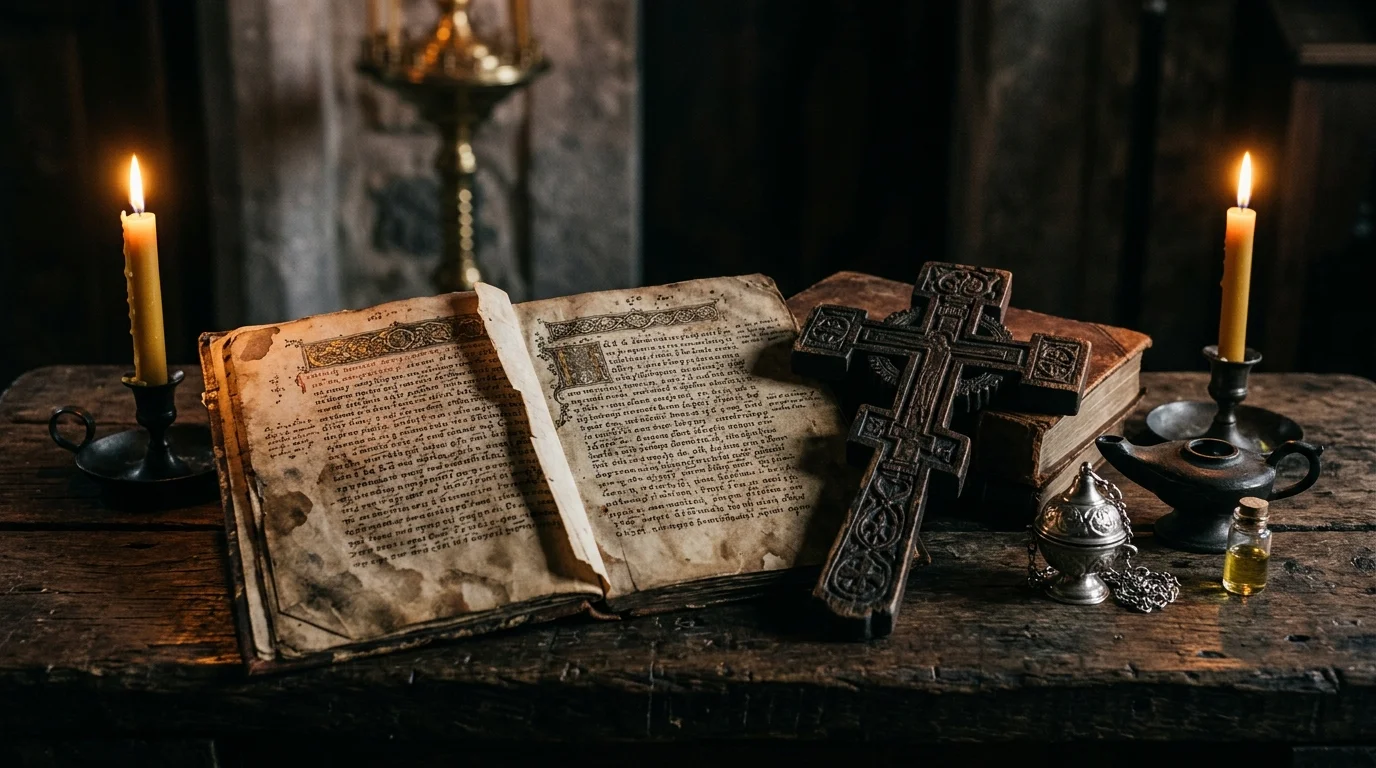
St. Ignatius, St. Cyprian, and the Early Church
As St. Irenaeus of Lyons argues in Against Heresies (2nd century), the Church's faith is public, handed down openly through apostolic succession, not a secret teaching reserved for an elite few. That's catholicity too, a faith available to everyone, everywhere, without hidden layers. It also helps answer questions like Was the first Church, Catholic or Orthodox, because the early Church's self-understanding predates our later labels.
As St. Maximus the Confessor presents in the Mystagogy (7th century), the Liturgy itself becomes an image of the whole cosmos gathered into Christ. Catholicity here isn't a bureaucratic term at all. It's cosmic. It's the whole created order, drawn together in worship.
As St. John of Damascus explains in the Exact Exposition of the Orthodox Faith (8th century), the task of the Church across every generation is to preserve, unchanged, what was received from the apostles. Not to invent something new and call it development. To keep the deposit whole. Related: Eastern Orthodox vs Roman Catholic: Key Differences.
Father Victor's Perspective: Catholicity as Wholeness, Not Branding
Here's what I wish more articles on this topic would say. Catholicity in Orthodoxy isn't first about how far the Church has spread across a map. It's about fullness of life in Christ. A tiny mission parish, poor, half-hidden in a converted storefront, can be completely catholic if it holds the apostolic faith, celebrates the Eucharist, and stays in communion with the wider Church. Size has almost nothing to do with it.
I've gone back and forth for years on how to explain this without sounding like I'm just knocking down the papacy to make a point. Here's where I've landed. Many seekers assume universality has to require centralized control, one office, one final word, one chain of command. Orthodoxy simply offers a different model. Unity through shared faith. Common worship. Apostolic succession preserved through the bishops. Communion among those bishops rather than submission to a single one of them. That's not a rejection dressed up as theology. It's its own positive vision of what unity actually is.
And I'll say this from my psychology background as much as my theology: the real question underneath 'is the Orthodox Church catholic' usually isn't a history question at all. It's an identity question. Modern seekers are tired, genuinely tired, of denominational branding, of feeling like Christianity is a shelf of competing products. What they're really asking is whether the Church can still be whole somewhere. Whether fragmented human life, their own fragmented life, can be gathered back into something complete. The Orthodox answer to that is yes, and it happens at the altar, not in an argument.
What Does This Mean for Seekers and Catechumens?
So, practically. If you've read this far, maybe you're wondering what any of this looks like on a Sunday morning.


How to Visit an Orthodox Parish
Just go. Sit near the back if you want, nobody minds. Most parishes in English-speaking countries welcome visitors warmly, and you don't need to know when to stand or sit. Watch, listen, and if a priest is around afterward, ask him your questions directly. In my own parish in Munich, I've watched dozens of first-time visitors stand through an entire Liturgy looking a little lost, candle in hand, unsure of the choreography. I remember that feeling myself, from my own early visits before I converted. It passes.
What to Listen for in the Divine Liturgy
Listen for the Creed. It comes roughly midway through. And when you hear "one, holy, catholic, and apostolic Church," you'll know exactly what those words are carrying, thanks to everything we've walked through here. That's the moment, more than any article, where the confusion usually clears. If you're still asking is the eastern orthodox church catholic at that point, the Liturgy itself is often what answers you best.
Common Misconceptions About Orthodox Catholicity
Let's deal honestly with what people get wrong here, because pretending confusion doesn't exist helps nobody.
"Catholic always means Roman Catholic, so Orthodoxy can't be catholic." Not quite. In modern English, sure, that's the common usage. But the Creed uses the older Christian sense: universal, whole, according to the fullness of the apostolic faith. Orthodoxy confesses itself as catholic without meaning Roman Catholic at all.
"The Orthodox Church stopped being catholic after 1054." Orthodoxy doesn't see the schism this way. We see it as a rupture in communion, a tragic one, not a moment when the Church suddenly lost its wholeness. Both traditions claim continuity with the ancient Church. We simply define catholicity through fullness of faith and conciliar communion rather than communion with the Pope. Related: Orthodoxy and Catholicism: Understanding the Divine....
"Orthodox and Catholics are basically the same except for married priests or language." I understand why it looks that way from outside, both traditions are sacramental, liturgical, ancient. But real differences remain around papal supremacy, the Filioque, and how the Church's unity is structured. Shared heritage first, real disagreement second, both true at once.
"Orthodoxy is just an Eastern or ethnic religion, so it can't be truly universal." Local culture shapes parish life, sure, you might hear Greek, Slavonic, Arabic, or Romanian in different parishes. But the faith itself belongs to no ethnicity. The Gospel is for everyone, everywhere, and that's exactly what catholicity means. In that sense, questions like Greek Orthodox vs Eastern Orthodox are about history and jurisdiction, not about a different faith.
"Orthodox reject the phrase 'one, holy, catholic, and apostolic Church.'" We say it out loud, together, every single Liturgy. If you've never heard Orthodox worship, this misconception makes sense. Come listen once, and it clears up fast.
"If Orthodoxy calls itself catholic, it must be hostile toward everyone else." Conviction doesn't require contempt. I can explain what Orthodoxy teaches honestly while still speaking with real respect toward Catholics and Protestants I've known and loved. That's not a contradiction. That's just how charity is supposed to work.
Frequently Asked Questions
Does the Catholic Church recognize the Orthodox Church?
The Roman Catholic Church recognizes Orthodox sacraments, including the Eucharist and priesthood, as valid due to shared apostolic succession, though full communion between the two churches remains broken. Rome generally views Orthodoxy as a true particular church lacking full communion, mainly over the question of papal primacy. This is nuanced territory though, and if a specific sacramental or membership question ever comes up in your own life, please talk to your priest directly rather than relying on a general answer online.
Do Orthodox accept LGBTQ?
Orthodox teaching on marriage and sexuality follows the traditional Christian understanding found in Scripture and the Fathers, while every person, regardless of their struggles or orientation, is welcomed with pastoral love and invited into the life of the Church. This is an area where doctrine and pastoral care work together rather than in isolation. I'd encourage anyone with personal questions here to speak with a parish priest, since real situations deserve real conversation, not a paragraph on a website.
Do Eastern Orthodox pray to Mary?
Orthodox Christians don't pray to Mary as though she were divine; we ask for her prayers, the same way we'd ask a living friend to pray for us, because we believe she and the saints remain alive in Christ. Worship (latria) belongs to God alone. Veneration of the Theotokos and the saints is something different entirely, honor given to those who reflect Christ's holiness back to us. This distinction, honestly, is one of the most common misunderstandings I encounter from seekers with a Protestant background.
How is the Eastern Orthodox Church different from the Catholic Church?
The main differences involve papal authority (Orthodoxy rejects universal papal jurisdiction), the Filioque clause in the Creed, married clergy (permitted in Orthodoxy for priests, not bishops), and how each tradition understands doctrinal development over time. Beneath these visible differences sits the deeper question we've spent this whole article on: how is the Church's unity and catholicity actually structured? Conciliar communion among bishops, or communion under one universal bishop? That's the real fork in the road.
About Father Victor Meshko
About the Author
Father Victor Meshko is an Orthodox priest of the Russian Orthodox Church Abroad, serving at the Cathedral of the Holy New Martyrs and Confessors of Russia in Munich since 2013. He holds multiple degrees in philosophy, theology, and psychology, including theological study at LMU Munich's Institute for Orthodox Theology, and he is the published author of a book on Archbishop Filaret (Gumilevskij) of Chernigov and Nezhin. For Find to God, he combines patristic scholarship, church history, and pastoral care to explain Orthodox Christianity in a way that is faithful, clear, and welcoming to seekers.
Researched and written by Father Victor Meshko. AI tools were used during the research process, in line with the EU AI Act and site policy.
<table class="seo-table comparison-table"><caption>What 'Catholic' Means in Orthodox, Catholic, and Protestant Contexts</caption><thead><tr><th>Aspect</th><th>Orthodox</th><th>Catholic</th><th>Protestant</th></tr></thead><tbody><tr><td>Meaning of 'catholic'</td><td>The universal and whole Church confessed in the Creed, fully present in the Orthodox Church</td><td>The universal Church in communion with the Pope of Rome</td><td>Usually the universal church of all true believers in a broad creedal sense</td></tr><tr><td>Source of visible unity</td><td>Communion in the same faith, sacraments, and bishops through conciliarity</td><td>Communion with Rome under papal primacy and jurisdiction</td><td>Varies by denomination; often less tied to bishops and sacraments</td></tr><tr><td>How the Church is experienced locally</td><td>The fullness of the Church is manifested in the local Eucharistic assembly around the bishop</td><td>The local church participates in the universal church under Roman communion</td><td>Often centered on the local congregation, denomination, or invisible church concept</td></tr><tr><td>View of 1054 and after</td><td>A tragic rupture in communion in which Orthodoxy believes it preserved the ancient faith and structure</td><td>A separation from full communion with Rome</td><td>Often viewed as a dispute within older Christianity rather than central to identity</td></tr><tr><td>Creed and Filioque</td><td>Confesses the original Nicene-Constantinopolitan Creed without the Filioque</td><td>In Latin tradition, commonly uses the Creed with the Filioque</td><td>Varies widely depending on tradition and liturgical usage</td></tr></tbody></table>


Help us bring the christian faith to modern seekers worldwide.
Godfinder relies on generous souls to sustain our multilingual platform, develop new tools like the Magic Cube, and support struggling believers. If our work has touched your heart, consider contributing to our nonprofit partner

Do you want to know More? Ask God’s Word!
Do you have questions, worries, or hopes? Feeling lost, burdened, or alone? “Ask God’s Word” brings you gentle guidance rooted in Scripture and the wisdom of the Church. Find hope and strength today!
