.avif)
Orthodox Beliefs: More Than Just Creed
You can recite the Nicene Creed word for word, without stumbling once, and still, by Orthodox standards, not really believe it. That sounds strange, I know. Give me a minute to explain what I mean. If you're trying to make sense of orthodox beliefs, this is where most introductions fail you right...

You Can Recite the Creed Perfectly and Still Miss the Point
You can recite the Nicene Creed word for word, without stumbling once, and still, by Orthodox standards, not really believe it. That sounds strange, I know. Give me a minute to explain what I mean. If you're trying to make sense of orthodox beliefs, this is where most introductions fail you right out of the gate.
In my years of serving as an Orthodox priest since 2013, I have found that many seekers ask not only what Orthodox Christians believe, but how those beliefs are actually lived in worship, repentance, and daily life. And that second question, honestly, matters more than the first. I remember a man who walked into my cathedral in Munich, Creed memorized from some comparative religion course years earlier, nodding at all the right lines. He still left confused about what Orthodoxy was actually asking of him. The doctrine wasn't hidden from him. Belief, in our tradition, was simply never meant to stand on its own.
Most articles on orthodox beliefs skip past something basic: the Orthodox Church doesn't separate belief from worship. Not really, not ever. In actual parish life, people learn the faith by standing through the Liturgy, confessing, fasting, receiving pastoral guidance, hearing the Creed prayed inside the eucharistic assembly. Agreeing with the Trinity on paper isn't really the question. The question is whether you're willing to let that belief rearrange your Tuesday afternoon.
Quick Answer: Orthodox Christians believe in one God in three Persons, in Jesus Christ as fully God and fully man, and in salvation as theosis — healing union with God received through the Church, the Holy Mysteries, and a life of repentance, rather than doctrine alone.
In This Article:
- You Can Recite the Creed Perfectly and Still Miss the Point
- What Are Orthodox Beliefs?
- What Do Orthodox Christians Believe About God?
- What Do Orthodox Christians Believe About Jesus Christ?
- What Do Orthodox Christians Believe About Salvation?
- What Do Orthodox Christians Believe About the Church?
- What Do Orthodox Christians Believe About Mary, the Saints, and Icons?
- What Do Orthodox Christians Believe About the Mysteries?
- How Are Orthodox Beliefs Lived Out in Daily Life?
- Father Victor's Perspective: What Seekers Usually Miss About Orthodox Beliefs
- How Can You Begin Exploring Orthodoxy Without Feeling Overwhelmed?
- Common Misconceptions About Orthodox Beliefs
TL;DR — Key Takeaways
- Orthodox belief centers on the Trinity, the Incarnation, and salvation as theosis — union with God by grace.
- The Creed is the public summary. Its real meaning gets learned inside the Liturgy, not off a page.
- Fasting, confession, and the Eucharist aren't extra credit. They're how belief becomes real in a person.
- A surprisingly freeing insight: Orthodoxy asks less of you intellectually than you'd think, and more of you practically than you expect.
What Are Orthodox Beliefs?
If you've ever walked into an Orthodox church for the first time, you probably noticed something. The worship feels ancient. Reverent. Different from anything you've experienced before. Icons everywhere. Chanting instead of announcements. And a lot of standing.

I remember my own first encounter with Orthodoxy, coming from a Roman Catholic background where I already knew the tradition fairly well. Yet when I encountered the Orthodox Church, with its miracles, its mystical depth, its authenticity and living ecclesial experience, I couldn't resist it anymore. For me it wasn't a sudden break. It felt like an inwardly logical, joyful step. Or, let me be more honest about it. It became joyful eventually. At first it was disorienting.
Quick Answer: The Creed, Scripture, and the Life of the Church
Orthodox belief is summarized in the Nicene Creed, formulated at the Councils of Nicaea in 325 and Constantinople in 381, and it's recited in every Divine Liturgy, as summarized by St Catherine Church's teaching page on Orthodox belief. But the Creed was never meant to function like a legal contract you sign once. It's a hymn we sing our way into, week after week, until the words stop being ideas and start being the shape of our lives. That's one of the first things worth understanding about orthodox beliefs and practices.
Here's a short video that gives a good introduction to how Orthodoxy understands itself, particularly its continuity with the apostolic Church:
[YOUTUBE_VIDEO]
What Do Orthodox Christians Believe About God?
One God in Three Persons
We confess one God in three Persons: Father, Son, and Holy Spirit. Not three gods. Not one God wearing three masks. Three Persons, one essence, eternally in communion with each other.
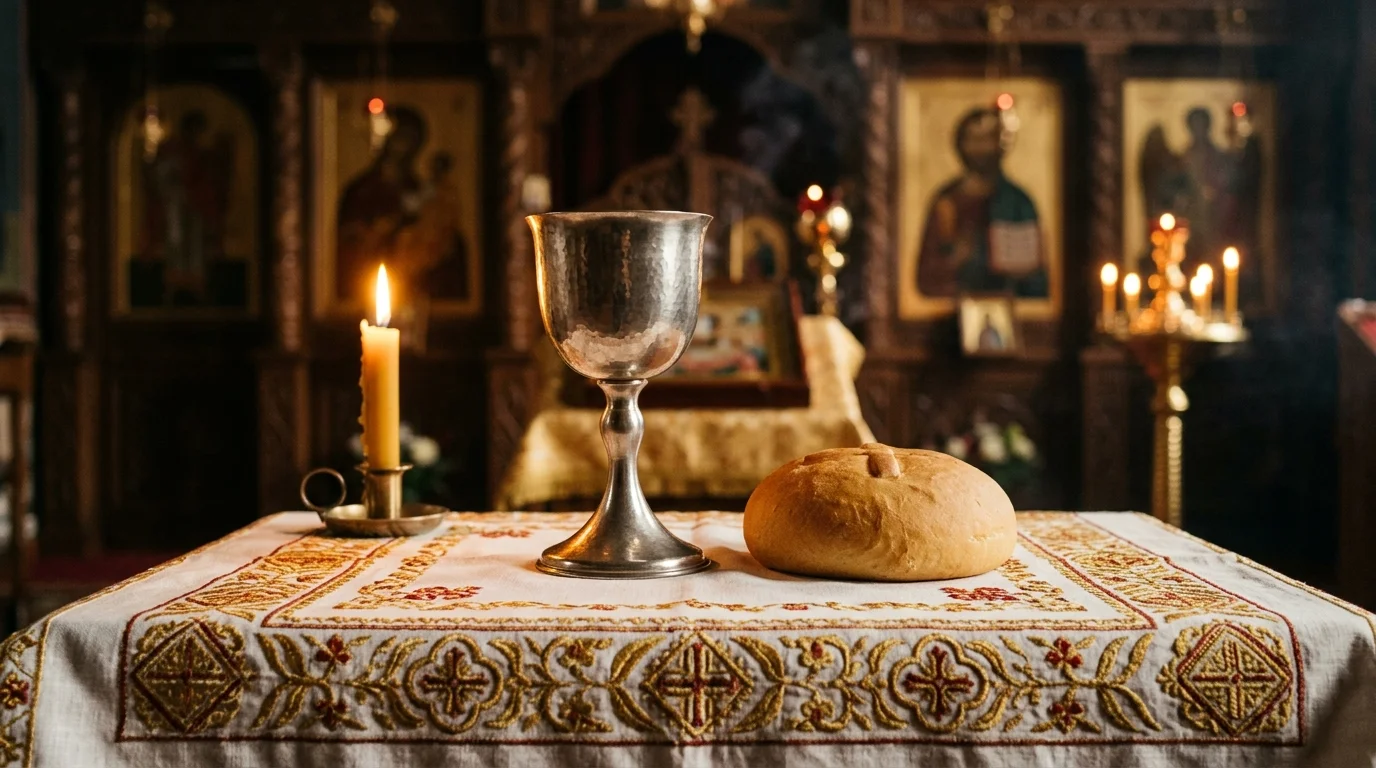
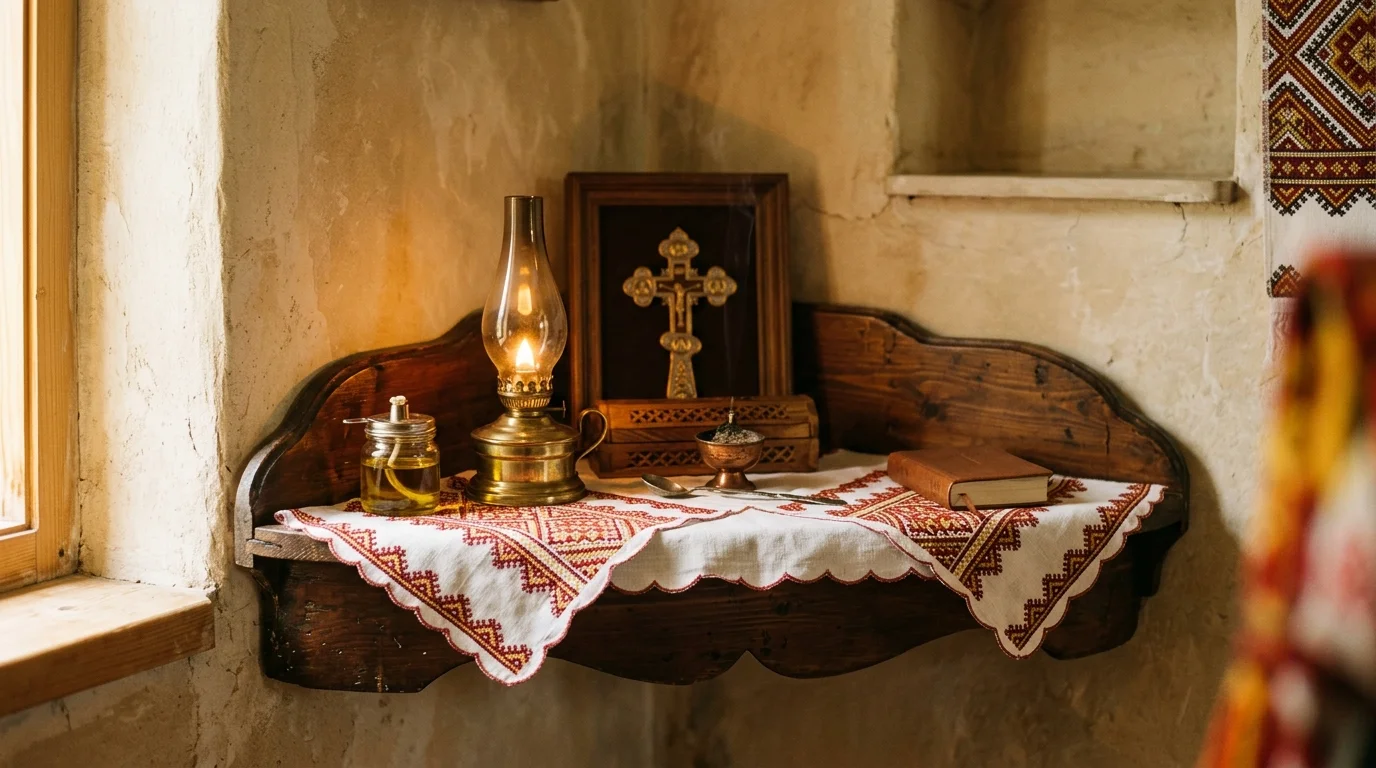


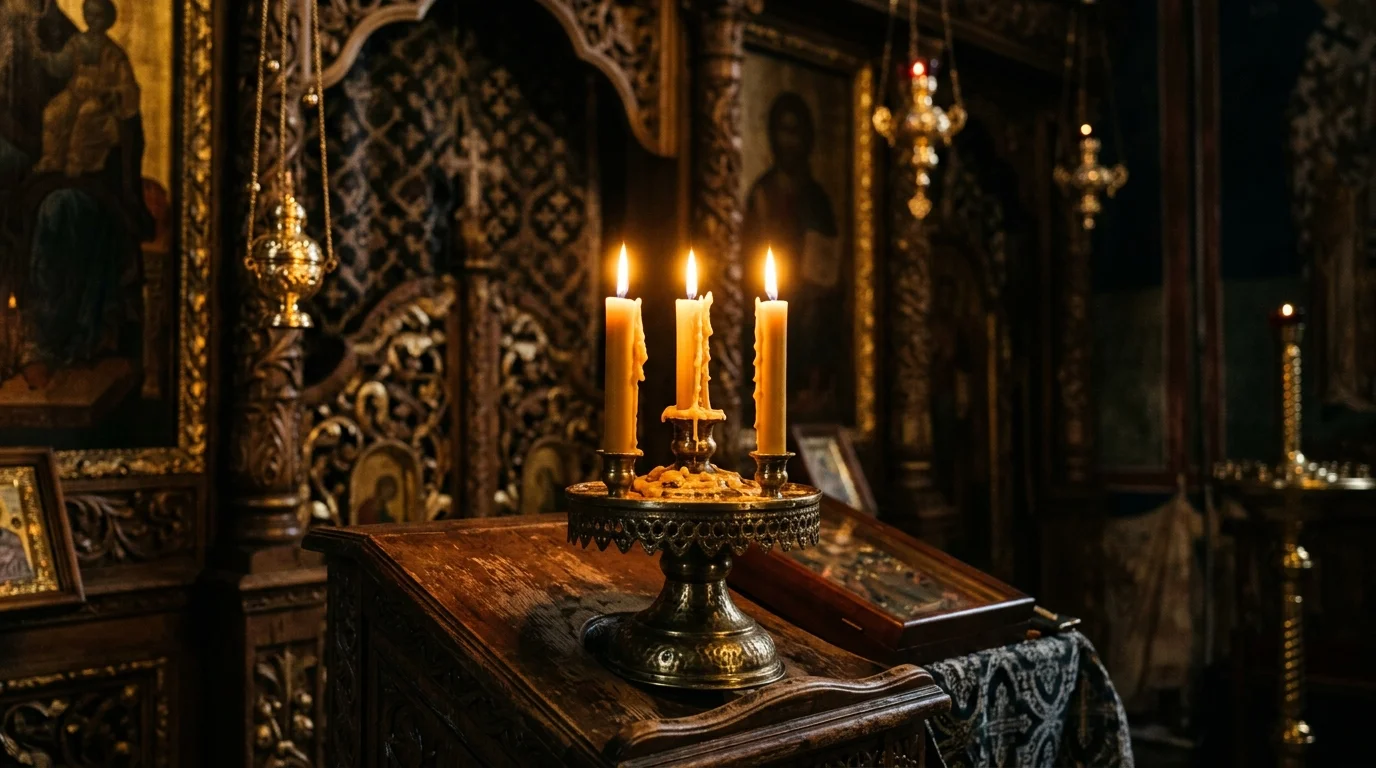
As St. Gregory the Theologian writes in the Theological Orations (4th century), the Church holds together the unity of the divine nature and the distinctness of the three Persons without dissolving either into the other. Precise language, I know. But it's precise because the early Church fought hard, for centuries, to protect something that seemed almost too fragile to say correctly. That's why orthodox beliefs read as careful rather than cold. They're guarding something real.
Why the Trinity Is Not an Abstract Doctrine
Here's what I've noticed after years of teaching catechumens in Munich: people assume the Trinity is a math problem the Church invented to test your loyalty. It isn't. Scripture grounds this belief directly. Christ commands the apostles, "baptizing them in the name of the Father and of the Son and of the Holy Spirit" (Matthew 28:19-20), tying the Trinity to the actual life of the Church, not to a seminar room.
And when we're baptized, we're baptized into that relationship. Not into an idea about it. Into it. That distinction changes everything about how you pray, honestly. It's also why orthodox beliefs resist being flattened into abstract propositions.
What Do Orthodox Christians Believe About Jesus Christ?
Fully God and Fully Man
Orthodoxy confesses Jesus Christ as fully God and fully man, one Person with two natures, united without confusion. "In the beginning was the Word, and the Word was with God, and the Word was God... And the Word became flesh" (John 1:1-14). Not poetry meant only to move you emotionally, though it does that too. It's a claim about reality.
Do Orthodox Christians think Jesus is God? Yes, without qualification. This has never been negotiable in our tradition. If someone asks about orthodox beliefs, this sits near the center of the answer.
Why the Incarnation Changes How Orthodox Christians See the Human Person
As St. Athanasius the Great teaches in On the Incarnation (4th century), the Word became man so that we might become divine, meaning united to God by grace, not by nature. That single sentence rearranged how I understood salvation entirely when I first read it during my doctoral studies at LMU Munich.
Why does this matter to someone visiting a Divine Liturgy for the first time? Because if God really took on flesh, matter isn't an obstacle to holiness anymore. Bread and wine, water, oil, wood, and paint can all carry grace. That's not superstition. It's the Incarnation, worked all the way through to its logical end. It's also why orthodox beliefs make room for sacrament, icon, and embodied prayer in ways some modern Christians find surprising.
What Do Orthodox Christians Believe About Salvation?
Salvation as Theosis, Healing, and Transformation
Last year, someone came to me after Liturgy, maybe in his late twenties, and asked something I've heard in different forms many times. "Father, if I already believe Jesus is Lord, why do I need to keep confessing, keep fasting? Isn't salvation already settled?" I understood exactly where that question came from.
Salvation is by God's grace, but grace is received in a life of repentance, cooperation, and healing. Fasting and confession aren't payment to God. They're medicine for the wounded heart. Metropolitan Kallistos Ware puts it simply: Orthodox salvation is best understood as healing and transformation into communion with God, not only as legal acquittal. I find that framing deeply clarifying, even after years of sitting with it. If you're comparing Orthodox beliefs vs Baptist approaches, this is often one of the sharpest differences in emphasis.
Scripture backs this directly. Peter writes that God's divine power "has given us all things that pertain to life and godliness... that you may be partakers of the divine nature" (2 Peter 1:3-4). Partakers. Not spectators.
Why Orthodox Spiritual Practices Are Medicine, Not Merit
As St. Maximus the Confessor reflects in the Ambigua (7th century), the whole human person, body, soul, and even the created world around us, gets drawn into this process of transformation in Christ. Not just the intellect agreeing with facts.
I don't fully understand this myself, if I'm honest. I've been a priest for over a decade and theosis still feels mysterious to me — the kind of thing you approach more than you explain. But I've seen it work in confession, in the quiet after someone finally says the thing they've been carrying for years. Something shifts. Not always dramatically. But really. This is why Orthodox beliefs on salvation stay inseparable from repentance, prayer, and the sacramental life.
What Do Orthodox Christians Believe About the Church?
Scripture Within Holy Tradition
We receive the faith through Scripture read within Holy Tradition, the living transmission of the apostolic faith found in worship, councils, saints, and doctrine. Paul tells the Thessalonians to "hold the traditions which you were taught, whether by word or our epistle" (2 Thessalonians 2:15). Written and unwritten, both carrying authority.
Holy Tradition isn't old habits nobody bothered to question. It's the Church's memory of how the apostles actually lived what they received. For many trying to understand orthodox beliefs, this is where the deepest shift has to happen.
The Church as the Body of Christ and the Continuation of Pentecost
The early Church "continued steadfastly in the apostles' doctrine and fellowship, in the breaking of bread, and in prayers" (Acts 2:42). Notice how those four things sit together in one sentence. Doctrine, fellowship, Eucharist, prayer. Not separated into categories.
Fr. Thomas Hopko said the Church is the visible life of Christ in the world, not merely a voluntary association of like-minded believers. That's a strong claim in a culture that treats church membership like a gym subscription you can cancel anytime. And yet I think it's exactly right. It also helps explain what people usually mean when they search for Orthodox Christianity vs Christianity — most are really asking how Orthodoxy sees itself as the historic fullness of Christian faith and life, not as some separate religion.
What Do Orthodox Christians Believe About Mary, the Saints, and Icons?
Why Orthodoxy Honors Mary as Theotokos
We call Mary the Theotokos, meaning God-bearer, because the title confesses something about Christ, not just about her. If she bore God in her womb, then the child she bore was truly God from the very first moment. That's Christology dressed in a title about His mother.
Why Icons Are Venerated but Not Worshiped
Orthodox Christians do not worship icons; they venerate them because the Son of God truly became visible in the Incarnation. As St. John of Damascus argues in On the Divine Images (8th century), if the eternal Word became flesh and could be seen, touched, and painted by those who knew Him, then refusing to depict Him in image actually denies the reality of the Incarnation.
A helpful way to explain this to visitors: an icon works something like a family photograph in prayerful form. The honor passes through to the person depicted. Adoration belongs to God alone. The Seventh Ecumenical Council settled this distinction centuries ago, and it still holds. For people asking about Greek Orthodox beliefs and practices or Russian Orthodox beliefs and practices, this point holds across Orthodoxy even where local customs differ.
What Do Orthodox Christians Believe About the Mysteries?
Baptism, Chrismation, Eucharist, Confession, and the Rest
We call the sacraments Mysteries, emphasizing that these are real encounters with divine grace, not only symbolic religious ceremonies. Baptism, Chrismation, Eucharist, Confession, Marriage, Holy Orders, and Unction. Seven, though the Church has never counted them the way you'd count items on a checklist.
Why the Eucharist Is the Center of Orthodox Life
"The cup of blessing which we bless, is it not the communion of the blood of Christ? The bread which we break, is it not the communion of the body of Christ? For we, though many, are one bread and one body" (1 Corinthians 10:16-17). That passage does something most modern readers miss on the first pass. It ties Communion directly to unity. You can't receive the Body of Christ and remain a stranger to the people kneeling beside you.
Fr. Alexander Schmemann wrote that the Eucharist is not one doctrine among many, but the center in which the Church becomes what she is. I think about that line often, honestly, especially standing at the altar during a Sunday Liturgy packed with people I've watched grow up in that community. In lived terms, this is one of the clearest windows into orthodox beliefs.
How Are Orthodox Beliefs Lived Out in Daily Life?
Prayer, Fasting, Repentance, Almsgiving, and Community
During my theological studies at LMU Munich and in pastoral conversations in Munich, I kept seeing the same pattern: people understand orthodox beliefs better when doctrine gets explained through prayer, the sacraments, and the healing of the human person. Not through a lecture. Through practice.

A catechumen once asked me, after several weeks of attending services, why Orthodoxy seemed to emphasize fasting, confession, and spiritual struggle so heavily. Does that mean salvation gets earned through religious effort? I told him no. Salvation is by grace, but grace is received in a life of repentance and cooperation. Fasting isn't payment. It's closer to physical therapy after an injury. Demanding, yes. But ordered toward healing, not punishment.
He stopped viewing Orthodox practice as legalism after that conversation. I've watched that same shift happen more times than I can count. If you want a fuller sense of orthodox beliefs and practices, this is where they become visible.
For readers who want broader orientation, you may also find our guides on what Orthodoxy is and the Divine Liturgy explained helpful alongside this overview of orthodox beliefs.


