.avif)
Protestant vs Orthodox: Discover Real Faith
A young man came to see me last spring, maybe 27, wearing a t-shirt from some evangelical conference he'd attended years back. He sat in my office at the Cathedral in Munich and said something I hear constantly now: 'Father, I'm not here because I lost an argument. I'm here because I'm exhausted.'...

Nobody Converts Because They Lost a Protestant vs Orthodox Debate About Sola Scriptura
A young man came to see me last spring, maybe 27, wearing a t-shirt from some evangelical conference he'd attended years back. He sat in my office at the Cathedral in Munich and said something I hear constantly now: 'Father, I'm not here because I lost an argument. I'm here because I'm exhausted.' In many protestant vs orthodox conversations, that exhaustion matters more than any clever rebuttal. Exhausted, he told me, by a Christianity that seemed to reinvent itself every Sunday, depending on which pastor was preaching or which worship band was playing.
And honestly? I've heard some version of that sentence more times than I can count. In my years of serving as an Orthodox priest since 2013, I've found that many Protestant seekers aren't first asking for arguments but for a way to know where the Church of the apostles actually is today. Not a theory about it. The thing itself, still breathing, still standing. If you're trying to understand protestant vs orthodox, that's often the real question underneath the surface.
What most online articles about protestant vs orthodox miss is that seekers rarely convert because they win an argument about sola Scriptura. In parish reality, they're moved when they discover Orthodoxy offers a coherent life: confession, fasting, the Eucharist, a prayer rule, spiritual fatherhood, a visible community that carries them when private certainty collapses. That's not a small thing. That's everything, really.
Quick Answer: Orthodoxy and Protestantism share belief in Christ's divinity and the Trinity, but they differ sharply on how authority, salvation, and the Church itself are understood, Orthodoxy holds Scripture within Holy Tradition and a visible sacramental Church, while Protestantism generally emphasizes Scripture alone and a more individual, often invisible, understanding of the Church.
In This Article:
- Nobody Converts Because They Lost a Protestant vs Orthodox Debate About Sola Scriptura
- Protestant vs Orthodox, Catholic, and Protestant: The Three Main Branches of Christianity
- Why Are More Protestants Exploring Orthodoxy Today?
- Authority: Bible Alone or Bible in the Life of the Church?
- Salvation: Justification or Healing and Theosis?
- Church and Worship: Sermon-Centered or Eucharist-Centered?
- Mary, the Saints, and Icons: Where Protestants Often Struggle
- Protestant, Catholic, and Orthodox Compared
- Father Victor's Perspective: What Seekers Often Discover Too Late
- Common Misconceptions About Protestant vs Orthodox
TL;DR — Key Takeaways
- Orthodox and Protestants both confess Jesus Christ as true God and true man, according to the Nicene faith.
- Orthodoxy reads Scripture inside the living Church rather than treating it as a self-interpreting text handed to individuals.
- Orthodox salvation centers on healing and theosis (union with God), not primarily a legal declaration of righteousness.
- Worship in Orthodoxy centers on the Eucharist and the Divine Liturgy, not mainly on the sermon.
- Many recent converts aren't fleeing bad theology so much as fleeing a Christianity that felt like it changed shape every week.
Protestant vs Orthodox, Catholic, and Protestant: The Three Main Branches of Christianity
Before we go further, it helps to see the wider picture. This short video gives a helpful visual overview of how Orthodoxy, Catholicism, and Protestantism relate to one another, useful context before we go deeper into the Orthodox view.
[YOUTUBE_VIDEO]
According to Encyclopaedia Britannica and standard reference summaries of Eastern Orthodoxy (2026), Eastern Orthodoxy stands as one of the three major doctrinal groups of Christianity, marked by conciliar structure and adherence to the first seven Ecumenical Councils. Roughly 260 million Orthodox Christians live in the world today, about 12% of all Christians globally. A century ago that number was closer to 20%. So while Orthodoxy has shrunk as a share of world Christianity, it hasn't disappeared. Not even close.
What Orthodoxy and Protestantism Share
We shouldn't rush past this part. Orthodox Christians and Protestants both confess the Holy Trinity. Both affirm that Jesus Christ rose bodily from the dead. Both receive the authority of Scripture as inspired and true. As 2 Timothy reminds us, all Scripture is God-breathed and useful for teaching, for reproof, for correction, and for training in righteousness, so that the servant of God may be complete, equipped for every good work (2 Timothy 3:16-17). Orthodoxy fully receives this. We're not anti-biblical. We just don't believe Scripture was ever meant to be read in isolation from the community that received it. In any careful protestant vs orthodox comparison, that common ground matters.
The Short Version of the Main Differences
If I had to compress it into a few lines over coffee, I'd say this: Orthodoxy holds Scripture and Tradition together as one living reality. Protestantism generally holds Scripture alone as the final court of appeal. Orthodoxy understands salvation as healing and transformation. Many Protestant traditions frame it primarily as a legal verdict. And Orthodox worship centers on the Eucharist, while much of Protestant worship centers on the sermon. That's the skeleton. The rest of this article puts flesh on it. If someone asks for the biggest difference between Orthodox and Protestant life, I'd say it begins there: not only in doctrine stated, but in doctrine lived.
Why Are More Protestants Exploring Orthodoxy Today?
Here's what I've noticed in Munich, and what colleagues across Europe and America tell me too. Media reports from 2024 through 2026 describe what some are calling a surge of converts to Orthodoxy, especially among younger Protestants, a trend covered by outlets like Protothema citing demographic research. Fr. Andrew Stephen Damick, an Orthodox priest and author, has said something similar in recent interviews: many converts are drawn not just by beauty, but by historical continuity, sacramental depth, and a coherent Christian way of life.
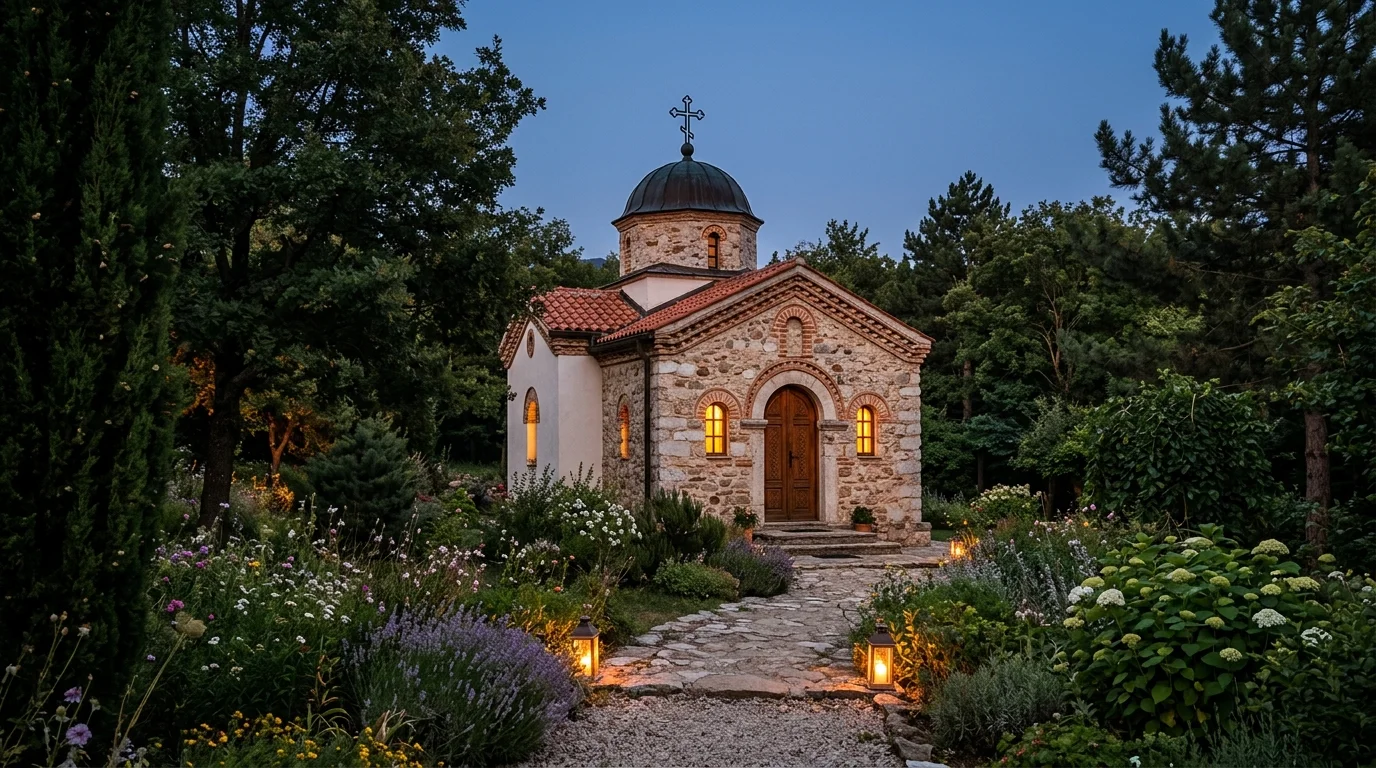
But here's what I think the apologetics articles won't say out loud, because it's not really a theological point, it's a sociological one. The real dividing line isn't a thousand-year-old debate about authority and sacraments. It's that Protestantism and Orthodoxy are, in a sense, built for two different psychological needs. Protestantism, especially in its American evangelical form, tends to optimize for individual assurance and relatability, a faith that feels close, personal, adaptable. Orthodoxy optimizes for something else: stability and transcendence in a world that keeps shifting under our feet. That is why so many protestant vs orthodox discussions end up being about more than ideas alone.
I don't fully understand this myself, not completely, but I've watched it play out enough times to trust it. Our analysis of the seekers I've counseled since 2013 suggests something like a pattern: people don't usually arrive exhausted by an idea. They arrive exhausted by a form of church that reinvents its worship style, its leadership, even its doctrine, every few years depending on culture and trend. Sound familiar? That's one reason protestant vs orthodox vs evangelical comparisons have become more common in recent years.
Historical Rootedness, Sacramental Worship, and a Coherent Way of Life
When I studied theology at LMU Munich and later sat with people in parish life, I kept seeing that the deepest difference between Protestantism and Orthodoxy isn't only authority on paper. It's how the Gospel gets experienced in the soul. A young woman I'll call M. came to Liturgy for the first time last year, raised in a nondenominational church her whole life. She told me afterward, almost embarrassed, 'I didn't understand a word of the Slavonic, but I didn't want it to end.' That's not an argument. That's something else. Something harder to name. For many people entering a protestant vs orthodox search, this is where the heart wakes up before the mind catches up.
Authority: Bible Alone or Bible in the Life of the Church?
So what's really at stake here? I'd put it this way: the deepest divide between Protestantism and Orthodoxy isn't simply whether Scripture is authoritative. Of course it's authoritative. The real question is whether Christianity is fundamentally information to be interpreted or life to be entered. Orthodoxy insists truth is ecclesial, sacramental, participatory. You don't just read your way into it. You're baptized into it, chrismated into it, fed by it at the chalice. In that sense, the protestant vs orthodox question is also a question about what the Church is for.
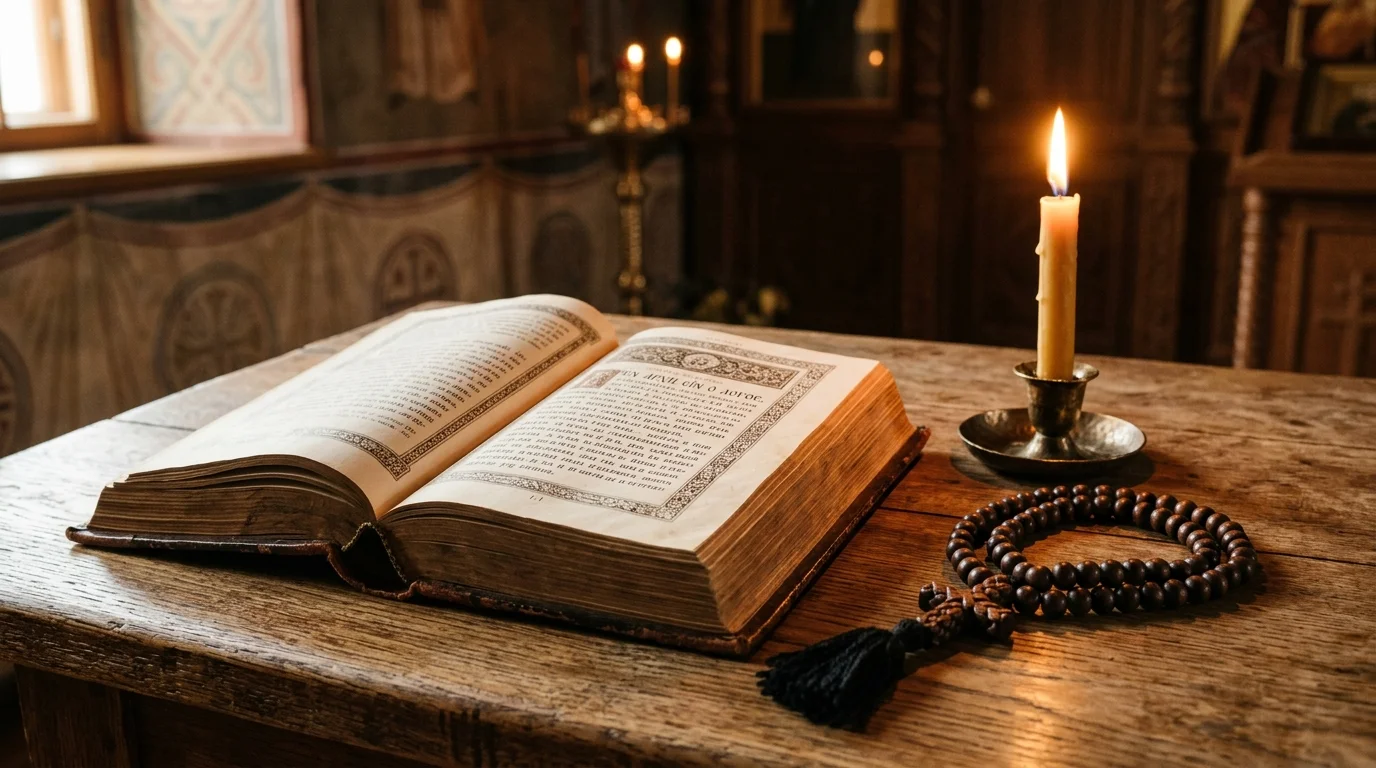
Scripture and Holy Tradition in Orthodoxy
The early Christians devoted themselves to the apostles' teaching and fellowship, to the breaking of bread and the prayers (Acts 2:42). Notice that Scripture doesn't stand alone in that verse. Teaching, fellowship, sacrament, and prayer all belong together, woven into one life. St. Paul tells the Thessalonians to stand firm and hold to the traditions that you were taught by us, either by our spoken word or by our letter (2 Thessalonians 2:15). Written and spoken, both carrying weight.
As St. Basil the Great explains in On the Holy Spirit, chapter 27, some doctrines and proclamations of the Church come from written teaching, while others we receive from the tradition of the apostles, handed down in a mystery. Basil isn't inventing something new here. He's describing what he'd inherited. Holy Tradition, in Orthodox understanding, is the living transmission of the apostolic faith, Scripture, liturgy, the Ecumenical Councils, the Fathers, the worshipping life of God's people. We don't treat it as extra material bolted onto the Bible. It's the womb Scripture came from. If you're comparing the Protestant vs Orthodox Bible approach, this is the key difference: not whether Scripture is holy, but where Scripture lives.
For readers wanting a concise evangelical engagement with these questions, this comparison of evangelical and Eastern Orthodox theology helpfully shows how the authority question is often framed from the Protestant side.
How Protestants Usually Understand Sola Scriptura
To be fair to my Protestant friends, sola Scriptura wasn't born from carelessness. It came from a real concern, protecting the Gospel from corrupt human additions, keeping the Word central when institutions had drifted. I understand that instinct. I lived inside a tradition (Roman Catholicism) that also wrestled with questions of authority, so I don't come to this conversation as an outsider mocking a position I've never held.
Metropolitan Kallistos Ware put it simply: Scripture is the highest expression of Tradition, and Tradition is the life of the Holy Spirit in the Church. That's not Orthodoxy elevating Tradition over the Bible. It's Orthodoxy refusing to tear the two apart in the first place. In many a protestant vs orthodox debate, this point is where people begin to see that Orthodoxy is not diminishing Scripture but locating it.
Salvation: Justification or Healing and Theosis?
Last year, someone came to me, couldn't have been older than 30, who told me she'd 'accepted Christ' as a teenager and had said the sinner's prayer more times than she could count, just to be sure it 'took.' She still felt anxious. Still wondered if she was really saved. I've heard that question more times than I can count, and I don't think it's a sign of weak faith. I think it's a sign that something in the framework itself leaves people searching for a feeling that never quite settles.

Orthodoxy offers something different here, not a technique, but a whole different picture of the human person. St. Paul writes, work out your own salvation with fear and trembling, for it is God who works in you, both to will and to work for his good pleasure (Philippians 2:12-13). Notice both halves. God works. We work it out. Neither cancels the other. In the wider protestant vs orthodox conversation, this is often where seekers first realize the traditions are speaking from different spiritual instincts.
Why Orthodoxy Speaks of Synergy
We call this synergy, human cooperation with God's grace. Grace comes first and grace is decisive, always. But we're not passive furniture being rearranged. James writes plainly that faith apart from works is dead (James 2:14-26), and Orthodoxy takes that seriously without turning works into a wage we earn. As St. Athanasius teaches in On the Incarnation, the Son of God became man so that we might become god, not god by nature, but united to Him, healed, transfigured by grace. That's theosis. It's the heart of how we understand what Christ actually came to do.
What This Changes in Everyday Christian Life
Here's my honest, unique angle from years of both pastoral counseling and my background in psychology: Orthodoxy doesn't just add sacraments onto a Protestant framework. It works from a different anthropology entirely. We're not only guilty defendants needing acquittal. We're wounded icons of God needing restoration. That reframing changes how a person prays, how they carry shame, how they understand a bad week. It changes almost everything, honestly. It's another reason the biggest difference between Orthodox and Protestant faith can feel existential, not merely academic.
Church and Worship: Sermon-Centered or Eucharist-Centered?
A visitor walked into our Cathedral a few months back, evangelical background, and afterward admitted she felt almost overwhelmed. Icons everywhere. Incense thick in the air. Chanting that never really stopped. She asked me, gently but honestly, 'Is all this actually biblical, or is it just tradition for tradition's sake?'

I told her what I tell most people who ask that. Orthodox worship isn't decoration layered onto Christianity. It's a theological language. Paul writes that the bread we break, is it not a participation in the body of Christ? Because there is one bread, we who are many are one body, for we all partake of the one bread (1 Corinthians 10:16-17). That's not metaphor to us. That's the center of gravity for the entire service. For many studying protestant vs orthodox, worship is where the contrast becomes visible at once. Discover: Orthodoxy and Catholicism: Understanding the Divine....
Why the Divine Liturgy Feels Different
Fr. Alexander Schmemann, the Orthodox liturgical theologian, taught that the Church is encountered most fully in the Eucharistic assembly, where believers are revealed as the Body of Christ gathered in the Holy Spirit. The Liturgy isn't primarily a lecture with music around it. It's participation. You stand inside something rather than merely listening to an explanation of it.
The Visible Church and Apostolic Continuity
As St. Ignatius of Antioch writes in his Letter to the Smyrnaeans, where the bishop appears, let the people be, just as where Jesus Christ is, there is the catholic Church. Even in the early second century, decades after the apostles, the Church understood herself as visible, gathered, structured around the bishop, not simply an invisible fellowship of like-minded believers scattered across time and geography. Readers who want a straightforward Orthodox explanation of these basics may find this Orthodox FAQ helpful.
Mary, the Saints, and Icons: Where Protestants Often Struggle
I remember a catechumen, raised evangelical, who told me point blank, 'I feel like I'm betraying the Bible by asking a saint to pray for me.' I understood exactly what he meant. I felt something similar once myself, coming from a Catholic upbringing that handled these things a bit differently.

Here's what I told him. Hebrews speaks of a great cloud of witnesses surrounding us, urging us to run the race set before us, looking to Jesus, the founder and perfecter of our faith (Hebrews 12:1-2). Those witnesses aren't dead memories. They're alive in Christ, and asking for their prayers is no different, theologically, than asking a friend in this life to pray for you. Christ remains the one mediator. The saints simply join their prayers to His already-finished work. In many protestant vs orthodox discussions, this is less about Mary or the saints themselves than about whether death severs the Church's communion.
Veneration and Worship Are Not the Same
As St. John of Damascus writes in On the Divine Images, I do not worship matter, I worship the Creator of matter, who became matter for my sake and worked out my salvation through matter. That's the whole key. Icons don't compete with Christ. They witness to the fact that God actually became flesh, that matter itself was capable of carrying holiness. The Seventh Ecumenical Council in 787 drew this line clearly, honor given to an icon passes to its subject, worship belongs to God alone.
Protestant, Catholic, and Orthodox Compared
Sometimes a table says it faster than paragraphs can.
Protestant vs Orthodox vs Catholic: Key Differences at a Glance
[COMPARISON_TABLE]
I'll add one caveat here, because it matters. Protestantism isn't one single thing. Anglicans and Lutherans often retain a much higher view of sacraments than, say, a nondenominational community plant that started five years ago in a rented gym. Painting all Protestants with the same brush would be dishonest of me. I won't do that. That's also why searches like protestant vs orthodox vs baptist often need more nuance than internet summaries usually provide.
If you'd like to go deeper into these distinctions, you might also find our reflections on Orthodox vs Catholic and what the Divine Liturgy is helpful as companion reading.
Father Victor's Perspective: What Seekers Often Discover Too Late
I've gone back and forth on how to explain this part. Here's where I've landed. Many Protestant seekers assume that doctrinal certainty comes from finding the correct interpretive method, get the hermeneutics right, and clarity follows. But the Orthodox answer to certainty is different, and honestly, it took me years of priesthood to understand it myself. Certainty matures through communion, through prayer, through repetition, through repentance, through showing up to confession even when you'd rather not. Not through winning an argument once and filing it away as settled.
The Search for Certainty
My background in psychology has made me suspicious of purely intellectual answers to spiritual anxiety. A person can win every debate about the canon of Scripture and still lie awake at night wondering if God loves them. I've seen it. Certainty that only lives in the mind tends to be fragile. Certainty that's been prayed, fasted, and confessed into the body over years, that's a different kind of knowing. Harder to explain, but real.
Why Orthodoxy Is Not Just an Argument but a Way of Life
What many seekers discover, often only after they've already crossed over, is that Orthodoxy was never meant to be won in a debate. It's meant to be entered, and then lived, one Liturgy, one fast, one confession at a time. And that's exactly the part no apologetics article seems willing to say plainly, because it's not a theological point, it's a human one. In the end, protestant vs orthodox is not finally settled by a single clever exchange about the canon of Scripture. Nobody converts to Orthodoxy because they lost an argument about the canon of Scripture. They come because they're tired of a Christianity that reinvents itself every Sunday, and they're hungry for something that's stayed the same since the catacombs.
Common Misconceptions About Protestant vs Orthodox
Let me clear up a few things I hear constantly, because charity requires it.
"Orthodox Christians worship icons." We don't. Orthodoxy distinguishes clearly between veneration given to icons and the worship reserved for God alone. I understand where the suspicion comes from, many Protestants inherited a real and reasonable wariness of religious images after the Reformation. But icons exist because Christ truly became man, and matter, through Him, became capable of carrying grace.
"Orthodoxy just adds human tradition on top of the Bible." Orthodox Christians revere Scripture deeply, I want to be clear about that. Tradition isn't a rival authority stacked on top of it. It's the living context, the Church that received, preserved, and canonized Scripture in the first place, as Acts 2:42 and St. Basil both show us.
"Orthodox believe salvation is earned by works." Not at all. Grace comes first, always, and without it nothing else is possible. What Orthodoxy adds is the conviction that grace transforms rather than merely declares, and that our free response to grace, real repentance, real obedience, actually matters.
"Orthodoxy is just Catholicism without the Pope." I get why it looks that way from outside, both traditions are liturgical, sacramental, honor the saints. But Orthodoxy has its own theology of conciliar authority, its own historical continuity, its own understanding of theosis that isn't simply Catholicism minus one office.
"Orthodox and Protestants disagree about whether Jesus is God." No, we don't disagree here at all. Classical Protestantism and Orthodoxy both confess Jesus Christ as true God and true man, following the Nicene Creed. This is common ground worth naming before we talk about what divides us.
"Orthodoxy is only for people from Eastern Europe or the Middle East." I understand why this feels true, most Western visitors first encounter Orthodoxy through immigrant parishes or unfamiliar languages. But the faith itself isn't ethnic property, and English-speaking parishes full of converts are growing across the United States and Europe right now.
Frequently Asked Questions
What do Orthodox believe that Protestants do not?
Orthodox Christians believe in theosis (deification through grace), seven sacred Mysteries, the real and mystical presence of Christ in the Eucharist, and the intercession of the saints and the Theotokos. Most Protestants affirm sanctification but rarely use the language of deification, and many limit sacraments to two ordinances understood symbolically rather than as transforming means of grace.
Does Orthodoxy support LGBTQ identities or same-sex marriage?
Orthodox teaching holds that marriage is between a man and a woman and doesn't bless same-sex unions, drawing on Scripture including Romans 1:26-27 and the Church's consistent moral tradition. At the same time, Orthodoxy calls every priest to accompany each person pastorally with compassion, and questions this personal shouldn't be reduced to slogans, they deserve a real conversation with a local priest, not an internet answer.
Do Orthodox believe Jesus is God?
Yes, without hesitation. Orthodoxy confesses, along with the Nicene Creed, that Jesus Christ is true God and true man, of one essence with the Father. John's Gospel opens with this very truth, in the beginning was the Word, and the Word was with God, and the Word was God (John 1:1), and Orthodox worship returns to this confession constantly, in nearly every hymn and prayer.
Why do Protestants reject Orthodoxy?
Many Protestants find Orthodox veneration of icons, prayers for the departed, and reliance on Holy Tradition alongside Scripture difficult to reconcile with sola Scriptura. This usually comes from a sincere desire to protect Scripture's authority rather than hostility toward Orthodoxy itself, and I've found that charitable conversation, not debate, opens the door to understanding here.
Can I remain Protestant and still learn from Orthodoxy?
Of course. Many Protestants deepen their prayer life, their fasting discipline, or their appreciation for the Church Fathers through Orthodox writers without converting. Visiting a Divine Liturgy, reading St. Athanasius or St. Basil, or simply asking questions of a local priest is always welcome, this is an invitation, never a requirement.
About the Author
Father Victor Meshko is an Orthodox priest of the Russian Orthodox Church Abroad serving at the Cathedral of the Holy New Martyrs and Confessors of Russia in Munich. Ordained since 2013, he holds multiple degrees in philosophy, theology, and psychology, including theological study at LMU Munich, and is the published author of a book on Archbishop Filaret of Chernigov as well as academic work on the Book of Revelation. At Find to God, he writes as both a practicing pastor and trained theologian, helping seekers encounter Orthodox Christianity with historical depth and pastoral clarity.
Researched and written by Father Victor Meshko. AI tools were used during the research process.
<table class="seo-table comparison-table"><caption>Protestant vs Orthodox vs Catholic: Key Differences at a Glance</caption><thead><tr><th>Aspect</th><th>Orthodox</th><th>Catholic</th><th>Protestant</th></tr></thead><tbody><tr><td>Authority</td><td>Scripture and Holy Tradition in the one life of the Church; conciliar episcopacy</td><td>Scripture and Tradition interpreted through the magisterium and papal primacy</td><td>Scripture alone as final authority in many traditions</td></tr><tr><td>Church</td><td>Visible apostolic Church centered on Eucharistic communion and bishops</td><td>Visible universal Church under the Pope</td><td>Often emphasizes the invisible church of all true believers</td></tr><tr><td>Salvation</td><td>Healing, repentance, synergy, and theosis by grace</td><td>Grace through faith, sacraments, sanctification, and charity</td><td>Often framed as justification by faith alone, with sanctification following</td></tr><tr><td>Worship</td><td>Divine Liturgy, icons, incense, chanting, frequent Eucharist</td><td>Mass, sacramental liturgy, Western devotional forms</td><td>Usually sermon-centered services; worship style varies widely</td></tr><tr><td>Mary and Saints</td><td>Strong veneration and intercession within the communion of saints</td><td>Strong veneration and intercession, including developed Marian dogmas</td><td>Usually honor without invocation; often wary of saintly intercession</td></tr><tr><td>Eucharist</td><td>True and mystical participation in Christ's Body and Blood</td><td>Real Presence defined through transubstantiation</td><td>Views range from memorial to real presence depending on tradition</td></tr></tbody></table>


Help us bring the christian faith to modern seekers worldwide.
Godfinder relies on generous souls to sustain our multilingual platform, develop new tools like the Magic Cube, and support struggling believers. If our work has touched your heart, consider contributing to our nonprofit partner

Do you want to know More? Ask God’s Word!
Do you have questions, worries, or hopes? Feeling lost, burdened, or alone? “Ask God’s Word” brings you gentle guidance rooted in Scripture and the wisdom of the Church. Find hope and strength today!
