.avif)
What Does the Bible Say About Going to Church?
Someone wrote to me last year. She'd stopped going to church after a deacon shamed her publicly for missing a few Sundays while caring for her dying mother. "Father," she asked, "is Hebrews 10:25 really talking about me?" I've thought about her question more than I can say. And when people ask what...
The Verse Everyone Quotes About what does the bible say about going to church (and the Context Almost Everyone Skips)
Someone wrote to me last year. She'd stopped going to church after a deacon shamed her publicly for missing a few Sundays while caring for her dying mother. "Father," she asked, "is Hebrews 10:25 really talking about me?" I've thought about her question more than I can say. And when people ask what does the bible say about going to church, this is exactly the kind of context that often gets skipped. Because here's the thing almost nobody mentions when they quote that verse: it was written to Christians facing real persecution, people tempted to hide their faith entirely out of fear, not to guilt-trip the sick, the abused, or the isolated.
In my years of serving as an Orthodox priest since 2013, I've found that many sincere people ask whether church attendance is a rule imposed from outside or a living need that grows from love for Christ. And honestly, most articles online answer this question badly. They either turn it into a scoreboard (miss three Sundays, feel guilty) or they ignore the Bible's actual, richer picture of what "church" even means.
What most online articles about what does the bible say about going to church miss is the lived reality that people don't usually stop attending for abstract theological reasons alone. They stop because of fatigue, shame, spiritual isolation, family pressure, or wounds that never healed. A priest sees this every week. So the biblical call to gather has to be explained not only doctrinally, but medicinally. The Church gathers people in order to heal them, not to inspect them. Worth repeating, that one.
✏️ By Father Victor Meshko | 📅 Updated: September 2026 | ⏱️ 11 min read
Quick Answer: The Bible doesn't command "church attendance" as a legal checkbox, but it consistently describes Christian life as gathered, sacramental, and communal, so that neglecting the assembly of believers means drifting away from the very Body of Christ we're called to belong to.
In This Article:
- The Verse Everyone Quotes About what does the bible say about going to church (and the Context Almost Everyone Skips)
- What Does "Church" Actually Mean in the Bible When Asking what does the bible say about going to church?
- Why Do Orthodox Christians See Church as Eucharistic, Not Merely Social?
- Is It a Sin Not to Go to Church Every Sunday?
- Why Isn't Personal Bible Reading Enough by Itself?
- What Did the Early Church Fathers Teach About Gathering for Worship?
- Father Victor's Perspective: Why This Question Is Really About Communion
- How Does Orthodoxy Compare With Catholic and Protestant Views on Church?
- Why Should We Go to Church According to the Bible?
- Common Misconceptions About Going to Church
TL;DR — Key Takeaways
- Scripture never imagines a solitary Christian life sustained by private belief alone.
- Hebrews 10:24-25 was written to persecuted believers tempted to disappear, not to shame the chronically ill or spiritually wounded.
- For Orthodox Christians, going to church means entering Eucharistic communion, not attending a religious event.
- Occasional absence and habitual neglect are two very different things, pastorally and spiritually.
What Does "Church" Actually Mean in the Bible When Asking what does the bible say about going to church?
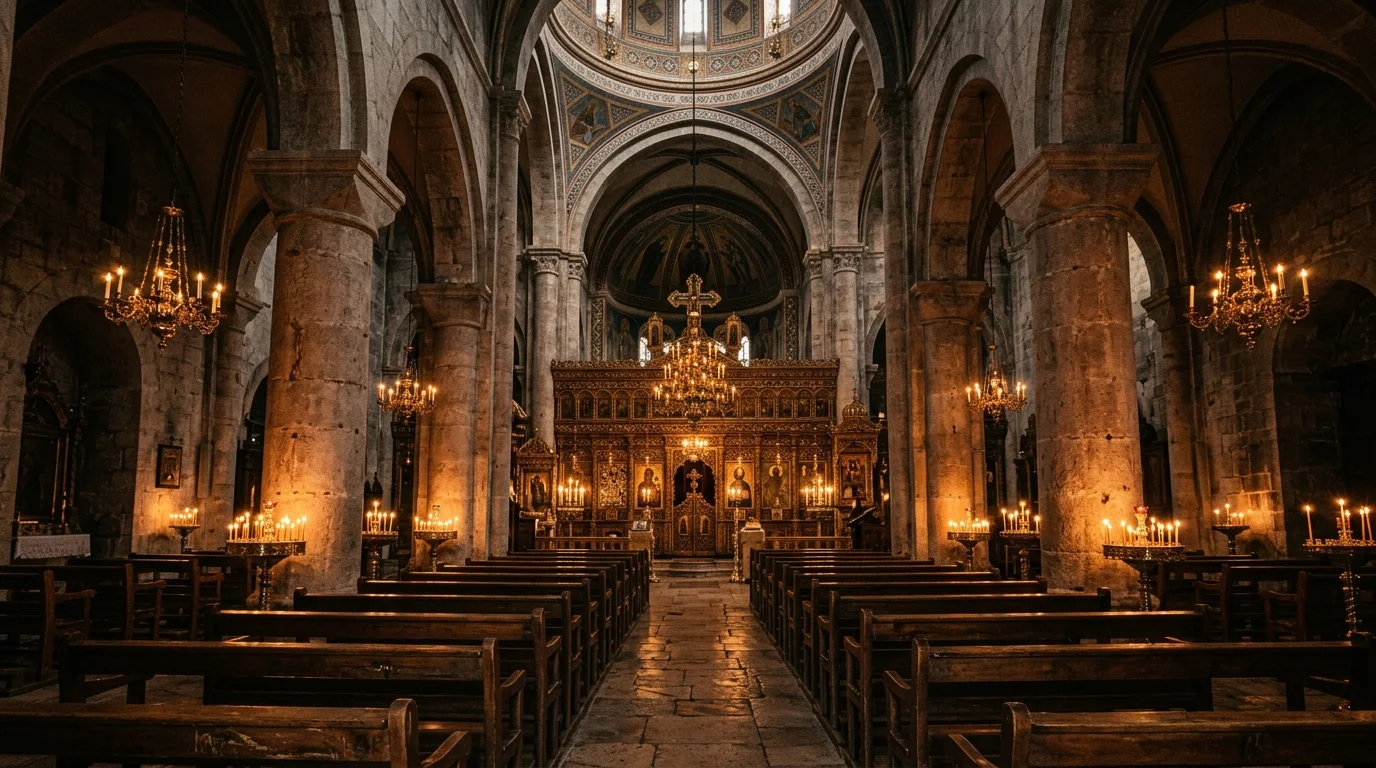
Here's where I think a lot of confusion starts. When we read "church" in English translations, we picture a building. Stained glass, maybe a steeple. But that's not what the original word meant at all.

The New Testament word is ekklesia, the assembly called together by God. In Scripture, it refers first to a gathered people, not a structure of brick or stone. When Paul writes to "the church in Corinth," he doesn't mean an address. He means the living, breathing assembly of believers meeting in that city. Does that distinction matter? I'd say it changes everything about how we read the rest of the New Testament, and it is central to what does the bible say about going to church.
Ekklesia as Assembly, Body, and Communion
Acts 2:42-47 gives us the earliest snapshot we have. The first Christians devoted themselves to the apostles' teaching, to fellowship, to the breaking of bread, and to prayers. Not one of these in isolation. All of them, together, as a rhythm of life. That's not a suggestion for a spiritually curious minority. It's simply what being a Christian looked like.
And 1 Corinthians 12:12-27 pushes this further. Paul describes the Church as one body with many members, an eye can't say to the hand, "I don't need you." I've sat with people who genuinely believe their private faith is sufficient, that they don't need the messiness of a parish community. I understand the impulse. But Paul's image doesn't leave much room for a Christian who insists on being a detached limb.
Why Do Orthodox Christians See Church as Eucharistic, Not Merely Social?
When I studied theology in Munich and later continued serving parishioners in real pastoral situations, I saw more clearly that the Bible speaks about the Church not mainly as a place we visit, but as a body and communion we enter. This is, honestly, where I think most Protestant and even some Catholic explanations stop short, and where Orthodoxy has something distinct to offer.
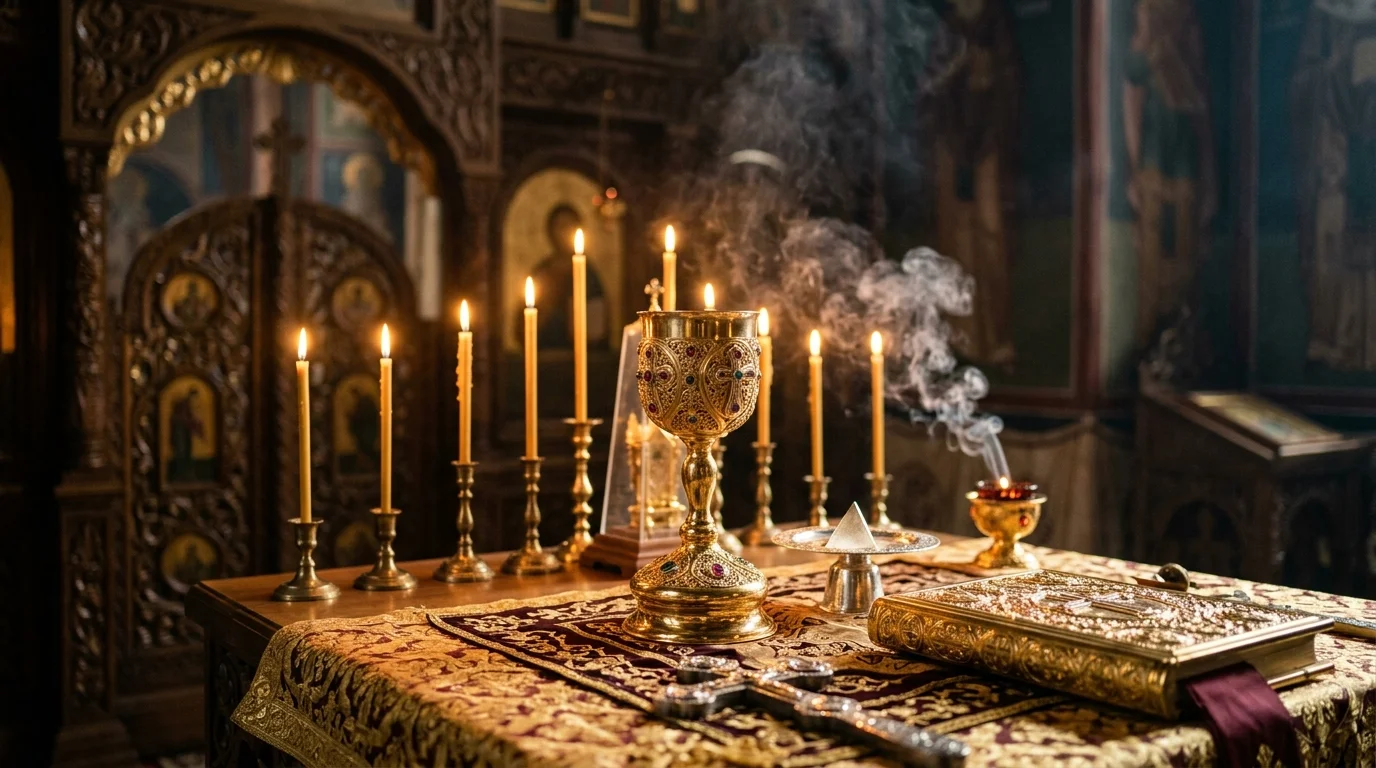
John 6:53-58 records Christ's own words about eating His flesh and drinking His blood as necessary for life in Him. For Orthodox Christians, this isn't a metaphor we politely nod at. It's the center of why we gather at all. Fr. Alexander Schmemann, the great Orthodox liturgical theologian, put it plainly: the Church's worship isn't one activity among others, it's the very manifestation of the Church as new life in Christ. Apart from the Eucharistic assembly, Christian existence becomes, in his words, unintelligible.
Sunday as the Lord's Day and "Mini-Pascha"
Here's something I wish more articles explained. Orthodoxy honors Saturday as Sabbath while celebrating Sunday as something else entirely, the Lord's Day. According to the 2024 Sabbatarianism overview's Eastern Orthodox section, Eastern Orthodoxy distinguishes Saturday as Sabbath and treats Sunday as the primary day of Eucharistic celebration, a weekly feast of the Resurrection rather than a transferred legal rule.
Revelation 1:10-13 shows John receiving his vision "on the Lord's Day," caught up among the lampstands, which represent the churches, with Christ walking among them. I find this deeply moving even after all these years of reading it. Sunday isn't a day we owe God attendance. It's the day we re-enter the Resurrection, every single week. The believer learns time itself differently by returning every Lord's Day. Not a rule. A rhythm. For those wondering what does the Bible say about going to church every Sunday, Orthodoxy answers less in terms of legalism and more in terms of Resurrection life.
Is It a Sin Not to Go to Church Every Sunday?
I get this question constantly. Someone missed three Sundays because of a new job schedule, or a flare-up of chronic illness, and they're lying awake wondering if God is keeping score. So let me try to answer honestly. Related: What Is Christianity? A Clear, Hopeful Guide to the Good....
Hebrews 10:24-25 tells us not to neglect meeting together, as some are in the habit of doing, but to encourage one another. Notice the word "habit." That's the key. Orthodox pastoral theology distinguishes between unavoidable absence and habitual neglect. The issue was never legal scorekeeping. It's whether someone is slowly drifting from the life of the Body, from hearing the Word, from the Eucharistic center of Christian existence.
As St. Basil the Great says in the Longer Rules, neglecting the meetings of the brethren deprives us of spiritual benefit. Not a threat. An observation about consequence, like saying a plant deprived of light will struggle.
Occasional Absence vs. Habitual Neglect
A baptized Christian once asked me directly: is it a sin if I miss church every Sunday because of work, illness, or exhaustion? I told her what I tell most people. It depends less on the calendar and more on the trajectory of your heart. Are you avoiding, or are you simply unable? Those are not the same thing, and God, I believe, knows the difference far better than we do.
I do not say this lightly: habitual, chosen absence without serious cause does drift a soul away from grace. But that's a conversation for confession and pastoral counsel, not a verdict I can hand down from an article. If you want a simple summary of the importance of going to church Bible verses, Hebrews 10, Acts 2, and 1 Corinthians 12 all point in the same direction: Christian life is meant to be shared, embodied, and sustained in communion.
A Pastoral Answer for People Carrying Shame or Church Hurt
Now here's where I want to slow down, because this is the part competitors almost never address. Last month someone told me she'd been away from any church for nearly six years after a pastor publicly humiliated her for a divorce she didn't want. She asked, quietly, "Father, does God even want me back?"
I told her what I believe with my whole heart. The Church understands repentance therapeutically, not as humiliation. Christ the Good Shepherd goes looking for the one sheep that wandered. He doesn't send it back with a lecture. Returning may feel awkward. Awkwardness isn't rejection. Sometimes the first step is just standing quietly in the back of a church, unnoticed, and letting that be enough for a while.
And here's the contrarian point I really want to make, because I think it matters more than most sermons on this topic. Hebrews 10:25 was written to believers under Roman persecution, people tempted to abandon the faith out of fear for their lives. It was not written to shame the chronically ill, the disabled, the abuse survivor recovering from a toxic congregation, or the caregiver who genuinely cannot leave the house on a Sunday morning. Scripture gives us more nuance than "just show up every week" suggests. I don't think we're honoring the text by flattening it into a guilt mechanism. If someone asks about the consequences of not going to church Bible verse, the real danger in Scripture is not missing one Sunday under strain, but slowly consenting to spiritual isolation.
Why Isn't Personal Bible Reading Enough by Itself?
I hear this one often, usually from people who've been genuinely wounded. "I pray and read Scripture at home, Father. Isn't that enough, especially since church people have hurt me before?"

I always want to acknowledge the wound first. It's real. I've sat across from too many people whose trust was broken by clergy or congregations to pretend otherwise. But Scripture itself leads believers into a visible, praying, Eucharistic community. Hebrews 10:24-25 and Acts 2:42-47 describe communal, sacramental, embodied faith. Personal prayer is necessary. It's just not the whole picture.
What I've watched happen, more than once, is someone starting by attending Sunday Liturgy quietly, without pressure, no expectations placed on them, and slowly discovering that healing often begins not by denying the wound but by returning to Christ among His people. Not instantly. Slowly. But real. Readers who want a broader Christian overview may also find this reflection on attending faithfully helpful alongside the Orthodox perspective offered here.
Scripture Belongs in the Worshiping Church
As St. Ignatius of Antioch writes in his Letter to the Magnesians, the Christian life is lived in harmony with God through the ordered life of the Church. This isn't about control. It's about the fact that Scripture was written by, for, and within a worshiping community, and it makes fullest sense when read there. I've written elsewhere about how Orthodox worship teaches through embodied practice and why the Divine Liturgy stands at the center of parish life; both themes connect directly to what does the bible say about going to church.
What Did the Early Church Fathers Teach About Gathering for Worship?
As St. John Chrysostom teaches in Homily 3 on Ephesians, prayer at home is not the same as prayer in the Church, where believers stand in one mind and one charity. I've thought about this line for years. There's something about corporate prayer, the accord of souls, he calls it, that solitary devotion simply doesn't replicate. I don't fully understand why that's true. But I've felt it, standing in the Cathedral in Munich during Divine Liturgy, more times than I can count.
As St. Cyprian of Carthage insists in On the Unity of the Catholic Church, God is not rightly confessed as Father while the Church is refused as Mother. Strong language, I know. But it's pointing at something Paul already said in 1 Corinthians 12: we don't get to keep the parts of Christianity that feel comfortable and discard the rest. Discover: What Do Orthodox Christians Believe? The Main Truths of Our....
As St. Maximus the Confessor explains in the Mystagogia, the Church images God's unifying work by gathering believers into communion. This is mystical language, and maybe that's too abstract for a first read. Let me put it more simply: when we gather, something happens that we can't manufacture alone in our living rooms. Call it grace. Call it communion. I don't have a better word for it.
Father Victor's Perspective: Why This Question Is Really About Communion
Here's where I want to offer something I haven't seen articulated quite this way elsewhere, though I could be wrong about that. The Bible's teaching on church attendance can't be reduced to a command about showing up. It's really a teaching about staying organically alive in Christ's Body. Attendance is the symptom. Communion is the substance.

Think about it this way. A hand doesn't "attend" the body. It's either connected, receiving blood and nerve signal, or it's severed and dying. That's a strange image, maybe even uncomfortable, but I think Paul intended exactly that discomfort in 1 Corinthians 12.
And here's my second observation, one I've reached slowly through years of pastoral counseling and my own study in psychology. The opposite of "going to church" isn't really "staying home." It's training the soul, slowly and almost invisibly, to live as though salvation were a private transaction. Our culture already pushes us toward that assumption in nearly everything else, personal achievement, private wellness, curated isolation. The Church resists that pull, not by force, but by insisting we need each other to become who we're meant to be.
Our analysis of the pastoral conversations I've had over the years shows a consistent pattern: people rarely leave the Church over doctrine. They leave over wounds, exhaustion, and unexamined shame. Which means the biblical call to gather has to be preached with medicine in one hand and truth in the other.
How Does Orthodoxy Compare With Catholic and Protestant Views on Church?
I knew the Catholic tradition quite well before my conversion, and I've studied Protestant ecclesiology enough to respect its seriousness on this question too. So let me lay this out honestly, without pretending the differences don't exist, but also without condemning anyone.
How Major Christian Traditions Understand Going to Church
[COMPARISON_TABLE]
Metropolitan Kallistos Ware once wrote that Christianity is essentially corporate, and to be Christian is to belong to the Church where salvation is lived. That line has stayed with me since seminary. Not because it's clever, but because it's simply true, in a way that cuts against nearly every instinct of modern individualism.
Why Should We Go to Church According to the Bible?
For readers who want to hear this unpacked in a different voice than mine, I'd point you toward a talk from Ancient Faith Ministries that walks through exactly this question, why Christians gather for the Divine Liturgy, from Scripture through to lived pastoral experience. Another useful overview, from outside the Orthodox tradition but still worth reading carefully, is this article on why we should go to church according to the Bible.
[YOUTUBE_VIDEO]
Luke 4:16 tells us Christ Himself went to the synagogue, as was His custom. Not occasionally. Habitually. If the Son of God saw fit to participate in communal worship, week after week, I don't think we're in a position to consider it optional for ourselves. For people searching What does the Bible say about going to church every week or even looking for a 10 reasons why we go to church Bible verse summary, this one detail matters: Christ Himself treated gathered worship as a holy custom, not an optional add-on.
Common Misconceptions About Going to Church
Let me address a few things I hear constantly, gently, because I think most of these come from good instincts pointed in the wrong direction.
"The Bible teaches a personal relationship with God, so church attendance is optional." Personal faith is indispensable. But biblical faith is never merely private. Hebrews 10:24-25, Acts 2:42-47, and 1 Corinthians 12:12-27 all show Christians as members of a gathered body. This misconception exists because modern spirituality often prizes authenticity over institutions, and many people have watched church get reduced to a social club rather than a sacramental body. Fair enough. But the New Testament assumes sincere faith joins believers to a praying, visible community. Learn more: What Is Non Denominational Church? Uncover the Truth.
"Orthodox Christians go to church to earn salvation." Not at all. We teach salvation by the grace of Christ, lived as communion with Him. Going to church isn't paying a debt. It's receiving life, healing, Eucharistic union. This idea persists because some people have only heard church attendance framed in terms of guilt or performance. The point was never earning points with God. It's refusing to live cut off from the gifts He already gave His Church.
"Any gathering of Christians counts as church." Informal fellowship is beautiful, genuinely so. But church in the New Testament and Orthodox life means an ordered assembly with prayer, teaching, and sacramental life under pastoral oversight. Camping with friends and talking about God is a good thing. It's just not church, not in the fuller biblical sense.
"Sunday is just a Christianized Sabbath rule." Orthodoxy honors Saturday as Sabbath while celebrating Sunday as the Lord's Day, the Resurrection feast. Sunday isn't a transferred legal code. It's joyful, Paschal. We gather because Christ rose, not because a rule got moved to a different day.
"Online sermons can fully replace physical attendance." Digital resources genuinely help, especially for the homebound or isolated. But they can't replace embodied sacramental participation, above all the Eucharist. Online access can be a mercy during illness or travel. It was never meant to become the whole of Christian life.
"If I've stayed away a long time, God probably doesn't want me back." This one breaks my heart every time I hear it. The Church understands repentance therapeutically. Christ the Good Shepherd seeks the lost. Return is welcomed through prayer and conversation, not humiliation. Awkward, maybe. Rejected, never.
Frequently Asked Questions
Is it a sin to not go to church every Sunday?
Not automatically, no. Orthodox teaching distinguishes unavoidable absence, illness, caregiving, genuine impossibility, from habitual, chosen neglect. Hebrews 10:24-25 warns against making a habit of forsaking the assembly, not against a single missed Sunday due to circumstances beyond your control. As St. Basil the Great notes in the Longer Rules, the danger lies in depriving yourself of spiritual benefit over time, not in any single absence. If you're wrestling with this, talk to a priest rather than carrying the anxiety alone.
Is not going to church a sin in the Bible?
The Bible doesn't frame occasional absence as sin; it warns against the pattern of neglecting fellowship altogether (Hebrews 10:25). Acts 2:42-47 shows gathering as the normal apostolic rhythm, not a legal minimum. For readers carrying church hurt or chronic illness, please hear this clearly: Scripture's warning was aimed at people tempted to abandon Christ out of fear, not at those who physically cannot attend or who are healing from real wounds.
Where in the Bible does it say to join a church?
Scripture doesn't use modern membership language, but Acts 2:41-42 shows baptism bringing believers directly into a visible, local community with teaching, fellowship, and shared life. 1 Timothy 3 and Titus 1 describe elders and deacons overseeing these communities. As St. Ignatius of Antioch writes in his Letter to the Magnesians, Christians lived in ordered harmony under bishop and presbyters from the earliest generation. There's no biblical picture of Christianity practiced entirely apart from a concrete local church.
Did Jesus ever tell people to go to church?
Jesus never used the word "church" the way we use it today, but Luke 4:16 shows Him habitually attending synagogue worship, and He promised His presence wherever believers gather in His name (Matthew 18:20). He founded the Church Himself (Matthew 16:18) and commanded His disciples to baptize and teach, which only makes sense within a gathered community. If Christ participated in communal worship as His custom, that tells us something important about what He expects from us.
About the Author
Father Victor Meshko is an Orthodox priest of the Russian Orthodox Church Abroad, serving at the Cathedral of the Holy New Martyrs and Confessors of Russia in Munich, in the Diocese of Berlin and Germany. Ordained to the priesthood in 2013, he holds multiple degrees in philosophy, theology, and psychology, including theological studies at LMU Munich's Institute for Orthodox Theology, and is the published author of a book on Archbishop Filaret of Chernigov. His writing for Find to God combines scholarly Orthodox theology, patristic depth, and practical pastoral care for seekers.
Researched and written by Father Victor Meshko. AI tools were used during the research process.
<table class="seo-table comparison-table"><caption>How Major Christian Traditions Understand Going to Church</caption><thead><tr><th>Aspect</th><th>Orthodox</th><th>Catholic</th><th>Protestant</th></tr></thead><tbody><tr><td>What 'church' primarily means</td><td>A concrete Eucharistic community, the Body of Christ gathered under bishop and clergy</td><td>A visible sacramental community centered on the Mass and communion with the Church</td><td>Usually the gathered community of believers; emphasis varies by denomination</td></tr><tr><td>Why believers gather</td><td>For Divine Liturgy, Eucharist, prayer, Scripture, and life in communion</td><td>For Mass, Scripture, sacramental grace, and ecclesial communion</td><td>For preaching, worship, fellowship, discipleship, and often Communion</td></tr><tr><td>Is Sunday gathering obligatory?</td><td>Strongly expected as the normal life of the Church; absence evaluated pastorally</td><td>Formally obligatory in canon law except for serious reasons</td><td>Usually strongly encouraged; level of formal obligation varies widely</td></tr><tr><td>Can private faith replace church?</td><td>No; private faith is incomplete without sacramental and communal life</td><td>No; private devotion does not replace Sunday Mass and ecclesial belonging</td><td>Generally no, though some traditions frame this more flexibly</td></tr><tr><td>What is unique about Sunday?</td><td>The Lord's Day, weekly Resurrection feast, a mini-Pascha</td><td>The Lord's Day and primary day of Eucharistic worship</td><td>Usually the main day of worship and remembrance of the Resurrection</td></tr></tbody></table>


Help us bring the christian faith to modern seekers worldwide.
Godfinder relies on generous souls to sustain our multilingual platform, develop new tools like the Magic Cube, and support struggling believers. If our work has touched your heart, consider contributing to our nonprofit partner

Do you want to know More? Ask God’s Word!
Do you have questions, worries, or hopes? Feeling lost, burdened, or alone? “Ask God’s Word” brings you gentle guidance rooted in Scripture and the wisdom of the Church. Find hope and strength today!
