.avif)
What Is an Orthodox Jew? Discover the Meaning Today
A woman lights her Shabbat candles at sundown on Friday. On the counter beside her, a phone buzzes with a Slack message from her boss. She won't touch it now. Not until three stars appear in the sky tomorrow night. If you're asking what is an orthodox jew, that small scene, more than any list of...

The Slack Notification and What Is an Orthodox Jew
A woman lights her Shabbat candles at sundown on Friday. On the counter beside her, a phone buzzes with a Slack message from her boss. She won't touch it now. Not until three stars appear in the sky tomorrow night. If you're asking what is an orthodox jew, that small scene, more than any list of 613 commandments, tells you what it actually means to be an Orthodox Jew in 2026.
In my years serving as an Orthodox priest since 2013, I've found that seekers ask me about Orthodox Jews for a reason that goes deeper than curiosity. They want to understand the biblical world Christ himself lived in, without falling into stereotypes they half-remember from somewhere. And honestly? Most articles on this topic answer a question nobody's really asking. They give you rules, percentages, sects. What they don't give you is the texture of a life lived under covenant, negotiated daily, sometimes awkwardly, between an ancient calling and a modern world that doesn't pause for anyone.
What strikes me most, and I say this after years of parish conversations in Munich, is that Orthodox Christians and Orthodox Jews share far more than the word "Orthodox." We both know what it means to carry something ancient into a world that keeps asking us to explain ourselves.
Quick Answer: An Orthodox Jew is a Jew who holds the written Torah and the oral Torah as divinely revealed and treats halakhah, Jewish law, as binding on nearly every part of daily life, including prayer, diet, family, and Sabbath rest.
In This Article:
- The Slack Notification and What Is an Orthodox Jew
- What Is an Orthodox Jew? A Simple Answer for Seekers
- Where Does What Is an Orthodox Jew Fit Within Judaism?
- What Do Orthodox Jews Actually Believe?
- How Do Orthodox Jews Actually Live Their Faith Day by Day?
- Orthodox Jew vs Orthodox Christian: What's the Real Difference?
- Father Victor's Perspective: What Christians Often Miss About Orthodox Jews
- How Should Orthodox Christians Speak About the Jewish People?
- Common Misconceptions About Orthodox Jews
TL;DR — Key Takeaways
- An Orthodox Jew accepts Torah and halakhah as divine law, not as cultural custom or personal preference.
- Orthodox Judaism isn't just "stricter Judaism" — it's a full theology of covenant, holiness, and sanctified time.
- Orthodox Jews vary widely: Haredi, Hasidic, Yeshivish, and Modern Orthodox communities live this calling in very different ways.
- For Christians, understanding Orthodox Jews often reveals how shallow our own reading of the Old Testament has become.
What Is an Orthodox Jew? A Simple Answer for Seekers
So let's start plainly. An Orthodox Jew is a Jew who understands the written Torah and the oral Torah as divinely given, and halakhah, the whole body of Jewish law and its rabbinic interpretation, as binding on everyday life. That's the quotable version. But it's not the whole story.

According to the educational summary on Judaism's key beliefs and practices, Orthodox Judaism sees halakhah as of divine origin and binding in daily life, shaping prayer, Sabbath, diet, and family. That's the textbook answer. Here's what the textbook won't tell you: this isn't a checklist somebody follows out of fear. It's closer to breathing. Ask an Orthodox Jew why they keep kosher and most won't say "because rule 47 requires it." They'll say something closer to, "because this is how I remember Who I belong to, every single meal." In other words, if someone asks what is an orthodox jew, the deepest answer is not merely about Orthodox Jew rules, but about belonging, memory, and covenant.
Quick Answer
An Orthodox Jew accepts the full authority of Torah, written and oral, and lives according to halakhah as an expression of covenant with God, not merely as a religious style choice.
Where Does What Is an Orthodox Jew Fit Within Judaism?
Judaism today isn't one thing. It never really was, if we're honest, but the modern divisions are fairly recent. As Orthodox Jewish educator Allison Josephs notes, what we now call "Orthodox" Judaism used to simply be called Judaism. There was no adjective needed. The label "Orthodox" only emerged in the 19th century, as a response to the rise of Reform Judaism, which reinterpreted halakhah as evolving human tradition rather than fixed divine command. That matters for understanding what is an orthodox jew, because the phrase only makes sense against the background of these modern distinctions within Judaism.
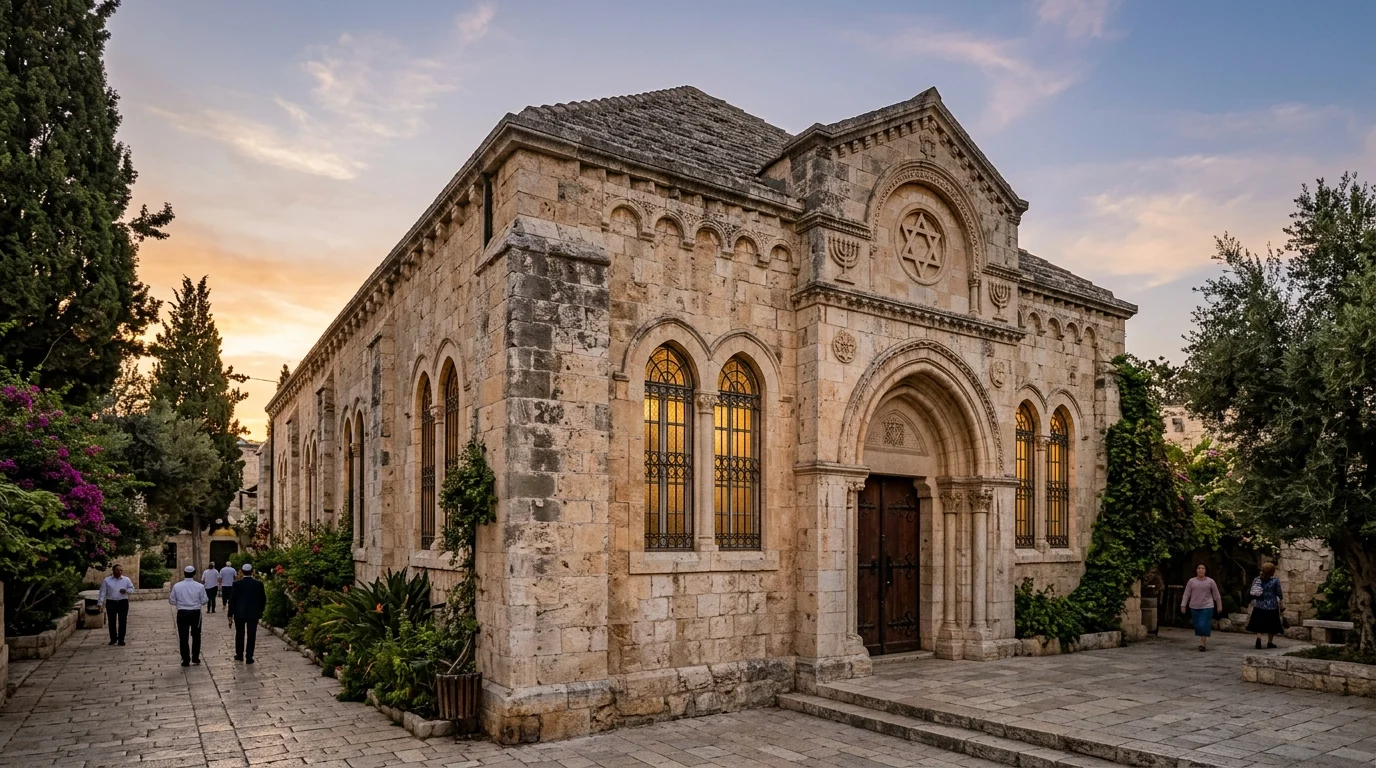
Judaism has roughly 15 million adherents worldwide, a relatively small number compared to Eastern Orthodoxy's estimated 290 million, according to global religion rankings from 2026. Small in global numbers, but hardly small in impact on the biblical story we as Christians inherit.
Orthodox vs Conservative vs Reform
Orthodox Judaism affirms full divine origin of both Torah and halakhah. Conservative Judaism generally treats halakhah as sacred but evolving. Reform Judaism tends to view Jewish law as a rich ethical and cultural inheritance rather than binding command. None of these are monolithic blocks, mind you. There's real diversity inside each. If you've ever wondered about Orthodox Judaism vs Judaism, this is really a question about how Orthodox Judaism understands itself within the broader Jewish world rather than outside it.
Secular Jews vs Orthodox Jews
Secular or cultural Jews often keep ethnic identity, maybe a Passover Seder, maybe High Holy Days, without the daily halakhic framework. Orthodox Jews structure their whole calendar, kitchen, and closet around covenant obedience. Orthodox Jews make up about 10% of American Jewry, according to a Harvard Divinity School Bulletin analysis, a meaningful minority within a Jewish population of roughly 7.5 million people in the United States. So when people ask what is an orthodox jew, they're asking about a meaningful but not majority form of Jewish life today.
What Do Orthodox Jews Actually Believe?
Here's where I want to slow down, because this is the part most articles rush past. Read more: What Is an Orthodox Christian: Discover the Faith.

Torah, Oral Torah, and Halakhah
Orthodox Jews believe God gave Moses the written Torah at Sinai, along with an oral tradition explaining and applying it. That oral tradition was eventually written down in the Mishnah and Talmud, and later organized into legal codes. Scripture itself points toward this kind of embodied, all-encompassing devotion. Deuteronomy 6:4-9 commands love of God with heart, soul, and might, and instructs that these words be bound as a sign on the hand and worn between the eyes, taught diligently to children, spoken at home and on the road, at lying down and rising up. That's not metaphor to an Orthodox Jew. That's tefillin. That's mezuzah on the doorpost. That's a whole household oriented toward God, morning and night.
Leviticus 11 lays out which animals may be eaten and which may not, the biblical root of kosher observance. Orthodox Judaism doesn't treat that chapter as ancient dietary trivia. It reads it as still speaking, still binding, still shaping what happens at the family table tonight. These Orthodox Judaism beliefs are essential if we want to answer what is an orthodox jew with any real honesty.
Messianic Hope and Why Orthodox Jews Don't Accept Jesus
Orthodox Jews look for a future human Messiah descended from David who will restore Israel and rebuild the Temple. They don't accept Jesus of Nazareth as that Messiah or as the Son of God. I want to say this plainly and without softening it into vagueness: that's a real, serious theological disagreement, not a misunderstanding waiting to be cleared up over coffee.
And yet, disagreement isn't hatred. It never has to be.
How Do Orthodox Jews Actually Live Their Faith Day by Day?
This is where the Wikipedia infobox runs out of things to say, and where the real story starts.

Shabbat
From sundown Friday to nightfall Saturday, observant Jews rest from categories of defined work, no driving, no using electronics, no writing, gather for festive meals, attend synagogue. Sounds simple until you picture the actual friction. I've talked with catechumens who assumed this kind of rest was easy in a slower century and can't imagine it now, with phones buzzing, deadlines circling, a world that never quite stops asking for your attention. Sound familiar? It should. We wrestle with something similar every time we try to keep our own fasting rules amid a culture that never fasts from anything. If you're still asking what is an orthodox jew, start here: someone who believes holy time really can interrupt the modern machine.
Kosher Food
Kosher observance follows Leviticus 11: permitted animals, ritual slaughter, no mixing meat and dairy, no blood. In practice, this means separate dishes, separate sinks sometimes, careful label-reading at the grocery store, awkward moments at a coworker's birthday party when the cake isn't kosher and everyone's watching to see what you'll do.
Prayer, Modesty, Hair, and Family Life
Daily prayer three times a day, often with a minyan, a quorum of ten. Modesty in dress. Many men wear a kippah; in Hasidic and Haredi communities, payot, the sidelocks, and beards, drawn from readings of Leviticus 19:27. Married women in many communities cover their hair with a scarf or wig, a mark of sanctified married life, not fashion. None of this looks the same from community to community. A Modern Orthodox professional in Manhattan and a Hasidic father in a Brooklyn enclave both call themselves Orthodox, and both mean it, though their daily lives look almost nothing alike. Questions about Orthodox Jew hair or Orthodox Jewish women usually arise here, but they only make sense when seen as part of a larger covenantal pattern rather than as exotic customs.
Ultra-Orthodox, or Haredi, Jews are projected to reach about 25% of Israel's population by 2050, and about 40% of the potential military draft pool, according to Associated Press reporting citing Ravitsky Tur-Paz. That's not a footnote. That's a demographic shift already reshaping Israeli politics, education, and public life. The public conversation also gets tangled when people confuse Orthodox Jew vs Zionist, even though religious identity and political ideology are not identical things. On that point, some Jewish writers have reflected helpfully in this Times of Israel essay and in this analysis of American Jewish political futures.
Orthodox Jew vs Orthodox Christian: What's the Real Difference?
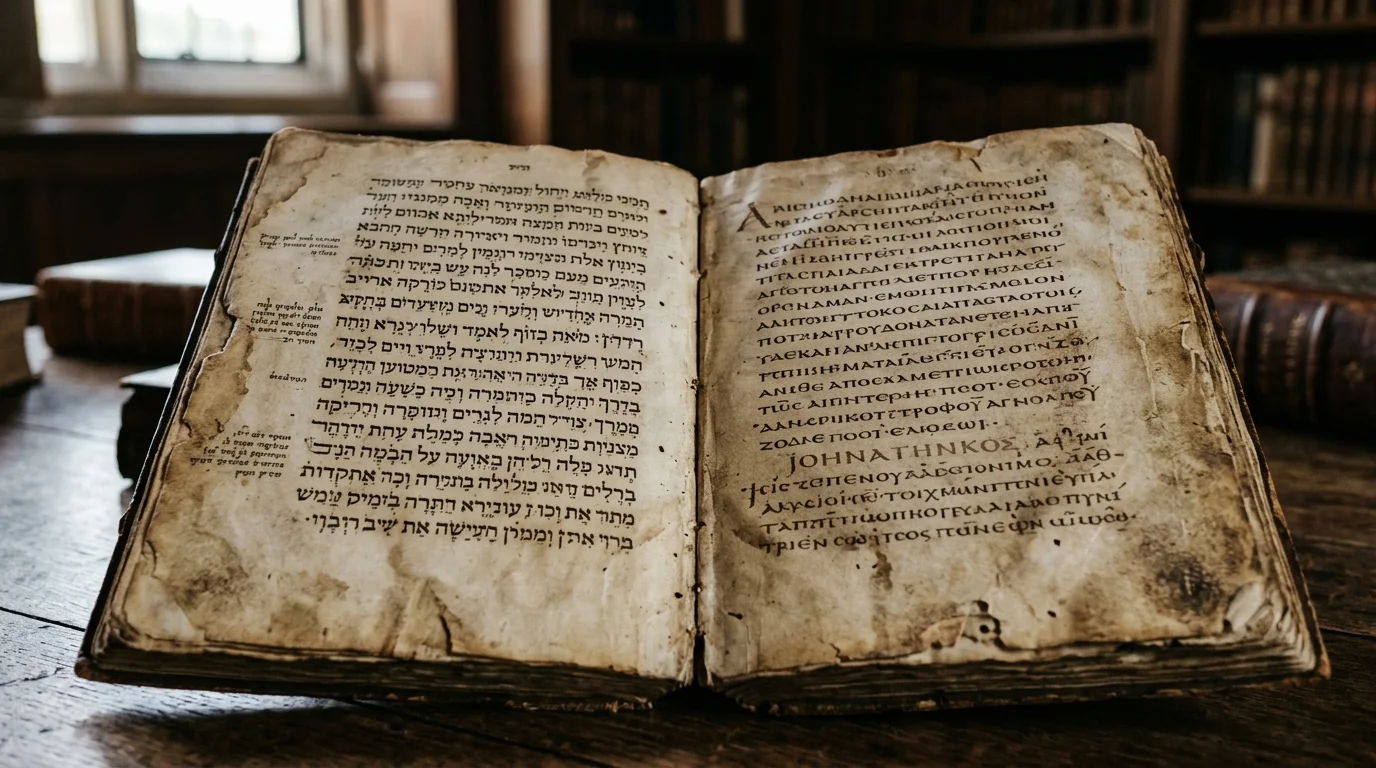
People search this phrase constantly, and I understand why. Two traditions, same word, seemingly parallel devotion to ancient practice. But that's not quite right. Let me back up and say what I actually mean.
Shared Roots
We share Genesis, Exodus, the Psalms, the Prophets. Genesis 12:1-3 tells of God's call to Abram, the promise that through his descendants all nations would be blessed. That promise is the root system beneath both trees. Orthodox Christians read the Psalms every single day of the Liturgical cycle. We fast, we keep feasts, we structure time around holiness, much as Orthodox Jews do, though toward a different center. Readers interested in related background may also appreciate our guide to the Old Testament in Orthodox Christianity and our reflection on what Holy Tradition means in Orthodoxy.
The Central Difference About Christ
The central difference between Orthodox Judaism and Christianity isn't whether the Law is holy. Both traditions say it is. The difference is whether Jesus Christ is its fulfillment. Matthew 5:17-20 records Christ saying he came not to abolish the Law or the Prophets but to fulfill them. That single claim is the hinge on which everything else turns.
As St. John of Damascus states in his Exposition of the Orthodox Faith (8th century), "We accept all the law and the prophets, but we interpret them according to Christ who is their fulfillment." That's the Orthodox Christian position in a sentence. A helpful Orthodox treatment of Judaism and other religions can also be found in this Apologia Library article.
Why Christians Don't Keep Halakhah
So why don't Christians follow the full halakhic system if we revere the Old Testament so highly? Acts 15:1-21 records the Jerusalem Council's answer: Gentile believers weren't placed under the full yoke of Mosaic observance. That decision wasn't a dismissal of the Law's holiness. It was a recognition that in Christ, something new had happened, something the Law had always pointed toward.
Orthodox Jew vs Orthodox Christian vs Other Christian Views on Law, Jesus, and Tradition
[COMPARISON_TABLE]
As St. John Chrysostom comments in his Homilies on Romans (4th century), "The root is holy; so also are the branches. Even if some were broken off, the root remains holy." I return to that line often. It keeps me from ever speaking of Israel as though God's promises simply expired. Related: What Is Orthodox Christianity? Discover Its Depth.
Father Victor's Perspective: What Christians Often Miss About Orthodox Jews
Here's something I've come to believe after years of teaching Scripture in parish settings, and I don't think most competitors online say this clearly enough. An Orthodox Jew isn't simply "a strict religious person." That's a sociologist's answer, and it flattens something enormous. From an Orthodox Christian view, an Orthodox Jew is someone whose entire time, body, household, and memory are ordered by covenantal obedience. That's not a list of rules. That's a theology of sanctified life, worked out at the kitchen sink and the office desk and the bedside table, every day.

I'll be honest with you about something else. Learning what an Orthodox Jew is should produce a kind of repentance in us as Christians. Not guilt for its own sake, but a real examination. When I studied theology at LMU Munich and later discussed Scripture with catechumens preparing for baptism, I saw how easily we dismiss the Old Testament as background material, as though it's the warm-up act before the main event of the Gospels. If we treat Torah as obsolete, we usually fail to grasp what Christ actually fulfills. You can't understand fulfillment if you never took the thing being fulfilled seriously in the first place. Does that make sense?
And here's the third thing, maybe the most important one. The real difference between Orthodox Judaism and Orthodox Christianity isn't that one has law and the other has grace. I used to hear that framing all the time in my Catholic upbringing, and I've gone back and forth on how fair it actually is. It's too simple. What Orthodox Christianity actually teaches is that grace fulfills and transfigures covenantal life in Christ. The Law was never opposed to grace. It was preparing for it, the way St. Basil once described it, as a tutor leading toward Christ without ever ceasing to be holy.
Our own analysis of pastoral conversations across my years in ministry shows the same pattern surfacing again and again: catechumens who assume Judaism and Christianity are simply competing rulebooks almost always soften into something more reverent once they read Romans 9-11 for themselves. In that sense, asking what is an orthodox jew can become the beginning of a much deeper Christian self-examination.
How Should Orthodox Christians Speak About the Jewish People?
With care. With gratitude. And, I'll admit, sometimes with more humility than we naturally have.
Alexander A. Winogradsky Frenkel, an Orthodox priest serving in Jerusalem, has written that Christianity has preserved a reverent memory of Jews whose obedience to the commandments of Israel was recognized as fidelity to God worthy of martyrdom. That's a striking way to put it. We don't have to agree theologically with someone to recognize the depth of their fidelity.
Romans 9-11 gives us Paul's own anguished, careful reflection on Israel's election and what he calls God's irrevocable gifts. If Paul, a Jew who came to know Christ, could speak of his own people with such longing and respect, I don't see how we get to speak with anything less.
Common Misconceptions About Orthodox Jews
"Orthodox Judaism is just stricter Judaism." Not quite. It's not extra rigor layered onto an otherwise ordinary religion. It's a theological claim that Torah and halakhah are divinely revealed and binding across all of daily life. What looks like strictness from outside is, from inside, a comprehensive covenantal way of life.
"Orthodox Jews and Orthodox Christians are basically parallel versions of the same religion." They share the word, and they share a reverence for tradition, but they're distinct religions with entirely different confessions about God, Christ, Scripture, and worship. The shared adjective is a coincidence of language, not theology. Related: Orthodox vs Protestant: Exploring Key Differences.
"Orthodox Jews hate Jesus or hate Christians." They don't accept Jesus as Messiah or Son of God. That's a genuine theological rejection. But rejection isn't hatred, and Christians should never collapse honest disagreement into caricature.
"Orthodox Jews can't drink alcohol." Actually, wine holds an important ritual place in Jewish life, especially through Kiddush on Shabbat and festivals. What's forbidden is drunkenness, not the wine itself.
"All Orthodox Jews are politically Zionist in the same way." Not at all. "Orthodox Jew" names a religious identity. "Zionist" names a political stance. They sometimes overlap, and sometimes they don't. Some Haredi communities are explicitly non-Zionist or anti-Zionist.
"Christians no longer need the Old Testament once they believe in Jesus." The Orthodox Church reveres the Old Testament as the Word of God, full stop. We read the Law and Prophets as fulfilled in Christ, never as erased. Christians don't outgrow the Old Testament. We read it more deeply in light of Christ.
Frequently Asked Questions
Do Orthodox Jews believe in Jesus?
No, Orthodox Jews don't accept Jesus as the Messiah or the Son of God. They may regard him, at most, as a historical Jewish teacher whose followers eventually formed a separate faith. Orthodox Christians confess Jesus as the fulfillment of the Law and Prophets, as Matthew 5:17-20 records, which marks the central theological divide between the two traditions.
Can Orthodox Jews drink alcohol?
Yes, Orthodox Jews can drink alcohol, and wine actually holds an important ritual place in Jewish worship, especially for Kiddush on Shabbat and festivals. What halakhah forbids is drunkenness and loss of self-control, not moderate, sanctified use of wine, similar in spirit to how we understand temperance in Orthodox Christian teaching.
What are the differences between secular Jews and Orthodox Jews?
Secular Jews typically hold onto ethnic or cultural Jewish identity, perhaps observing major holidays, without treating halakhah as divinely binding day to day. Orthodox Jews structure their entire calendar, diet, and family life around Torah and halakhah as direct commands from God. The difference isn't intensity of feeling. It's a difference in what each considers actually binding.
Do Orthodox Jews accept LGBTQ?
Traditional Orthodox halakhah defines marriage as between a man and a woman and considers same-sex sexual acts prohibited, based on readings from Leviticus and rabbinic tradition. Social attitudes vary though, and some Modern Orthodox communities work toward pastoral compassion within that traditional framework, similar to tensions many traditional Christian communities navigate as well.
Are all Orthodox Jews Zionists?
No. Many Orthodox Jews support the State of Israel religiously and politically, but some Haredi communities are explicitly non-Zionist or anti-Zionist on theological grounds, believing the restoration of Israel belongs to the Messiah alone, not to a modern political state. Religious identity and political stance, while often linked in public perception, aren't the same thing.
A note on transparency: AI tools assisted in researching and structuring parts of this article, but Father Victor Meshko provided the theological review, pastoral reflection, and final editorial approval, in keeping with responsible content standards.
About the Author
Father Victor Meshko is an Orthodox priest of the Russian Orthodox Church Abroad (ROCA), Diocese of Berlin and Germany, serving at the Cathedral of the Holy New Martyrs and Confessors of Russia in Munich since 2013. He holds multiple degrees in philosophy, theology, and psychology, including theological studies at LMU Munich, and is the published author of Erzbischof Filaret (Gumilevskij) von Cernigov und Nezin as well as academic work on the prophetic and eschatological character of the Apocalypse. For Find to God, he brings together scholarly formation, parish experience, and pastoral clarity for seekers.
Researched and written by Father Victor Meshko. AI tools were used during the research process.
<table class="seo-table comparison-table"><caption>Orthodox Jew vs Orthodox Christian vs Other Christian Views on Law, Jesus, and Tradition</caption><thead><tr><th>Aspect</th><th>Orthodox Judaism</th><th>Eastern Orthodoxy</th><th>Catholic / Protestant Overview</th></tr></thead><tbody><tr><td>View of Torah</td><td>Written and oral Torah are divinely revealed and binding through halakhah</td><td>Torah is divine revelation fulfilled in Christ</td><td>Usually affirms fulfillment in Christ, with variations in how law is categorized</td></tr><tr><td>View of Jesus</td><td>Not accepted as Messiah or Son of God</td><td>Confessed as the incarnate Logos, Messiah, and Son of God</td><td>Also confesses Jesus as Christ, with doctrinal variation among denominations</td></tr><tr><td>Religious practice</td><td>Shabbat, kosher, prayer, family purity, synagogue life</td><td>Liturgy, sacraments, fasting, prayer rule, feasts and fasts</td><td>Varies widely by denomination and community</td></tr><tr><td>Role of tradition</td><td>Rabbinic tradition and legal interpretation are central</td><td>Holy Tradition, Scripture, Fathers, liturgy, councils</td><td>Ranges from strong traditional authority to sola scriptura frameworks</td></tr><tr><td>Relationship to the Old Testament</td><td>Direct covenantal norm for Jewish life</td><td>Revered as God's Word and interpreted through Christ</td><td>Generally revered, but interpreted through different doctrinal systems</td></tr></tbody></table>


Help us bring the christian faith to modern seekers worldwide.
Godfinder relies on generous souls to sustain our multilingual platform, develop new tools like the Magic Cube, and support struggling believers. If our work has touched your heart, consider contributing to our nonprofit partner

Do you want to know More? Ask God’s Word!
Do you have questions, worries, or hopes? Feeling lost, burdened, or alone? “Ask God’s Word” brings you gentle guidance rooted in Scripture and the wisdom of the Church. Find hope and strength today!
