.avif)
What Is Non Denominational Church? Uncover the Truth
Every non-denominational church proudly tells you what it's free from. No bishops, no synod, no denominational headquarters telling them what to preach. But when people ask what is non denominational church, I've noticed after years of sitting across from people in confession and pastoral...
Who's Actually in Charge? What Is Non Denominational Church
Every non-denominational church proudly tells you what it's free from. No bishops, no synod, no denominational headquarters telling them what to preach. But when people ask what is non denominational church, I've noticed after years of sitting across from people in confession and pastoral counseling that almost none of these churches will tell you who actually has the power to remove a pastor, audit the finances, or overrule bad doctrine. And in most cases, the honest answer is nobody.
In my years of serving as an Orthodox priest since 2013, I've met many sincere Christians who say, "I attend a non-denominational church," but are still trying to understand what that actually means. So let's talk about it. Not to score points for one tradition over another, but because I think the question of what is non denominational church deserves more honesty than it usually gets.
✏️ By Father Victor Meshko | 📅 Updated: September 2026 | ⏱️ 10 min read
Quick Answer: A non-denominational church is usually an independent Protestant congregation that governs itself locally, without belonging to a historic denomination like Baptist, Methodist, or Lutheran, and often without bishops, creeds, or a formal liturgy.
In This Article:
- Who's Actually in Charge? What Is Non Denominational Church
- What Is a Non-Denominational Church? What Is Non Denominational Church
- Why Many People Choose Non-Denominational Churches
- The Orthodox Question: What Makes a Church the Church?
- What the Bible Shows About Church Unity and Authority
- What the Early Church Fathers Taught
- Orthodox, Catholic, and Non-Denominational Views Compared
- Father Victor's Perspective: Why 'No Denomination' Still Forms a Denomination of Habit
- Common Misconceptions About Non-Denominational Churches
- If I Attend a Non-Denominational Church, What Faith Am I Actually Practicing?
- How to Explore Orthodoxy If You Are Coming From a Non-Denominational Background
TL;DR — Key Takeaways
- A non-denominational church is an independent congregation, usually evangelical, governed by its own local leadership rather than a bishop or denomination.
- Orthodoxy teaches that the Church is one, holy, catholic, and apostolic, a visible communion with continuity back to the apostles, not something rebuilt fresh at the local level.
- Every church has a theology of authority and tradition, even one that says it has none, so it's worth asking who actually holds power when things go wrong.
- Independent Christians number around 409.4 million worldwide, so this isn't a fringe question, it's one of the major shapes modern Christianity has taken.
What Is a Non-Denominational Church? What Is Non Denominational Church
Quick Answer
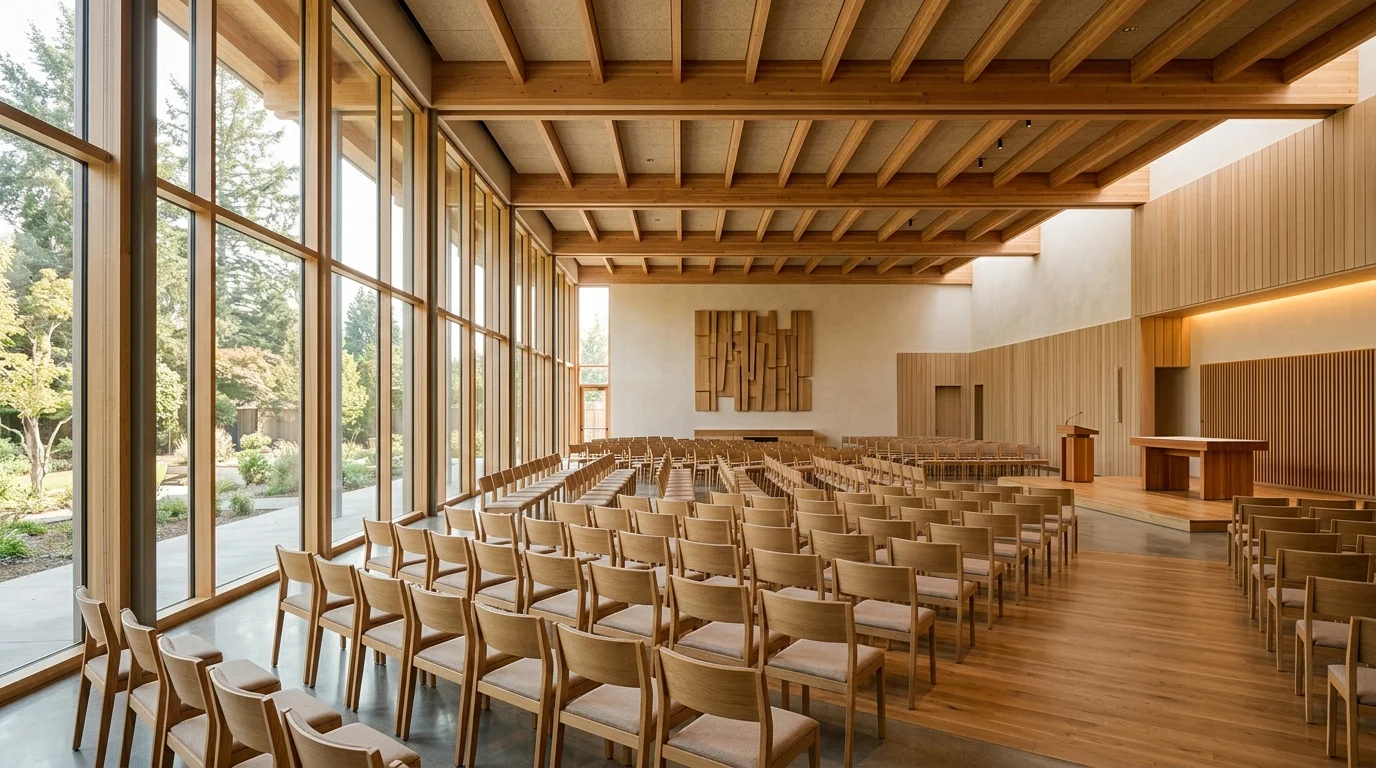
A non-denominational church is a Christian congregation that doesn't formally belong to a larger denomination. No Baptist Convention. No Methodist bishop. No Lutheran synod overseeing doctrine. Instead, a local pastor or board sets the course, writes the statement of faith, and answers mostly to itself. If someone asks what is non denominational church, this is usually the simplest starting point.
Why the Term Usually Refers to Independent Protestant Churches
Here's the thing though. "Non-denominational" almost always describes an evangelical Protestant congregation, even when the label sounds neutral. According to the historical summary cited in Apologia Catholic, the movement grew largely out of twentieth-century American evangelicalism, a reaction against denominational infighting and bureaucracy. That reaction makes sense to me. I understand the exhaustion.
What strikes me, though, is how the word "non-denominational" implies an absence, as if the church exists in some neutral space outside theology and structure. It doesn't. Every congregation, whether it admits it or not, has a system of authority, an interpretation of Scripture, and a way of deciding who's in and who's out. The label just hides where those decisions actually get made. So when people search what is non denominational church, they are often really asking where authority and doctrine come from.
Why Many People Choose Non-Denominational Churches
Simplicity, Informality, and Bible-Centered Preaching
I get why people are drawn here. When I studied theology at LMU Munich and later discussed these questions pastorally, I found that the real issue is rarely the label itself, but the deeper question of what makes the Church the Church. Still, I understand the pull toward simplicity. Many who type Non denominational church near me into a search bar are not trying to reject Christ's Church; they're usually trying to find community, clarity, and a place that feels approachable.
People want warm community. They want preaching that speaks to their actual lives, not something that feels locked in centuries-old disputes. They want to walk in wearing jeans and not feel like an outsider. None of that is wrong to want.
What Seekers Often Find Attractive
- Contemporary worship music and a relaxed atmosphere
- Preaching centered directly on personal Bible application
- Freedom from what feels like denominational politics
- A sense that "it's just me and Jesus," without inherited baggage
- Quick, visible community, often built around small groups
Fair enough. But I'd ask, gently: does simplicity always mean faithfulness? Not necessarily. And for anyone still asking what is non denominational church, that difference matters more than it first appears.
The Orthodox Question: What Makes a Church the Church?
Visible Unity, Apostolic Continuity, and Sacramental Life
Again and again in parish conversations, I've watched seekers move from asking about worship style and church branding to asking something much deeper: what actually makes a church the Church, rather than just a gathering of Christians who happen to like each other?

Orthodoxy answers that with the Creed we say every Sunday: one, holy, catholic, and apostolic. Not four separate qualities you can pick and choose from. One body. Holy, set apart for God. Catholic, meaning whole and complete, not fragmented into competing brands. Apostolic, meaning traceable, historically and sacramentally, back to the apostles themselves.
Christ himself said to Peter, “And I say also unto thee, That thou art Peter, and upon this rock I will build my church; and the gates of hell shall not prevail against it.” (Matthew 16:18, KJV). He founded a Church. Not a suggestion. Not an invisible ideal that anyone could reconstruct from scratch with good intentions and a Bible. A visible, enduring body. On the historical structure of this visible communion, Britannica's overview of Eastern Orthodoxy offers a useful summary.
Why Orthodoxy Does Not Treat 'Non-Denominational' as a Neutral Category
From an Orthodox perspective, the main issue isn't the absence of a denominational label. It's whether a church remains visibly united in apostolic faith, sacramental life, and historical continuity. And that's exactly where the term starts to get uncomfortable, honestly, because "non-denominational" often functions as if it's outside the question entirely.
It isn't. A church that rejects the word "denomination" still has beliefs about baptism, communion, church government, and biblical interpretation. It just decides those things locally, sometimes by one charismatic leader, rather than receiving them from something older and larger than itself. That is one reason the question what is non denominational church cannot be answered only by saying what it is not.
What the Bible Shows About Church Unity and Authority
Christ and the Founding of the Church
Christ didn't scatter individual believers with private Bibles and tell each of them to figure it out alone. He built something. A community. A structure, even, with apostles at its center, entrusted with teaching and governing. If someone asks, What does the Bible say about non denominational churches, the better starting point is often to ask what the Bible says about the Church itself.
Apostolic Teaching, Eucharist, and Common Prayer
Look at how the earliest Christians actually lived. “And they continued stedfastly in the apostles’ doctrine and fellowship, and in breaking of bread, and in prayers.” (Acts 2:42, KJV). That's not a description of independent house churches doing their own thing theologically. It's one community, centered on apostolic teaching and the breaking of bread, which is the Eucharist.
St. Paul writes about that same meal with striking specificity: “For I have received of the Lord that which also I delivered unto you, That the Lord Jesus the same night in which he was betrayed took bread:” (1 Corinthians 11:23, KJV). This is received tradition, handed down, not a symbolic custom each congregation invents for itself. That's one of the biggest differences between Orthodoxy and many non-denominational churches, and I don't think it gets said often enough. Related: What Is a Non Denominational Church? Unveiled!.
And Paul elsewhere pleads for something that should sound familiar to anyone tired of denominational fragmentation: “There is one body, and one Spirit, even as ye are called in one hope of your calling; One Lord, one faith, one baptism, One God and Father of all, who is above all, and through all, and in you all.” (Ephesians 4:4-6, KJV). One body. Not many bodies loosely networked by shared vibes.
Timothy is told how to “But if I tarry long, that thou mayest know how thou oughtest to behave thyself in the house of God, which is the church of the living God, the pillar and ground of the truth.” (1 Timothy 3:15, KJV). The Church itself, not a private reading list, holds and guards the truth. And Paul tells the Thessalonians to “Therefore, brethren, stand fast, and hold the traditions which ye have been taught, whether by word, or our epistle.” (2 Thessalonians 2:15, KJV), written and unwritten both. Tradition isn't a dirty word in Scripture. It's how the apostolic faith gets carried forward. In that sense, what is non denominational church also becomes a question about how a community receives and guards what was handed down.
What the Early Church Fathers Taught
St. Ignatius of Antioch on Bishop and Church
As St. Ignatius of Antioch writes in his Letter to the Smyrnaeans, "Where the bishop is, there let the multitude be; even as where Jesus Christ is, there is the Catholic Church." He wrote this in the second century, mind you, decades after the apostles, as someone on his way to martyrdom. This wasn't theory to him. It was how he understood the Church he was about to die for.

St. Basil on Scripture and Tradition
As St. Basil the Great explains in On the Holy Spirit, "Of the dogmas and proclamations preserved in the Church, some we possess from written teaching and others we have received from the tradition of the apostles, transmitted in mystery." Scripture and Tradition aren't rivals in the Orthodox mind. They're two streams from the same apostolic source.
St. Cyprian and the Unity of the Church
As St. Cyprian of Carthage teaches in On the Unity of the Catholic Church, "He can no longer have God for his Father, who has not the Church for his mother." Strong words. I know. But he wasn't writing from a place of cruelty, he was writing as a bishop watching his own community suffer real division, and warning that the Church isn't optional decoration on top of personal faith.
Worth adding here, as St. Athanasius the Great writes in his doctrinal writings, "Let us look at the very tradition, teaching, and faith of the Catholic Church from the beginning, which the Lord gave, the Apostles preached, and the Fathers kept." And St. Vincent of Lérins gives us perhaps the simplest test of all, in the Commonitorium: "We hold that faith which has been believed everywhere, always, by all." For readers wanting a brief popular overview of the Fathers' place in Orthodox life, this article on the father of Orthodoxy may be helpful as a starting point.
Orthodox, Catholic, and Non-Denominational Views Compared
Our analysis of how these three traditions actually structure authority shows a pattern that most comparison articles miss entirely. It's not really about worship style. It's about who gets to decide what's true, and how that decision gets passed down. If you're asking what is non denominational church, this comparison is where many of the practical differences become clearer.
How Orthodox, Catholic, and Non-Denominational Churches Differ on Church Identity
[COMPARISON_TABLE]
I knew the Catholic tradition quite well growing up, and I'll say this plainly: Orthodox and Catholic Christians disagree on real things, papal primacy chief among them. But we're much closer to each other on this particular question than either of us is to most non-denominational congregations. We both insist the Church is visible, sacramental, and historically traceable. That's not a small point of agreement. If you'd like to explore a related Orthodox question about life after death and doctrine, you may also find this explanation of whether Orthodox believe in purgatory useful.
Father Victor's Perspective: Why 'No Denomination' Still Forms a Denomination of Habit
Here's something I've come to over years of pastoral conversations, and I don't think I've read it stated quite this way anywhere else. The term "non-denominational" often sounds like the absence of a system. In practice, though, it usually means a hidden ecclesiology. Authority is still there. Tradition is still there, just newer and less examined. Doctrine is still there, defined somewhere, by someone. The real question was never whether a church has tradition. It's whether that tradition is apostolic, accountable, and sacramental, or whether it was invented three years ago by a leadership team that answers to no one.
I've gone back and forth on how strongly to put this. Let me try again. The desire to be "just Christian," free of labels and history, can become spiritually unstable if it cuts a believer off from the actual concrete forms Christianity has always lived in: bishop, Eucharist, creed, fast, confession, common prayer. Simplicity isn't the same thing as faithfulness. I wish more seekers heard that distinction before they made a decision about where to worship.
And here's where my background in psychology comes in, which I don't often mention but it shapes how I listen to people. A modern seeker usually evaluates a church by clarity, warmth, and how easy it is to get plugged in. Fair criteria, as far as they go. But Orthodoxy adds something most people aren't looking for yet: does this community form the soul through repentance and sacramental participation, or only through information and inspiration? A church can move you every single Sunday and still leave you spiritually underformed. I've seen it. More than once.
What most online articles about non-denominational churches miss entirely is the pastoral aftermath of radical local independence. When a doctrinal dispute erupts, or a pastor falls into scandal, or the finances turn out to be a mess, people discover that autonomy, which felt so freeing on a Sunday morning, leaves them with no larger sacramental or pastoral anchor to appeal to. No bishop to write to. No council to bring the matter before. Just the same small leadership team that may be the source of the problem, deciding how to handle itself. This is also why questions about Non denominational church rules and Non denominational beliefs matter much more than many visitors first realize.
Common Misconceptions About Non-Denominational Churches
Let me try to clear up a few things I hear often, and I'll try to be fair to both sides here.
"Non-denominational means a church has no doctrine at all." Not true, most of the time. Most non-denominational churches do have doctrine, statements of faith, membership expectations. They usually just don't belong to a historic denomination or a wider sacramental communion. Most of these churches have beliefs and internal structures. The difference is that these are defined locally rather than received through something older and larger than the congregation itself.
"Non-denominational churches are automatically more biblical than ancient churches." I understand why this feels true. Modern Protestant culture often sets "Bible" against "tradition," as though tradition always means later, man-made additions. Orthodoxy deeply reveres Scripture. But we ask who preserved it, who recognized its canon, who's handed down its interpretation for two thousand years. For us, the Bible was never separated from the Church that received it. Discover: What Denomination Am I? Discover True Belonging.
"A non-denominational church is Christianity without labels, so it's closest to the early Church." I appreciate the good instinct behind this, the desire to escape fragmentation. But the early Church wasn't an informal network of self-governing congregations. It was bishop-centered, sacramental, and deeply conscious of preserving what it had received. Avoiding labels doesn't, by itself, restore ancient Christianity.
"All non-denominational churches believe basically the same thing." Not remotely. Baptism, communion, women in ministry, predestination, charismatic gifts, end-times teaching, moral questions, these vary enormously from one congregation to the next. Two churches can call themselves non-denominational and disagree on almost everything except the label. It's wise to ask directly what a specific church teaches before assuming anything.
"The Orthodox Church is just another denomination, like one option among many." I understand why it looks that way from the outside, in a culture that treats all Christian groups as equivalent brands on a shelf. But Orthodoxy doesn't understand itself as a branch created by later preference. It understands itself as the historical continuation of the one Church, in worship, faith, and sacrament.
"If someone attends a non-denominational church, they must not have real faith in Christ." No. I want to be very clear here. Orthodoxy tries to hold truthfulness and charity together, not one at the expense of the other. I've met deeply sincere, prayerful Christians in non-denominational congregations. We don't dismiss that sincerity. We also don't hide what we believe about the fullness of the Church. Both things, at once.
If I Attend a Non-Denominational Church, What Faith Am I Actually Practicing?
Honestly? It depends on the church, more than the label lets on. Most non-denominational congregations sit broadly within modern evangelical Protestantism, whether or not they'd choose that word for themselves. They usually affirm the Trinity, salvation through Christ, and the authority of Scripture. Beyond that, things vary widely, and I mean widely. In other words, if you're still asking what is non denominational church, the answer often becomes clearer only when you look at one local congregation's actual teachings.
Ask about baptism. Is it infant or adult only? Symbolic or something more? Ask about communion, how often, and what they believe actually happens there. Ask who could remove the pastor if serious wrongdoing came to light. That last question tends to reveal more than any doctrinal statement posted on a website. The search phrases what is non denominational church near california or what is non denominational church near texas may help someone find local congregations, but they still won't answer these deeper theological questions on their own.
How to Explore Orthodoxy If You Are Coming From a Non-Denominational Background
What to Expect at an Orthodox Parish
It will feel different. I won't pretend otherwise. Incense, icons, standing for long stretches, a Liturgy that follows the same basic shape it's followed for over a thousand years. Some people walk in and feel immediately at home. Others need months to adjust. Both reactions are completely normal, and I've watched both happen many times in Munich. If helpful, you can also read our guides on what the Orthodox Church is and Orthodox vs. Catholic differences before visiting a parish.

Questions to Ask a Priest
- How does your parish handle catechesis for someone coming from a Protestant background?
- What does reception into the Church look like for me specifically, baptism or chrismation?
- How is confession practiced here, and how often should I come?
- What does the fasting rhythm actually look like for a beginner?
On that first question, practice does vary by jurisdiction. Some receive converts by baptism, others by chrismation, depending on pastoral and canonical circumstances. That's not doctrinal confusion, it's just something your local priest and bishop need to sort out with you directly. Ask. And if your deeper question is still what is non denominational church, one of the best things you can do is compare that answer with what the historic Church has actually looked like from the beginning.
Frequently Asked Questions
Do non-denominational churches believe Jesus is God?
Most do. Non-denominational churches are overwhelmingly evangelical and affirm the Trinity, including the full divinity of Christ, but beliefs vary by congregation, so it's worth checking a specific church's statement of faith rather than assuming. From an Orthodox view, this shared confession of Christ's divinity is a real point of unity worth honoring, even where other differences run deep.
What religion am I if I go to a non-denominational church?
You're most likely practicing a form of evangelical Protestant Christianity, even though the church avoids that label. The specific theology, on baptism, communion, and authority, depends entirely on that particular congregation's leadership and statement of faith. That's not a criticism. Just something worth knowing clearly rather than assuming.
Why do people not like non-denominational churches?
Criticism usually centers on a lack of external accountability. Without a denomination or bishop overseeing a congregation, some worry there's no outside body to check doctrine, handle financial oversight, or intervene when a pastor abuses trust. That concern, in my pastoral experience, is one of the most serious and least discussed aspects of independent church life.
Do non-denominational churches support LGBTQ?
It varies enormously, congregation by congregation, since there's no denominational statement binding all of them. Some affirm traditional Christian teaching on marriage and sexuality, others don't. Readers should check a specific church's stated beliefs or speak directly with its pastor rather than assume based on the label alone.
Are non-denominational churches biblical?
Most emphasize Scripture heavily and would say yes without hesitation. Orthodoxy would gently add a further question: is Scripture being read within the Church that received it, preserved its canon, and has interpreted it continuously since the apostles? That's not a rejection of Bible-centered faith. It's a different account of where trustworthy interpretation actually comes from.
About the Author
Father Victor Meshko is an Orthodox priest of the Russian Orthodox Church Abroad, serving at the Cathedral of the Holy New Martyrs and Confessors of Russia in Munich since 2013. He holds multiple theology degrees from the Uzhhorod Ukrainian Theological Academy, Carpathian University, and the Institute for Orthodox Theology at LMU Munich, where he also pursued doctoral studies, and he is the published author of Erzbischof Filaret (Gumilevskij) von Cernigov und Nezin. With additional academic training in psychology, he brings both scholarly depth and pastoral sensitivity to questions seekers ask about the Church.
Researched and written by Father Victor Meshko. AI tools were used during the research process in accordance with the EU AI Act, and the article was reviewed by Father Victor Meshko before publication.
I don't wish to hide or bury in the ground the treasure, the joy, and the happiness that were granted to me. I wish to share this experience with you, leaving each person the freedom of personal choice. My message is simple and sincere: trust in God, open your hearts to Him, participate in the Holy Mysteries of the Orthodox Church, and He will surely comfort you and lead you to a life that is deeper, more whole, and more joyful.
<table class="seo-table comparison-table"><caption>How Orthodox, Catholic, and Non-Denominational Churches Differ on Church Identity</caption><thead><tr><th>Aspect</th><th>Orthodox</th><th>Catholic</th><th>Protestant / Non-denominational</th></tr></thead><tbody><tr><td>Church authority</td><td>Episcopal and conciliar, rooted in apostolic succession</td><td>Episcopal, with communion under the pope</td><td>Usually local pastoral or elder-led authority</td></tr><tr><td>Church identity</td><td>One visible, sacramental, apostolic Church</td><td>One visible Church in communion with Rome</td><td>Independent congregation or loose network of churches</td></tr><tr><td>Tradition</td><td>Scripture within Holy Tradition</td><td>Scripture and Tradition</td><td>Often Scripture alone in practice</td></tr><tr><td>Worship</td><td>Liturgical and sacramental, historically continuous</td><td>Liturgical and sacramental</td><td>Often contemporary, flexible, and locally shaped</td></tr><tr><td>Eucharist and sacraments</td><td>Central to the life of the Church</td><td>Central to the life of the Church</td><td>Varies widely; often treated as ordinances</td></tr><tr><td>Historical continuity</td><td>Claims continuity with the apostolic Church and Fathers</td><td>Claims apostolic continuity through Rome</td><td>Usually emphasizes renewal, reform, or biblical simplicity</td></tr></tbody></table>


Help us bring the christian faith to modern seekers worldwide.
Godfinder relies on generous souls to sustain our multilingual platform, develop new tools like the Magic Cube, and support struggling believers. If our work has touched your heart, consider contributing to our nonprofit partner

Do you want to know More? Ask God’s Word!
Do you have questions, worries, or hopes? Feeling lost, burdened, or alone? “Ask God’s Word” brings you gentle guidance rooted in Scripture and the wisdom of the Church. Find hope and strength today!
