.avif)
What is Orthodox Christianity Beliefs? Uncover Now
Something strange is happening. People who once would never have searched a phrase like what is orthodox christianity beliefs are now doing exactly that. While mainline churches keep softening their message to hold onto members, Orthodox Christianity is doing the opposite. Stranger. Harder to...

Why Is Everyone Suddenly Asking What Is Orthodox Christianity Beliefs?
Something strange is happening. People who once would never have searched a phrase like what is orthodox christianity beliefs are now doing exactly that. While mainline churches keep softening their message to hold onto members, Orthodox Christianity is doing the opposite. Stranger. Harder to categorize. More demanding, if I'm honest. And yet the converts keep showing up. Not despite the difficulty. Because of it.
I've watched this from the inside since my ordination in 2013. Parish by parish, catechumen by catechumen, I keep meeting people who don't just want to know what Orthodox Christians believe — they want to know if any of it can survive contact with a real life, their real life, with all its mess. A young man walks into my cathedral in Munich, sees the icons, smells the incense, hears words in a language older than his grandparents, and he doesn't want a summary. He wants to know if this is real. So when someone types what is orthodox christianity beliefs into a search bar late at night, I don't think they're looking for a definition. I think they're asking whether any of it can hold weight.
Here's what most articles on this topic get wrong. A practicing Orthodox Christian doesn't usually learn the faith from an outline first. It comes through the rhythm of confession, fasting, feast days, the Divine Liturgy, a priest who knows your name and your struggles. Belief gets absorbed as much as it's explained. I'll give you the doctrinal outline in a moment — you came here for it, and you'll get it. But let me say something first, plainly, because I think it matters more than the outline itself: Orthodoxy was never built to be easy. Never has been. And that's precisely why I think so many people are finding their way to it right now.
Quick Answer: Orthodox Christianity teaches one God in the Holy Trinity, Jesus Christ as fully God and fully man, salvation as lifelong healing and union with God (theosis), and the Church as the one, holy, catholic, and apostolic community that has carried the apostolic faith continuously since Pentecost.
In This Article:
- Why Is Everyone Suddenly Asking What Is Orthodox Christianity Beliefs?
- Who Are Orthodox Christians and What Is Orthodox Christianity Beliefs?
- What Are the Core Beliefs of Orthodox Christianity?
- Why Doesn't Orthodoxy Separate Scripture From the Church?
- How Are Orthodox Beliefs Actually Lived Through the Mysteries?
- Do Orthodox Christians Worship Icons and Pray to the Saints?
- What Do Orthodox Beliefs Look Like in Daily Life?
- Core Orthodox Christian Beliefs in Simple Terms
- How Does Orthodoxy Differ from Catholicism and Protestantism?
- Father Victor's Perspective: Why Orthodox Belief Is More Than Information
- Common Misconceptions About Orthodox Christianity
TL;DR — Key Takeaways
- Orthodox Christians confess one God in three Persons, Jesus Christ as fully divine and fully human, and salvation as healing rather than mere legal pardon.
- What's preached is prayed, and what's prayed is what shapes belief. We don't split the two.
- Practically, this means daily prayer, regular confession, fasting, and participation in the Eucharist — not just nodding along with a creed.
- Surprisingly, Orthodoxy's growth in the West seems driven by people looking for something demanding, not something comfortable.
Who Are Orthodox Christians and What Is Orthodox Christianity Beliefs?
Orthodox Christians belong to what we call the one, holy, catholic, and apostolic Church — the same community St. Peter and the other apostles established after Pentecost. We're not a breakaway group. Not a recent movement. Not even close. For someone asking what is orthodox christianity beliefs, that continuity actually matters a great deal, because Orthodoxy doesn't see itself as a new take on Christianity. It sees itself as the ancient faith, still being lived, right now, in parishes all over the world.

A Brief Historical and Global Overview
Our roots go back to the first Christian communities in Jerusalem, Antioch, and Constantinople. The faith spread through Greece, Russia, the Middle East, and Eastern Europe long before it ever reached Western Christendom in the form we recognize today. According to demographic summaries and Pew-cited reporting, there are roughly 220 to 260 million Orthodox Christians worldwide, making Orthodoxy the second-largest Christian communion after Roman Catholicism. That's not a footnote. That's a global body of believers — most of whom you've probably never met, and whose grandmothers probably taught them to pray before they could read.
How Many Orthodox Christians Are There Today?
Orthodox Christians make up about 12% of Christians worldwide today, down from around 20% a century ago, according to Pew Research Center data cited in recent reporting. In the United States specifically, we remain about 1% of the population — smaller and less familiar than either Protestant or Catholic communities here. And yet something curious is happening in that small slice. Pew's research found that 64% of Orthodox respondents in the U.S. are now men, up from 47% in 2007. My own sense of it, from talking with converts, is that this surge isn't really about theology textbooks at all. It's about men, specifically, looking for a Christianity that won't apologize for asking something of them. Some of the recent reporting on this trend has noted the same pattern, including this discussion of why young men are flocking to Eastern Orthodoxy.
I should be honest about the other side of this too. Practicing Orthodox Christians in the U.S. actually declined from 817,000 in 2010 to 676,000 in 2020, with regular attendees dropping from 212,000 to 183,000, according to sociologist Ryan Burge's research. So interest is rising in certain corners of the internet. But showing up on Sunday, fasting on Wednesday, going to confession — that's a different and much harder thing. Worth remembering, I think. A balanced look at that question appears in this report on whether the Orthodox population is really growing.
What Are the Core Beliefs of Orthodox Christianity?
Here's where I'd normally hand you a list. But let me try explaining it the way I would over coffee after Liturgy, because a list on its own won't get you very far. If you're searching what is orthodox christianity beliefs, the shortest honest answer I can give is this: Orthodox doctrine and Orthodox life were never meant to be separated.
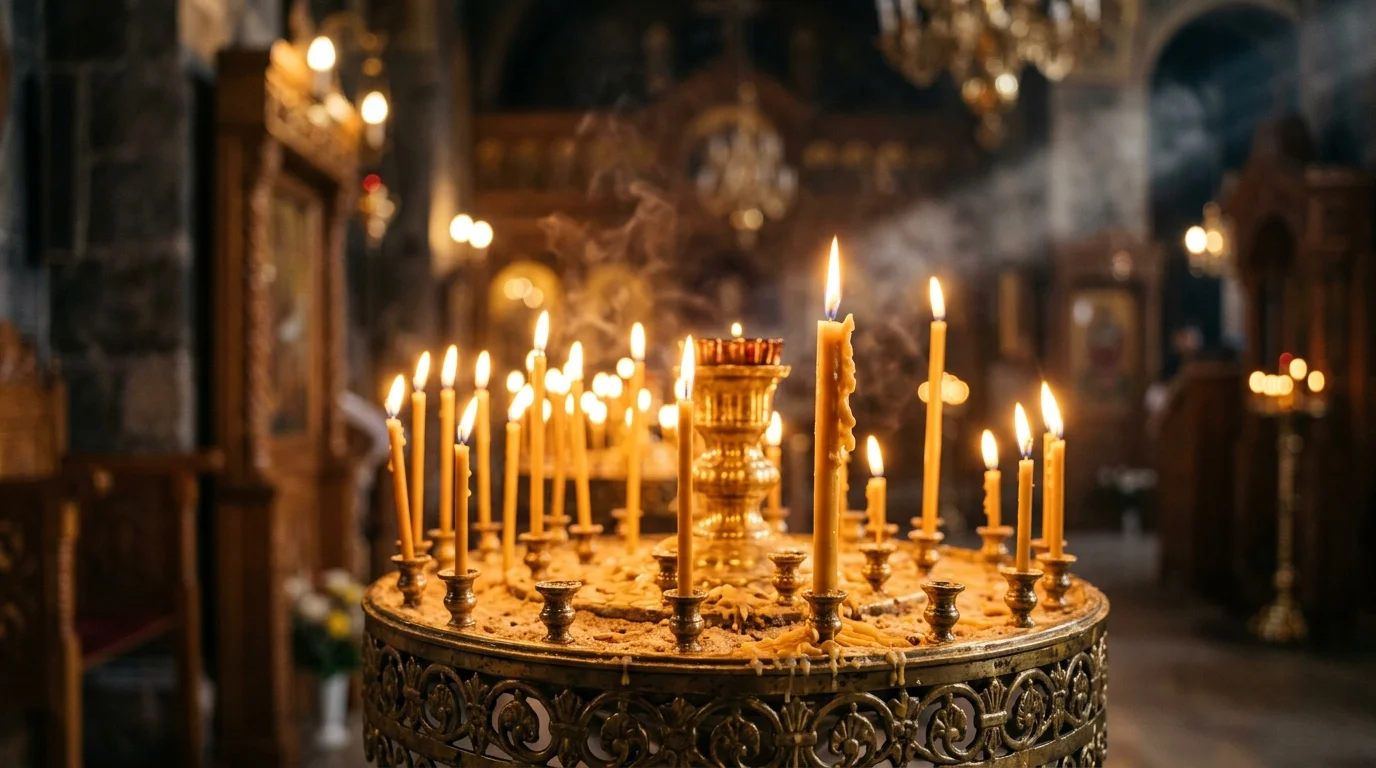
One God in the Holy Trinity
We believe in one God who exists as three Persons — Father, Son, and Holy Spirit — undivided in essence yet fully distinct. This isn't a math puzzle waiting to be solved. Fr. Dumitru Staniloae, the Romanian Orthodox theologian, put it beautifully: the Holy Trinity is a communion of love, and we as human persons are called to reflect that same communion in how we live with one another. God isn't a solitary monad sitting apart from creation. He's relationship itself. And we're invited into it.
Jesus Christ: Fully God and Fully Man
We confess that the eternal Word of God became man, one Person in two natures, without confusion or division. As Scripture tells us, "In the beginning was the Word, and the Word was with God, and the Word was God... And the Word became flesh and dwelt among us" (John 1:1, 14). This is the center of everything, really. As St. Gregory the Theologian teaches in Letter 101 (4th century), "What is not assumed is not healed." Christ had to take on our full humanity — body and soul, mind and will — because anything less couldn't be healed by Him. That line has stayed with me since seminary. It still does, honestly. I don't think it will ever stop unsettling me in the right way.
Sin, Salvation, and Theosis
Orthodoxy understands sin primarily as a spiritual sickness, a wound distorting the person, rather than only a legal offense requiring punishment. Salvation, then, is a lifelong process of healing and growing into union with God — what we call theosis. As St. Athanasius the Great writes in On the Incarnation (4th century), "For the Son of God became man so that we might become god." That phrase can sound shocking the first time you hear it. I remember reacting that way myself, coming from a Catholic background where the vocabulary was different. Theosis doesn't mean becoming God by nature. It means growing into real communion, holiness, and likeness to God by grace, through cooperation — what we call synergy — between His grace and our freedom. Scripture backs this directly: we're given "exceedingly great and precious promises, that through these you may be partakers of the divine nature" (2 Peter 1:4).
According to the 2026 theological analyses New Life in Christ: Salvation in Orthodox Theology, Orthodox theology presents redemption as a therapeutic process of healing the human person, not merely a juridical transaction. That's not a rejection of the cross. It's a fuller picture, I think, of what the cross actually accomplishes. This is also one of the clearest places where Orthodox Christianity vs Catholic or Protestant frameworks often becomes a real discussion, because the Orthodox emphasis falls so strongly on healing, union, and transformation.
The Church as One, Holy, Catholic, and Apostolic
We believe Christ founded a visible, continuous Church through His apostles, and that this Church has carried the faith without interruption. Christ Himself commanded, "Go therefore and make disciples of all the nations, baptizing them in the name of the Father and of the Son and of the Holy Spirit... and lo, I am with you always, even to the end of the age" (Matthew 28:19-20). As St. John Chrysostom says in his Homilies on Matthew (4th century), "The Church is not a wall and a roof, but faith and life." Not a building. Not an institution chart. A living body — and I mean living.
Why Doesn't Orthodoxy Separate Scripture From the Church?
Some Christians assume that talking about "Tradition" means Orthodox Christians care less about the Bible. I've heard this from Protestant friends more times than I can count. It's actually the opposite.
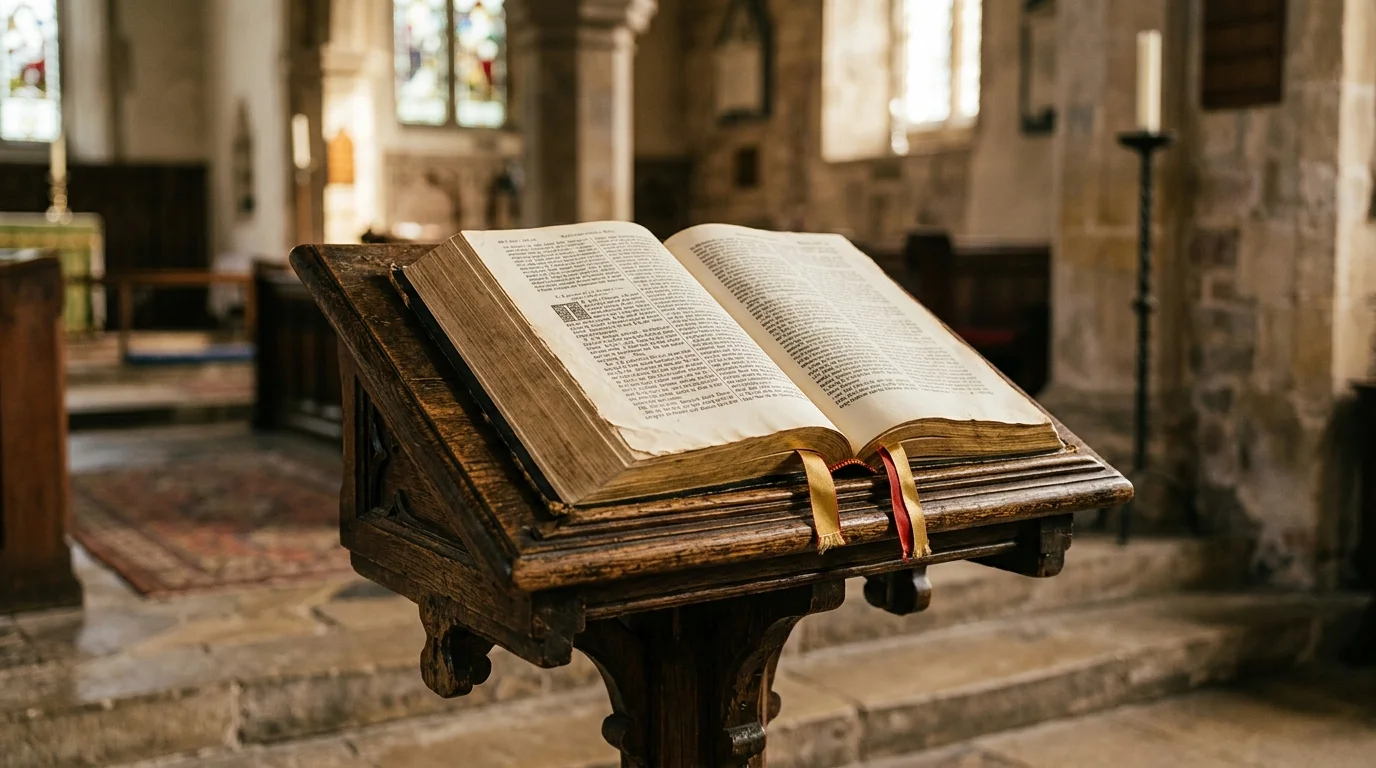
For Orthodox Christians, the Bible is never separated from the Church that received, preserved, and prays it. We read Scripture constantly — at every single Divine Liturgy, in daily prayers, in the hymns of every feast. St. Paul calls the Church "the pillar and ground of the truth" (1 Timothy 3:15), meaning the Church safeguards right interpretation rather than leaving each of us to work it out alone against everyone else's private reading. Related: What Do Orthodox Christians Believe? The Main Truths of Our....
The Nicene Creed, the Fathers, and the Councils
Holy Tradition includes the Nicene Creed, the decisions of the first seven Ecumenical Councils, the writings of the Church Fathers, and the lived spiritual experience of the saints. According to the research summary on Eastern Orthodox theology, Orthodox Christians understand Scripture within the Church's living Tradition and the consensus of the Fathers, not through private judgment alone.
Here's something I've come to see clearly after years of celebrating Liturgy: the Creed isn't a doctrinal checklist we recite to prove we're orthodox. It's formative. Every Sunday, we say those same words together, out loud, as a community. Over years, over decades, that repetition trains the heart to see reality differently. It's not a test you pass once. It's a confession that keeps shaping how you see God, yourself, and the world — whether you notice it happening or not. If you want a broader introduction to Orthodox beliefs and practices, you might also find helpful our guide to Orthodox Christian prayer life and our overview of the Divine Liturgy explained.
How Are Orthodox Beliefs Actually Lived Through the Mysteries?
A visitor once came to my cathedral for her first Divine Liturgy. Afterward, she asked me something I still think about: "Is this mostly ritual, or is there an actual set of beliefs behind all this?" Fair question. I told her the Liturgy IS the theology. It doesn't hide behind incense and chanting. Belief in the Trinity, the Incarnation, the Resurrection, salvation — it's all being prayed right in front of you, not just explained in a pamphlet somewhere in the narthex.

Baptism, Chrismation, and Eucharist
Baptism unites us with Christ's death and Resurrection. As St. Paul writes, "Do you not know that as many of us as were baptized into Christ Jesus were baptized into His death?... that just as Christ was raised from the dead... even so we also should walk in newness of life" (Romans 6:3-4). Chrismation follows immediately, sealing the gift of the Holy Spirit. And then the Eucharist — the center of it all, really. St. Paul again: "The bread which we break, is it not the communion of the body of Christ? For we, though many, are one bread and one body" (1 Corinthians 10:16-17). This is real participation. Not a symbol standing in for something absent.
Confession, Marriage, Holy Orders, and Unction
Confession functions as spiritual medicine — a place of honest reckoning and restoration, not courtroom sentencing. Marriage, Holy Orders, and Unction round out what we call the seven Mysteries. I remember, early in my priesthood, a parishioner telling me confession felt more like visiting a doctor than standing before a judge. That's exactly right. That's the whole point of it. Questions about Orthodox christianity beliefs marriage or family life make the most sense only when seen inside this wider sacramental picture.
Do Orthodox Christians Worship Icons and Pray to the Saints?
Short answer: no, we don't worship icons. But I understand why it looks that way from outside — I really do.
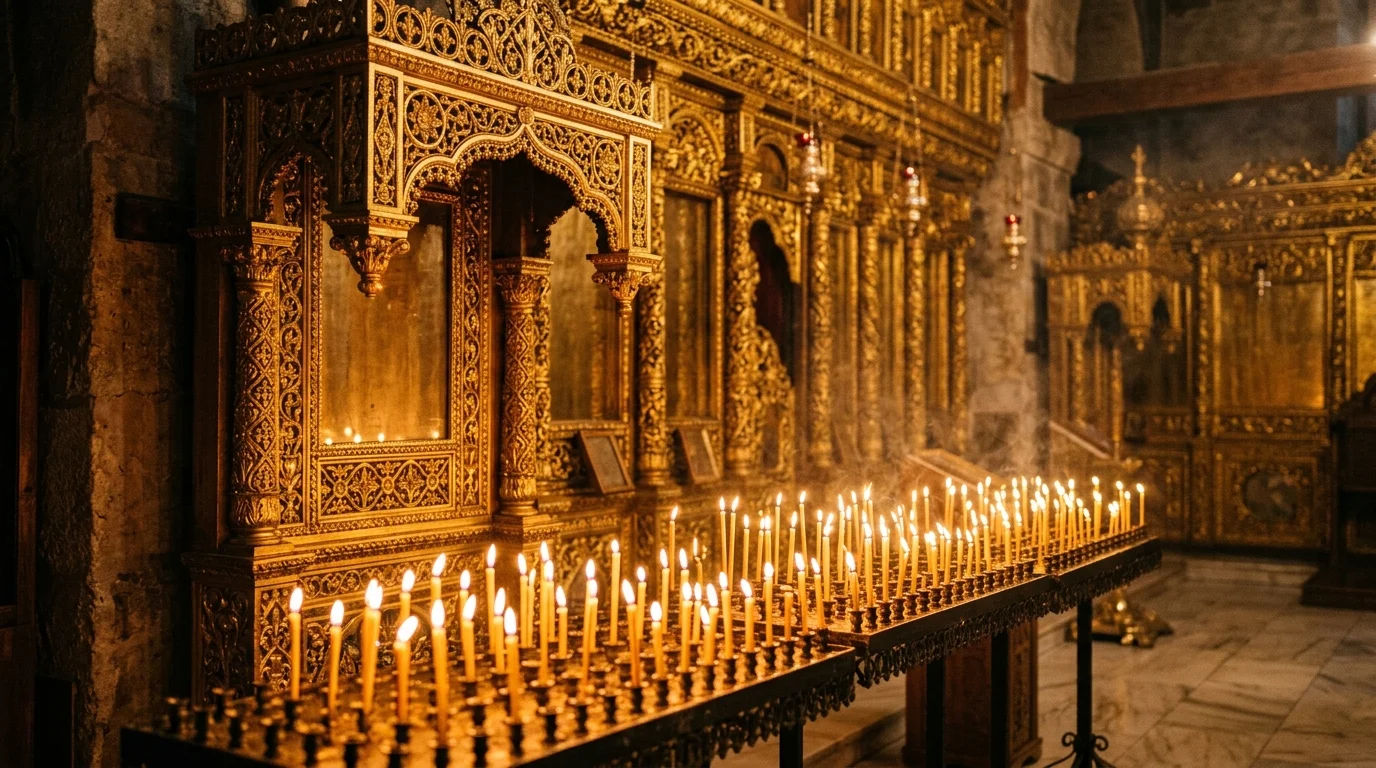
Why Liturgy Matters
Fr. Alexander Schmemann described the Church as the sacrament of the Kingdom, a foretaste of transformed creation. That's what Liturgy is meant to feel like — heaven touching earth for an hour or two on Sunday morning. Metropolitan Kallistos Ware said something similar that I keep returning to: Orthodoxy isn't a system or a set of ideas, but a life, the life of the Holy Spirit within the Church.
Do Orthodox Christians Worship Icons?
We venerate icons; we worship God alone. As St. John of Damascus explains in On the Divine Images (8th century), "I do not worship matter; I worship the Creator of matter who became matter for my sake." Because the Son of God truly took on flesh, matter itself can now bear witness to grace. That distinction was formally defended at the Seventh Ecumenical Council in 787. Kissing an icon is like kissing a photograph of someone you love. You're not honoring the paper.
Do Orthodox Christians Pray to Mary and the Saints?
We ask the saints, including the Theotokos (Mary, the Mother of God), to pray for us — the same way you might ask a friend to pray for you. We don't worship them. This flows directly from the Incarnation itself: that God became man, and humanity, in Christ, can genuinely share in holiness. For many readers, this is one of the places where Orthodox Christianity vs Christianity can sound confusing. From where we stand, though, it's part of historic Christian life, not some strange extra bolted on later.
What Do Orthodox Beliefs Look Like in Daily Life?
Last year, someone came to see me, couldn't have been older than 25, completely wrung out from anxiety. "Father, how am I supposed to pray without ceasing when I can barely sit still for five minutes?" I've heard some version of that question more times than I could possibly count.

I told him what I tell most people. Start small. Morning and evening prayers. The Jesus Prayer repeated quietly through the day: "Lord Jesus Christ, Son of God, have mercy on me, a sinner." Fasting on Wednesdays and Fridays. Regular confession. None of it fixes everything overnight — nothing does. But over time, it reshapes how a person carries their own mind. I don't fully understand why it works this way,


Help us bring the christian faith to modern seekers worldwide.
Godfinder relies on generous souls to sustain our multilingual platform, develop new tools like the Magic Cube, and support struggling believers. If our work has touched your heart, consider contributing to our nonprofit partner

Do you want to know More? Ask God’s Word!
Do you have questions, worries, or hopes? Feeling lost, burdened, or alone? “Ask God’s Word” brings you gentle guidance rooted in Scripture and the wisdom of the Church. Find hope and strength today!
