.avif)
Who Do Catholics Pray To? Explained Simply
Ask ten Catholics leaving Mass on a Sunday morning to explain the theological difference between "praying to" Mary and "praying to" God. Go ahead, try it. Most will pause, maybe laugh a little, and say something like, "Well, it's different, but I couldn't tell you exactly how." I don't say this to...

Ten Catholics Leaving Mass, One Simple Question About Who Do Catholics Pray To
Ask ten Catholics leaving Mass on a Sunday morning to explain the theological difference between "praying to" Mary and "praying to" God. Go ahead, try it. Most will pause, maybe laugh a little, and say something like, "Well, it's different, but I couldn't tell you exactly how." I don't say this to embarrass anyone. And honestly, I think it's one of the most human things about religious life.
In my years of serving as an Orthodox priest, I've found that the question "who do Catholics pray to?" is often really a deeper question in disguise. What people actually want to know is whether Christians pray to God alone, or somehow split their devotion between God and a crowd of holy figures. Fair question. I remember wondering something similar myself, years ago, before I ever set foot in an Orthodox parish.
What strikes me, and what most online articles about this topic completely miss, is that the confusion starts before theology even enters the room. It starts with a word. When I studied theology in Munich and later sat across from catechumens and curious visitors at my own parish, I noticed how much trouble comes from the English phrase "pray to." For one person it means worship. For another, it just means "ask." Two very different things wearing the same three words.
Quick Answer: Catholics (like Orthodox Christians) direct all worship to the Holy Trinity alone, Father, Son, and Holy Spirit, and separately ask Mary and the saints to pray for them, the same way you'd ask a friend for prayer, except this friend is already standing before God.
In This Article:
- Ten Catholics Leaving Mass, One Simple Question About Who Do Catholics Pray To
- Who Do Catholics Pray To? A Clear Short Answer
- Who Do Catholics Pray To: Christians Pray to the One God, Father, Son, and Holy Spirit
- Why Catholics and Orthodox Ask Mary and the Saints to Pray for Them
- Father Victor's Perspective: What People Usually Miss About This Question
- Orthodox, Catholic, and Protestant Views Compared
- Common Misconceptions About Praying to Saints
- How This Looks in Daily Orthodox Prayer
- About Father Victor Meshko
TL;DR — Key Takeaways
- Worship belongs to God alone; asking a saint to pray for you is intercession, not adoration.
- Catholics and Orthodox both pray directly to Jesus, to the Father, and to the Holy Spirit, constantly and without hesitation.
- A good starting point for any seeker: begin with the Lord's Prayer and the Jesus Prayer, then grow into the wider life of the Church.
- The real theology is visible in the liturgy itself, and almost every major prayer there is addressed straight to God.
Who Do Catholics Pray To? A Clear Short Answer
So let's get the basic answer out of the way first, because I think seekers deserve directness before nuance.

Quick Answer for Seekers
Catholics worship God alone: Father, Son, and Holy Spirit. When they pray to Mary or the saints, they're asking for intercession, not offering divine worship. That's the official teaching, and it's not some clever apologetic dodge, it's been the consistent Christian position since the earliest centuries. According to this Catholic catechetical explanation, worship (latria) belongs to God alone, while saints receive veneration, sometimes called dulia, and Mary receives a heightened form called hyperdulia.
Orthodoxy holds essentially the same conviction, though we tend to explain it less through those Latin categories and more through the actual life of the Church, her liturgy, her hymns, her Fathers. I'll get to that. If someone asks very plainly, "who do catholics pray to," the shortest faithful answer is this: to God directly, and also to the saints only in the sense of asking their prayers.
Who Do Catholics Pray To: Christians Pray to the One God, Father, Son, and Holy Spirit
Christ himself gave us the pattern. When his disciples asked him how to pray, he didn't teach them a formula addressed to angels or ancestors. He said, “After this manner therefore pray ye: Our Father which art in heaven, Hallowed be thy name. Thy kingdom come. Thy will be done in earth, as it is in heaven. Give us this day our daily bread. And forgive us our debts, as we forgive our debtors. And lead us not into temptation, but deliver us from evil: For thine is the kingdom, and the power, and the glory, for ever. Amen.” (Matthew 6:9-13, KJV). Every Christian tradition I know of, Catholic, Orthodox, Protestant, begins here. This is the floor beneath everything else we're going to talk about.
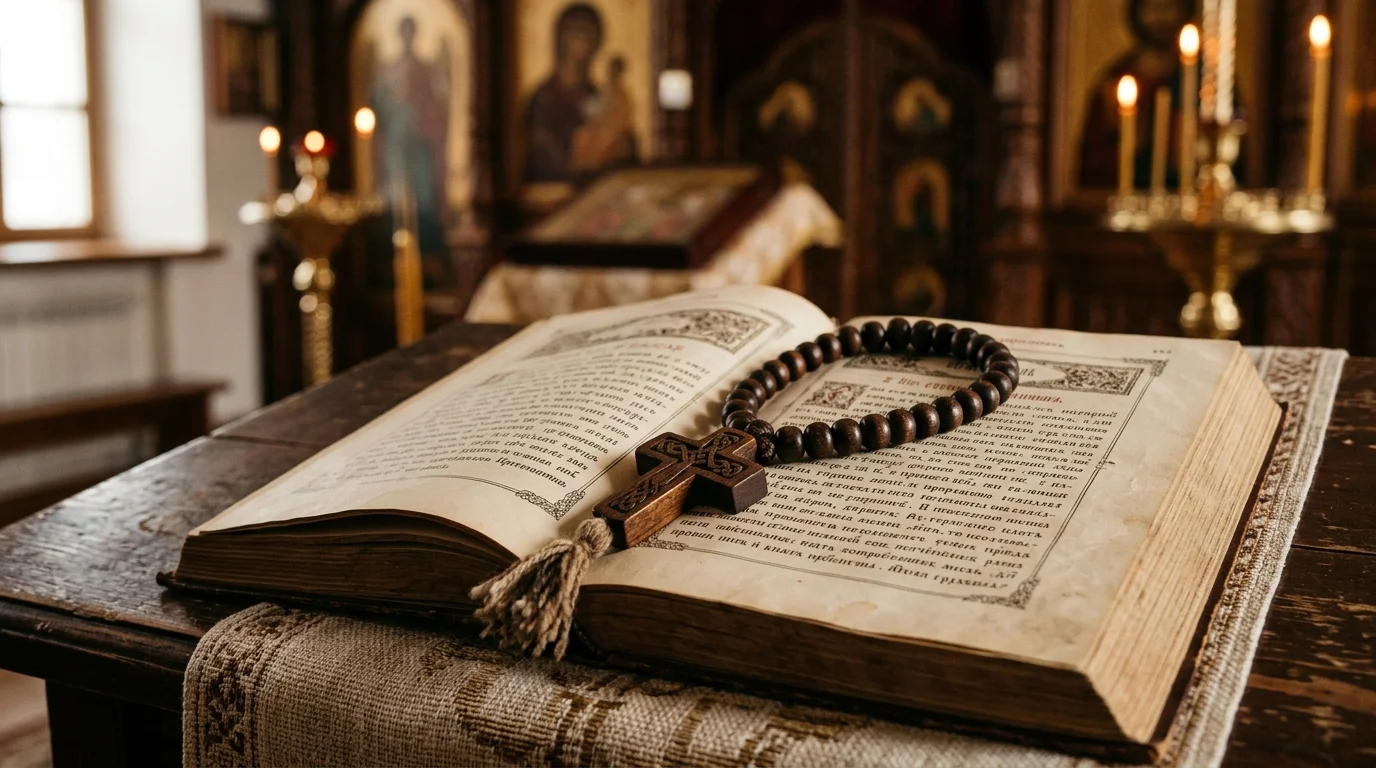
Why Christians Pray to the Father
The Lord's Prayer sits at the center of the Divine Liturgy, and it sits at the center of the Catholic Mass too. Not tucked away, not optional. Central. As St. Athanasius the Great teaches in his Letters to Serapion on the Holy Spirit, worship is offered to the Father through the Son in the Holy Spirit. That's not a slogan I invented for this article, it's ancient Trinitarian grammar, and it explains something I think gets lost in a lot of online debates: Christian prayer was never meant to be a flat address to "God" in some generic sense. It has structure. Direction. A shape. So if someone wonders, "Do Catholics pray to God directly," the answer is yes, unmistakably and constantly.
Why Christians Also Pray Directly to Jesus and the Holy Spirit
Here's where I think a lot of competitor articles stop too early. They say "Christians pray to God," full stop, as if Jesus and the Spirit are somehow secondary addressees. Not true. Stephen, as he was being stoned, cried out directly to the risen Christ: “And they stoned Stephen, calling upon God, and saying, Lord Jesus, receive my spirit. And he kneeled down, and cried with a loud voice, Lord, lay not this sin to their charge. And when he had said this, he fell asleep. ” (Acts 7:59-60, KJV). That's about as direct as prayer gets. No mediator mentioned. No formula. Just a dying man speaking straight to his Lord.
And the Spirit too. As St. Gregory the Theologian says in Oration 31, Christians pray to the Spirit as well, which confirms something worth sitting with: prayer in the Christian tradition is addressed to all three divine Persons, not filtered through only one. The Jesus Prayer, which I say daily and have said for years now, is addressed directly to Christ: "Lord Jesus Christ, Son of God, have mercy on me, a sinner." No detour. No committee. Just Christ and me.
Does that surprise people? It surprised me, actually, when I first left Catholicism behind and started paying closer attention to how Orthodox prayer actually works. Many seekers ask it in almost exactly these words: "Who do Catholics pray to God or Jesus?" And the Christian answer is not either-or, but both, because the Son is one in divinity with the Father and the Holy Spirit.
Why Catholics and Orthodox Ask Mary and the Saints to Pray for Them
Now we get to the part that causes most of the confusion. So let's slow down here.

Worship and Intercession Are Not the Same Thing
1 Timothy 2:5 tells us there's one mediator between God and humanity, Christ Jesus. Some Protestant friends I've spoken with over the years cite this verse as if it settles the matter completely against asking saints for prayer. But I'd gently push back, not to argue, just to clarify. Paul himself, in the very same body of letters, asks other Christians to pray for him constantly. “Confess your faults one to another, and pray one for another, that ye may be healed. The effectual fervent prayer of a righteous man availeth much.” (James 5:16, KJV). If asking a living Christian to pray for you doesn't compromise Christ's unique mediation, why would asking a Christian who's already with God compromise it? Related: Why Do Catholics Pray to Saints? Discover the Truth.
That's the whole logic, really. Prayer to the saints doesn't compete with Christ's mediation. It depends on it entirely.
As St. Basil the Great writes in Letter 360, Christians invoke the martyrs so that through them they may obtain from God the blessings they ask. Notice the direction of the sentence: through them, from God. The martyrs aren't the source. God is. They're the friend you ask to knock on the door with you.
The Communion of Saints in Scripture and Worship
Hebrews 12:1-2 speaks of a "great cloud of witnesses" surrounding believers, and I've always found that image quietly overwhelming. Not distant. Not gone. Surrounding. Revelation 5:8 describes heavenly elders holding bowls "which are the prayers of the saints," offered before God's throne. This isn't decoration. It's biblical imagery of a Church that spans both sides of death.
As St. John of Damascus explains in On the Divine Images, Book 3, the saints aren't adored but honored as friends of Christ. Friends. That word matters to me. Not intermediaries in some bureaucratic sense, not spiritual vending machines, friends who happen to already see God face to face. For those asking, "Who do Catholics pray to Mary, or God?" the better way to say it is that Catholics pray to God as the source of every gift, and ask Mary to pray with and for them.
Let me offer a quick word about a video I often recommend to seekers exploring this exact question. The Orthodox channel Theoria has a clear teaching video called "Why Do Orthodox Christians Pray to Saints?" that walks through icons, liturgy, and the theology of intercession in a way that complements everything I'm trying to explain here in words. For a liturgical example of how the Church honors the Mother of God without worshiping her, see also the Orthodox Church in America's hymns for the Dormition of the Mother of God.
[YOUTUBE_VIDEO]
Father Victor's Perspective: What People Usually Miss About This Question
I've gone back and forth on how to explain this section without sounding like I'm just repeating what apologists already say. Here's where I've landed.
The Language Problem Behind 'Pray To'
Modern English often treats "pray to" as a synonym for "worship." But older Christian usage, going back centuries, could simply mean "address" or "ask," the way an old English speaker might say "I pray thee, tell me the time." No worship implied whatsoever. Clarifying this single linguistic point removes a surprising amount of the controversy before the doctrinal discussion even begins. I don't think I've seen another article make this the actual center of the explanation, and I think that's a mistake, because in my pastoral experience, this is where most confusion actually starts. Not in bad theology. In bad vocabulary.
The Liturgy Reveals the Real Theology
Here's something I wish more seekers understood: the best way to test whether a community worships saints isn't to isolate one devotional prayer and analyze it under a microscope. It's to observe the liturgical center. In Orthodox worship, the Eucharistic prayers, the daily offices, the entire architecture of the service, reveal unmistakably that God is the primary addressee. Requests to the Theotokos and the saints are short. Relational. Clearly intercessory. "Most Holy Theotokos, save us." That's it. Four words, tucked between long prayers addressed to the Father.
In my parish in Munich, I've watched newcomers sit through their first Liturgy looking a little lost, trying to count how many prayers go where. And what strikes them, almost every time, once someone points it out, is how overwhelmingly the service is directed toward God. The saints appear, briefly, like companions joining a conversation already underway.
There's a third thing I want to add here, and it's the one I find most moving after all these years. In Orthodox experience, the saints aren't spiritual shortcuts around Christ. They're evidence that Christ's salvation actually works. Every saint standing before God is a small, living proof that death has lost. The existence of saintly intercession is itself a proclamation, not a workaround. If you want to understand the Divine Liturgy or the Jesus Prayer more deeply, you'll see this pattern again and again: God is worshiped, and the saints are remembered as living members of his Body.
Orthodox, Catholic, and Protestant Views Compared
So where does this leave the three major Christian families? Pretty close together, actually, though the emphasis shifts.

Who Christians Pray To: Orthodox, Catholic, and Protestant Comparison
[COMPARISON_TABLE]
I knew the Catholic tradition quite well before my own path led me into Orthodoxy, and I want to be honest here: on this particular question, the two traditions agree far more than they disagree. Catholic teaching is very close on the core point. Worship belongs to God alone, Mary and the saints are venerated and asked to intercede. Where Orthodoxy differs is more in flavor than substance, we tend to lean on liturgy, patristics, and lived communion rather than later scholastic categories like latria and dulia. Both roads, in my experience, lead somewhere honest. Explore: Why Do Catholics Pray to Mary? Discover the Truth.
Most Evangelical and Reformed Protestants, by contrast, reject invocation of saints altogether, preferring direct prayer to God alone, often citing 1 Timothy 2:5 exactly as we discussed above. I respect that concern. It comes from a real desire to protect Christ's uniqueness, and that's not a small thing. In other words, if someone asks, "Who do Protestants pray to," the answer is usually simply God alone, without invoking saints.
According to the Our World in Data religious composition dataset, there are roughly 220 million Orthodox Christians worldwide, compared to about 1.36 billion Catholics. Different scale, similar core conviction on this particular question. There has even been wider cultural attention to renewed interest in Orthodox devotion among younger people, as noted in this report on growing fascination with the Theotokos and Orthodoxy.
Common Misconceptions About Praying to Saints
Let me walk through what I hear most often, from catechumens, from curious visitors, from people messaging the parish after finding us online.
"Catholics and Orthodox worship Mary and the saints." Not true. Worship belongs to the Holy Trinity alone. The Theotokos and the saints are honored and asked to pray for us, never adored as gods. I understand why it sounds strange from the outside. But in historic Christian language, asking a saint to pray isn't the same thing as worshiping that saint.
"If someone asks saints for prayer, he isn't going directly to Jesus." Also not true, and honestly this one troubles me the most because it misses so much. We go to Christ directly, constantly, every single day. Asking the saints to pray with us is additional, never substitutive. Say it plainly: we absolutely go to Christ directly. We also ask others in Christ's Body to pray alongside us, the same way you'd ask a friend on earth.
"The Bible forbids praying to saints because it forbids speaking to the dead." Scripture forbids necromancy, occult attempts to gain hidden power or secret knowledge. That's a completely different category from asking a living member of Christ's Body to pray before God. The Church isn't consulting the dead for secrets. It's asking those alive in Christ to intercede.
"Orthodoxy just repeats Catholic formulas about saints without its own perspective." There's genuine overlap, I won't pretend otherwise. But Orthodoxy should be understood through its own liturgy, its own Fathers, its own way of life, not simply as a variation inside a Catholic-Protestant argument.
"Prayer to saints is basically superstition, a way to get favors from heaven." If someone treats a saint like a vending machine, that's a distortion, plain and simple. The true practice stays relational and Christ-centered. God is always the giver. Saints don't bypass his will, their prayers participate in his mercy.
"A beginner must fully embrace saintly intercession before starting Orthodox prayer." Not at all. Start by praying to God sincerely, the Lord's Prayer, the Jesus Prayer, Psalm 50. The Church will teach you, gradually, how the saints belong within that relationship. Nobody hands you a theology exam at the door.
How This Looks in Daily Orthodox Prayer
Last year, someone came to me after Liturgy, couldn't have been older than 25, holding her phone with a dozen tabs open about Orthodoxy. "Father," she said, "can I just pray to God and Jesus for now? Or am I supposed to be comfortable with the saints right away?" I've heard some version of that question more times than I can count.

My answer is always roughly the same. Begin with the Lord's Prayer, Psalm 50, and the Jesus Prayer. Let those become familiar, even boring in the good sense, the way a well-worn path becomes comfortable under your feet. Present saintly intercession as a gift you grow into, not a technique you're required to master on day one. If a seeker is still asking who do catholics pray to, the healthiest place to begin is not with anxiety, but with simple prayer to God. Read more: How to Pray the Divine Mercy Chaplet Prayer & More.
A Simple Starting Point for Beginners
Here's what a very basic daily rule might look like for someone just starting out:
- Morning: the Lord's Prayer, said slowly, meaning every word
- A few minutes with the Jesus Prayer, repeated quietly
- Psalm 50 (51 in some numbering), the great prayer of repentance
- One simple line to the Theotokos, if and when it feels natural: "Most Holy Theotokos, save us"
- Evening: brief thanksgiving, brief confession of the day's failures
Nobody's grading this. It's an invitation, not a command, and I mean that. As St. Isaac the Syrian counsels in the Ascetical Homilies, the believer remembers the saints as those who stand before God on our behalf, but that remembering grows slowly, like most things worth having.
Our own small analysis of parish conversations over the years suggests something interesting: the people most anxious about "getting the theology right" before they pray are usually the ones who end up praying the least. And the ones who just start, simply, honestly, tend to grow into the fuller life without ever needing a seminar on it. So if you're still wondering who do catholics pray to, begin with the clarity the Church has always offered: worship the Holy Trinity, pray to Christ without hesitation, and receive the prayers of the saints as a help, not a replacement.
Frequently Asked Questions
Who are Catholics supposed to pray to?
Catholics direct all worship to the Holy Trinity, Father, Son, and Holy Spirit, and separately ask Mary and the saints to intercede for them. This mirrors Orthodox practice closely. The Lord's Prayer (Matthew 6:9-13) remains the model for direct prayer to God, while requests to saints follow the pattern of James 5:16, asking others to pray for us.
Do Catholics believe Jesus is God?
Yes, fully and without qualification. Catholic doctrine, shared with Orthodoxy, confesses Jesus Christ as true God and true man, consubstantial with the Father, exactly as the Nicene Creed states. This isn't a point of disagreement between our two traditions at all.
Do Catholics pray to Jesus or God?
Both, constantly. Since Jesus is God, prayer to Jesus is prayer to God. Stephen the first martyr prayed directly to the risen Christ as he was dying, “And they stoned Stephen, calling upon God, and saying, Lord Jesus, receive my spirit. And he kneeled down, and cried with a loud voice, Lord, lay not this sin to their charge. And when he had said this, he fell asleep. ” (Acts 7:59-60, KJV), and that same directness marks Catholic and Orthodox devotion today, from the Divine Mercy Chaplet to the Jesus Prayer.
Why do Catholics pray to saints if the Bible says not to?
Scripture doesn't forbid asking saints for prayer, it forbids necromancy and occult consultation of the dead for hidden knowledge (a very different thing). Asking a saint to pray follows the same logic as James 5:16, requesting the prayers of a righteous person, except this person already stands before God.
Who do Catholics pray to when they lose something?
Many Catholics ask St. Anthony of Padua, traditionally invoked for lost items, to pray for them. Orthodox Christians sometimes ask St. Phanourios for similar needs. In both cases, the understanding stays the same: God provides the help, the saint simply prays alongside you.
About Father Victor Meshko
I do not wish to hide or bury in the ground the treasure, the joy, and the happiness that were granted to me. I wish to share this experience with you, leaving each person the freedom of personal choice. My message is simple and sincere: trust in God, open your hearts to him, participate in the Holy Mysteries of the Orthodox Church, and he will surely comfort you and lead you to a life that's deeper, more whole, and more joyful.
About the Author
Father Victor Meshko is an Orthodox priest of the Russian Orthodox Church Abroad, serving at the Cathedral of the Holy New Martyrs and Confessors of Russia in Munich since his ordination in 2013 by Metropolitan Mark (Arndt). He holds multiple degrees in philosophy, theology, and psychology, including theological study at LMU Munich's Institute for Orthodox Theology, and he is the published author of Erzbischof Filaret (Gumilevskij) von Cernigov und Nezin. For Find to God, he brings together scholarly depth, liturgical knowledge, and years of pastoral guidance for seekers.
Researched and written by Father Victor Meshko. AI tools were used during the research process; all theological content was reviewed and confirmed by the author prior to publication, in keeping with EU AI Act transparency expectations.
<table class="seo-table comparison-table"><caption>Who Christians Pray To: Orthodox, Catholic, and Protestant Comparison</caption><thead><tr><th>Aspect</th><th>Orthodox</th><th>Catholic</th><th>Protestant</th></tr></thead><tbody><tr><td>Who receives worship</td><td>The Holy Trinity alone</td><td>The Holy Trinity alone</td><td>God alone</td></tr><tr><td>Is prayer addressed directly to Jesus?</td><td>Yes, fully and regularly</td><td>Yes, fully and regularly</td><td>Yes, in most traditions</td></tr><tr><td>Are Mary and the saints asked to intercede?</td><td>Yes, as living members of the Church in Christ</td><td>Yes, as intercessors before God</td><td>Usually no in Evangelical and Reformed traditions; limited in some Anglican/Lutheran settings</td></tr><tr><td>How is the difference explained?</td><td>Worship belongs to God; saints are honored and asked for prayers</td><td>Worship belongs to God; saints receive veneration, not adoration</td><td>Concern that saintly invocation compromises Christ's unique mediation</td></tr><tr><td>Practical center of prayer</td><td>Divine Liturgy and prayer rule directed to God, with intercessions from saints</td><td>Mass and personal devotion directed to God, with requests to saints</td><td>Direct prayer to God, often in Jesus' name alone</td></tr></tbody></table>


Help us bring the christian faith to modern seekers worldwide.
Godfinder relies on generous souls to sustain our multilingual platform, develop new tools like the Magic Cube, and support struggling believers. If our work has touched your heart, consider contributing to our nonprofit partner

Do you want to know More? Ask God’s Word!
Do you have questions, worries, or hopes? Feeling lost, burdened, or alone? “Ask God’s Word” brings you gentle guidance rooted in Scripture and the wisdom of the Church. Find hope and strength today!
