.avif)
How Do You Pray Salat? Discover Rituals & Meanings
Every guide to salat will tell you exactly where to place your hands and which direction to face. But when people ask how do you pray salat, what almost none of those guides tell them is why Islam concluded, some fourteen centuries ago, that without five fixed checkpoints a day, most people simply...

Why Does Every Prayer Tradition Seem to Need Rules When Asking How Do You Pray Salat?
Every guide to salat will tell you exactly where to place your hands and which direction to face. But when people ask how do you pray salat, what almost none of those guides tell them is why Islam concluded, some fourteen centuries ago, that without five fixed checkpoints a day, most people simply would not pray at all. And honestly, that question interests me far more than the mechanics of any single ritual.
In my years of serving as an Orthodox priest since 2013, I've often met seekers who ask about salat not to argue, but because they're sincerely trying to understand how disciplined prayer might look in Christianity. Some come from Muslim backgrounds and begin with the practical question, how do you pray salat, before asking whether Christianity has anything comparably structured. Others just wandered into an Orthodox church on a whim and noticed the standing, the bows, the candles, the long silences, and thought: wait, is there something structured happening here too?
During my theological studies at LMU Munich and in parish conversations afterward, I kept noticing the same pattern. Many English-speaking seekers assume Christianity offers either only spontaneous prayer or nothing serious at all. Neither is quite true. So let's slow down and actually look at both, salat and the Orthodox answer to it, with honesty and without pretending one simply replaces the other.
✏️ By Father Victor Meshko | 📅 Updated: September 2026 | ⏱️ 9 min read
Quick Answer: Muslim salat is performed five times daily through ritual washing, facing Mecca, and fixed cycles of standing, bowing, and prostration with Arabic recitations, while Orthodox Christianity answers the same human need for disciplined prayer through a daily prayer rule, the canonical hours, and the Jesus Prayer, all centered on communion with the Father through Christ in the Holy Spirit.
In This Article:
- Why Does Every Prayer Tradition Seem to Need Rules When Asking How Do You Pray Salat?
- What Is Salat? A Respectful Overview for Seekers Asking How Do You Pray Salat
- Do Orthodox Christians Have Something Like Salat?
- Orthodox Prayer Step by Step: A Simple Beginner Rule
- What Do Orthodox Christians Say in Prayer?
- From Salat to Orthodox Prayer: Guidance for Seekers and Catechumens
- Orthodox, Catholic, and Protestant Approaches to Daily Structured Prayer
- Father Victor's Perspective: Prayer as Communion, Not Mere Replacement
- Prayer and Theosis: Why Orthodox Christians Pray
- Common Misconceptions About Orthodox Prayer
TL;DR — Key Takeaways
- Salat involves wudu, facing Qibla, and set cycles (rakah) of standing, bowing, and prostration performed five times daily.
- Orthodox Christianity has its own ancient tradition of fixed daily prayer, rooted in Scripture and preserved through the canonical hours.
- A simple beginner's rule, morning, midday, evening, with the Lord's Prayer and the Jesus Prayer, can start in about 15 minutes a day.
- The real difference isn't frequency of prayer but who you're praying to, and Orthodoxy centers everything on the Holy Trinity and theosis.
What Is Salat? A Respectful Overview for Seekers Asking How Do You Pray Salat
Salat is the Islamic ritual prayer performed five times a day: Fajr, Dhuhr, Asr, Maghrib, and Isha. It's built around cycles called rakah, and each one follows a fairly consistent pattern. So if someone asks, how do you pray salat, the first answer is that it is not merely private inspiration but a defined form of worship kept at appointed times.

Before praying, a Muslim performs wudu, washing hands, mouth, face, arms, and feet. Then comes facing the Qibla, the direction of the Kaaba in Mecca, and forming a silent intention (niyyah) for the specific prayer. For readers searching phrases like How to pray Islam 5 times or How to pray namaz for beginners, these opening acts are part of the discipline itself, not optional extras.
The basic steps commonly described in salat guides
The prayer opens with the takbir, raising the hands and saying "Allahu Akbar." From there, the worshiper recites Surah al-Fatihah and other Quranic verses while standing (qiyam), then bows (ruku) while saying "Subhana Rabbiy-al-'Adheem" three times. After rising, the worshiper prostrates (sujud), touching forehead, hands, knees, and toes to the ground, repeating "Subhaana Rabbiy-al-A'laa." A short seated pause follows, then a second prostration completes one rakah. The prayer concludes with the Tashahhud and the Salam, turning the head right and left while saying "Assalamu alaikum wa rahmatullah."
Detailed, precise, physical. Worth noticing, too, how much bodily discipline this involves, not unlike what I've seen in Orthodox monasteries during Great Lent. Anyone looking up What to say in prayer Islam step by step, Salah (prayer words), or even 2 Rakat prayer step by step is usually trying to grasp this union of words, posture, and timing.
Why many seekers compare salat with Christian prayer
So why do people even bring these two traditions into the same conversation? I think it's because both assume something quiet but important about human nature.
Neither tradition trusts the heart to simply pray on its own, without help. Islam builds five fixed checkpoints into the day. Christianity, as we'll see, built its own version of that same instinct centuries before Islam even existed. And isn't that worth pausing on? Two very different theological worlds arriving at a similar conclusion about human weakness. That is often the deeper issue beneath the question how do you pray salat: not just what you do, but why human beings need an ordered life of prayer at all.
Do Orthodox Christians Have Something Like Salat?
Short answer: yes, though the shape looks different. Orthodoxy has never treated prayer as something you do only when the feeling strikes.

I recall a seeker who came to one of our services in Munich, someone raised with the discipline of salat, who leaned over during Vespers and asked, quietly, "Do Orthodox Christians have anything like this, or is Christian prayer just... whatever comes to mind?" I've heard some version of that question more times than I can count. Very often it comes right after the earlier practical question, how do you pray salat, because people want to know whether Christians also live by an intentional rhythm.
Fixed hours of prayer in Scripture and the early Church
Scripture actually gives us disciplined, timed prayer long before Islam appears on the historical stage. In the Book of Acts, we read of Peter and John "going up into the temple at the hour of prayer" (Acts 3:1). Daniel prayed "three times a day" even under threat of death (Daniel 6:10). These weren't spontaneous outbursts. They were habits, kept faithfully, under pressure.
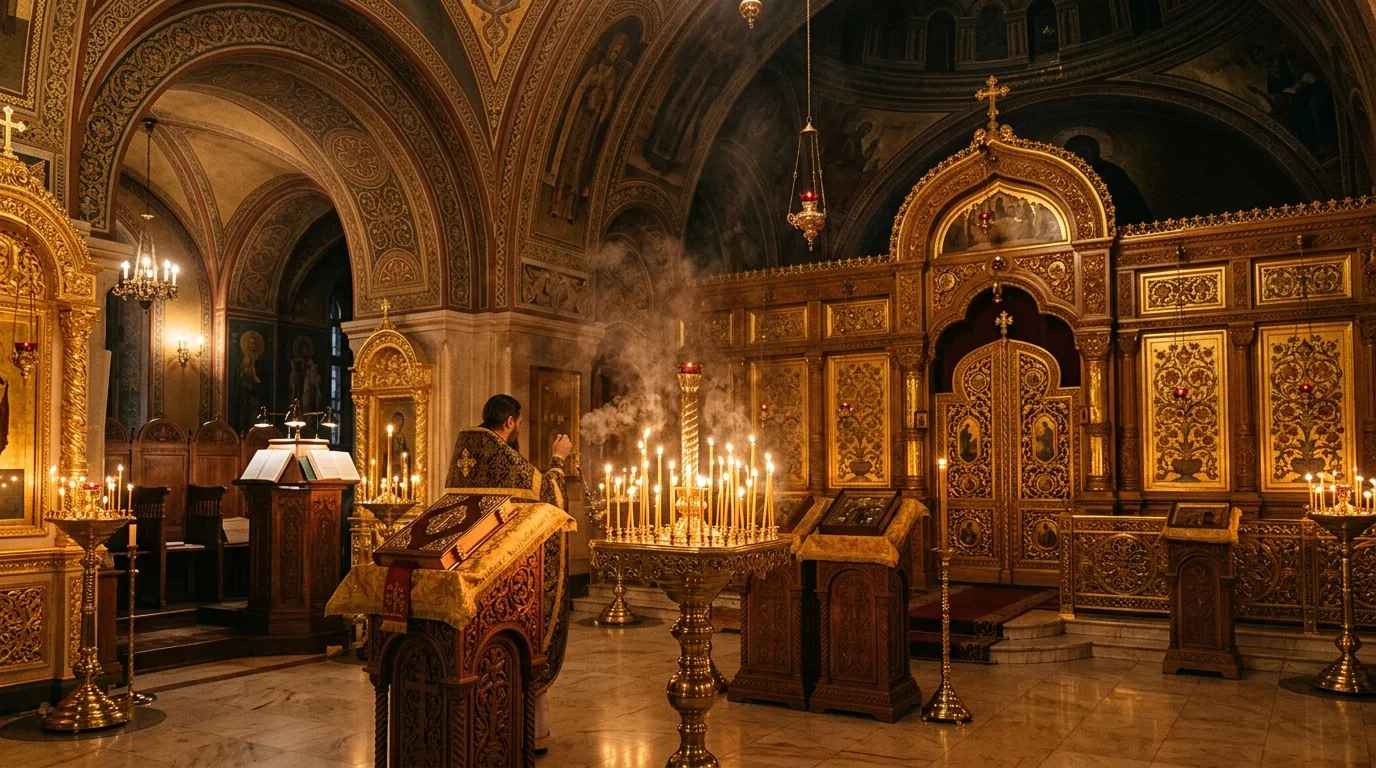
The early Church inherited this instinct and grew it into what we now call the canonical hours, Vespers, Compline, the Midnight Office, Matins, and the Little Hours. Monasteries still keep the full cycle today. Parishes usually keep a simplified form. But the root goes back to the same conviction Daniel had: prayer needs a rhythm, or it tends to disappear. If you'd like a brief historical overview of that development, this summary of the history of Christian prayer is a useful starting point.
Morning and evening prayer in daily Orthodox life
In daily Orthodox life, prayer isn't confined to one service or one emotional high point. It shapes mornings and evenings, slips into work breaks through the Jesus Prayer, and reaches its summit in the Divine Liturgy. For many of us, the whole day slowly gathers itself around the remembrance of God. Explore: How to Pray Fajr: Solving Your Wake-Up Dilemma.
Christ himself gave the pattern when His disciples asked, "Lord, teach us to pray" (Luke 11:1). He answered with what we now call the Lord's Prayer, and taught them to avoid empty repetition, praying instead from the heart, in secret, trusting the Father who already knows their needs (Matthew 6:5-13). That's the compass for everything that follows. For readers exploring daily Orthodox practice further, see our guide to an Orthodox prayer rule and our introduction to the Jesus Prayer.
Orthodox Prayer Step by Step: A Simple Beginner Rule
I get asked constantly, "Father, what does an actual Orthodox prayer rule look like for a beginner?" So let me lay it out plainly, the way I would over coffee after Liturgy.

Preparing the space, body, and heart
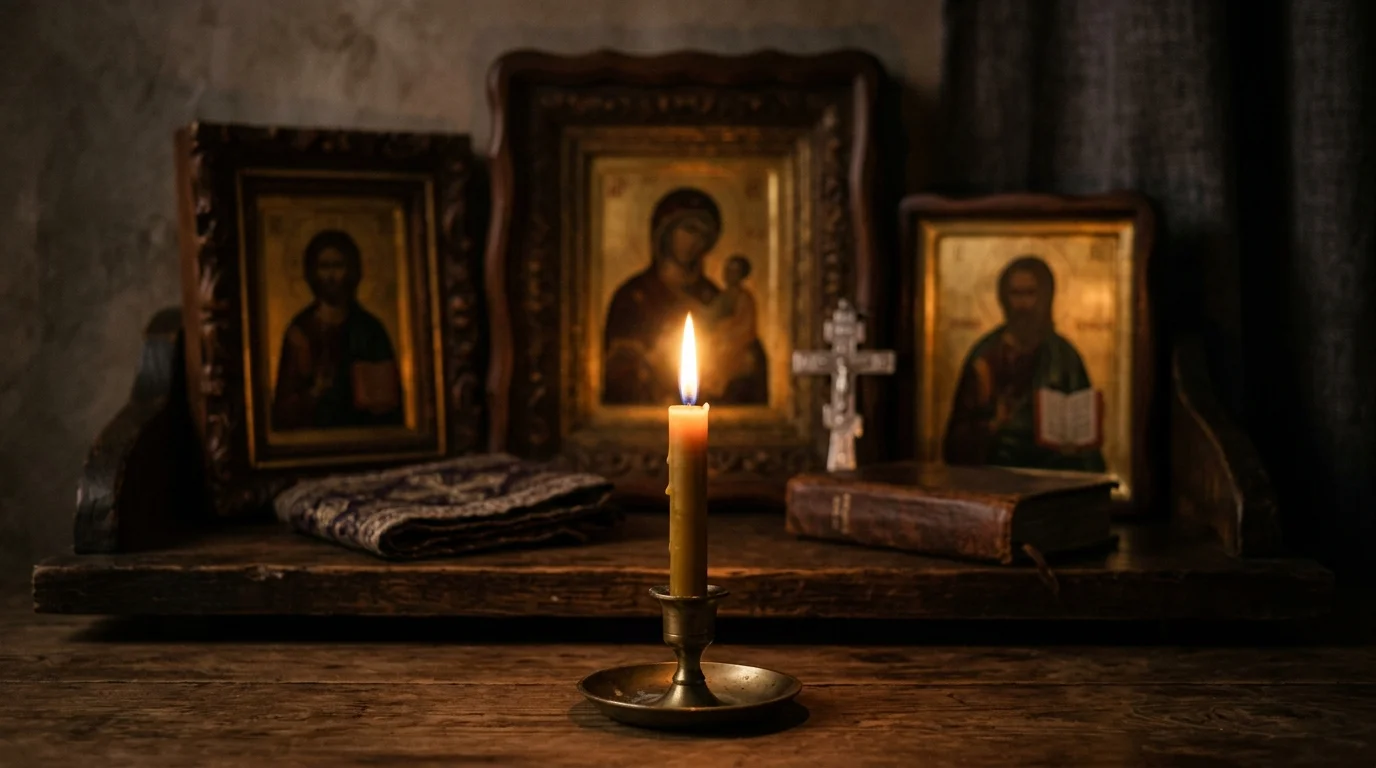
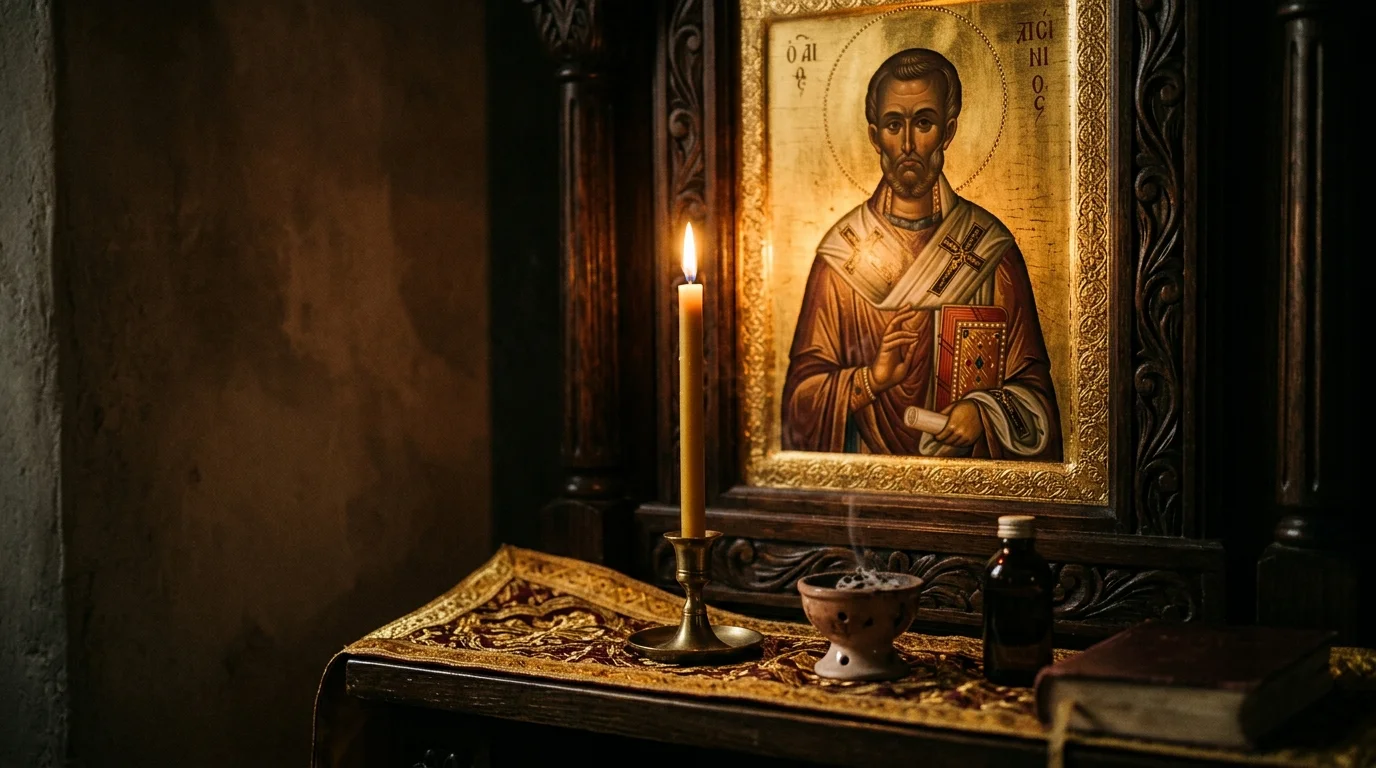
Find a quiet corner. An icon helps, though it's not required at the start. Stand, or sit if health requires it, and simply become aware that you're stepping into God's presence. Hebrews reminds us to "draw near with confidence to the throne of grace" (Hebrews 4:16). Not fear. Confidence.
Opening prayers, psalms, and the Lord's Prayer
A simple rule usually begins with an opening prayer to the Holy Spirit, a psalm (Psalm 50 for repentance is common), and the Lord's Prayer itself, the very words Christ gave us. Some add a short reading from the Gospels. That's it for the skeleton. Everything else grows from there. People who first came searching how do you pray salat are sometimes surprised to find that Orthodoxy also hands down a concrete pattern, even though the theology and content of the prayer are very different.
The Jesus Prayer and personal intercessions
Then comes the Jesus Prayer: "Lord Jesus Christ, Son of God, have mercy on me, a sinner." Said slowly, sometimes with a prayer rope, sometimes without one. St. Paul tells us to "pray without ceasing" (1 Thessalonians 5:17), and this short prayer is how Orthodox spirituality takes that command seriously, not as an impossible burden, but as a habit the heart can actually carry through the day.
According to SaintGabrielHours' beginner guidance on structured daily prayer, about 15 minutes a day is a realistic entry point. Not hours. Fifteen minutes. That's achievable for almost anyone, and honestly, most beginners overestimate what they'll manage and underestimate what those fifteen minutes will do over a year.
What Do Orthodox Christians Say in Prayer?
Set prayers of the Church
We use written prayers composed by the saints, morning prayers, evening prayers, prayers before and after meals. Are they less sincere because someone else wrote them first? I don't think so. As St. John of Damascus teaches in An Exact Exposition of the Orthodox Faith, prayer is the raising of the mind and heart to God, and words borrowed from a saint can raise the heart just as well as words we invent ourselves, sometimes better.

Spontaneous prayer within a liturgical life
But set prayers aren't the whole picture. We also speak to God plainly, in our own words, especially in moments of grief or gratitude. Orthodoxy holds both together. Fixed prayer trains the heart; spontaneous prayer lets the heart speak once it's been trained. Not one or the other. Both. That balance can be reassuring to those whose spiritual search began with a very different question, namely, how do you pray salat.
[YOUTUBE_VIDEO]
I'd recommend the short video above if you're the kind of learner who needs to see a rule in practice rather than just read about it. It won't replace guidance from a priest, but it's a fair starting point.
From Salat to Orthodox Prayer: Guidance for Seekers and Catechumens
Someone exploring Orthodoxy once told me, almost in a whisper, "If I become Christian, I'm afraid I'll lose the discipline I built through years of praying at set times." I understood exactly what she meant. That fear is real, and I won't pretend it isn't.

Keeping discipline without fear
Here's what I told her, and what I'd tell you: a habit of fixed prayer isn't something Orthodoxy asks you to throw away. It can become a foundation, not a loss. Fr. Thomas Hopko put it simply: every Orthodox Christian should have a daily rule of prayer, kept faithfully and without self-will. That's not so different from the discipline you already know, just reoriented.
How fixed prayer can be reoriented toward Christ
What changes is not the discipline itself but the One you're speaking to, and why. As St. Athanasius the Great teaches in the Letters to Serapion, we are made sons through the Spirit in the Son. That's the heart of it. Christian prayer isn't submission to a distant sovereign; it's a child approaching a Father, through Christ, carried by the Spirit. I don't fully know how to make that difference feel real in a single paragraph, honestly, it took me years of my own conversion to feel it in my bones rather than just understand it in my head. But I've watched it happen in others, and it's real. So when someone asks how do you pray salat and then wonders what becomes of that discipline in the Church, my answer is: the habit need not die; it can be healed and fulfilled in Christ. Learn more: How to Make Istikhara Prayer: Seek Real Guidance.
Daily Structured Prayer: Salat, Orthodox Practice, Catholic Practice, and Protestant Practice
[COMPARISON_TABLE]
Orthodox, Catholic, and Protestant Approaches to Daily Structured Prayer
Catholicism, like Orthodoxy, kept a historic daily office, the Liturgy of the Hours, prayed by priests and religious worldwide, with growing lay participation. Strong overlap with our own tradition, and I say that with real respect for the Catholic heritage I grew up in. Readers interested in that parallel can see this concise guide to the Liturgy of the Hours.
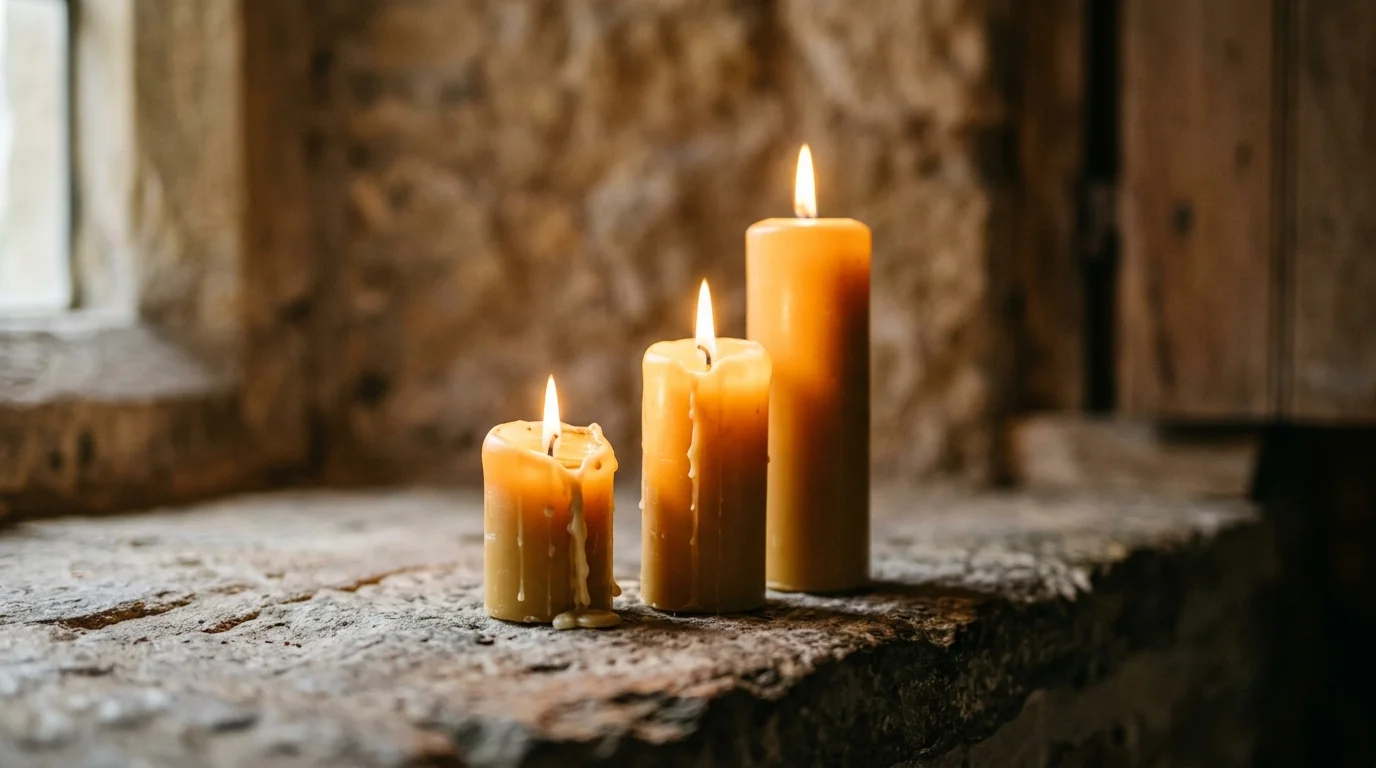
Protestant traditions tend to lean toward personal and spontaneous prayer, though some communities keep morning and evening devotions or modern daily office resources. Less universal expectation of a fixed inherited rule, generally speaking, though that varies enormously by denomination.
What makes Orthodoxy distinct, I think, is how it joins fixed prayer, bodily reverence, liturgical continuity, and the doctrine of theosis into one coherent vision. Orthodox Christianity does have structured daily prayer, but its center isn't a legal minimum. It's communion with the Holy Trinity.
Father Victor's Perspective: Prayer as Communion, Not Mere Replacement
Here's where I want to slow down and share something I've wrestled with for years, both as a priest and as someone with a background in psychology.
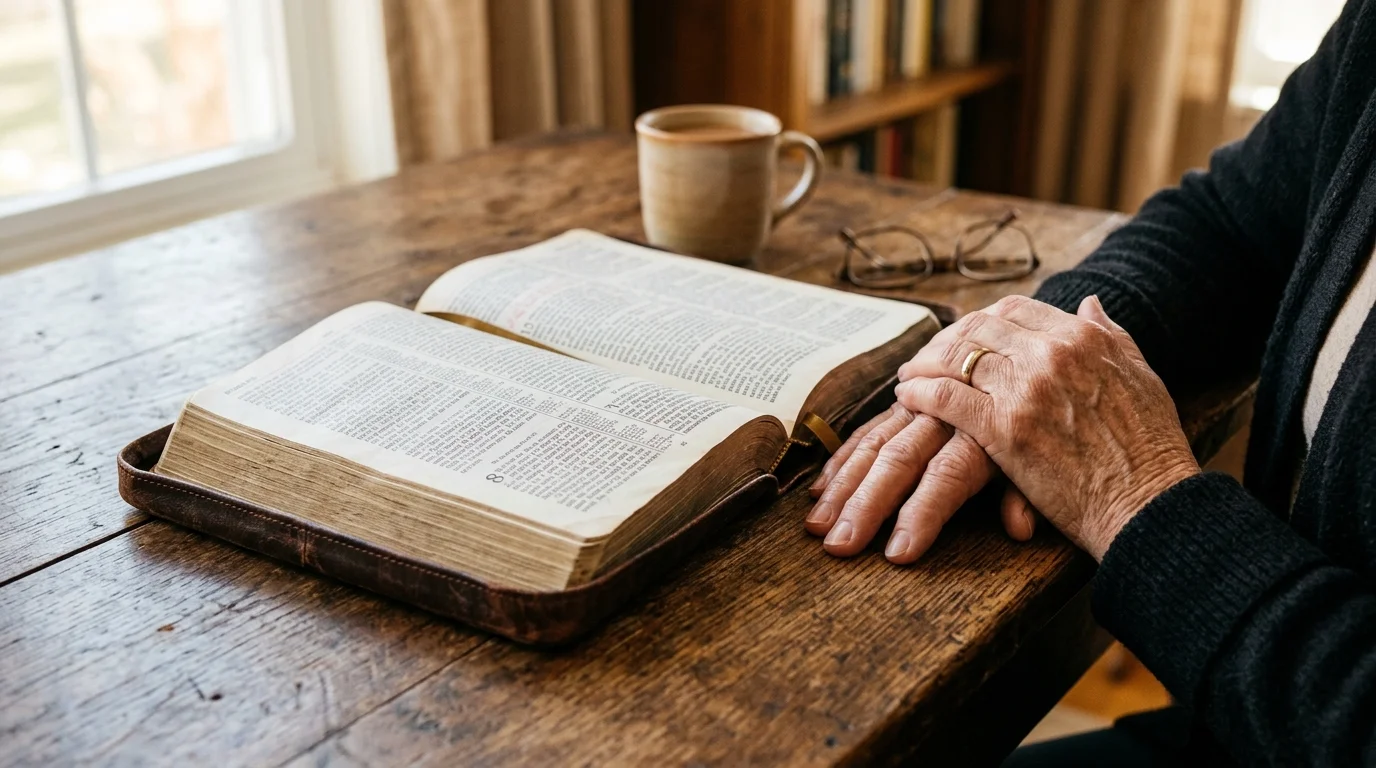
For a seeker shaped by salat, the deepest Orthodox answer isn't first about replacing one set of movements with another. That's not quite right, let me put it more carefully. It's about discovering who the One addressed in prayer actually is. In Orthodoxy, prayer becomes filial communion with the Father through Christ in the Holy Spirit. Not obedience to a ruler far above you, but a son or daughter speaking to a Father who already loves you before you speak a word.
Second, and I say this pastorally, not theoretically: a disciplined habit of fixed prayer is not something we ask former Muslims to despise. Or actually, let me say it stronger, it can become a providential preparation for an Orthodox prayer rule, once purified and reoriented toward Christ. I've watched this happen. Someone who learned to stop five times a day, everything else in life, and turn toward God, often adapts beautifully to a Christian rule of prayer. The muscle is already there. Only the direction changes.
Third, and this one took me the longest to understand myself: Orthodox prayer unites body and soul without making bodily precision the final measure of success. Bows, standing, prostrations, these matter, genuinely. But the true criterion is repentance, attention, and growth in theosis. As St. Maximus the Confessor teaches in Centuries on Love, the depth of prayer is revealed by the heart's freedom from distraction, not by perfect physical form. That's a relief, honestly, for anyone who worries they'll "get it wrong." In that sense, even the repeated online question how do you pray salat can become a doorway into a much deeper question about what prayer is for.
Prayer and Theosis: Why Orthodox Christians Pray
Why pray at all, in the end? As St. John Chrysostom writes in his Homily on Prayer, prayer is a refuge for human anxiety and sorrow. That's not marketing language. I've seen it hold up under real grief in my own parish.

Metropolitan Kallistos Ware once wrote that prayer is not simply words, but a living relationship between the human person and the living God. And Fr. Alexander Schmemann added something I return to often, the primary aim of prayer is not to get something from God but to enter into communion with Him.
According to Sts. Peter and Paul Cathedral's teaching on the living tradition of Orthodox prayer, prayer is participation in God's own life, what we call theosis, the process by which the human person becomes by grace what God is by nature. That's the destination. Everything else, the rule, the psalms, the Jesus Prayer, is simply the path there.
According to PrayFocus's global Christianity statistics, there are roughly 291.6 million Orthodox Christians worldwide today. And according to Orthodox.News, summarizing recent Orthodox reporting and Pew-based estimates, we represent about 12% of the world's Christians. In the United States specifically, according to PrayFocus's compilation of denominational data, Orthodox Christians make up roughly 1% of the population, which explains why so many readers here have simply never encountered this tradition before. Not a small thing to consider, given roughly 2.3 billion Christians and 2.0 billion Muslims share this planet.
Common Misconceptions About Orthodox Prayer
"Orthodox Christians don't really have structured daily prayer, unlike Muslims who pray salat." Not true. Orthodoxy carries a long tradition of fixed daily prayer through the canonical hours, morning and evening prayers, and the repeated Jesus Prayer. The misconception exists mostly because many Western Christians today are more familiar with informal devotional habits than historic liturgical prayer, so outsiders assume Christianity lacks structure altogether. It doesn't.
"A written or repeated prayer is less sincere than a spontaneous one." The Church teaches the opposite, actually. Set prayers can school the heart, especially joined with attention and humility. Modern culture tends to equate authenticity with spontaneity, but just as love can be expressed in inherited words at a wedding, the Church's prayers give language to the heart when we simply don't know how to pray well ourselves. Discover: How to Pray the Divine Mercy Chaplet: A Guide.
"Orthodox prayer is only in Greek, Slavonic, or some language I can't understand." Understandable worry, but not accurate. Orthodox worship and prayer exist widely in English and many other languages, even while some parishes keep traditional liturgical tongues alongside. Visitors sometimes walk into one ethnic parish and assume that defines the whole Church. It doesn't. Ask around, and you'll likely find an English-language community nearby.
"Orthodox Christians pray to saints instead of God." No. We pray to God, and we also ask saints for intercession, the same way you might ask a friend on earth to pray for you. Worship itself belongs to God alone. That distinction matters, and I try to explain it patiently every time someone raises it.
"Leaving salat means abandoning all rhythm and bodily reverence." Not so. Orthodoxy preserves disciplined prayer habits through a Christian prayer rule, grounded in Christ and the life of the Church. Some seekers assume the only alternative to salat is prayer with no schedule and no body involved at all. That's simply not what Orthodoxy offers.
"God only accepts prayer if every formula and bodily detail is performed perfectly." I hear this fear often, especially from people coming out of highly formalized environments. Orthodoxy values order and reverence, yes, but emphasizes mercy, repentance, and the heart's disposition before God far more. Learn carefully, without fear. Prayer matures over time, under grace, with a spiritual father's guidance.
Frequently Asked Questions
What is the correct way to pray Salah?
The correct performance of Salah, according to Islamic teaching, involves wudu, facing the Qibla, forming the intention, and completing cycles (rakah) of standing, bowing, and prostration with specific Arabic recitations. If you're asking as someone exploring Christianity rather than Islam, Orthodox prayer follows a different structure entirely, centered on the Trinity rather than a fixed sequence of movements.
How do I pray Salah step-by-step?
Salah begins with the takbir ("Allahu Akbar"), moves through recitation of Surah al-Fatihah, bowing (ruku), two prostrations (sujud) per rakah, and concludes with the Tashahhud and Salam. Each of the five daily prayers has a set number of rakah. For a Christian parallel, the Orthodox prayer rule moves through opening prayers, psalms, the Lord's Prayer, and the Jesus Prayer, morning and evening.
What do you say during Salat?
Worshipers recite "Allahu Akbar," Surah al-Fatihah, "Subhana Rabbiy-al-'Adheem" while bowing, "Subhaana Rabbiy-al-A'laa" while prostrating, and the Tashahhud near the end. Orthodox Christians, by comparison, say the Lord's Prayer, psalms, and the Jesus Prayer, "Lord Jesus Christ, Son of God, have mercy on me, a sinner," as the backbone of daily prayer.
What are the 5 rules of Salah?
Commonly cited conditions include ritual purity (wudu), covering the body appropriately, facing the Qibla, praying at the correct fixed time, and forming the sincere intention (niyyah). Orthodox Christianity has its own conditions for prayer, less legal in tone, more relational: humility, attentiveness (nepsis), repentance, regularity, and, ideally, guidance from a spiritual father.
Is there a Christian equivalent to praying five times a day?
Not an exact equivalent, but a real parallel. Orthodox monasteries keep the full cycle of canonical hours, seven services rooted in Scripture's own pattern of morning, evening, and midday prayer (Psalm 55:17, Acts 3:1, Daniel 6:10). Most laypeople keep a simplified version, morning and evening prayers plus the Jesus Prayer through the day, which St. Paul calls praying "without ceasing" (1 Thessalonians 5:17).
I do not wish to hide or bury in the ground the treasure, the joy, and the happiness that were granted to me. I wish to share this experience with you, leaving each person the freedom of personal choice. My message is simple and sincere: whether your search began with how do you pray salat or with some other longing of the heart, trust in God, open your hearts to Him, participate in the Holy Mysteries of the Orthodox Church, and He will surely comfort you and lead you to a life that is deeper, more whole, and more joyful.
About the Author
Father Victor Meshko is an Orthodox priest of the Russian Orthodox Church Abroad (ROCA), serving at the Cathedral of the Holy New Martyrs and Confessors of Russia in Munich since his ordination in 2013. He holds multiple degrees in philosophy, theology, and psychology, including theological studies at the LMU Munich Institute for Orthodox Theology, and is the published author of Erzbischof Filaret (Gumilevskij) von Cernigov und Nezin. In this article for Find to God, he brings together scholarly training, pastoral experience, and lived Orthodox prayer.
Researched and written by Father Victor Meshko. AI tools were used during the research process.
Lorem ipsum dolor sit amet, consectetur adipiscing elit. Suspendisse varius enim in eros elementum tristique. Duis cursus, mi quis viverra ornare, eros dolor interdum nulla, ut commodo diam libero vitae erat. Aenean faucibus nibh et justo cursus id rutrum lorem imperdiet. Nunc ut sem vitae risus tristique posuere.
Lorem ipsum dolor sit amet, consectetur adipiscing elit. Suspendisse varius enim in eros elementum tristique. Duis cursus, mi quis viverra ornare, eros dolor interdum nulla, ut commodo diam libero vitae erat. Aenean faucibus nibh et justo cursus id rutrum lorem imperdiet. Nunc ut sem vitae risus tristique posuere.
Lorem ipsum dolor sit amet, consectetur adipiscing elit. Suspendisse varius enim in eros elementum tristique. Duis cursus, mi quis viverra ornare, eros dolor interdum nulla, ut commodo diam libero vitae erat. Aenean faucibus nibh et justo cursus id rutrum lorem imperdiet. Nunc ut sem vitae risus tristique posuere.


Help us bring the christian faith to modern seekers worldwide.
Godfinder relies on generous souls to sustain our multilingual platform, develop new tools like the Magic Cube, and support struggling believers. If our work has touched your heart, consider contributing to our nonprofit partner

Do you want to know More? Ask God’s Word!
Do you have questions, worries, or hopes? Feeling lost, burdened, or alone? “Ask God’s Word” brings you gentle guidance rooted in Scripture and the wisdom of the Church. Find hope and strength today!
