.avif)
What Is the Greek Orthodox Church? Discover Here!
If you have ever sat in a Greek Orthodox church and felt like everyone around you was speaking a language you did not quite understand, both literally and culturally, you have already stumbled onto the real answer to What is the Greek Orthodox that no dictionary entry will give you. The chanting...

What Is the Greek Orthodox Church?
If you have ever sat in a Greek Orthodox church and felt like everyone around you was speaking a language you did not quite understand, both literally and culturally, you have already stumbled onto the real answer to What is the Greek Orthodox that no dictionary entry will give you. The chanting may be in Greek, or English, or a mixture of both. The candles, the incense, the icons watching from every wall, all of it can feel foreign even to people who grew up Christian. And then there is the harder question underneath: is this a religion, an ethnicity, or a family inheritance? In my experience, it is deliberately all three at once, which is exactly why converts and mixed-heritage families sometimes feel like permanent guests even after years of belonging.

In my years of serving as an Orthodox priest since 2013, I have found that many seekers ask whether Greek Orthodox means an ethnic club, a different religion, or simply another word for Eastern Orthodox Christianity. I was raised Catholic myself, so I understand the confusion of standing at the threshold of a tradition and not knowing which door you are walking through. What most people are really asking, underneath the terminology, is something much simpler: could I meet Christ here?
✏️ By Father Victor Meshko | 📅 Updated: September 2026 | ⏱️ 9 min read
Quick Answer: Greek Orthodox Christianity is the Greek-speaking and historically Greek expression of Eastern Orthodox Christianity, a sacramental and apostolic Church that confesses the Holy Trinity, the Incarnation of Christ, and the faith of the first seven Ecumenical Councils, and it is not a separate religion from the wider Orthodox Church.
In This Article:
- What Is the Greek Orthodox Church?
- Is Greek Orthodox Christian, and What Is the Greek Orthodox Faith?
- What Happens in a Greek Orthodox Church, and What Is the Greek Orthodox Way of Worship?
- Why "Greek" Does Not Mean You Must Be Greek
- Greek Orthodox, Catholic, and Protestant: What Is the Difference?
- Common Misconceptions About Greek Orthodoxy
- Father Victor's Perspective: Why Seekers Often Misunderstand Greek Orthodoxy
- How to Explore Greek Orthodoxy for Yourself
TL;DR — Key Takeaways
- Greek Orthodox Christianity is a local, historical expression of Eastern Orthodox Christianity, not a separate faith.
- "Greek" usually points to liturgical heritage, historical language, and church jurisdiction, not to an ethnic requirement for belonging.
- You do not need Greek ancestry to attend, be baptized, or belong to a Greek Orthodox parish.
- Orthodox Christians worship God alone, honor Mary as Theotokos, and venerate icons because Christ truly took on flesh.
Quick Answer: What "Greek Orthodox" Means in One Paragraph
Greek Orthodoxy names the branch of Eastern Orthodox Christianity historically connected to the Greek-speaking Byzantine world: the Ecumenical Patriarchate of Constantinople, the ancient Patriarchates of Alexandria and Jerusalem, the Church of Greece, and the many parishes founded by Greek immigrants across the English-speaking world. It shares the same faith, the same seven Ecumenical Councils, and the same sacraments as Russian, Serbian, Romanian, Antiochian, and other Orthodox churches. According to the Greek Orthodox Archdiocese of America, the word "Greek" here refers primarily to historical language and liturgical inheritance rather than to modern Greek nationality alone.
The Three Meanings of "Greek Orthodox": Theological, Institutional, and Cultural
What strikes me about this question, after years of answering it in the narthex after Liturgy, is that people rarely separate the three layers hiding inside it. Theologically, Greek Orthodox means the confession of the Nicene Creed, the seven Ecumenical Councils, and communion in the sacraments, exactly what any Eastern Orthodox Christian believes. Institutionally, it points to a jurisdiction: a diocese or archdiocese under a specific bishop, connected historically to Constantinople rather than to Moscow, Belgrade, or Bucharest. Culturally, it can mean Greek language, Greek cuisine at the parish festival, and grandparents who crossed an ocean carrying an icon wrapped in cloth.
The trouble is that seekers usually experience all three layers simultaneously the moment they walk through the doors, and no one warns them which layer they are looking at. A person can be Greek Orthodox by baptism and never set foot in Greece. Another person can be ethnically Greek and never attend Liturgy. Both descriptions are accurate, and both are incomplete on their own. If someone asks What is the Greek Orthodox in ordinary conversation, the most honest answer is that it names one and the same Orthodox faith as it has been historically received, organized, and lived in a Greek inheritance.
Is Greek Orthodox Christian, and What Is the Greek Orthodox Faith?
What Greek Orthodox Christians Believe About God, Christ, and the Church
Yes, without qualification. Greek Orthodox Christians confess one God in three Persons, the full divinity and full humanity of Jesus Christ, His death and bodily Resurrection, and the life of the world to come. Scripture describes the apostolic Church in a way Orthodox Christians recognize as their own daily life: "they continued steadfastly in the apostles' doctrine and fellowship, in the breaking of bread, and in prayers" (Acts 2:42-47). That is not a description of the past for us. It is Sunday morning.
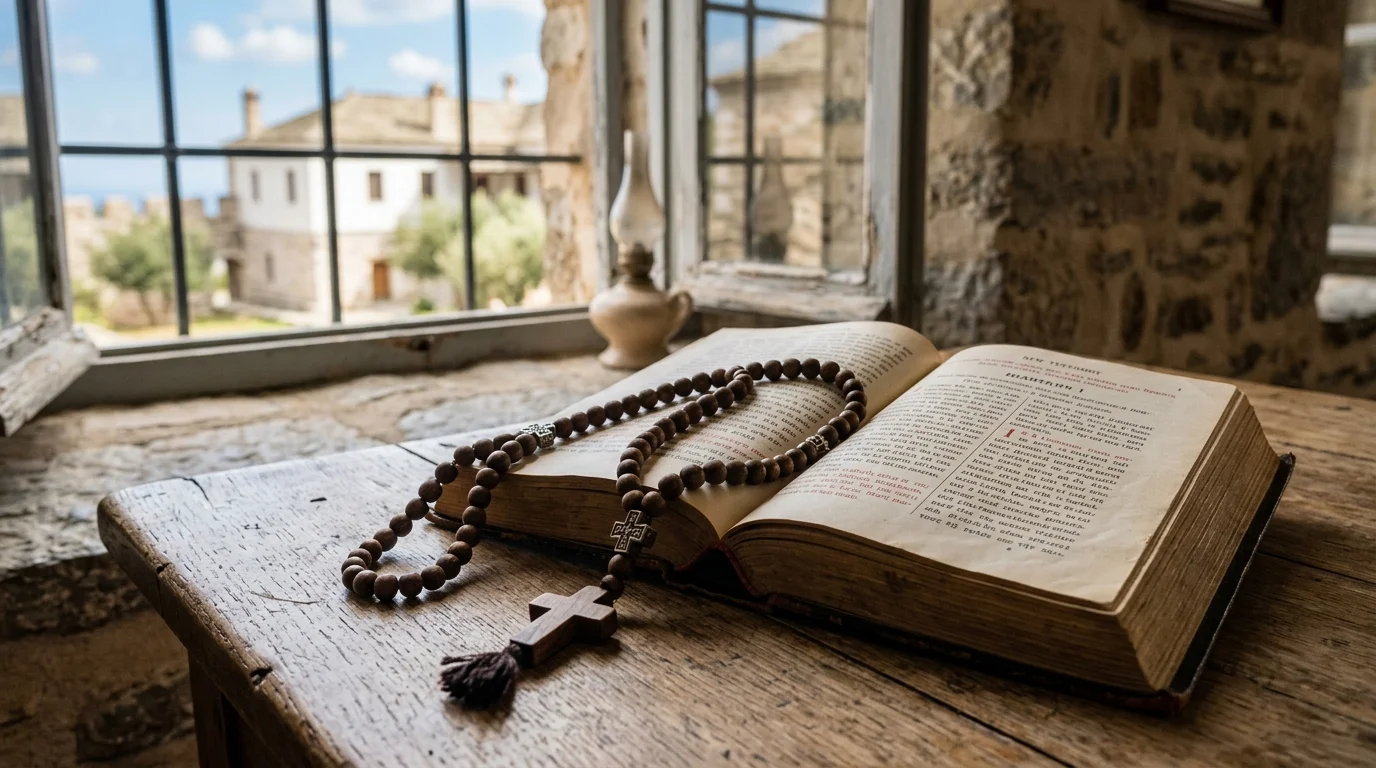
The unity between Greek Orthodox parishes and the wider Orthodox world rests on the same conviction Saint Paul gave the Ephesians: “There is one body, and one Spirit, even as ye are called in one hope of your calling; One Lord, one faith, one baptism, One God and Father of all, who is above all, and through all, and in you all.” (Ephesians 4:4-6, KJV). Greek Orthodoxy is one local voice within that single body, not a competing melody. This is also where questions such as Greek Orthodox vs Christianity or Is Greek Orthodox Catholic usually need gentle clarification: Greek Orthodoxy is fully Christian, but it is not Catholic in the Roman sense.
Why Orthodox Christians See Themselves as Apostolic
The Church's mission was never a private club. Christ told His apostles to “Go ye therefore, and teach all nations, baptizing them in the name of the Father, and of the Son, and of the Holy Ghost: Teaching them to observe all things whatsoever I have commanded you: and, lo, I am with you alway, even unto the end of the world. Amen. ” (Matthew 28:19-20, KJV). Orthodox Christians take this commission seriously: it is why Greek-speaking missionaries brought the faith to Slavic peoples in the ninth century, and why today an American convert with no Greek ancestry at all can be received into full communion with the Church.
Metropolitan John Zizioulas, the Orthodox theologian who served as Metropolitan of Pergamon, taught that Orthodox ecclesiology understands the Church as communion, not merely an association of individuals who happen to share opinions. That distinction matters here. Greek Orthodoxy is not a debating society that agrees on doctrine. It is a network of local churches bound by shared sacramental life, shared bishops in apostolic succession, and a shared confession going back, in unbroken continuity, to the apostles themselves. For anyone still wondering What is the Greek Orthodox at the deepest level, that continuity is central to the answer.
What Happens in a Greek Orthodox Church, and What Is the Greek Orthodox Way of Worship?
Icons, Chanting, Incense, and the Divine Liturgy
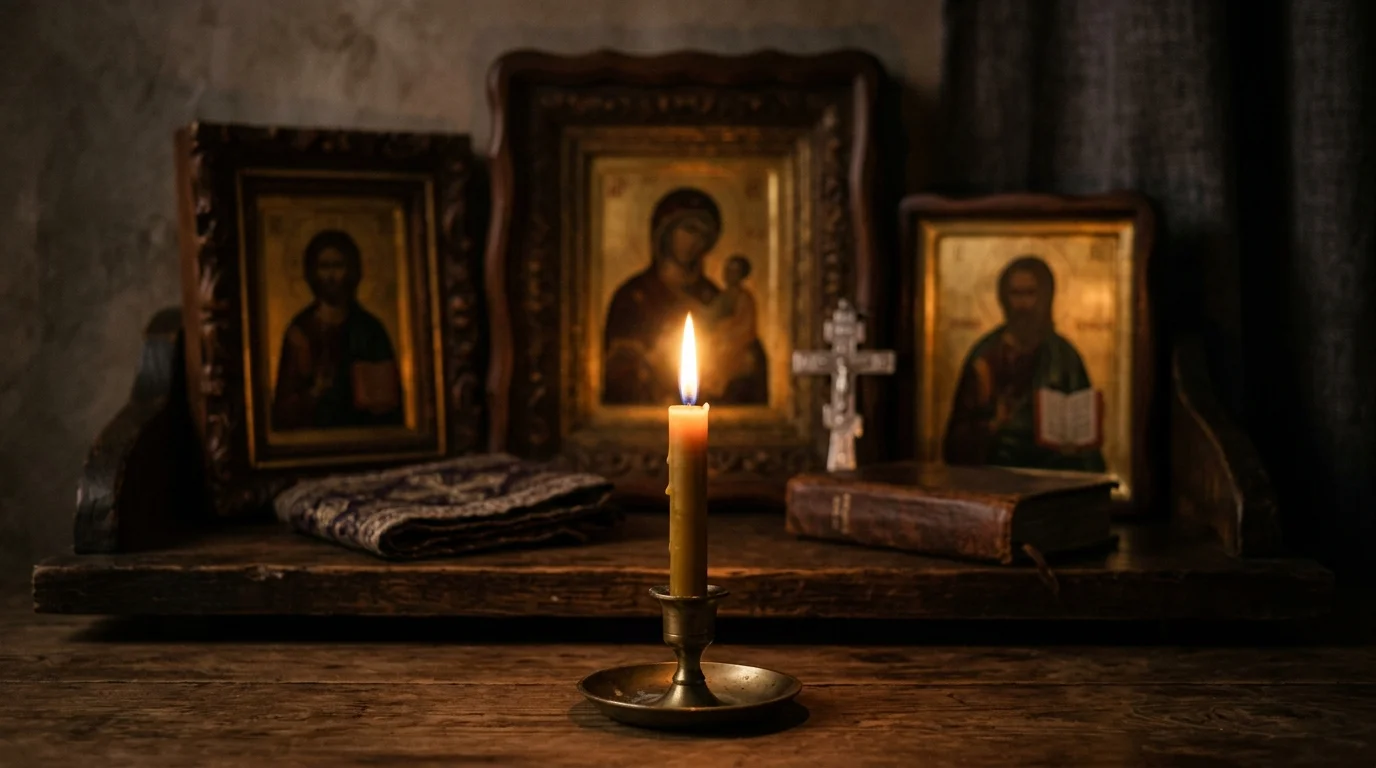
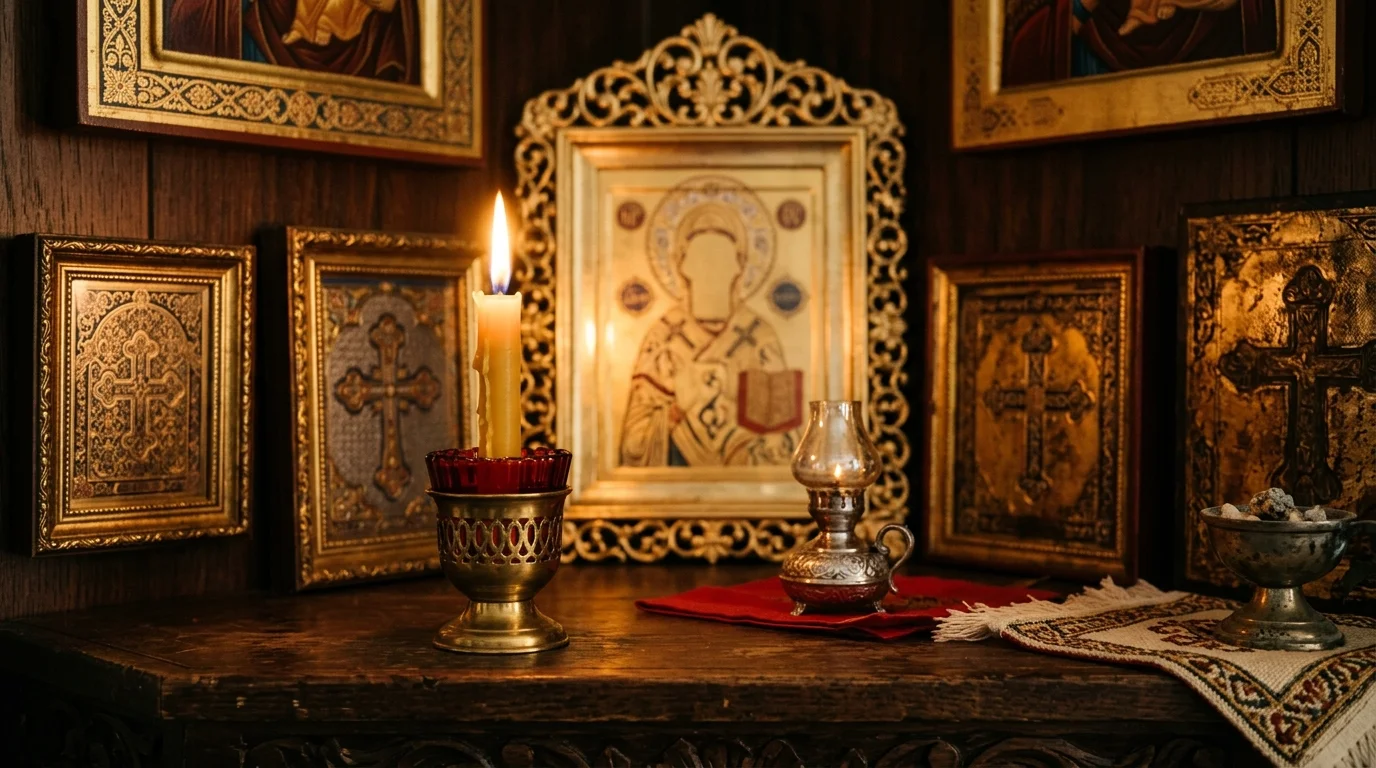
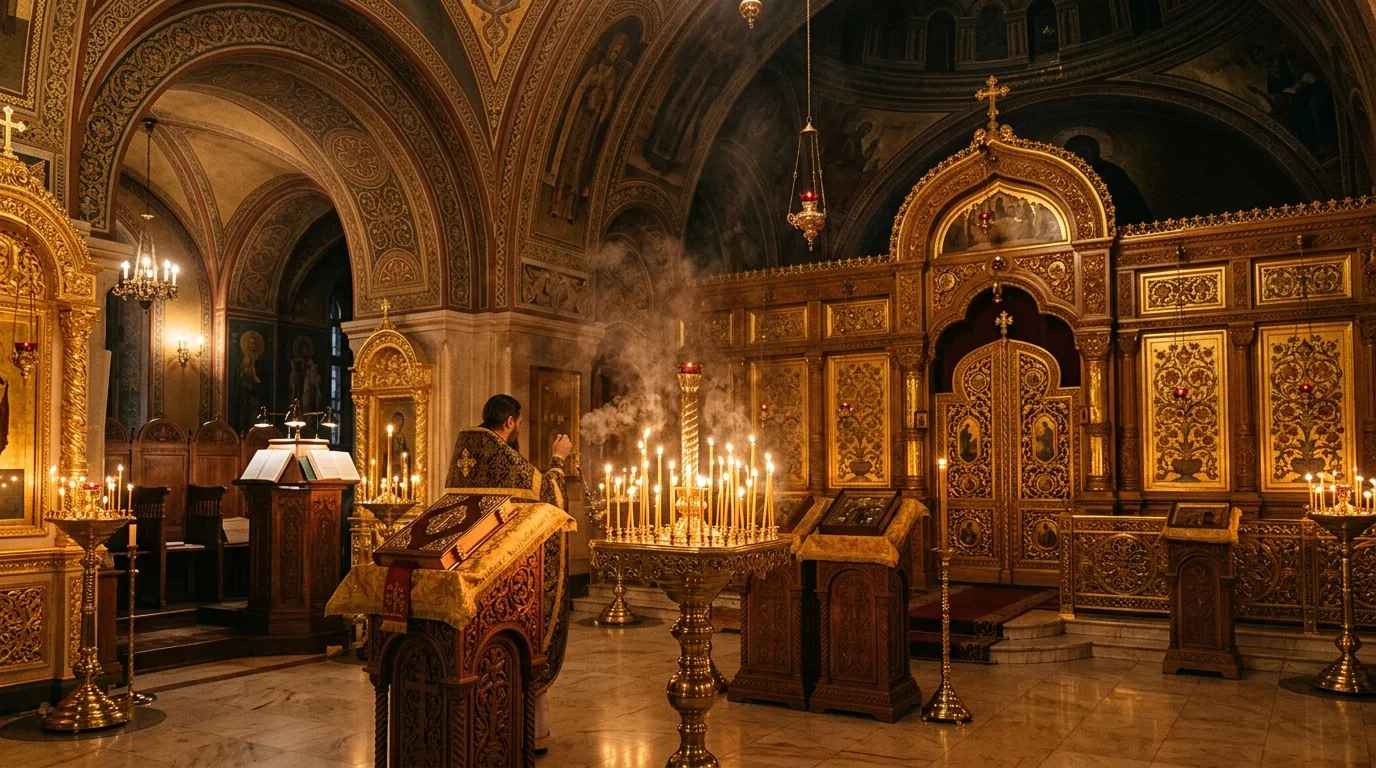
One of the most moving moments in parish life is when a visitor realizes that the incense, icons, and chanting are not barriers to God, but invitations into the Church's living prayer. I remember a visitor at our cathedral in Munich who whispered to me afterward that she had expected a performance and instead felt like she had walked into someone else's conversation with God, one that had been going on for centuries before she arrived. Related: What Does the Greek Orthodox Church Believe?.

The Divine Liturgy of St. John Chrysostom is the service celebrated most Sundays in Greek Orthodox parishes, with the Liturgy of St. Basil the Great used on certain feasts during the year, according to the Orthodox Church in America. Every element has a purpose. The icons are not decoration; they proclaim that "the Word became flesh and dwelt among us" (John 1:1-18), and that because God took on a visible body, holy images of Christ and His saints can be venerated without confusing the image with the divine nature itself. The bread and wine of Holy Communion are not a symbol but, as Scripture says, a true "communion of the blood of Christ" and “The cup of blessing which we bless, is it not the communion of the blood of Christ? The bread which we break, is it not the communion of the body of Christ? For we being many are one bread, and one body: for we are all partakers of that one bread.” (1 Corinthians 10:16-17, KJV), the very thing that makes many believers one body.
What Visitors Should Expect
A first-time visitor will notice people standing for most of the service, crossing themselves, lighting candles, and approaching icons to venerate them with a kiss or a bow. None of this requires prior Orthodox background. Priests in Greek Orthodox parishes are used to visitors who do not know when to stand or sit, and no one expects a stranger to have memorized the choreography. Come as you are, watch, listen, and if questions arise, most priests are glad to answer them over coffee after the service rather than during it. In that sense, one practical answer to What is the Greek Orthodox is simply this: it is a worshiping life that must be seen and heard, not merely summarized.
Why "Greek" Does Not Mean You Must Be Greek
Language, Heritage, and the Universal Mission of the Church
When I studied Orthodox theology in Munich and then returned to parish life, I saw how often people understand Greek Orthodoxy from the outside as history or culture, while missing its inner life as worship, communion, and healing in Christ. The word "Greek" can mislead modern seekers because they often hear it as an ethnic label, while the Church hears it sacramentally, as a local embodiment of the one apostolic faith carried in a particular historical language and liturgical inheritance. Byzantine Greek was the language of the New Testament's cultural world, of the Ecumenical Councils, and of the great patristic writers. That inheritance does not close the door to non-Greeks; it opens a window into how the early Church actually spoke and prayed.
In practice, some Greek Orthodox parishes worship mostly in English, some blend English and Greek depending on the generation present, and some, especially older immigrant communities, worship more heavily in Greek. This is a pastoral and local reality shaped by history, not a doctrinal division. The same is true of the liturgical calendar: some Orthodox jurisdictions follow a different calendar for fixed feasts than others, while confessing the identical faith in Christ. None of these differences touch what the Church believes about God, salvation, or the sacraments. This is one reason questions about Greek Orthodox beliefs and practices or Greek Orthodox rules need patient answers rather than stereotypes.
Greek Orthodox, Catholic, and Protestant: What Is the Difference?
I knew the Catholic tradition quite well before my conversion, and I want to be fair to it here. Orthodoxy and Catholicism share a great deal: belief in the Holy Trinity, the full divinity and humanity of Christ, apostolic succession, baptism, the Eucharist, and honor for Mary and the saints. The differences that developed, especially regarding the authority of the Bishop of Rome and certain later doctrinal developments, unfolded gradually over centuries rather than in a single rupture. Protestant traditions vary enormously among themselves, but many share belief in the Trinity and the authority of Scripture, while typically differing from Orthodoxy on the role of icons, the invocation of saints, and how Scripture relates to church tradition. This is where comparisons such as Greek Orthodox vs Catholic can be useful, so long as they remain fair and historically careful.
Comparison Table
Greek Orthodox Compared With Catholic and Protestant Christianity
[COMPARISON_TABLE]
According to the Orthodox Church in America's teaching on the Divine Liturgy, salvation in Orthodox theology is never reduced to a legal transaction. Scripture speaks of becoming “According as his divine power hath given unto us all things that pertain unto life and godliness, through the knowledge of him that hath called us to glory and virtue: Whereby are given unto us exceeding great and precious promises: that by these ye might be partakers of the divine nature, having escaped the corruption that is in the world through lust.” (2 Peter 1:3-4, KJV), which Orthodox theology calls theosis, participation in God's own life by grace. Saint Athanasius the Great put it with startling directness in his fourth-century work On the Incarnation: "He was made man that we might be made God." This does not mean a human being becomes God by nature. It means, as Norman Russell explains in his study of Greek patristic deification theology published by Oxford University Press, that salvation includes healing, sanctification, and resurrection, not acquittal alone.
Common Misconceptions About Greek Orthodoxy
Do Greek Orthodox Christians Worship Mary?
No. Orthodox Christians worship God alone. Mary is honored as Theotokos, God-bearer, because the child she carried is truly God incarnate, and this title was defended precisely to protect the truth about Christ, not to elevate Mary above her Son. Orthodox Christians ask her prayers in the same way believers ask each other for prayer, trusting that she who is closest to Christ intercedes for those who ask. A gentle way to say it to a Protestant friend: Orthodox Christians do not place Mary in the place of God. They honor her because of who Christ is.
Do Greek Orthodox Christians Worship Icons?
No, and this distinction was settled formally at the Seventh Ecumenical Council in Nicaea in AD 787. Orthodoxy separates worship, which belongs to God alone, from veneration, which is honor given to the person an image represents. As St. John of Damascus wrote in his eighth-century defense of icons, "I do not worship matter; I worship the Creator of matter." When I studied the theology of images in connection with my dissertation research on Archbishop Filaret of Chernigov, I noticed how carefully nineteenth-century Russian theologians traced this same argument back through early witnesses like Eusebius of Caesarea, insisting that icon veneration developed alongside Christianity itself rather than as a later addition, precisely because the Church has always confessed that the invisible God became visible in Jesus Christ. See also: What Do Greek Orthodox Believe? Discover Their Faith.
Was the Orthodox Church Created in 1054?
Not exactly, and this is where popular church history oversimplifies. The year 1054 marks a notable moment of mutual excommunication between representatives of Rome and Constantinople, but as John Meyendorff explains in his study of Orthodox church history, the estrangement between East and West developed gradually over centuries through theological, linguistic, and political tensions, not in a single afternoon. Orthodox Christians understand their Church as continuous with the apostolic Church of the first millennium; 1054 is a milestone worth knowing, not the whole story.
Do Orthodox Christians Follow Tradition Instead of the Bible?
No. Orthodoxy does not set tradition against Scripture as competing authorities. As St. Basil the Great wrote in the fourth century, some elements of the Church's life come from written teaching and others were "delivered to us in a mystery by the tradition of the apostles." Orthodox Christians receive Scripture as inspired and authoritative precisely within the worshiping life of the Church that first wrote, copied, and prayed it.
Father Victor's Perspective: Why Seekers Often Misunderstand Greek Orthodoxy
Greek Orthodoxy as a Way of Communion, Not Just a Label
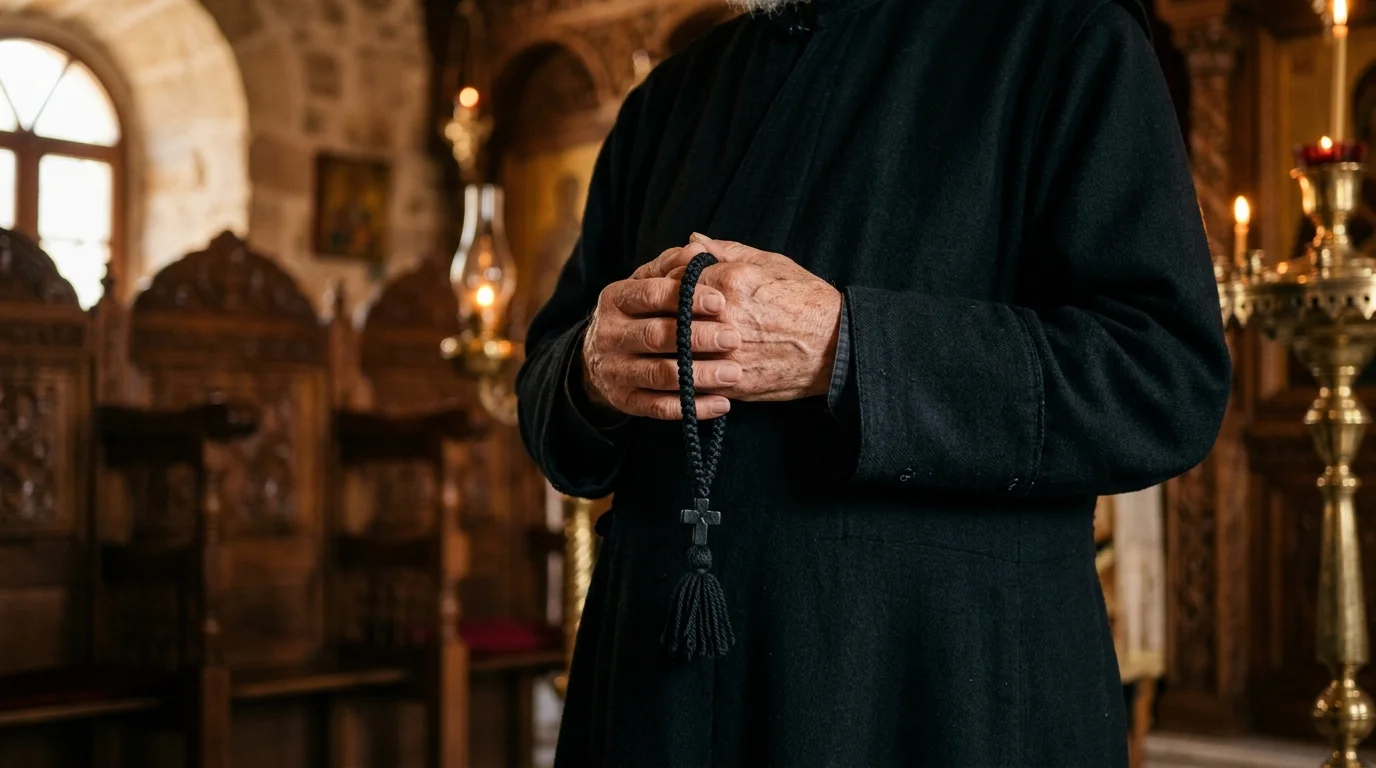
There is something important here that most articles miss. A pastoral explanation of Greek Orthodoxy should begin not with bureaucracy or geopolitics, but with worship. In my experience, people understand the Church most truthfully when they encounter the Divine Liturgy itself, because doctrine is received there as prayed reality, not as a paragraph to memorize. I have watched skeptical visitors stand quietly through their first Liturgy and leave asking better questions than any book could have prompted in them.
Why Worship Explains Orthodoxy Better Than Definitions Alone
One reason seekers misread Greek Orthodoxy is that modern Western religion is often imagined as a set of opinions people hold privately, while Orthodoxy presents Christianity as communion, healing, and transformation lived corporately. With my background bridging theology and psychology, I find this anthropological question more honest than the doctrinal checklist approach: the real question is not only what do Greek Orthodox Christians think, but what kind of human person does this way of life form over years of fasting, confession, and Liturgy? Fr. Alexander Schmemann wrote that the Church is the sacrament of the Kingdom, meaning that in worship, believers do not simply learn about the Kingdom of God, they taste it already, imperfectly but really. That is why the language barrier, literal or cultural, that a newcomer feels in a Greek parish is not necessarily a wall. Sometimes it is simply the sound of a very old conversation with God still being carried on faithfully, one that welcomes anyone willing to listen long enough to learn its rhythm.
How to Explore Greek Orthodoxy for Yourself
Visit a Parish, Attend Vespers or Liturgy, and Speak With the Priest
If you are curious, I would gently suggest starting with Saturday evening Vespers rather than Sunday's full Divine Liturgy. It is shorter, quieter, and gives you room to watch without pressure. Afterward, most priests welcome a conversation over coffee. Bring your honest questions, including the uncomfortable ones about Mary, icons, or whether you need Greek ancestry to belong. You do not need to decide anything on your first visit. This is an invitation, not a command, and it leaves you the freedom of personal choice that God Himself always leaves us.
Frequently Asked Questions
What do Greek Orthodox churches believe?
Greek Orthodox churches believe in the Holy Trinity, the full divinity and humanity of Jesus Christ, His death and Resurrection, salvation as healing and theosis, and the seven Ecumenical Councils as authoritative statements of the apostolic faith. They celebrate the sacraments, above all the Eucharist, as real participation in the life of Christ, and they honor Mary as Theotokos and the saints as members of Christ's Body who intercede for the living.
Does Greek Orthodox support LGBTQ?
The Orthodox Church teaches that marriage is between a man and a woman and calls all Christians, regardless of their struggles, to a life of repentance, chastity, and love shaped by the Gospel. This is a pastoral and personal question that deserves a real conversation with a priest rather than an internet answer, because pastoral care always considers the whole person, not a policy statement. I would encourage anyone wrestling with this to speak honestly with a priest who can listen without judgment. Discover: Greek Orthodox Church Beliefs: Begin Your Journey.
Do Greek Orthodox pray to Mary?
Orthodox Christians ask Mary to pray for them, the same way they ask a living friend for prayer, but they worship God alone. Mary is honored as Theotokos because of who her Son is, not as a substitute for divine worship.
Do Greek Orthodox Christians drink alcohol?
Moderate use of alcohol is generally permitted outside of fasting periods, though Orthodox fasting traditions restrict wine on certain days and abstain from it, along with meat and dairy, during stricter fasts like Great Lent. Practices vary by parish custom and personal health, so I always encourage people to ask their own priest for guidance rather than applying a rule found online.
Do you have to be Greek to attend a Greek Orthodox church?
No. Greek Orthodox parishes in English-speaking countries serve converts, immigrants from many nations, and lifelong Orthodox Christians with no Greek ancestry at all. The word "Greek" describes liturgical and historical heritage, not a requirement of ethnicity.
Is Greek Orthodox the same as Eastern Orthodox?
Greek Orthodox Christianity is one historical and liturgical expression within the wider Eastern Orthodox Church, sharing identical faith and sacraments with Russian, Serbian, Romanian, Antiochian, and other Orthodox churches. Eastern Orthodox is the broader term; Greek Orthodox names a specific heritage within that same communion, according to the Greek Orthodox Archdiocese of America.
Eastern Orthodox Christians worldwide are commonly estimated at roughly 260 to 300 million people, according to Pew Research Center, though this figure includes all Orthodox jurisdictions together and does not isolate Greek Orthodox numbers specifically, since Greek Orthodox identity can mean ethnicity, language, or church membership depending on who is counting. In the United States, Pew's Religious Landscape Study finds that around 1 percent of adults identify as Orthodox Christian of any jurisdiction, a small but historically rooted presence going back to the seven Ecumenical Councils, beginning at Nicaea in AD 325 and concluding at Nicaea in AD 787.
I do not wish to hide or bury in the ground the treasure, the joy, and the happiness that were granted to me when I found my way into the Orthodox Church. If you are still asking What is the Greek Orthodox, I hope this has shown you that it is not merely a label but a living communion in Christ. I wish to share this with you, leaving each person the freedom of personal choice. My message is simple and sincere: trust in God, open your hearts to Him, participate in the Holy Mysteries of the Orthodox Church, above all confession and Holy Communion, and He will surely comfort you and lead you to a life that is more whole and more joyful.
About the Author
Father Victor Meshko is an Orthodox priest of the Russian Orthodox Church Abroad, serving since 2013 at the Cathedral of the Holy New Martyrs and Confessors of Russia in Munich, in the Diocese of Berlin and Germany. He holds multiple degrees in philosophy, theology, and psychology, including a Diplom in Theology and a Doctorate in Theology from LMU Munich's Institute for Orthodox Theology, and he is the published author of Erzbischof Filaret (Gumilevskij) von Cernigov und Nezin. For Find to God, he writes from both scholarly depth and daily pastoral experience with seekers, converts, and parish life.
Researched and written by Father Victor Meshko. AI tools were used during the research process, with human theological review of all content.
Lorem ipsum dolor sit amet, consectetur adipiscing elit. Suspendisse varius enim in eros elementum tristique. Duis cursus, mi quis viverra ornare, eros dolor interdum nulla, ut commodo diam libero vitae erat. Aenean faucibus nibh et justo cursus id rutrum lorem imperdiet. Nunc ut sem vitae risus tristique posuere.
Lorem ipsum dolor sit amet, consectetur adipiscing elit. Suspendisse varius enim in eros elementum tristique. Duis cursus, mi quis viverra ornare, eros dolor interdum nulla, ut commodo diam libero vitae erat. Aenean faucibus nibh et justo cursus id rutrum lorem imperdiet. Nunc ut sem vitae risus tristique posuere.
Lorem ipsum dolor sit amet, consectetur adipiscing elit. Suspendisse varius enim in eros elementum tristique. Duis cursus, mi quis viverra ornare, eros dolor interdum nulla, ut commodo diam libero vitae erat. Aenean faucibus nibh et justo cursus id rutrum lorem imperdiet. Nunc ut sem vitae risus tristique posuere.



Help us bring the christian faith to modern seekers worldwide.
Godfinder relies on generous souls to sustain our multilingual platform, develop new tools like the Magic Cube, and support struggling believers. If our work has touched your heart, consider contributing to our nonprofit partner

Do you want to know More? Ask God’s Word!
Do you have questions, worries, or hopes? Feeling lost, burdened, or alone? “Ask God’s Word” brings you gentle guidance rooted in Scripture and the wisdom of the Church. Find hope and strength today!
