.avif)
A Christmas Prayer: Finding Meaning Beyond Words
Every December, I meet people who cannot bring themselves to say the words "Merry Christmas" without a small ache underneath. For some, even looking for a christmas prayer feels difficult: a woman grieving her mother's first Christmas absence, a man estranged from his son who will spend the feast...

When a christmas prayer feels like the hardest thing to say
Every December, I meet people who cannot bring themselves to say the words "Merry Christmas" without a small ache underneath. For some, even looking for a christmas prayer feels difficult: a woman grieving her mother's first Christmas absence, a man estranged from his son who will spend the feast alone, a convert still uncertain whether his faith is real enough to deserve the joy everyone around him seems to feel. If the only Christmas prayer you can find online asks you to be grateful, united, and joyful on command, it simply was not written for the person who is dreading December 25th. And I want to say clearly, from the start: that person is not praying wrong.
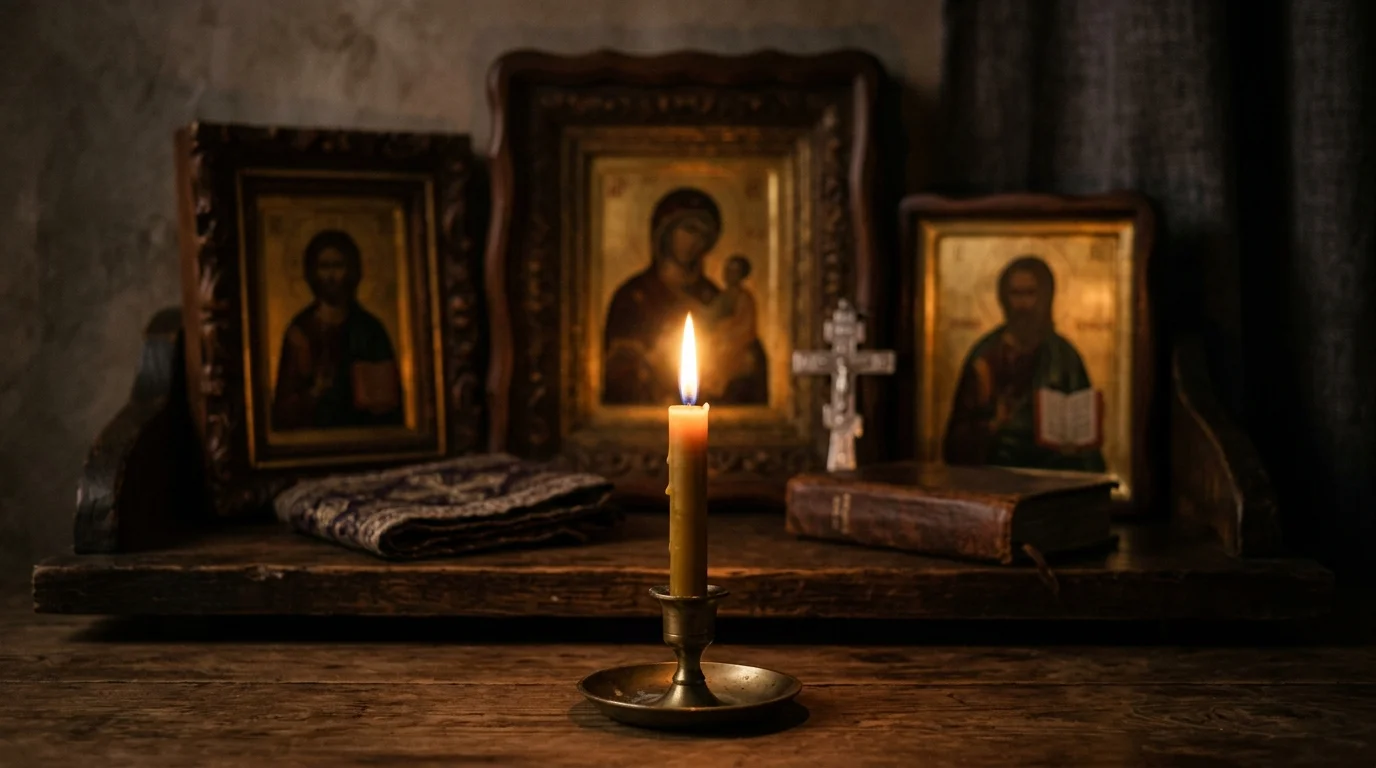
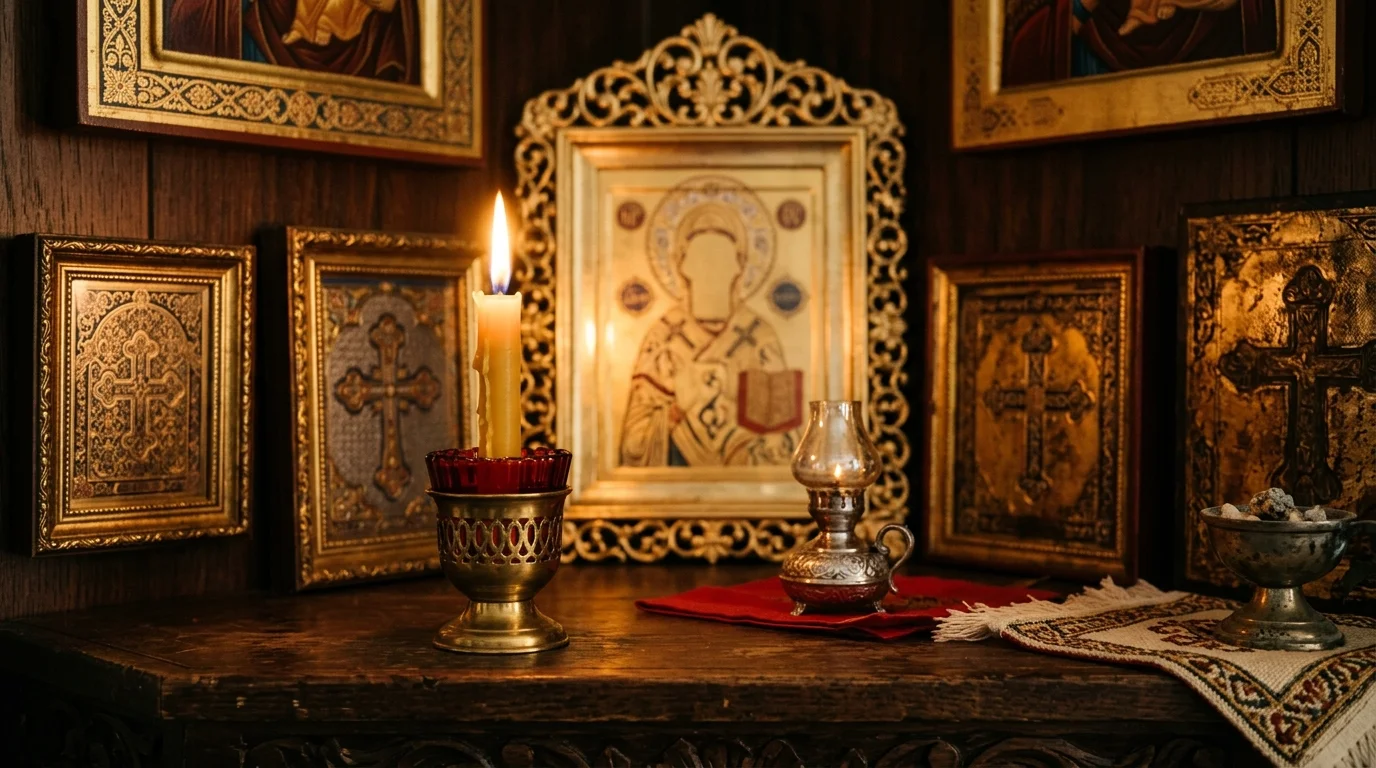
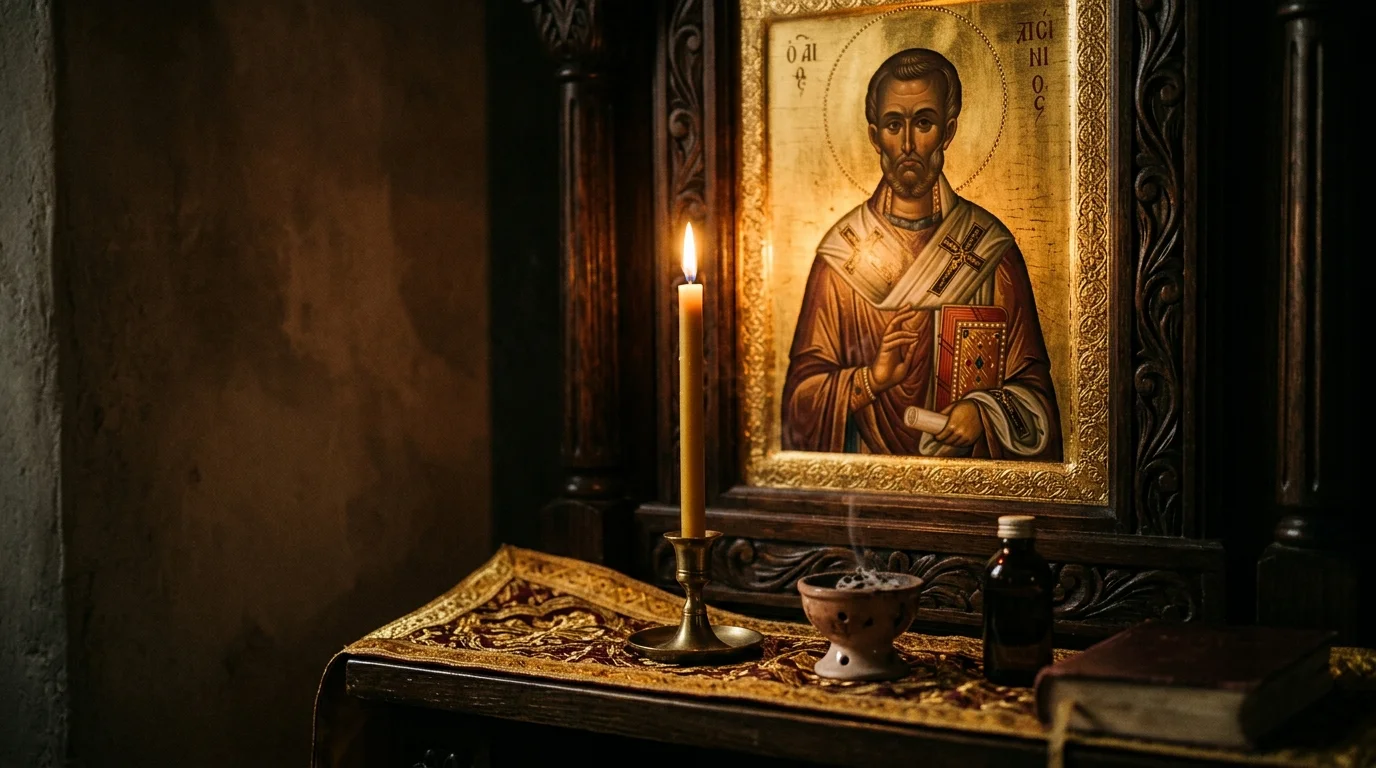
In my years of serving as an Orthodox priest, I have often met people who want a Christmas prayer that feels sincere, but they are surprised to discover that the Church invites them into something deeper than seasonal emotion. What most online articles about a Christmas prayer miss is that in actual parish life, the most powerful Christmas prayer is rarely experienced as an isolated text on a screen. It grows out of the whole rhythm of preparation: fasting, confession, candlelight, the hymns of the Nativity, intercession for the suffering, and finally the communal worship of the feast itself. That lived setting changes how the words are heard, and it also makes room for grief and doubt to stand honestly before God rather than be papered over with forced cheer.
✏️ By Father Victor Meshko | 📅 Updated: September 2026 | ⏱️ 9 min read
Quick Answer: An Orthodox Christmas prayer glorifies Christ for His Incarnation, gives thanks for salvation, includes honest repentance, and intercedes for the suffering world, rather than simply asking God to make the holiday feel warm and united.
In This Article:
- When a christmas prayer feels like the hardest thing to say
- An Orthodox a christmas prayer you can use today
- Why does a christmas prayer begin with the Incarnation, not with feelings?
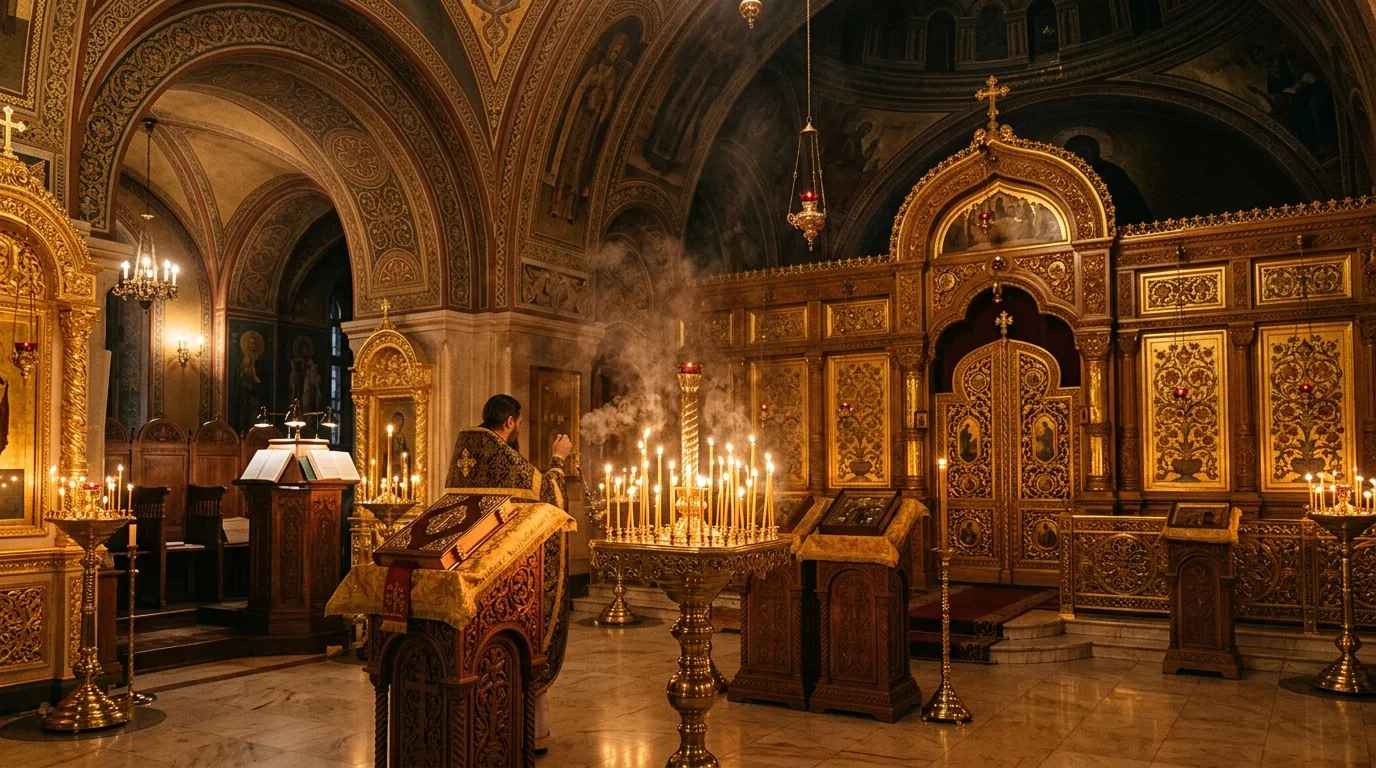
- What Does the Nativity Look Like in Orthodox Worship?
- Father Victor's Perspective: What Most Christmas Prayer Guides Miss
- Common Misconceptions About a Christmas Prayer
TL;DR — Key Takeaways
- A Christmas prayer in Orthodox tradition centers first on the Incarnation, the eternal Word becoming man, not on producing a happy holiday mood.
- You do not need formal liturgical language to pray sincerely; a simple, honest prayer offered in faith is fully valid.
- Orthodox Christmas prayer widens outward, remembering the poor, the lonely, the grieving, and the whole suffering world, not only your own household.
- It is spiritually honest, not faithless, to bring grief, doubt, or dread to God at Christmas rather than performing gratitude you do not feel.
An Orthodox a christmas prayer you can use today
Let me offer a prayer here, and I want to be transparent about what it is. It is not an ancient liturgical text. It is an original prayer I have composed, shaped by Orthodox theology, for readers who want words to hold onto without pretending to more experience than they have.

"O Lord Jesus Christ, eternal Son and Word of God, we glorify You for Your loving-kindness in becoming man for our salvation. As we mark Your Nativity, shine Your peace into our hearts, heal our divisions, and strengthen those who suffer. Remember the lonely, the poor, the sick, and all who cannot celebrate this feast in safety or in peace. Grant us repentance, humility, and faith, that our lives may bear witness to Your mercy. Through the prayers of Your Most Pure Mother and all Your saints, have mercy on us and save us. Amen."
What Each Part of the Prayer Means
Notice the order. The prayer does not begin by asking for anything. It begins by naming who Christ is: the eternal Word who became man. Only after that act of glorification does it move to thanksgiving, then to a plea for peace and healing, then outward to the lonely and the suffering, and only at the end does it turn inward, asking for repentance and mercy for ourselves. This ordering is not accidental. It reflects how Orthodox worship itself is structured: glorification, thanksgiving, intercession, and only then personal petition. A prayer that reverses this order, starting and ending with "make me feel good," has quietly become something smaller than Christian prayer.
Why does a christmas prayer begin with the Incarnation, not with feelings?
The temptation, every December, is to ask God: "How can this season make me feel peaceful?" I would rather we ask a different question first: "Who is this Child, and what does His coming reveal about God and about us?" That single shift reorders everything. It moves prayer from something emotion-centered to something Christ-centered, and I have come to believe this is the real dividing line between a generic Christmas wish and an Orthodox Christmas prayer.

Scripture gives us the ground for this. Saint Luke tells us plainly that "in those days a decree went out from Caesar Augustus that all the world should be registered" and that Mary "gave birth to her firstborn son and wrapped him in swaddling cloths and laid him in a manger" while angels announced to shepherds, "I bring you good news of great joy that will be for all the people" (Luke 2:1-20). This is not a private family scene closed off from the world. It happens under Roman taxation, among shepherds who were among the poorest and least respected people of their society, announced by angels to those the world had overlooked. Saint John goes further still, opening his Gospel with words that refuse to let Christmas remain sentimental: "In the beginning was the Word, and the Word was with God, and the Word was God... And the Word became flesh and dwelt among us" (John 1:1-18). Saint Matthew's account roots this same mystery in Joseph's quiet obedience and the naming of the child Emmanuel, "God with us" (Matthew 1:18-25). Related: A Very Powerful Prayer for Difficult Situations.
From Bethlehem to Salvation
None of this is decoration. Saint Paul writes that "when the fullness of time had come, God sent forth his Son, born of woman, born under the law, to redeem those who were under the law, so that we might receive adoption as sons" (Galatians 4:4-7). The Letter to the Hebrews goes further, explaining that the Son shared in our humanity precisely so He could break the power of death and help those who are tested (Hebrews 2:14-18). And Saint Paul's hymn in Philippians describes Christ's coming not as triumph but as self-emptying humility, "who, though he was in the form of God... emptied himself, taking the form of a servant" (Philippians 2:5-11). Christmas prayer that skips over this and lands only on "bless our happy holiday" has quietly traded the mystery of salvation for a much smaller thing.
Why Orthodox Prayer Is More Than Holiday Sentiment
As St. John Chrysostom writes in his Homily on the Nativity of Christ, "I behold a strange and wondrous mystery." That is the right posture: wonder before mystery, not management of mood. As St. Athanasius the Great teaches in On the Incarnation, "He was made man that we might be made god." I want to be careful here, because this phrase can sound strange to ears formed outside Orthodoxy. Athanasius is not saying we become God by nature. He means theosis, the process by which human beings, by grace, are drawn into real communion with God's life, restored to what we were created to be. Christmas prayer, understood this way, is not asking God to decorate an already-good life. It is asking to be healed at the root.
What Does the Nativity Look Like in Orthodox Worship?
I want to be honest about a distinction that most articles blur completely. There is a real difference between an original prayer inspired by Orthodox theology, like the one I offered above, and the Church's official liturgical texts: the troparion and kontakion of the feast, the canon sung at Matins, the hymns of Vespers, and above all the Divine Liturgy itself. According to the Orthodox Church in America's teaching on worship, Orthodox prayer is not primarily a private technique but part of the Church's whole life of common prayer and sacramental communion. A personal Christmas prayer is strongest when it flows out of that liturgical life rather than replacing it. Readers who want to hear the Church's hymnographic voice directly may also find it helpful to explore official troparia and festal hymns at OCA.org.

Personal Prayer, Liturgical Prayer, and the Divine Liturgy
When I studied the hymnographic tradition connected to certain monastic fathers, I noticed how carefully the Church distinguishes between texts composed by named saints and later devotional compositions attributed to them without certainty. In a study I wrote on St. Gregory of Sinai, I traced how several troparia and canons bear his name in the manuscript tradition, yet scholars remain uncertain how many are genuinely his. The Church still treasures them, but it does not pretend uncertainty is certainty. I try to bring the same honesty here: call an original prayer what it is, and point readers toward the Church's actual Nativity services when they want the fuller, authoritative voice of Orthodox worship.
The Role of the Nativity Fast, Almsgiving, and Repentance
Many Orthodox Christians prepare for Christmas through the Nativity Fast, a season of prayer, almsgiving, and repentance. According to the Orthodox Church in America's teaching on fasting, the exact discipline requires pastoral discernment rather than a rigid rule applied to everyone alike. I will not tell a seeker reading this to adopt a strict fast without first speaking to a priest who knows their health, their circumstances, and their heart. What I can say is that fasting is not a transaction to earn God's favor. It is a practice meant to make the heart more attentive, more able to notice the neighbor who is hungry or alone, precisely in a season when we are tempted to notice only our own table. For those asking how prayer widens into mercy, the Church's charitable witness can also be seen in ministries such as Philoptochos service and outreach.
How Christmas Prayer Is Commonly Approached in Orthodox, Catholic, and Protestant Contexts
[COMPARISON_TABLE]
I knew the Catholic tradition well before my own path led me into Orthodoxy, and I want to be clear that this table describes differences of emphasis, not opposition. Catholic and Protestant Christians pray at Christmas with real faith in Christ's Nativity. Orthodoxy's particular contribution is treating Christmas prayer as participation in the Church's contemplation of the eternal Word made flesh, which gives it a strongly liturgical, Christological, and communal shape.
Father Victor's Perspective: What Most Christmas Prayer Guides Miss
Here is where I want to speak plainly, from years of hearing confessions and sitting with people in the days before and after the feast. Most Christmas prayer guides assume the reader wants comfort and community, and they write accordingly. But a Christmas prayer is also, in my pastoral experience, a school of perception. It trains the eye to notice what the feast is actually about. When I pray honestly before the mystery of the Incarnation, I find myself unable to ignore the lonely guest at the table, the strained relationship with a sibling, the neighbor who has no table at all. The Nativity does not stay in Bethlehem. It asks to become visible again, this year, in whatever room you are sitting in.

This is where I want to name the deepest distinction I know between a generic Christmas prayer and an Orthodox one. It is not a matter of vocabulary, of using older words or more formal titles for Christ. A generic prayer blesses an occasion. An Orthodox prayer enters the saving mystery by which God unites Himself to human nature for its healing. That is a difference of horizon, not decoration. Learn more: What Is the Serenity Prayer? Discover Its True Meaning.
Prayer as a School of Seeing Christ in the Neighbor
I think often of St. Isaac the Syrian's teaching in his Ascetical Homilies, that the heart must become a place of encounter with heavenly realities. This is not abstract mysticism removed from ordinary life. In my parish in Munich, I have watched a visitor come to the Nativity service expecting only nostalgia, the sort of gentle, decorative religious feeling associated with childhood memories, and leave instead with a new awareness that Christmas is the feast of God entering human life to heal it from within, not to decorate it. That awareness rarely stays theoretical. It usually shows up a few days later as an unexpected phone call to an estranged relative, or a decision to bring food to someone who has no one. For those who want to anchor a christmas prayer more deeply in Scripture, the Church's daily readings can also be followed through resources such as the OCA daily readings.
Why an Orthodox Christmas Prayer Has a Wider Horizon Than Private Comfort
And now I want to return to what I said at the beginning, because I think it matters more than anything else in this article. If Christmas is difficult for you this year, if you are grieving, if your family is broken, if you are not sure you believe any of this the way you once did, you are not disqualified from Christmas prayer. You are, if anything, closer to its true shape than the person who can only manage cheerful gratitude. The angels' announcement in Luke's Gospel was made first to shepherds, men who were poor, tired, and largely invisible to their society. God's first Christmas audience was not the comfortable and the united. It was the overlooked. A prayer that only performs gratitude, forcing warmth you do not feel, is in some ways less honest, and I would say less spiritually serious, than a prayer that says plainly to God: "I am angry. I am grieving. I do not know if I believe. But I am here." The Church has always understood lament as a legitimate form of prayer, from the Psalms themselves to the cries of the persecuted. There is room in Orthodox prayer for a Christmas that hurts.
Common Misconceptions About a Christmas Prayer
Over the years I have heard the same misunderstandings again and again, and I want to address them here charitably, because they usually come from good intentions rather than carelessness.
- "Any prayer labeled 'Christmas prayer' online is an official Orthodox prayer." Orthodoxy distinguishes between the Church's official liturgical texts, found in her service books, and later personal devotional compositions. Both can be useful, but they carry different kinds of authority. When you find a prayer online, it is worth asking whether it comes from the Church's worship or from a modern writer, myself included.
- "Christmas prayer is mainly about asking God for comfort or a happy holiday atmosphere." Orthodox Christmas prayer begins by glorifying Christ for the Incarnation, gives thanks for salvation, includes repentance, and extends intercession to the suffering and the whole world. Praying for family peace is good, but it belongs inside that larger vision rather than replacing it.
- "Orthodox Christians celebrate a different Christmas from other Christians." Orthodox Christians celebrate the Nativity of the same Lord Jesus Christ as other Christians. According to the Orthodox Church in America, the difference many people notice between December 25 and January 7 is a matter of calendar usage, not a different theology of the feast.
- "The Theotokos is worshiped as a goddess." Orthodox Christians worship God alone. Mary is honored with the title Theotokos, meaning God-bearer, because the one born from her is truly God incarnate. This title, defended at the Council of Ephesus in 431, protects the truth about Christ's identity; it does not displace Him.
- "A Christmas prayer must be long or formal to count as real Orthodox prayer." A short prayer offered with humility and faith is fully valid. The Church has both majestic liturgical hymns and very brief personal prayers; what matters is truthful turning toward God, not performance.
- "If I pray sincerely enough, God will grant the exact outcome I want." Christian prayer entrusts our requests to God's wisdom rather than guaranteeing specific results. It is trustful union with God's will, even amid uncertainty, not a formula for control.
Frequently Asked Questions
What is a powerful prayer for Christmas?
A powerful Christmas prayer is one that glorifies Christ for His Incarnation, gives sincere thanks, includes honest repentance, and intercedes for those who suffer, rather than one that simply requests a pleasant holiday. The prayer offered earlier in this article, inspired by Orthodox theology, follows that pattern and can be prayed by anyone, regardless of how much liturgical experience they have.
Is there a Hallmark movie called "A Christmas Prayer"?
There is a 2025 television movie titled A Christmas Prayer, distributed through Great American Family, about a children's book illustrator who discovers a young girl's list of prayers for her widowed father and community. This article focuses on the Orthodox Christian meaning and practice of Christmas prayer rather than the film, though the movie's premise, a child's simple, sincere prayer for others, touches on something genuinely Orthodox: intercession that reaches beyond ourselves.
Where was the movie "A Christmas Prayer" filmed?
Specific filming location details for the 2025 movie are best confirmed directly through its distributor or an official film database, since that information falls outside the theological focus of this article. Related: How to Start a Prayer: Overcome Common Fears.
Where can I stream the movie A Christmas Prayer?
Streaming availability for the film changes over time and should be verified through the distributor's official channels or a reliable film listing service rather than through a page focused on Orthodox Christian prayer.
Can non-Orthodox visitors attend Orthodox Christmas services?
Yes, visitors of any background are welcome to attend Orthodox Nativity services. Receiving Holy Communion, however, normally requires being a baptized and chrismated Orthodox Christian who has prepared according to the Church's discipline, so a visitor is welcome to pray, sing, and stand with the community without approaching the chalice. If you are curious, simply tell the priest or a parishioner beforehand that you are visiting; they will gladly guide you.
Why do some Orthodox Christians celebrate Christmas on January 7?
This reflects a difference in calendar usage, not a different feast or doctrine. According to the Orthodox Church in America, churches that follow the Revised Julian or Gregorian calendar keep the Nativity on December 25, while churches that retain the traditional Julian calendar mark December 25 on a date that falls on January 7 in the civil calendar. Both are celebrating the same Nativity of the same Lord.
Can I pray an Orthodox Christmas prayer if I am just exploring the faith?
Yes. A seeker may begin with a simple prayer addressed to Christ centered on His Nativity, thanksgiving, repentance, and mercy, without pretending to more experience than they actually have. Orthodox prayer naturally grows over time toward fuller participation in the Church's worship, but that growth begins exactly where you are now.
About the Author
Father Victor Meshko is an Orthodox priest serving at the Cathedral of the Holy New Martyrs and Confessors of Russia in Munich under the Russian Orthodox Church Abroad, Diocese of Berlin and Germany. Ordained to the priesthood in 2013, he holds multiple theology degrees, including a Diplom in Theology and a Doctorate in Theology from LMU Munich's Institute for Orthodox Theology, as well as a Master's degree in Psychology. As the author of the published book Erzbischof Filaret (Gumilevskij) von Cernigov und Nezin, he brings both scholarly depth and lived pastoral experience to questions of Orthodox prayer, worship, and spiritual life.
Researched and written by Father Victor Meshko. AI tools were used during the research process; the theological content has been reviewed and confirmed by the author. Approximately 260 million people are estimated to be Orthodox Christians worldwide according to Pew Research Center (2017), a figure that includes both Eastern and Oriental Orthodox communities. No reliable statistic exists measuring how many Orthodox Christians use any specific Christmas prayer, and this article does not claim otherwise.
Lorem ipsum dolor sit amet, consectetur adipiscing elit. Suspendisse varius enim in eros elementum tristique. Duis cursus, mi quis viverra ornare, eros dolor interdum nulla, ut commodo diam libero vitae erat. Aenean faucibus nibh et justo cursus id rutrum lorem imperdiet. Nunc ut sem vitae risus tristique posuere.
Lorem ipsum dolor sit amet, consectetur adipiscing elit. Suspendisse varius enim in eros elementum tristique. Duis cursus, mi quis viverra ornare, eros dolor interdum nulla, ut commodo diam libero vitae erat. Aenean faucibus nibh et justo cursus id rutrum lorem imperdiet. Nunc ut sem vitae risus tristique posuere.
Lorem ipsum dolor sit amet, consectetur adipiscing elit. Suspendisse varius enim in eros elementum tristique. Duis cursus, mi quis viverra ornare, eros dolor interdum nulla, ut commodo diam libero vitae erat. Aenean faucibus nibh et justo cursus id rutrum lorem imperdiet. Nunc ut sem vitae risus tristique posuere.


Help us bring the christian faith to modern seekers worldwide.
Godfinder relies on generous souls to sustain our multilingual platform, develop new tools like the Magic Cube, and support struggling believers. If our work has touched your heart, consider contributing to our nonprofit partner

Do you want to know More? Ask God’s Word!
Do you have questions, worries, or hopes? Feeling lost, burdened, or alone? “Ask God’s Word” brings you gentle guidance rooted in Scripture and the wisdom of the Church. Find hope and strength today!
