.avif)
A Very Powerful Prayer for Difficult Situations
Someone handed you a prayer once. Maybe it was a friend, maybe a website, maybe a well-meaning aunt. She said it was powerful, said it worked for her, said say this and watch God move. If you've been searching for a very powerful prayer for difficult situations, you may have said those words too....

When a Very Powerful Prayer for Difficult Situations Didn't Work
Someone handed you a prayer once. Maybe it was a friend, maybe a website, maybe a well-meaning aunt. She said it was powerful, said it worked for her, said say this and watch God move. If you've been searching for a very powerful prayer for difficult situations, you may have said those words too. And you said it. You meant it. And the diagnosis stayed. Or the marriage still ended. Or the prodigal still hasn't called. If that's you right now, I want you to know something before we go any further: I'm not going to hand you another formula.
In my years of serving as an Orthodox priest since 2013, I've found that people often come asking for a powerful prayer when life feels unbearable, but what they usually need even more is to discover how to stand before God without despair. That's not quite what most articles on this topic tell you. Most give you the words and let you believe the words themselves carry the power. Or actually, let me put it differently: the words matter, but they're not magic, and I think you already sense that, or you wouldn't still be reading.
What most online articles about a very powerful prayer for difficult situations miss is the lived Orthodox experience that prayer in crisis rarely stands alone. In actual pastoral care, the strongest prayer gets joined to confession, to the Psalms, to intercession at the Divine Liturgy, to the prayer rope, and to real acts of repentance and reconciliation. So the question isn't really "what words do I say?" It's "how do I stay in communion with God when nothing makes sense?" Different question. Better one, I think.
✏️ By Father Victor Meshko | 📅 Updated: September 2026 | ⏱️ 9 min read
Quick Answer: In Orthodox Christianity, the most powerful prayer for a difficult situation isn't a formula for control but a cry of communion with God offered in faith, repentance, and surrender, most simply prayed as the Jesus Prayer: "Lord Jesus Christ, Son of God, have mercy on me."
In This Article:
- When a Very Powerful Prayer for Difficult Situations Didn't Work
- A Direct Answer: What Is a Very Powerful Prayer for Difficult Situations?
- A Short Orthodox Prayer for Difficult Situations
- Why Orthodox Christians Don't Treat Prayer as Magic
- What Does Scripture Say About Prayer in Difficult Situations?
- What Do the Church Fathers Teach About Prayer in Suffering?
- How Should I Pray When I Feel Anxious, Afraid, or Constantly Nervous?
- How Do You Pray for a Friend in a Difficult Situation?
- How Do Orthodox Christians Pray for Impossible Situations?
- How Christians Understand a "Powerful Prayer" in Difficult Situations
- Father Victor's Perspective: What Makes a Prayer Truly Powerful?
- A Simple Orthodox Prayer Rule for Difficult Seasons
- Common Misconceptions About Powerful Prayer
TL;DR — Key Takeaways
- A powerful prayer isn't measured by how fast it changes your circumstances, but by whether it keeps you united to Christ inside them.
- The Jesus Prayer, the Lord's Prayer, and the Psalms form the backbone of Orthodox prayer in crisis, not invented phrases.
- Prayer for hardship works best joined to confession, the Liturgy, and honest daily practice, not used as an isolated emergency tool.
- Sometimes the real answer to prayer is a changed heart before there's ever a changed situation. And that counts.
A Direct Answer: What Is a Very Powerful Prayer for Difficult Situations?
Let's be honest about what people usually mean when they ask this. They mean: what can I say that will get God to act? And I understand that impulse completely. I've felt it myself, more than once, sitting beside a hospital bed with nothing but a prayer rope in my pocket.
But here's what I've noticed after years of pastoral work: the Orthodox answer isn't a different formula than what you've tried. It's a different understanding of what prayer even is. Metropolitan Kallistos Ware put it simply, prayer isn't merely asking for things but entering relationship with God, and that single shift changes everything about how we approach a crisis. If you want a clearer introduction to that Orthodox understanding, this short overview of what Orthodox Christianity means may help place the whole conversation in context.
Quick Answer for Readers in Immediate Distress
If you need something right now, before reading another word, say this slowly:
"Lord Jesus Christ, Son of God, have mercy on me."
That's the Jesus Prayer. Ancient, short, and it doesn't require you to feel anything in particular while you say it. Repeat it as many times as you need. Ten times. A hundred. It works even when your mind is scattered and your hands are shaking. For many people, this is the closest thing Orthodox tradition offers to a very powerful prayer for difficult situations without treating prayer like a mechanism.
A Short Orthodox Prayer for Difficult Situations
Beyond the Jesus Prayer, I often teach people a slightly longer form when they have a moment to breathe. It follows a pattern I've come to trust through years of pastoral observation, one that Orthodox ascetical theology has shaped for centuries even if no one wrote it down quite this way before.

A short Orthodox crisis prayer really contains four movements: naming the pain honestly, confessing our dependence on God rather than ourselves, asking for wisdom and mercy, and then, hardest of all, surrendering the outcome. Competitors give you sample prayers to copy. What they don't explain is why each piece belongs there. If you're looking for a short prayer for difficult times, here's an example:
"Lord, You see what I'm facing, and I don't know how to carry it. I confess I can't fix this on my own. Grant me mercy, wisdom, and peace according to Your will. Whatever happens, keep me close to You."
Say it in your own words if that fits you better. Orthodox tradition doesn't require poetry. It requires honesty.
A One-Line Prayer for Panic, Fear, or Overwhelm
When there's no time for four movements, there's the one line: "Lord, have mercy." That's it. Two words in Greek, Kyrie eleison, repeated at every Orthodox service thousands of times over centuries. Worth repeating, honestly, until it becomes as natural as breathing.
Why Orthodox Christians Don't Treat Prayer as Magic
I need to say something plainly here, and I don't say it to discourage you. Prayer isn't a spell. It isn't a lever you pull to make God do what you want. I do not say this lightly, because I've watched people walk away from faith entirely after being told the opposite, after being promised that enough intensity or enough repetition guarantees a result.
Fr. Thomas Hopko taught something I return to often: prayer in suffering is grounded in repentance, gratitude, and endurance rather than demanding outcomes from God. That's uncomfortable to hear when you're desperate. I get it. But it's also, in my experience, the only version of prayer that survives contact with real suffering.
Prayer as Communion, Not Control
As St. Gregory of Nyssa teaches in On the Lord's Prayer, prayer is a "conversation and union with God." Not a transaction. Not a request submitted to a cosmic help desk. A conversation, ongoing, sometimes wordless.
What strikes me about this teaching, even after all these years, is how it reframes failure. If prayer is conversation, then a conversation that doesn't get you what you wanted isn't a failed conversation. It's still a real one. Discover: A Prayer for Strength: Finding True Grace.
Why Surrender to God's Will Makes Prayer Stronger, Not Weaker
People sometimes hear "according to Your will" and think it's a loophole, a way for God to dodge responsibility. I understand why it sounds that way. But in Orthodox pastoral theology, a prayer becomes truly powerful not when it overpowers events, but when it keeps suffering from becoming spiritually meaningless. That's a different kind of power than the world usually means by the word. Quieter. Slower. But real.
What Does Scripture Say About Prayer in Difficult Situations?
Christ Himself gave us the pattern. He didn't leave us to invent our own words from scratch. As recorded in Matthew 6:9-13, He taught His disciples to pray directly to the Father, asking for daily bread, forgiveness, and deliverance from evil, all inside a framework of trust rather than demand.

When you're exhausted and burdened, His invitation in Matthew 11:28-30 speaks directly to you: come to Him, and He will give you rest. Not necessarily a solved problem. Rest.
And for those who wonder why they should keep praying when nothing seems to change, Luke 18:1-8 tells the parable of the persistent widow, given specifically to teach that we "ought always to pray and not lose heart." That parable has carried more parishioners through long seasons of waiting than any technique I've ever taught. If someone came here looking for a very powerful prayer for difficult situations Bible verse, this is one of the places I would gently point them.
Prayers for Strength, Wisdom, and Peace
If you don't even know how to put words together right now, Romans 8:26-28 offers something remarkable: the Spirit intercedes for us "with groanings which cannot be uttered" when we don't know what to pray for. You're not failing at prayer if you're groaning instead of speaking. That counts.
And for the anxiety that keeps you up at night, Philippians 4:6-7 connects prayer directly with thanksgiving and promises "the peace of God, which surpasses all understanding." Not the peace of a solved crisis. The peace of God Himself.
James 1:2-5 adds something the miracle-prayer pages tend to skip: trials produce endurance, and if we lack wisdom, we're told simply to ask God, who gives generously. Wisdom, not just deliverance. That's the ask.
What Do the Church Fathers Teach About Prayer in Suffering?
As St. John Chrysostom writes in his homiletic teaching on prayer, "Prayer is the place of refuge for every worry, a foundation for cheerfulness, a source of constant happiness, a protection against sadness." A refuge, not a remote control. I find that distinction deeply encouraging, especially on the days when nothing in my own life is going the way I'd planned.
As St. Basil the Great teaches in his ascetical instruction, "We must pray as often as we breathe." I've thought about that phrase for years, honestly, and I still find something new in it. Not pray occasionally when things go wrong, but pray as constantly as your lungs work, whether you notice it or not.
St. John Chrysostom, St. Basil, and St. Isaac on Distress and Peace
As St. Isaac the Syrian writes in the Ascetical Homilies, "Make peace with yourself, and heaven and earth will make peace with you." That line has sat with me since seminary. So much of our panic, if I'm honest, comes from being at war with ourselves before we're even at war with our circumstances.
As St. Maximus the Confessor teaches in his ascetical writings, the one who prays properly is being transformed in love and virtue. Not the situation. The person. That's the real miracle most competitor articles never mention. If you were hoping for a very powerful prayer for difficult situations quotes, the Fathers give us something better than slogans: they give us the mind of the Church.
How Should I Pray When I Feel Anxious, Afraid, or Constantly Nervous?
Last year, someone came to me, couldn't have been older than twenty-five, completely burned out. She told me her mind never stopped racing. "Father, how am I supposed to pray when I can barely sit still for five minutes?" I've heard some version of that question more times than I can count. Read more: What the Bible Says About Prayer and Silence.
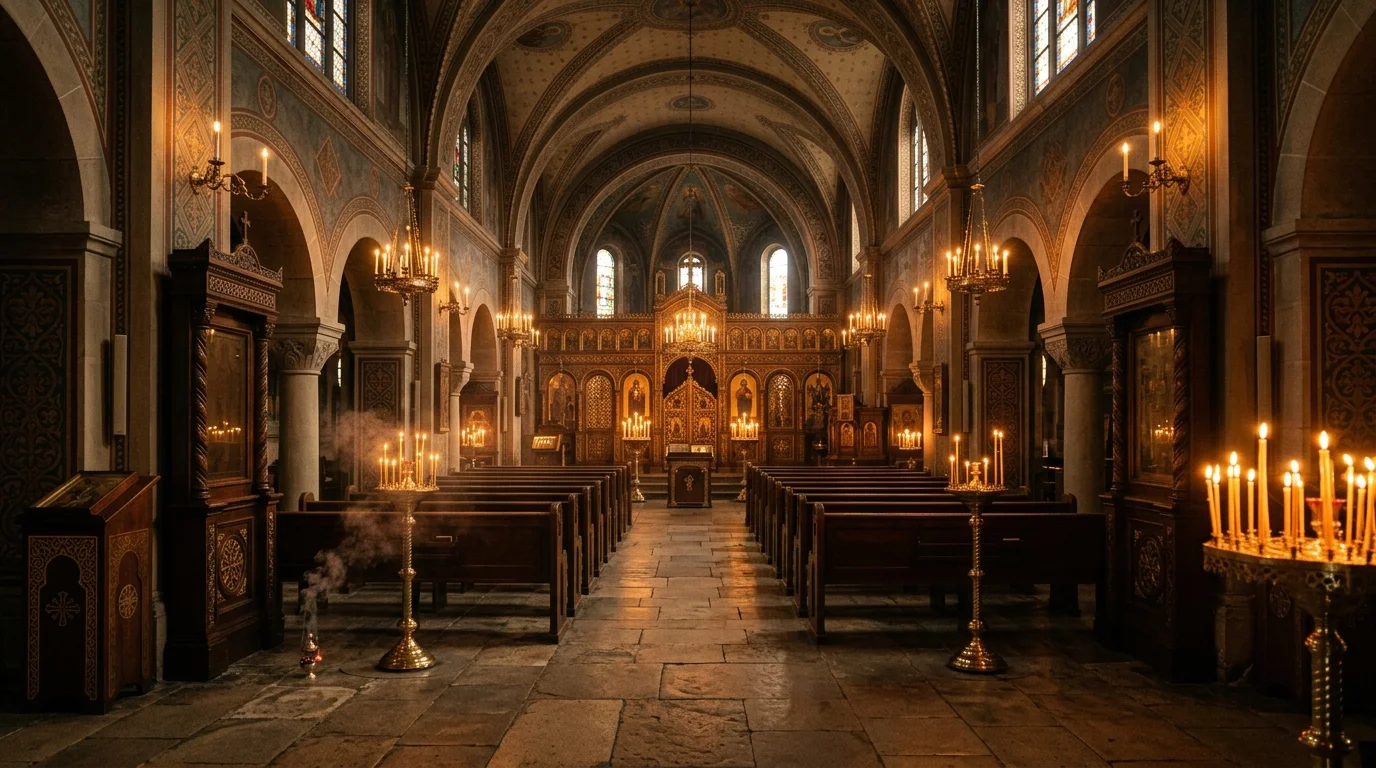
My answer is usually the same. Don't try to force stillness first. Start with the Jesus Prayer, repeated slowly, matched to your breathing if that helps. In through the nose, "Lord Jesus Christ, Son of God," out through the mouth, "have mercy on me." That's it. No performance required.
The Jesus Prayer and the Psalms
The Jesus Prayer suits modern anxiety in a way I don't think many people expect. It gathers scattered attention, humbles the self, and places the sufferer in Christ's presence without requiring any emotional performance at all. Given my background in psychology, I've come to see this as more than devotional advice. A short, repeated phrase genuinely interrupts the anxious loop the mind gets stuck in. I don't fully understand the mechanics of it, honestly, but I've watched it work too many times to dismiss it.
Pair it with a Psalm. Psalm 22 (23 in most English Bibles), the one about the shepherd and the valley of the shadow, has steadied more frightened people in my parish than I could ever tally. For a broader picture of Christian life around the world, including how believers across traditions practice prayer, these global Christianity statistics are also useful background.
A Gentle Orthodox Pattern for Moments of Panic
- Say the Jesus Prayer slowly, five to ten times, without rushing.
- Read one short Psalm aloud, even in a whisper.
- Name the fear honestly to God, out loud if you can.
- Ask for peace and wisdom, not a specific outcome.
- Let the moment end there. You don't have to solve everything in one sitting.
If panic becomes constant, or if you're dealing with real trauma or thoughts of self-harm, please also reach out to a professional and to your priest. Prayer isn't a replacement for that kind of care. It works alongside it. If you'd like to go deeper into this Orthodox approach, you may also find helpful our guide on how to pray the Jesus Prayer and this reflection on an Orthodox prayer rule for beginners.
How Do You Pray for a Friend in a Difficult Situation?
I've been asked by parishioners more than once, "What do I even say when someone I love is suffering and I feel useless?" A simple intercession works: "Lord, remember Your servant [name], surround them with Your mercy, give them strength and peace, and let them feel Your presence even now."
You don't need elaborate language. You need consistency. Praying for someone by name, day after day, connects you to them in a way that's hard to explain, but real. If someone is searching for a very powerful prayer for difficult situations for a friend, I would start there, with simplicity and faithfulness rather than dramatic language.
How Do Orthodox Christians Pray for Impossible Situations?
Take the couple I sat with once, under crushing financial stress, fighting constantly at home. "Father," one of them asked me, "why do we keep praying if nothing's changing?" Fair question. I didn't have a tidy answer.

What I told them is what Orthodox teaching has always held: prayer isn't measured only by whether circumstances shift quickly. Prayer exposes anger. It softens pride. It teaches repentance and restores enough peace that practical decisions can actually get made with clear heads. Months later, they told me the money situation hadn't fully resolved, but they'd stopped screaming at each other. And honestly? That was the miracle I was watching for the whole time.
Prayer, Fasting, Confession, and Endurance
For situations that feel genuinely impossible, Orthodox practice weaves together several threads at once: persistent prayer, fasting where your priest advises it (never as a punishment, and always with discernment for your health), regular confession, and simple endurance. Miracles happen. I've seen a few myself, and I won't pretend otherwise. But no honest priest can promise you one on schedule. That is why an Orthodox powerful prayer for impossible situations is never separated from repentance, sacramental life, and patient trust.
How Christians Understand a "Powerful Prayer" in Difficult Situations
How Christians Understand a 'Powerful Prayer' in Difficult Situations
[COMPARISON_TABLE]
I knew the Catholic tradition quite well growing up, and I want to say clearly: there's far more overlap here than difference. Catholic devotion often frames crisis prayer through novenas and set devotions, while Orthodoxy leans more on the Jesus Prayer and integration into the daily prayer rule. Different emphasis, same Father being addressed. Many readers also search for a very powerful prayer for difficult situations Catholic, and I understand why. Many Protestant traditions, meanwhile, place beautiful confidence in bold, direct petition in Jesus' name, though generally with less emphasis on saintly intercession or fixed liturgical rhythm. None of these approaches is foreign to genuine faith. They're just different paths shaped by different histories. And if you're comparing traditions more broadly, this overview of the Eastern Orthodox Church in relation to other Christian traditions may be useful.
Father Victor's Perspective: What Makes a Prayer Truly Powerful?
When I studied theology in Ukraine and later at LMU Munich, I became increasingly convinced that the deepest Orthodox answer to difficult situations isn't a technique for producing results. It's a way of communion with Christ inside the suffering itself. I've gone back and forth on how to explain this to seekers without sounding like I'm dodging their real pain. Here's where I've landed.
A prayer becomes powerful in the Orthodox sense not when it overpowers your circumstances, but when it keeps your suffering from becoming meaningless. That's the whole reframe. Competitor pages treat power as breakthrough, as victory, as the moment the bad thing stops. I understand the appeal of that. But in genuine pastoral care, again and again, I've seen that a short prayer said with repentance and trust steadies a frightened heart faster than any amount of explanation ever could. That steadying, that restored meaning, that's the power. Not the escape.
I'll also say this, because I think it matters more than anything else in this whole article: if you've prayed the powerful prayer someone gave you and your situation didn't change, you haven't failed at faith. You've joined nearly every saint the Church has ever venerated. Job didn't get his answer in words he understood. St. Paul asked three times for his thorn to be removed and was told grace was enough. A difficult situation doesn't mean prayer has failed. Sometimes prayer begins its work by changing the sufferer before it ever touches the situation.
A Simple Orthodox Prayer Rule for Difficult Seasons
In my parish in Munich, I've watched people move from crisis-only prayer toward something steadier, and it usually starts small. Here's what I typically suggest, always adjustable with a priest's guidance:
- Morning: a short prayer of thanksgiving and one line asking for guidance through the day.
- Throughout the day: the Jesus Prayer, repeated as often as you remember, ideally with a prayer rope.
- One Psalm, read slowly, whenever you have five minutes.
- Evening: an honest examination of the day, and confession of what weighed on you.
- Regular sacramental confession and Holy Communion, not saved only for emergencies.
Some jurisdictions and spiritual fathers suggest different repetition counts on the prayer rope, and that's fine. There's no rigid universal number. Ask your priest what fits your life right now, not someone else's. If you'd like more background on prayer and worship in the wider life of the Church, our article on what the Divine Liturgy is may help.
Common Misconceptions About Powerful Prayer
"A powerful prayer is a special formula that guarantees results if said with enough intensity." I understand the hunger behind this belief completely. But the Church teaches that prayer is communion with God, not a mechanism for forcing outcomes. God hears, strengthens, guides, and answers according to His wisdom and love, not according to how intensely we perform our request. Learn more: How to Pray When Under Spiritual Attack Effectively.
"If the situation doesn't improve quickly, the prayer didn't work." Our culture measures nearly everything by speed. But Scripture and the Fathers consistently show that prayer brings peace, wisdom, endurance, and repentance long before, or sometimes instead of, visible change in circumstances.
"Orthodox Christians only use long, formal prayers." Not even close. The Jesus Prayer is one of the shortest prayers in all of Christian history, and it's precisely what's recommended in moments of fear, anxiety, and confusion. Liturgical richness and simplicity live together quite comfortably in our tradition.
"Asking saints to pray means Orthodox Christians aren't praying directly to God." Our prayer is directed to God. Full stop. Saints are asked to intercede the way you'd ask a faithful friend to pray for you, as living members of Christ's Body who pray with the Church, not instead of God.
"Powerful prayer means emotional intensity or dramatic language." The Church teaches that humility, repentance, and quiet perseverance matter more than verbal drama. God doesn't ignore you because you're tired, numb, or unable to speak beautifully. He never has.
"Prayer for difficult situations is only about private comfort, not real action." Orthodox prayer includes wisdom, discernment, and responsible action. We pray, we seek counsel, we reconcile, we serve, and then we act. Prayer and action were never opposites.
Frequently Asked Questions
What is a powerful prayer that works immediately?
The Jesus Prayer, "Lord Jesus Christ, Son of God, have mercy on me," is the Orthodox prayer most often recommended for immediate use, because it can be repeated even when your mind is scattered or your heart is afraid. It doesn't promise an instant change in circumstances, but it immediately places you back in Christ's presence, which is, in the Orthodox understanding, the actual point.
What is a very powerful prayer for difficult situations in the Bible verse?
Philippians 4:6-7 is one of the most cited passages, connecting prayer, thanksgiving, and the peace of God that "surpasses all understanding." Romans 8:26-28 is another, reminding us the Spirit intercedes for us when we don't know what to pray, and that God works all things together for good for those who love Him.
How do you pray for an impossible situation?
Orthodox Christians pray for impossible situations through persistent prayer joined with confession, fasting when a priest advises it, and honest surrender of the outcome to God's will. Miracles are genuinely possible and Scripture doesn't hide that, but Orthodox teaching never lets prayer collapse into a guarantee. It's trust that endures, not a formula that controls.
What is a powerful prayer for calmness that can help someone who is constantly nervous?
Short, repeated prayer, especially the Jesus Prayer paired with slow breathing, is the classic Orthodox response to constant nervousness. Combine it with a Psalm, such as Psalm 22 (23), read slowly, and permission to skip the pressure of forced emotional intensity. Calm often comes quietly, not dramatically.
Can I pray this if I'm not Orthodox?
Yes. The Jesus Prayer, the Lord's Prayer, and the Psalms belong to the whole Christian family, not to Orthodoxy alone. I'd only invite you, gently, to consider what the fuller Orthodox life of confession and sacramental prayer might offer alongside it, though that's an invitation, never a requirement.
What if I feel nothing when I pray?
Feeling nothing doesn't mean your prayer failed or that God is absent. St. Paisios and many of the Fathers taught that faithfulness matters more than emotional intensity, and dryness in prayer is something nearly every saint experienced at some point. Keep praying anyway. That's usually where the real growth happens.
About the Author
Father Victor Meshko is an Orthodox priest of the Russian Orthodox Church Abroad, serving at the Cathedral of the Holy New Martyrs and Confessors of Russia in Munich since his priestly ordination in 2013. He holds multiple degrees in philosophy, theology, and psychology, including advanced theological study at LMU Munich's Institute for Orthodox Theology, and is the author of a published book on Archbishop Filaret of Chernigov. For Find to God, he writes from both scholarly formation and lived pastoral experience, helping seekers encounter Orthodox Christianity with clarity, warmth, and depth.
Researched and written by Father Victor Meshko. AI tools were used during the research process.
Lorem ipsum dolor sit amet, consectetur adipiscing elit. Suspendisse varius enim in eros elementum tristique. Duis cursus, mi quis viverra ornare, eros dolor interdum nulla, ut commodo diam libero vitae erat. Aenean faucibus nibh et justo cursus id rutrum lorem imperdiet. Nunc ut sem vitae risus tristique posuere.
Lorem ipsum dolor sit amet, consectetur adipiscing elit. Suspendisse varius enim in eros elementum tristique. Duis cursus, mi quis viverra ornare, eros dolor interdum nulla, ut commodo diam libero vitae erat. Aenean faucibus nibh et justo cursus id rutrum lorem imperdiet. Nunc ut sem vitae risus tristique posuere.
Lorem ipsum dolor sit amet, consectetur adipiscing elit. Suspendisse varius enim in eros elementum tristique. Duis cursus, mi quis viverra ornare, eros dolor interdum nulla, ut commodo diam libero vitae erat. Aenean faucibus nibh et justo cursus id rutrum lorem imperdiet. Nunc ut sem vitae risus tristique posuere.


Help us bring the christian faith to modern seekers worldwide.
Godfinder relies on generous souls to sustain our multilingual platform, develop new tools like the Magic Cube, and support struggling believers. If our work has touched your heart, consider contributing to our nonprofit partner

Do you want to know More? Ask God’s Word!
Do you have questions, worries, or hopes? Feeling lost, burdened, or alone? “Ask God’s Word” brings you gentle guidance rooted in Scripture and the wisdom of the Church. Find hope and strength today!
