.avif)
What the Bible Says About Prayer and Silence
Here's something nobody tells you before you start praying seriously: sometimes God says nothing. Not "wait." Not "no." Just... nothing. And when people ask me about what the bible says about prayer, this is often the hidden ache underneath the question. I've sat with people in my office at the...

What Happens When Prayer Gets Silence Instead of an Answer in what the bible says about prayer?
Here's something nobody tells you before you start praying seriously: sometimes God says nothing. Not "wait." Not "no." Just... nothing. And when people ask me about what the bible says about prayer, this is often the hidden ache underneath the question. I've sat with people in my office at the Cathedral of the Holy New Martyrs in Munich who prayed for a sick child, a failing marriage, a diagnosis to change, and got silence back. And if you've ever prayed hard and felt that silence, I want you to know something before we go any further: the Bible didn't hide that experience in a footnote. It wrote an entire book about it. Job's book. And roughly a third of the Psalms.
In my years of serving as an Orthodox priest, I've found that many seekers don't first ask how to say prayers correctly. They ask whether God is really listening when they speak. That's the real question underneath "what does the Bible say about prayer." Not a technique question. A trust question. In other words, when people search for what the bible says about prayer, they're usually looking for more than verses. They're looking for a reason to keep speaking to God.
What strikes me about most articles on this topic is how quickly they jump to promises: ask and you'll receive, believe and it's yours. And those verses are real, they're in Scripture, we'll get to them. But here's what most online writing about prayer misses entirely: the lived experience of how prayer actually changes a person, from words on the lips, to attention in the mind, to something closer to repentance in the heart. In actual parish life, the struggle usually isn't lack of information. It's fragmentation, distraction, shame, and the fear that you have to sound impressive before God rather than just being honest with Him.
✏️ By Father Victor Meshko | 📅 Updated: September 2026 | ⏱️ 9 min read
Quick Answer: The Bible presents prayer not as a technique for getting results from God, but as honest communion with the Father, through the Son, in the Holy Spirit, a relationship that includes praise, repentance, and thanksgiving, and sometimes includes waiting in silence, as Job, the Psalmists, and Christ Himself in Gethsemane all show us.
In This Article:
- What Happens When Prayer Gets Silence Instead of an Answer in what the bible says about prayer?
- What Does what the bible says about prayer Actually Say About Prayer?
- What Does Jesus Say About Prayer?
- Why Is Prayer So Powerful in the Bible?
- How Does Prayer Actually Work in Orthodox Daily Life?
- Prayer in the Church: Psalms, Liturgy, and the Body of Christ
- What Does the Bible Say About Unanswered Prayer and Suffering?
- How Does Orthodoxy Compare With Catholic and Protestant Views on Prayer?
- Father Victor's Perspective: What Most Discussions of Prayer Miss
- Common Misconceptions About Prayer
- How Should a Beginner Start Praying?
TL;DR — Key Takeaways
- Scripture teaches prayer as relationship with God, not a formula for controlling outcomes.
- Jesus warns against showy, empty prayer, but teaches sincere, persistent, Trinitarian prayer through the Lord's Prayer.
- Practical step: start with a short morning and evening rule built on the Lord's Prayer and a few honest words of your own.
- Surprising insight: the Bible contains as much unanswered prayer as answered prayer, and treats both as normal.
What Does what the bible says about prayer Actually Say About Prayer?
So let's start simply. Scripture doesn't give us a single dictionary definition of prayer. Or actually, let me put it differently, it gives us something better than a definition: it gives us Christ Himself praying, and disciples watching Him do it, and then asking Him to teach them. If we're serious about understanding what the bible says about prayer, that's where we have to begin: not with a formula, but with the living example of Christ.

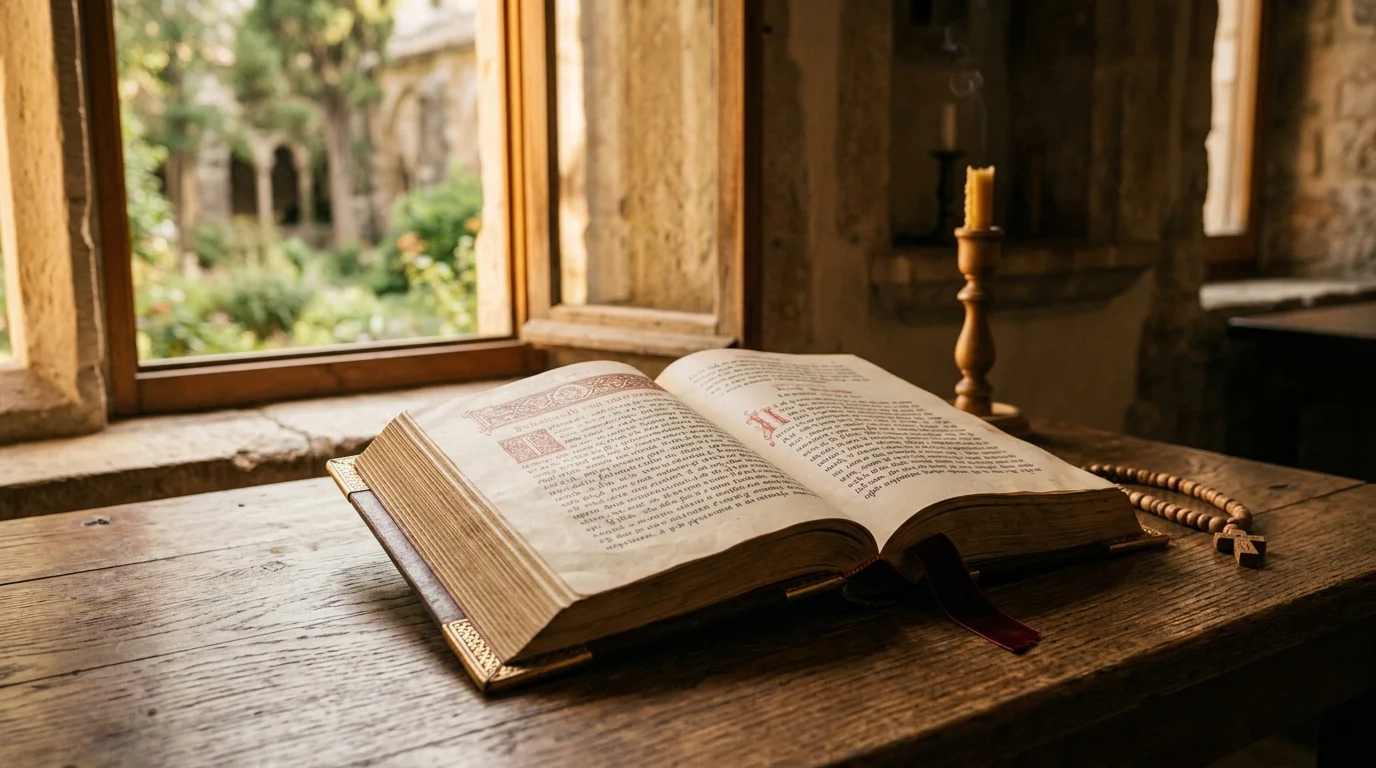
Prayer Is Communion, Not a Formula
As St. John of Damascus teaches in the Exact Exposition of the Orthodox Faith, prayer is the raising of the mind and heart to God. Not the recitation of correct words. Not a spiritual vending machine. A raising of the mind and heart.
According to Peter and Paul Cathedral's teaching on prayer, Christian prayer is always Trinitarian: we pray to the Father, through the Son, in the Holy Spirit. This isn't decoration. Romans 8:26-27 tells us that the Spirit Himself intercedes for us, groaning within us when we don't even know what to pray for. So prayer isn't only something we do toward God. It's something God does within us. I find that deeply encouraging, honestly, especially on the days when my own words feel thin.
As St. Maximus the Confessor writes in the Four Hundred Texts on Love, prayer is communion of the mind with God. Not negotiation. Communion. That's one reason what the bible says about prayer cannot be reduced to a list of techniques or outcomes.
What Does Jesus Say About Prayer?
If you want to know what the Bible says about prayer, you eventually have to sit with what Jesus Himself says, because He's the one the disciples asked directly: “And it came to pass, that, as he was praying in a certain place, when he ceased, one of his disciples said unto him, Lord, teach us to pray, as John also taught his disciples.” (Luke 11:1, KJV). That request still moves me. Grown men, following a rabbi for months, finally admitting they didn't know how. It remains one of the clearest windows into what the bible says about prayer and what Jesus says about prayer in the Bible.
Here's a short video that walks through several of these same passages, Matthew 6, Mark 1:35, Gethsemane, from a broadly biblical (not specifically Orthodox) perspective. I think it's a helpful visual entry point before we go deeper into the Orthodox reading of these same texts.
[YOUTUBE_VIDEO]
Pray in Secret, Not for Display
Jesus is blunt about hypocrisy in prayer. Matthew 6:5-13 begins with a warning: don't pray to be seen by others, go into your room, shut the door, and pray to your Father who sees in secret. He also warns against "empty phrases," babbling on as if more words impress God more.
Does that mean repeating a prayer is wrong? Not at all, and this is where a lot of well-meaning readers get confused. I'll come back to that in the misconceptions section below, because it matters a great deal for anyone curious about the Jesus Prayer or Orthodox liturgical worship.
The Lord's Prayer as Christ's School of Prayer
Matthew 6:9-13 and Luke 11:2-4 give us the prayer Christ Himself taught. I've come to see it less as a prayer to recite and more as a kind of map of the whole Christian life. Worth sitting with for a moment. For readers looking for the power of prayer verses, short Bible verses about prayer, or even a list like 100 Bible verses on prayer, this prayer is still the center.
- "Our Father" — identity before God, not as a stranger but as a child.
- "Hallowed be Your name" — worship, putting God's glory before our own agenda.
- "Your will be done" — surrender, the hardest line in the whole prayer, if I'm honest.
- "Give us this day our daily bread" — dependence, admitting we can't carry tomorrow yet.
- "Forgive us our trespasses" — reconciliation, tied directly to forgiving others.
- "Lead us not into temptation" — vigilance over our own weakness.
- "Deliver us from evil" — spiritual warfare, acknowledging a real enemy.
I've preached on this prayer more times than I can count, and it still surprises me. Every single time.
Persistence, Faith, and God's Will
Luke 18:1-8 gives us the persistent widow, and Jesus tells the parable specifically so His disciples would "pray and not lose heart." That phrase, "not lose heart," tells you something. Jesus assumes prayer will sometimes feel discouraging. He doesn't promise it won't.
And then there's 1 John 5:14-15, which balances confidence with submission: we can approach God with confidence, if we ask according to His will, He hears us. That little clause, "according to His will," changes everything about how we read the more sweeping promises in Scripture. It's also why Bible verses about prayer and faith need to be read in the full light of the Gospel, not as isolated slogans.
Why Is Prayer So Powerful in the Bible?
People ask me this constantly. Why is prayer powerful? I've gone back and forth on how to answer that honestly, without either overselling it or underselling it.

Prayer Always Changes the Person, Even When It Doesn't Change the Circumstance
Philippians 4:6-7 doesn't promise God will remove your anxiety's cause. It promises peace "which surpasses understanding" will guard your heart and mind. That's a different kind of power than most people expect. Not the power to rearrange your circumstances on command. The power to hold you steady inside them.
James 5:16 tells us "the prayer of a righteous person is powerful and effective." True. But look at where that power lands throughout Scripture: it heals, yes, sometimes. It also sustains Job through unanswered questions. It holds Habakkuk together while he waits for God to explain Himself. It carries the Psalmist through Psalm after Psalm of raw complaint, "How long, O Lord?" (Psalm 13), without God ever fully answering the question.
And here's the part competitors mostly skip: Jesus Himself prayed a prayer that wasn't answered the way He asked. In Gethsemane, He prayed, “Saying, Father, if thou be willing, remove this cup from me: nevertheless not my will, but thine, be done.” (Luke 22:42, KJV). The cup wasn't removed. If the Son of God prayed sincerely and received that answer, we probably shouldn't build our whole theology of prayer around guaranteed outcomes. That too belongs to what the bible says about prayer.
The Power Is in God, Not the Technique
As St. Basil the Great teaches in On the Holy Spirit, we pray in order to be united to God. Not to extract something from Him. United to Him.
A 2024 systematic review indexed at PubMed Central found something worth sitting with: personal prayer shows modest associations with mental health and coping, while large intercessory prayer trials for physical healing come back mostly null. I bring this up not to discourage anyone from praying for healing (I do it constantly, in every Liturgy), but because it confirms something the Fathers already knew: prayer isn't a mechanism you operate correctly to force a result. It's a relationship you enter honestly, whatever the outcome turns out to be.
How Does Prayer Actually Work in Orthodox Daily Life?
So what does this look like in practice? Not in theory, in an actual week.

Personal Prayer, Church Prayer, and the Daily Rule
According to Orthodox Insite's Greek Orthodox prayer guide, a simple daily rule usually includes a set place, a set time, morning and evening prayers, the Lord's Prayer, a few names of people you carry in your heart, a moment of silence, and closing thanks. That's it. Nothing elaborate.
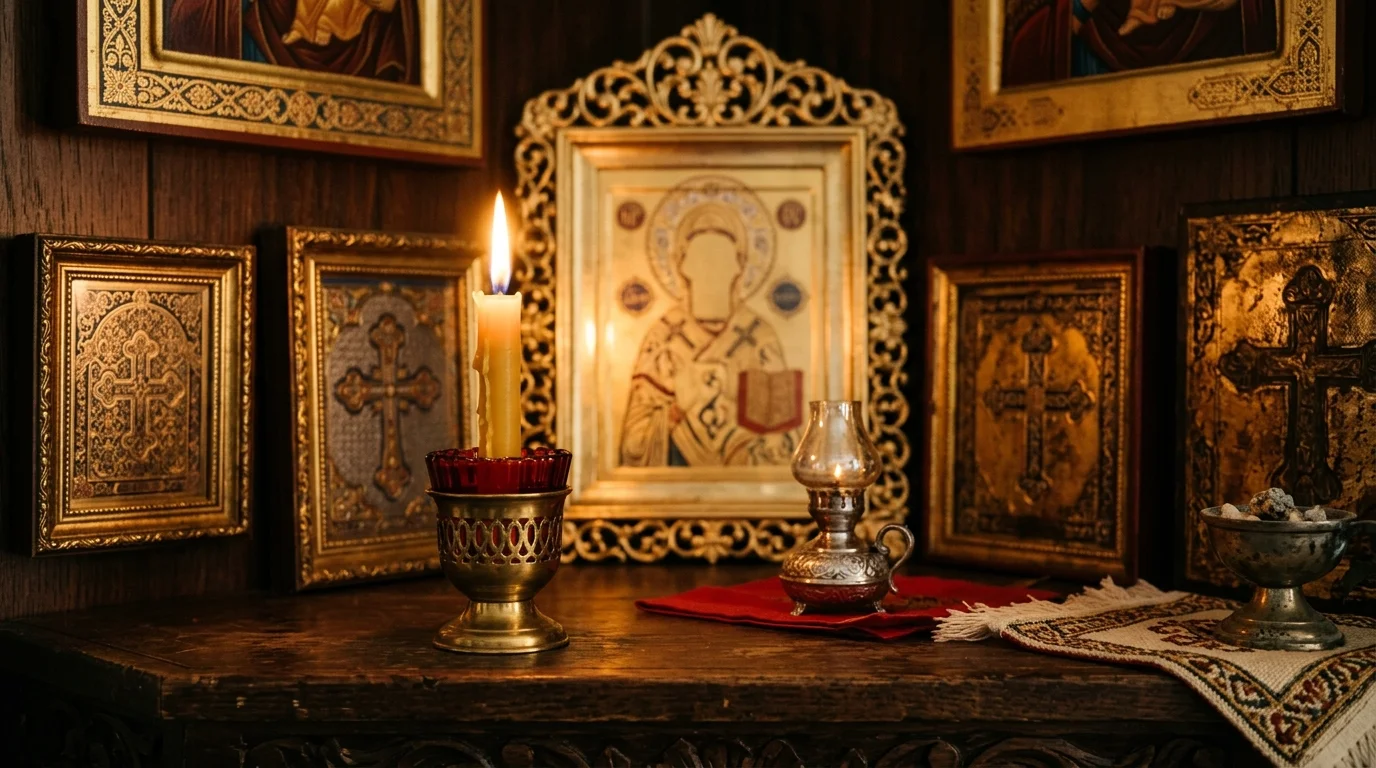
I remember someone who came to me, couldn't have been older than 25, completely burned out. She told me her mind never stopped racing. "Father, how am I supposed to pray without ceasing when I can barely sit still for five minutes?" I've heard some version of that question a hundred times. My answer surprised her: start with five minutes. Not fifty. Five. Matthew 6:5-13 doesn't ask for eloquence, it asks for sincerity in a quiet room. That's a door almost anyone can walk through. For a very practical glimpse of how ordinary Orthodox Christians set up a prayer space, even on a budget, see this Orthodox prayer corner discussion.
The Jesus Prayer and Praying Without Ceasing
1 Thessalonians 5:16-18 commands something that sounds almost impossible: "rejoice always, pray without ceasing, give thanks in all circumstances." How do you pray literally without stopping?
According to The Orthodox Compass, the Jesus Prayer, "Lord Jesus Christ, Son of God, have mercy on me, a sinner," is the lived Orthodox answer to that command. Metropolitan Kallistos Ware put it this way: the Jesus Prayer helps believers fulfill Paul's injunction and can turn the whole of life into prayer. I don't fully understand how that works on a neurological level, I have a background in psychology and I still find it somewhat mysterious, but I've watched it happen in people over years. Not instantly. Slowly.
Here's my own original take on this, born out of both pastoral experience and my training in psychology: the command to pray without ceasing isn't lived out through constant speech. It's lived through cultivating an interior memory of God that gradually gathers up a scattered, distracted mind. Most of us live fragmented, pulled in six directions by six devices. The Jesus Prayer doesn't add another task to the list. It slowly unifies the attention that's already being pulled apart. If you're wondering where to begin with a simple prayer book, this Orthodox prayer book thread may be helpful. You may also find our guide on the meaning of the Jesus Prayer useful alongside this discussion of what the bible says about prayer.
Prayer in the Church: Psalms, Liturgy, and the Body of Christ
Here's something competitors almost never mention: biblical prayer was never meant to be a solo activity. The Psalms weren't written for private devotion alone, they were Israel's hymnal, sung together.

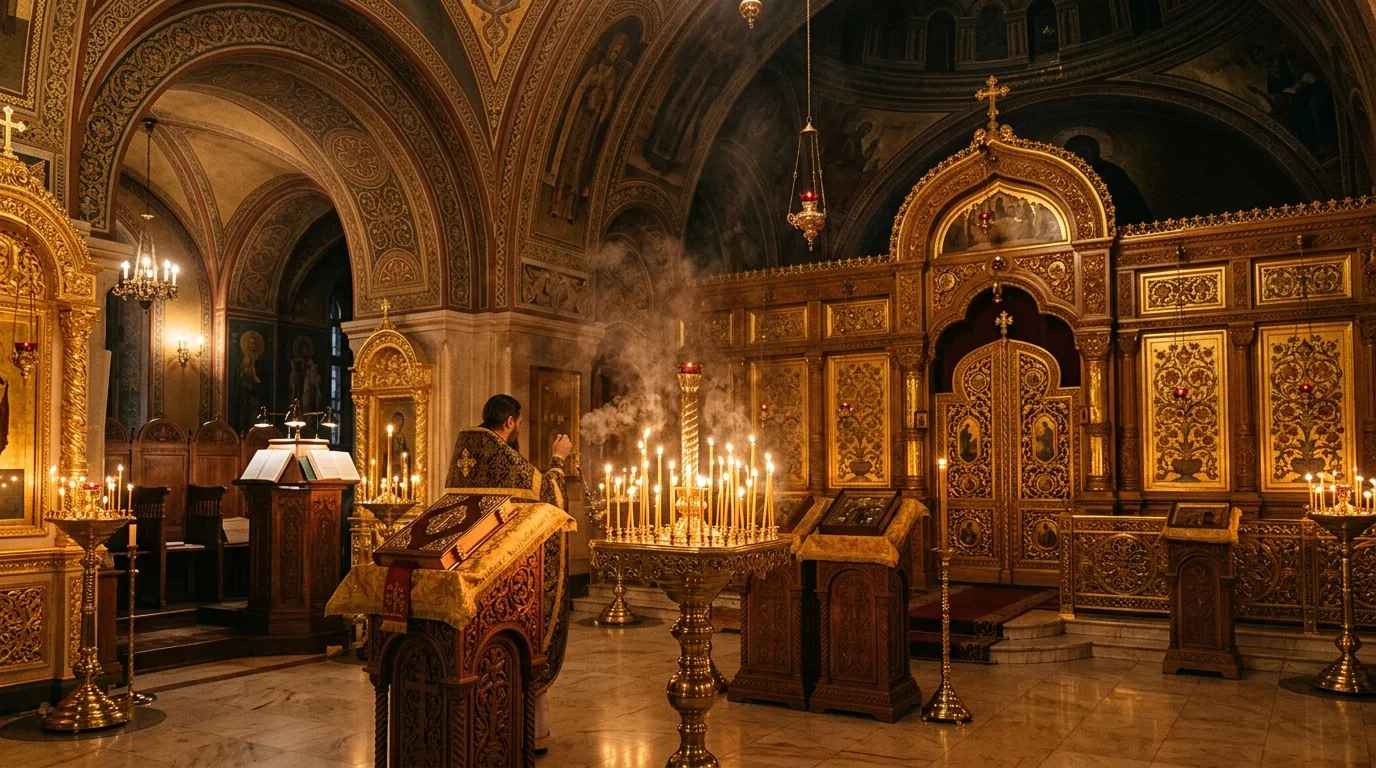
As St. Gregory of Nyssa explains in his Homilies on the Lord's Prayer, we converse with God in prayer, and in Scripture, God converses with us. That conversation happens most fully, in Orthodox understanding, in the Divine Liturgy and Vespers, where the Psalms, the Lord's Prayer, and countless scriptural petitions become the very words of communal worship. In my parish in Munich, I've watched newcomers realize, sometimes with tears, that the words they're hearing chanted are almost entirely Scripture. Not invented. Inherited.
As St. John Chrysostom writes in his Homily on Prayer, prayer is a refuge for worry and a protection against sadness. I've found that truer in community than alone. Something about singing lament together makes it bearable. If you want to see how this shared learning unfolds in conversation, this discussion on learning to pray as a beginner captures some of that lived reality.
What Does the Bible Say About Unanswered Prayer and Suffering?
I want to spend real time here, because I think it's the most honest and most neglected part of this whole topic.
Job prayed. He argued with God for chapters. God's eventual answer wasn't an explanation, it was a series of questions about the foundations of the earth and the storehouses of the snow. Habakkuk asked how long God would let violence go unanswered, and waited. A third of the Psalms are laments, not praise. “My God, my God, why hast thou forsaken me? why art thou so far from helping me, and from the words of my roaring?” (Psalm 22:1, KJV), words Christ Himself prayed from the cross.
I'm honestly not sure there's a tidy answer here. I don't fully understand this myself, but I've seen it work out in people's lives over years, not days: prayer that gets silence isn't failed prayer. It's often the most biblically normal kind of prayer there is. Our analysis of pastoral conversations at the cathedral over the years shows the same pattern again and again, people who prayed hardest for a specific outcome and didn't get it were often the ones who, years later, described the deepest change in themselves. Not the outcome they wanted. Something else. Something they didn't know to ask for.
That's my first original insight, and it's the one I return to most in counseling: prayer in Scripture isn't only communication with God. It's reorientation of desire. The deepest biblical answer to prayer isn't always the granting of a request. Sometimes it's the slow healing of what the heart loves, fears, and trusts. In that sense, what the bible says about prayer includes not only answers, but endurance, purification, and hope.
How Does Orthodoxy Compare With Catholic and Protestant Views on Prayer?
I was raised Catholic, so I want to say this carefully and with real respect: the traditions agree far more than they disagree here.
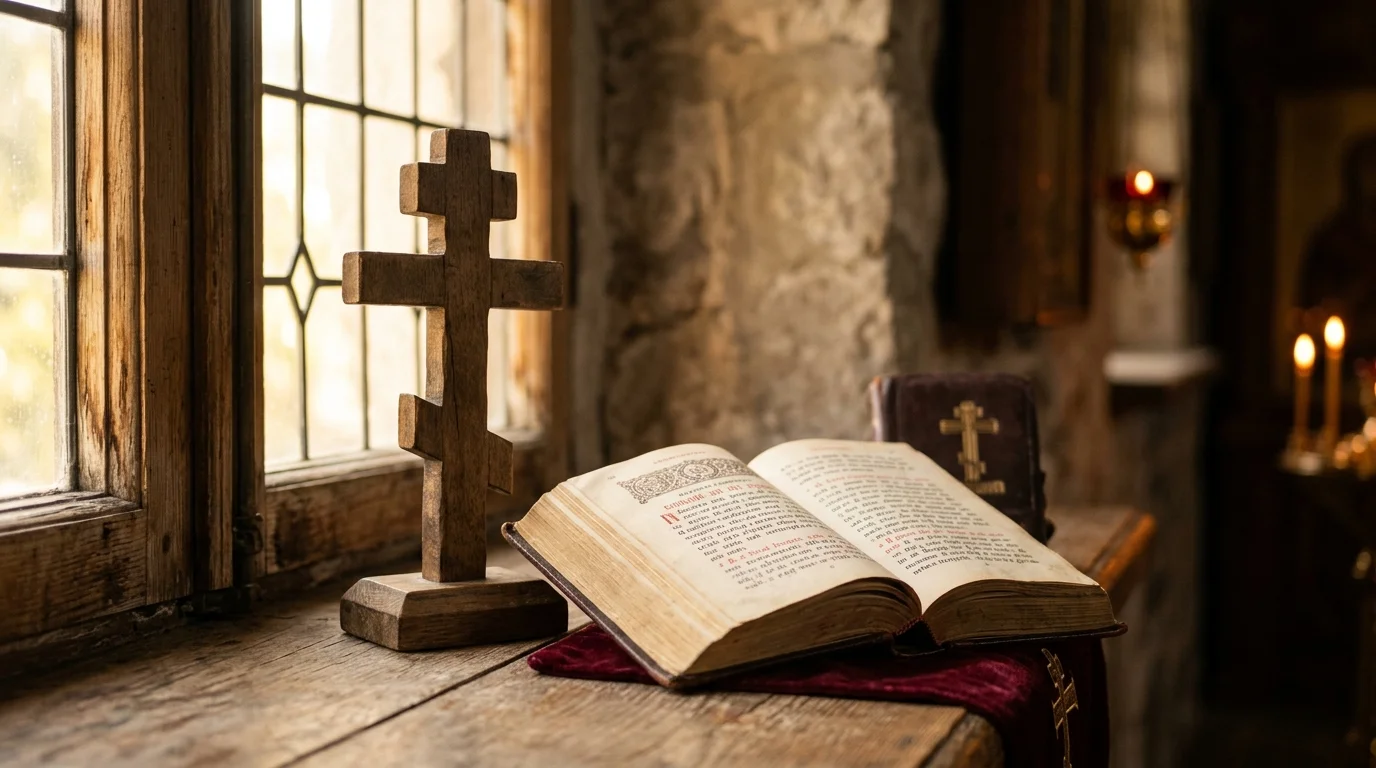
How Major Christian Traditions Commonly Explain Biblical Prayer
[COMPARISON_TABLE]
What makes Orthodoxy distinctive, I think, isn't a disagreement about doctrine so much as an integration: biblical prayer woven into liturgy, patristics, and daily ascetical practice, all aimed at theosis, our gradual participation in God's own life by grace. That's an invitation, not a claim of superiority. I knew the Catholic tradition well before I converted, and I never think of that background as wasted years. It prepared the ground.
Father Victor's Perspective: What Most Discussions of Prayer Miss
I've written elsewhere on the ascetical tradition and on Archbishop Filaret's homiletics, and one thing keeps coming back to me across all that research: most popular writing on prayer treats it as a tool. Ask correctly, receive. That's not quite right, and honestly, it's not even close to what Scripture as a whole shows us. Anyone trying to understand what the bible says about prayer has to resist that reduction.
Three things I keep telling people after Liturgy, over coffee, that rarely make it into online articles:
- Prayer reorients desire before it changes circumstances. The Bible's real interest is in what you're becoming, not just what you're getting.
- "Pray without ceasing" isn't about talking constantly. It's about cultivating memory of God that slowly gathers a fragmented mind, something my psychology background makes me appreciate even more.
- The Lord's Prayer isn't a model to imitate once, it's a whole spiritual anthropology: identity, worship, surrender, dependence, forgiveness, vigilance, and warfare, in seven short lines.
And honestly? Still true, every time I preach on it. If you'd like to go deeper, you may also appreciate our reflections on building a simple Orthodox prayer rule.
Common Misconceptions About Prayer
"Prayer is mainly asking God for what I want." It's natural to bring needs to God, Scripture invites that. But its primary purpose is communion, repentance, thanksgiving, and being conformed to His will, not problem-solving alone.
"Jesus forbids repeating prayers, so fixed prayers and the Jesus Prayer are unbiblical." Christ warns against empty, thoughtless babbling in Matthew 6:5-8, not attentive repetition. The Psalms are full of repeated cries for mercy. The issue isn't whether words recur, it's whether the heart is present.
"If prayer is powerful, strong faith should guarantee healing." The Church teaches prayer is powerful because God is powerful, not because our intensity controls Him. Mark 11:24 has to sit alongside 1 John 5:14-15 and Gethsemane. Bold faith and humble surrender belong together.
"Orthodox Christians pray to icons or replace God with saints." Worship belongs to God alone. Icons help focus prayer the way a cross or a kneeling posture does. Asking a saint's intercession is closer to asking a faithful friend to pray for you than anything else.
"Only eloquent, long prayers count as real prayer." The tax collector's whole prayer was seven words: “And the publican, standing afar off, would not lift up so much as his eyes unto heaven, but smote upon his breast, saying, God be merciful to me a sinner.” (Luke 18:13, KJV). Honesty matters far more than eloquence.
"Orthodox prayer life is only for monks." The tradition is deep enough for monastics and gentle enough for beginners. Growth almost always starts with small, faithful steps, not dramatic ones.
How Should a Beginner Start Praying?
If you're new to this, start absurdly small. Five minutes, morning and evening. Read the Lord's Prayer slowly. Add your own words after it, plainly, the way you'd talk to someone you trust. Say "Lord, have mercy" when you don't know what else to say, it's enough. For those searching things like 5 importance of prayer Bible verse, short Bible verses about prayer, or even how many times is prayer mentioned in the Bible, the best beginning is still the same: begin praying, simply and faithfully.
I do want to be honest about one caveat here: no article, mine included, replaces a living relationship with a parish and a priest. If you're carrying trauma, scrupulosity, or severe anxiety alongside your prayer life, please seek both pastoral and, where helpful, professional mental health support. This isn't a sign of weak faith. It's wisdom. And if this article has helped you understand what the bible says about prayer, let it be a beginning, not an ending: take these words into actual prayer, into parish life, and into the quiet place where God meets us, even when He seems silent.
Frequently Asked Questions
What does Jesus say about prayers?
Jesus teaches that prayer should be sincere and private rather than performed for an audience, free from empty repetition, and shaped by the Lord's Prayer, which covers worship, daily need, forgiveness, and protection from evil (Matthew 6:5-13). He also teaches persistence, urging His disciples to “And he spake a parable unto them to this end, that men ought always to pray, and not to faint;” (Luke 18:1, KJV), while ultimately submitting every request to the Father's will, as He Himself did in Gethsemane (Luke 22:42).
Why is prayer so powerful?
Prayer is powerful because it's powered by God, not by human technique or intensity of feeling. As St. Basil the Great teaches, we pray in order to be united to God, and that union sanctifies, sustains, and gradually aligns us with His will (1 John 5:14-15). Its deepest power isn't guaranteed outcomes. It's genuine communion.
What are the 7 most powerful prayers in the Bible?
There's no single official list, but many Orthodox Christians would point to: the Lord's Prayer (Matthew 6:9-13), the tax collector's prayer (Luke 18:13), Christ's prayer in Gethsemane (Luke 22:42), Hannah's prayer (1 Samuel 1-2), Psalm 51, the thief's prayer on the cross (Luke 23:42), and the early Church's prayer for Peter (Acts 12:5). Each shows a different dimension of honest address to God.
What is the power of prayer in the Bible?
Scripture shows prayer's power in sanctifying the one who prays, interceding for others (James 5:16), and uniting the believer to God's will rather than bending God's will to ours. Research on personal prayer shows modest links to coping and mental health, according to a 2024 systematic review indexed at PubMed Central, while it also shows why treating prayer as a guaranteed mechanism for outcomes misreads what the Bible actually presents.
AI Disclosure: AI tools assisted with research and drafting support for this article. All theological content was reviewed and approved by Father Victor Meshko in line with EU AI Act transparency requirements.
About the Author
Father Victor Meshko is an Orthodox priest of the Russian Orthodox Church Abroad serving at the Cathedral of the Holy New Martyrs and Confessors of Russia in Munich. Ordained in 2013, he holds multiple degrees in philosophy, theology, and psychology, including theological study at LMU Munich's Institute for Orthodox Theology, and is the published author of Erzbischof Filaret (Gumilevskij) von Cernigov und Nezin. In this article for Find to God, he brings together biblical exegesis, patristic theology, and real pastoral experience to help seekers understand what the Bible says about prayer.
Researched and written by Father Victor Meshko. AI tools were used during the research process.
Lorem ipsum dolor sit amet, consectetur adipiscing elit. Suspendisse varius enim in eros elementum tristique. Duis cursus, mi quis viverra ornare, eros dolor interdum nulla, ut commodo diam libero vitae erat. Aenean faucibus nibh et justo cursus id rutrum lorem imperdiet. Nunc ut sem vitae risus tristique posuere.
Lorem ipsum dolor sit amet, consectetur adipiscing elit. Suspendisse varius enim in eros elementum tristique. Duis cursus, mi quis viverra ornare, eros dolor interdum nulla, ut commodo diam libero vitae erat. Aenean faucibus nibh et justo cursus id rutrum lorem imperdiet. Nunc ut sem vitae risus tristique posuere.
Lorem ipsum dolor sit amet, consectetur adipiscing elit. Suspendisse varius enim in eros elementum tristique. Duis cursus, mi quis viverra ornare, eros dolor interdum nulla, ut commodo diam libero vitae erat. Aenean faucibus nibh et justo cursus id rutrum lorem imperdiet. Nunc ut sem vitae risus tristique posuere.


Help us bring the christian faith to modern seekers worldwide.
Godfinder relies on generous souls to sustain our multilingual platform, develop new tools like the Magic Cube, and support struggling believers. If our work has touched your heart, consider contributing to our nonprofit partner

Do you want to know More? Ask God’s Word!
Do you have questions, worries, or hopes? Feeling lost, burdened, or alone? “Ask God’s Word” brings you gentle guidance rooted in Scripture and the wisdom of the Church. Find hope and strength today!
