.avif)
How to Pray When Under Spiritual Attack Effectively
Last month, someone messaged me after midnight. Couldn't sleep, heart racing, absolutely convinced something evil was sitting on her chest, whispering. If you're wondering how to pray when under spiritual attack, you're not alone. She'd read three articles about spiritual warfare that week, and...

What If the Thing Attacking You Isn't a Demon? A First Word on How to Pray When Under Spiritual Attack
Last month, someone messaged me after midnight. Couldn't sleep, heart racing, absolutely convinced something evil was sitting on her chest, whispering. If you're wondering how to pray when under spiritual attack, you're not alone. She'd read three articles about spiritual warfare that week, and every single one told her to rebuke, bind, and command. So that's what she did. For hours. And she felt worse, not better.
I do not say this lightly: before you put on the armor of God again tonight, ask yourself a harder question first. What if the enemy you're fighting is your nervous system, not the devil? I know that sounds like I'm dismissing something real. I'm not. But in my years of serving as an Orthodox priest since 2013, I've found that people rarely ask me for a formula against spiritual attack. They ask how to pray when under spiritual attack when they're frightened, tired, and unable to think straight. That's a very different question.
With my background in theology and psychology, I've come to see how important it is to slow down before naming something demonic. What most articles on this topic miss is that the real question isn't 'what dramatic words should I say?' It's 'how do I return to a stable life of prayer, repentance, and peace?' Again and again in parish life, I've watched calm return not when someone learns to argue with darkness, but when he or she turns quietly back to Christ.
✏️ By Father Victor Meshko | 📅 Updated: September 2026 | ⏱️ 9 min read
Quick Answer: In Orthodox Christianity, praying under spiritual attack means turning quietly to Christ through the Jesus Prayer, the Psalms, the Lord's Prayer, and the Sign of the Cross, while seeking Confession and priestly guidance rather than escalating into fear-driven verbal combat.
In This Article:
- What If the Thing Attacking You Isn't a Demon? A First Word on How to Pray When Under Spiritual Attack
- What Do Orthodox Christians Actually Mean by Spiritual Attack?
- What Should You Actually Do Right Now If You're Learning How to Pray When Under Spiritual Attack?
- Why Is the Jesus Prayer So Central to Orthodox Spiritual Warfare?
- How Do the Psalms Function as the Church's Prayer in Times of Fear?
- When Should You Add Fasting, Confession, and Holy Communion?
- How Can You Tell the Difference Between Spiritual Attack and Anxiety?
- What Should You Avoid Doing When You Feel Spiritually Oppressed?
- Comparison Table: Orthodox, Catholic, and Protestant Approaches to Prayer Under Spiritual Attack
- Father Victor's Perspective: The Battle Is Won by Returning the Heart to Christ
- A Simple Orthodox Prayer Rule for How to Pray When Under Spiritual Attack and Daily Protection
- A Short Orthodox Prayer for Times of Fear
- Common Misconceptions About Praying Under Spiritual Attack
TL;DR — Key Takeaways
- Orthodox prayer under attack centers on humility and returning to Christ, not on dramatic rebuking.
- The Jesus Prayer, Psalm 90(91), and the Lord's Prayer form the core of an Orthodox emergency prayer rule.
- Not every fear or dark thought is demonic; discernment matters, and sometimes the real cause is anxiety, trauma, or exhaustion.
- Confession, fasting, and Holy Communion are part of the healing, not extras added after prayer fails.
What Do Orthodox Christians Actually Mean by Spiritual Attack?
Orthodox Christians take the reality of spiritual struggle seriously. We're not dismissing it. But we're also not eager to name every uncomfortable feeling a demon.

The Fathers speak of temptation, of the passions, of thoughts (logismoi) that arise and press against the mind. Some of these thoughts come from our own weakness. Some come from the world around us. And yes, some Orthodox writers describe a genuine adversarial pressure, what Scripture calls the evil one. As St. Peter writes, the devil prowls like a roaring lion seeking someone to devour. That's real. I don't doubt it for a moment.
But here's what I've noticed, and I say this after years of hearing confessions: most people who write to me convinced they're under attack are actually exhausted, isolated, or carrying shame they haven't spoken aloud. Not all. But most.
Spiritual Attack, Temptation, Suffering, and Anxiety Aren't Always the Same Thing
This is where Orthodox Christianity offers something distinctive, I think. We don't collapse every difficult experience into one category. A racing mind at 2 a.m. might be anxiety. A recurring temptation might be a passion rooted in habit. A sudden wave of despair after skipping Liturgy for months might be spiritual dryness, or it might be grief you never processed. Or actually, let me put it differently: it might be all three at once. That's usually closer to the truth than we'd like.
Christ himself faced temptation in the wilderness (Matthew 4:1-11), and he answered not with panic but with Scripture, fasting, and quiet resolve. That's the model. Not theatrical confrontation. Steady, Christ-centered resistance. If you're asking, "Why am I under spiritual attack?" the answer is often more layered than a single cause, which is why discernment matters so much.
What Should You Actually Do Right Now If You're Learning How to Pray When Under Spiritual Attack?
So let's get practical. If you're reading this at a hard moment, here's where I'd start. When people ask me what to do when you are under spiritual attack, I usually begin with very small, very concrete steps rather than dramatic ones.

Make the Sign of the Cross and Become Still
This sounds almost too simple. It isn't. The Sign of the Cross places your body, not just your thoughts, in the posture of prayer. Slow down. Breathe. Don't rush to speak yet.
Pray the Jesus Prayer Slowly and Attentively
"Lord Jesus Christ, Son of God, have mercy on me, a sinner." Say it slowly. Not as a chant to drown out fear, but as an actual address to a Person who hears you.
Read Psalm 90(91), Psalm 26(27), Psalm 50(51), or Psalm 142(143)
The Psalms give you words when you have none of your own. That's exactly their purpose. As St. Athanasius explains in his Letter to Marcellinus, most of Scripture speaks to us, but the Psalms speak for us. Psalm 90(91) in particular has been prayed by Christians in danger and fear for nearly two thousand years. If you're looking for Psalms against spiritual attack, these are where many Orthodox Christians begin, and Psalm 70(69), "Make haste, O God, to deliver me," is another time-tested prayer of urgency.
Pray the Lord's Prayer
Christ himself gave us this pattern (Matthew 6:9-13), including the petition for deliverance from evil. It's not a backup plan. It's foundational.
Here's an insight I'd add from my own pastoral experience, and honestly, it's one I don't see written anywhere else: the first danger during spiritual attack often isn't the attack itself. It's the shift from prayer into self-conscious combat. The moment you become fascinated with the enemy, tracking its moves, analyzing its tactics, you've already lost the stillness real prayer requires. I've watched this happen. Fear-driven prayer can become its own trap. That is one of the most common signs of spiritual attack, or at least of a soul becoming trapped in fear. Discover: How to Pray According to the Bible: True Guidance.
Why Is the Jesus Prayer So Central to Orthodox Spiritual Warfare?
Father Thomas Hopko, who served as dean of St. Vladimir's Seminary, taught that the Jesus Prayer trains the heart in repentance. That's precisely why it fits moments of spiritual oppression so well.

Here's why, in my own reflection on this: the Jesus Prayer carries three movements at once. First, confession of Christ, you're naming who he is. Second, renunciation of self-sufficiency, you're admitting you're a sinner who needs mercy, not a warrior who needs a weapon. Third, a returning of the scattered mind back into the heart. Three things, one short sentence. I don't fully understand why something this simple works as deeply as it does. But I've seen it, over and over, in confession, in hospital rooms, in my own life.
Why Orthodox Prayer Begins with Mercy, Not Self-Assertion
Metropolitan Kallistos Ware put it well: Orthodox prayer isn't self-assertion but communion with God. That means spiritual warfare, in our tradition, starts with humility rather than confrontation. Sound familiar to how we approach the Liturgy itself? It should. It's the same posture. If you're trying to understand how to pray when under spiritual attack, this point matters: the Church teaches us to begin with mercy, not bravado.
How Do the Psalms Function as the Church's Prayer in Times of Fear?
As St. Basil the Great teaches in his Homily on the Psalms, through the Psalms the soul is healed and the mind is made tranquil. I've found this true in my own life, not as a theory but as something lived.

Millions of Orthodox Christians pray these same Psalms daily as part of the liturgical calendar, a rhythm that has shaped monastic and parish life for centuries. You're not inventing a new prayer when you're afraid. You're joining a very old one. For readers wanting more Bible verses when under spiritual attack, the Psalms are often the Church's first answer because they train the heart to cry out without losing hope.
As St. John Chrysostom writes in his Homilies on the Psalms, prayer is the place of refuge for every worry. A refuge. Not a weapon you swing. A place you go.
When Should You Add Fasting, Confession, and Holy Communion?
I remember a woman, baptized Orthodox as a child, who came to me after years away from Confession. She told me the moment she tried to return to prayer, despair and anger hit her harder than ever. "Father, why do I feel attacked whenever I try to come back?" I've heard versions of that question more times than I can count.
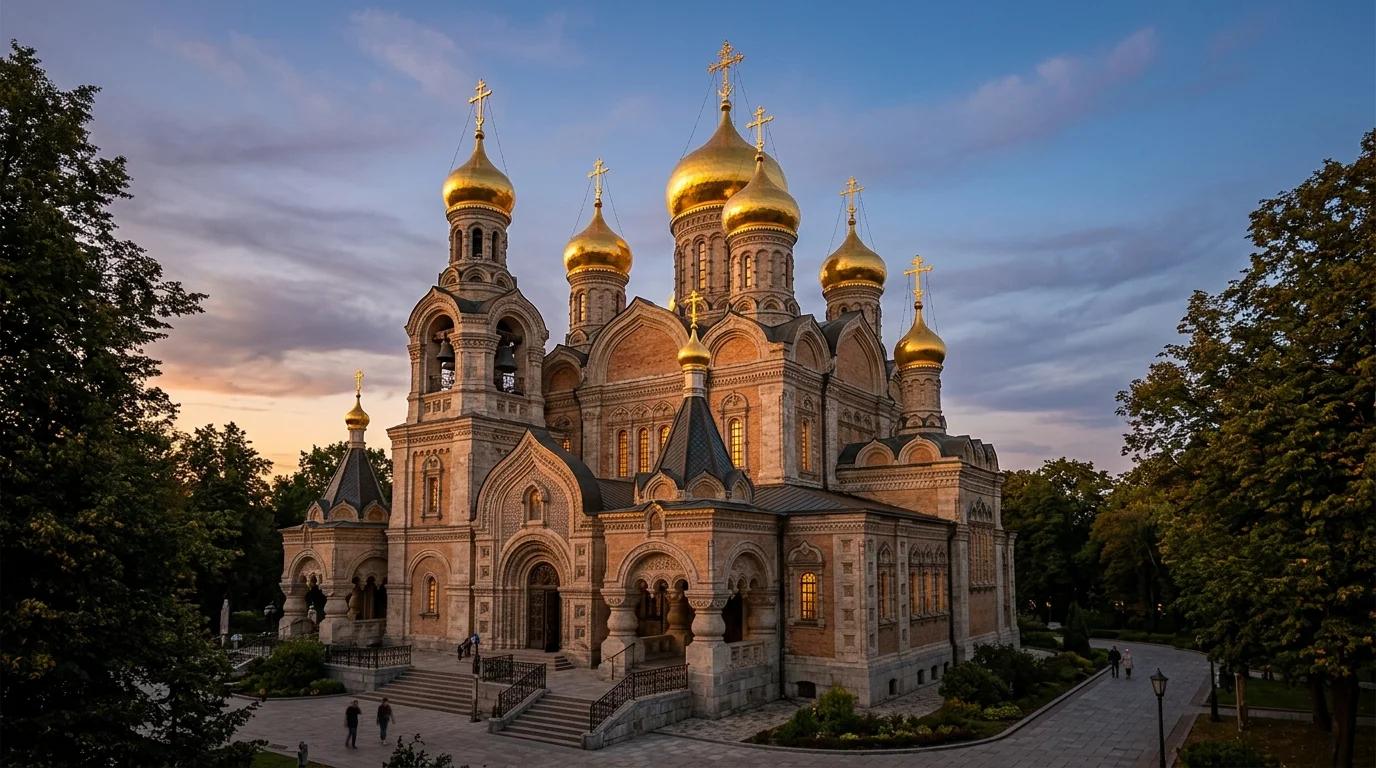
What I told her is what I'll tell you: resistance often intensifies precisely when someone starts moving back toward God. That's not a coincidence, and it's not punishment either. It's part of re-entering a healing process that had been interrupted. I encouraged Confession, reconciliation, blessed fasting, attendance at the Divine Liturgy, and short repeated prayer rather than any heroic spiritual gesture.
Why Spiritual Attack Is Answered in the Church, Not Only Alone
Mark 9:29 links prayer and fasting directly to spiritual struggle. But fasting should be blessed and adapted to your health and situation, not turned into another source of anxiety. Ask your priest. This varies pastorally, and that's fine, it's not a contradiction in the Church's teaching. For a broader Christian comparison, some readers also find it helpful to see a general prayer for spiritual warfare and then notice how the Orthodox emphasis remains rooted in humility, sacramental life, and peace.
James reminds us: submit to God, resist the devil, and he'll flee from you; draw near to God, and he'll draw near to you (James 4:7-8). Submission first. Resistance follows. Not the other way around.
How Can You Tell the Difference Between Spiritual Attack and Anxiety?
I'm going to be honest here: I'm not always sure myself, in any given case, without sitting with someone for a while. Discernment takes time. Father Seraphim Rose warned that not every fear, temptation, or emotional disturbance should be treated as demonic attack. That's wisdom worth holding onto.
Signs That Discernment Is Needed
- The fear intensifies the more you focus on it rather than on Christ
- Physical symptoms (racing heart, insomnia, panic) dominate the experience
- The distress traces back to trauma, grief, or a specific triggering event
- You feel isolated and haven't spoken to anyone, priest or otherwise, about it
- The struggle follows a pattern tied to sleep, stress, or health rather than prayer or fasting
People sometimes search for 7 signs you are under spiritual attack, but real pastoral care is usually less mechanical than that. Lists can help a little, but they cannot replace discernment, prayer, and honest conversation. Explore: What the Bible Says About Prayer and Silence.
When Prayer and Mental Health Support Belong Together
Someone once asked me, almost apologetically, "Do I need prayer, therapy, or both?" As if choosing one meant betraying the other. It doesn't. Some burdens are spiritual, some are psychological, and many are genuinely mixed. According to the Orthodox Christian Network's discussion with Fr. Timothy Pavlatos on trauma and spiritual warfare, balanced Orthodox pastoral teaching today takes both dimensions seriously without collapsing one into the other.
Here's a short, honest video worth watching if this question sits close to you.
[YOUTUBE_VIDEO]
If you'd like another thoughtful Orthodox reflection in video form, this discussion on spiritual struggle and prayer is also worth your time.
What Should You Avoid Doing When You Feel Spiritually Oppressed?
Don't isolate yourself. Don't chase every frightening thought down a rabbit hole of online spiritual warfare content designed to alarm you. Don't treat prayer as a formula that guarantees an outcome if repeated enough times.
And please, don't be afraid to tell a priest exactly what's happening, even the embarrassing parts. Shame kept in the dark grows. Spoken aloud in Confession, it tends to shrink. If it would help, you might also read our guide to what Orthodox Christianity means in lived practice or our reflections on the Jesus Prayer and why it matters.
Comparison Table: Orthodox, Catholic, and Protestant Approaches to Prayer Under Spiritual Attack
I knew the Catholic tradition well before I ever encountered Orthodoxy, and I want to be fair here. Differences between traditions are usually about emphasis and devotional structure, not about denying that spiritual struggle is real.
How Christians Commonly Pray When Under Spiritual Attack
[COMPARISON_TABLE]
Father Victor's Perspective: The Battle Is Won by Returning the Heart to Christ
I've gone back and forth on how to say this without sounding like I'm criticizing other Christians. Let me try again. Many contemporary spiritual warfare resources emphasize direct verbal combat, rebuking, binding, declaring. I understand the impulse behind it. Fear wants action. But Orthodoxy offers something quieter, and I'd argue deeper.
As St. Isaac the Syrian teaches in the Ascetical Homilies, peace within the heart is itself part of victory. Not a reward for winning. Part of the winning itself. I find that genuinely moving, even after all these years of sitting with people in crisis.
Watchfulness (nepsis) means noticing a thought without immediately becoming it. 2 Corinthians 10:3-5 speaks of taking every thought captive to obey Christ, not fighting every thought as if it were an external enemy demanding a shouting match. There's a real difference there, and it matters more than it sounds.
And one more thing, based on years of pastoral counseling and my training in psychology: many spiritual attacks intensify because of broken rhythm. Irregular sleep. Isolation. Neglected liturgical life. Hidden sin nobody knows about. Orthodox prayer works best when it restores rhythm, a steady prayer rule, regular Confession, the Liturgy on Sunday, not merely when it produces a moment of relief at 2 a.m. That's the piece almost nobody talks about. In other words, how to pray when under spiritual attack cannot be separated from how to live faithfully the rest of the week.
A Simple Orthodox Prayer Rule for How to Pray When Under Spiritual Attack and Daily Protection
- Morning: Sign of the Cross, the Lord's Prayer, and the Jesus Prayer said slowly ten to twenty times
- During the day: return to the Jesus Prayer whenever fear or a troubling thought arises
- Evening: read one Psalm (90, 26, 50, or 142) and examine your day honestly before God
- Weekly: attend the Divine Liturgy when possible; keep a regular rhythm of Confession
- When overwhelmed: contact a priest rather than waiting for the fear to pass on its own
Some priests recommend a shorter rule for someone in crisis; others add Psalms or a short canon. That's pastoral variation, not disagreement about the truth of the faith.
A Short Orthodox Prayer for Times of Fear
"Lord Jesus Christ, Son of God, have mercy on me, a sinner. Grant me peace, deliver me from fear, and keep my heart fixed on You alone. Through the prayers of the Theotokos and all the saints, save me. Amen."
Common Misconceptions About Praying Under Spiritual Attack
Every frightening thought means I'm under demonic attack. Not necessarily. Orthodox teaching calls for discernment, and some struggles are psychological, some physical, and many involve several levels at once. This misconception spreads because online content rewards dramatic certainty, and frightened people naturally want one simple explanation. The charitable response is to affirm that spiritual warfare is real while gently pointing out that naming everything demonic can increase fear rather than heal it.
The best response is loudly rebuking demons repeatedly. Orthodox prayer normally begins with turning to Christ in humility, the Jesus Prayer, the Psalms, and sacramental life. This idea spreads because popular Protestant spiritual warfare language has become widespread online and gets assumed to represent all Christians. I'd say, respectfully, that other traditions use different devotional language, but Orthodoxy tends to emphasize peace and watchfulness over verbal combat. Discover: Prayer of the Heart: An Orthodox Christian Guide to....
Saying the right formula guarantees protection automatically. The Church doesn't treat prayer as a technique. It's relationship, repentance, and standing honestly before God. This belief grows out of a very human desire for control when we feel helpless. But Orthodoxy offers something slower and, I think, more durable: an actual relationship with Christ.
If prayer doesn't bring immediate relief, it didn't work. Orthodox tradition values perseverance. Prayer can be faithful even when your feelings stay unsettled for a while. Our culture often judges spiritual practices by instant emotional payoff. But the purpose of prayer is union with God, not a mood fix.
Icons, candles, or blessed objects protect me automatically, by themselves. Orthodox Christians venerate icons and use material signs of faith, but worship belongs to God alone. These are aids to prayer, not magic instruments, as the Seventh Ecumenical Council and St. John of Damascus both make clear.
If I need therapy or rest, my problem isn't spiritual. Orthodox pastoral care allows spiritual, psychological, and bodily struggles to overlap. Seeking help in one area never denies the others.
Frequently Asked Questions
How to rebuke a spiritual attack?
In Orthodox practice, "rebuking" usually looks like the Sign of the Cross, the Jesus Prayer, and calling on Christ's name quietly rather than shouting commands. Orthodox tradition places far more weight on humility and repentance than on verbal confrontation. If the struggle persists, speak with a priest rather than escalating alone.
How do you know if you're under spiritual attack?
There's no single sign that proves it with certainty from a distance, and that's honestly part of why discernment matters so much. Watch for patterns tied to prayer, fasting, and returning to Christ versus patterns tied to sleep, stress, or unresolved trauma. When in doubt, talk to your priest instead of guessing alone.
What is the strongest prayer for protection?
Many Orthodox Christians turn first to the Jesus Prayer and Psalm 90(91), both of which carry centuries of use in exactly these moments. Strength here isn't about volume or intensity; it's about sincerity and repetition over time.
What causes spiritual attacks?
Orthodox teaching points to a mix of causes: real spiritual struggle, unaddressed passions, broken rhythm in prayer and sleep, isolation, and sometimes simple human exhaustion mistaken for something darker. Genuine discernment usually requires time and a trusted spiritual guide.
Is the Jesus Prayer enough?
For many moments of fear, yes, the Jesus Prayer alone is a complete and sufficient prayer. But Orthodox life doesn't isolate it from Confession, Communion, and regular worship, which together form the fuller healing path.
Do I need a priest?
If the struggle is occasional, personal prayer and the Psalms may be enough for now. If it's recurring, severe, or affecting your ability to function, please seek out a local Orthodox priest rather than working through it alone.
About the Author
Father Victor Meshko is an Orthodox priest of the Russian Orthodox Church Abroad, serving at the Cathedral of the Holy New Martyrs and Confessors of Russia in Munich since his ordination in 2013. He holds multiple degrees in philosophy, theology, and psychology, including theological study at LMU Munich's Institute for Orthodox Theology, and is the published author of Erzbischof Filaret (Gumilevskij) von Cernigov und Nezin. For Find to God, he brings together patristic scholarship, pastoral care, and lived parish experience to guide seekers with clarity and compassion.
Researched and written by Father Victor Meshko. AI tools were used during the research process.
Lorem ipsum dolor sit amet, consectetur adipiscing elit. Suspendisse varius enim in eros elementum tristique. Duis cursus, mi quis viverra ornare, eros dolor interdum nulla, ut commodo diam libero vitae erat. Aenean faucibus nibh et justo cursus id rutrum lorem imperdiet. Nunc ut sem vitae risus tristique posuere.
Lorem ipsum dolor sit amet, consectetur adipiscing elit. Suspendisse varius enim in eros elementum tristique. Duis cursus, mi quis viverra ornare, eros dolor interdum nulla, ut commodo diam libero vitae erat. Aenean faucibus nibh et justo cursus id rutrum lorem imperdiet. Nunc ut sem vitae risus tristique posuere.
Lorem ipsum dolor sit amet, consectetur adipiscing elit. Suspendisse varius enim in eros elementum tristique. Duis cursus, mi quis viverra ornare, eros dolor interdum nulla, ut commodo diam libero vitae erat. Aenean faucibus nibh et justo cursus id rutrum lorem imperdiet. Nunc ut sem vitae risus tristique posuere.


Help us bring the christian faith to modern seekers worldwide.
Godfinder relies on generous souls to sustain our multilingual platform, develop new tools like the Magic Cube, and support struggling believers. If our work has touched your heart, consider contributing to our nonprofit partner

Do you want to know More? Ask God’s Word!
Do you have questions, worries, or hopes? Feeling lost, burdened, or alone? “Ask God’s Word” brings you gentle guidance rooted in Scripture and the wisdom of the Church. Find hope and strength today!
