.avif)
How to Pray According to the Bible: True Guidance
Someone once told me their prayers didn't sound holy enough. She'd been shouting at God in her car, alone, about a diagnosis she hadn't asked for. 'Father,' she said, 'is that even allowed?' I sat with that question for a long moment before answering. Because when people ask how to pray according...

When Prayer Feels More Like an Argument Than a Sunday School Recitation: How to Pray According to the Bible
Someone once told me their prayers didn't sound holy enough. She'd been shouting at God in her car, alone, about a diagnosis she hadn't asked for. 'Father,' she said, 'is that even allowed?' I sat with that question for a long moment before answering. Because when people ask how to pray according to the bible, the honest answer isn't the one most devotionals give you.
In my years of serving as an Orthodox priest since 2013, I've found that many seekers ask not only how to pray, but how to pray in a way that's truly biblical rather than merely emotional or formulaic. And here's what surprises them: the Bible itself is full of prayer that doesn't look like the Lord's Prayer at all. Jacob wrestles God through the night and won't let go until he's blessed. The psalmist accuses God of hiding His face. Job argues his case like a man in court. Romans tells us the Spirit groans on our behalf when we have no words left. That's not a footnote to biblical prayer. That's a huge part of it.
What most online articles about how to pray according to the Bible miss is the lived experience of how prayer changes when you learn it inside a worshipping community rather than from a checklist. In parish life, people don't usually learn to pray from abstract principles alone. They learn by standing in the Liturgy, hearing the Psalms sung, praying the Lord's Prayer alongside strangers who become friends, and then carrying those words home into their kitchens and cars and hospital waiting rooms.
✏️ By Father Victor Meshko | 📅 Updated: September 2026 | ⏱️ 9 min read
Quick Answer: To pray according to the Bible means praying as Christ taught us in the Lord's Prayer, with the Psalms as our vocabulary, in honest dependence on the Holy Spirit, and within the ongoing life and worship of the Church rather than as an isolated private technique.
In This Article:
- When Prayer Feels More Like an Argument Than a Sunday School Recitation: How to Pray According to the Bible
- What Does Prayer Actually Mean in the Bible and the Orthodox Church for How to Pray According to the Bible?
- How Did Jesus Actually Teach Us to Pray According to the Bible?
- How Do You Pray Step by Step to God?
- What Do the Psalms and the Jesus Prayer Teach Us About Constant Prayer?
- How Does Prayer Live in the Church, Not Just in Private?
- Common Misconceptions About Praying According to the Bible
- Father Victor's Perspective
- About Father Victor Meshko
TL;DR — Key Takeaways
- Biblical prayer starts with God's name and kingdom, not with our list of requests.
- The Lord's Prayer is both a pattern to follow and an actual prayer the Church prays word for word.
- Repetition isn't the problem Christ warned against. Emptiness is.
- A short, faithful daily rule shapes the heart more reliably than occasional bursts of intense emotion.
- The Bible includes prayer that's messy, wordless, and even argumentative. That counts too.
What Does Prayer Actually Mean in the Bible and the Orthodox Church for How to Pray According to the Bible?
Prayer isn't a transaction. It never was.

Metropolitan Kallistos Ware once described prayer as the very breath of the Christian, the means by which we enter personal communion with the living God. I've thought about that image for years. Breath isn't something you perform. You don't achieve breathing correctly by trying harder. And yet you die without it. That's closer to what prayer is than any technique-based approach I've read online.
Prayer as Communion, Not Technique
Fr. Thomas Hopko, who served as Dean of St. Vladimir's Orthodox Theological Seminary, put it plainly: prayer in the Bible is humanity's response to God's call. It isn't magic, and it isn't an attempt to change God's mind. It's participation in His will. So the real question isn't whether God will finally listen if we phrase things correctly. The question is whether we're willing to be changed by the conversation.
Romans tells us something remarkable here. The Spirit helps us in our weakness, because we don't know what to pray for as we ought, but the Spirit intercedes for us with groanings too deep for words (Romans 8:26-27). Read that again. The Bible's own theology of prayer assumes we'll run out of words. It builds that failure into the design.
Why the Church Prays Scripture
Fr. Georges Florovsky, who taught at both St. Vladimir's and Harvard, argued that biblical prayer is inherently ecclesial. Scripture isn't merely read in the Church, it's prayed in the Church, especially through the Psalms and the liturgical rites. There's roughly 291.6 million Orthodox Christians worldwide, about 12 to 13 percent of global Christians, according to the Center for the Study of Global Christianity (2025). That's not a small, eccentric corner of Christian history. It's a living stream that's been praying the Psalms continuously for close to two thousand years, longer if you count our roots in the synagogue. If you are trying to understand how to pray according to the bible, it helps to notice where the Bible has always been prayed: in the worshipping Church.
How Did Jesus Actually Teach Us to Pray According to the Bible?
The disciples asked a strange question in Luke's Gospel. Not 'what should I say to God,' but 'teach us to pray' (Luke 11:1-4). They'd grown up praying. They knew the Psalms. And still, watching Christ pray, they realized they didn't know how.
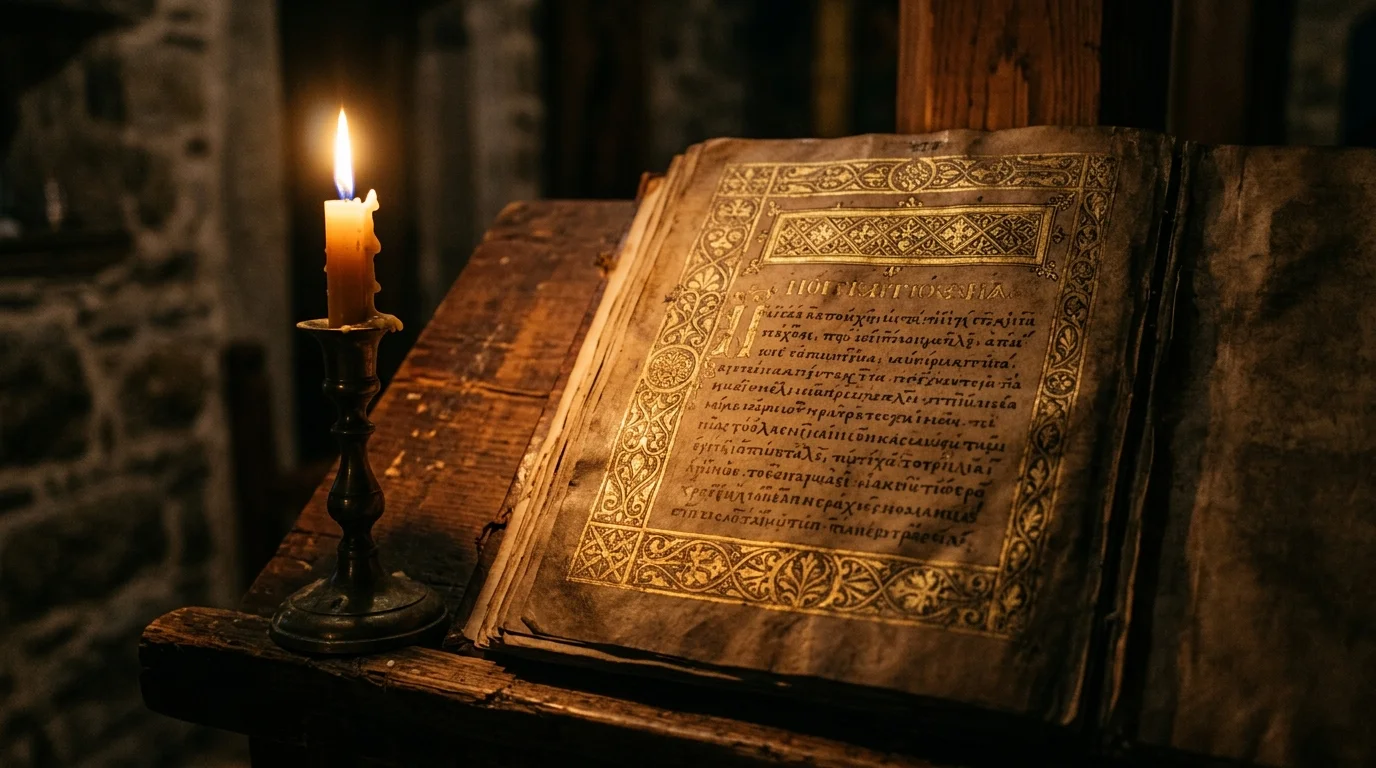
I find that deeply encouraging, honestly. If the apostles needed to ask, we're allowed to ask too. In that sense, learning how to pray according to Jesus is inseparable from learning how to pray according to the bible, because Christ Himself stands at the center of both.
The Lord's Prayer as Both Model and Prayer
Here's where a lot of well-meaning articles get it wrong, and I say this gently. Many treat the Lord's Prayer purely as an outline, a rough sketch you're supposed to expand in your own words. As Fr. Lawrence Farley writes, the Lord's Prayer isn't simply an example of how to pray. In the Orthodox Church, it's prayed as Christ's own words, shaping all our requests and desires.
We recite it, unchanged, in the Divine Liturgy immediately before Holy Communion, according to Saints Peter & Paul Orthodox Cathedral's description of the Divine Liturgy. Every single time. Not because we've run out of original ideas, but because Christ Himself gave us these exact words when His own disciples asked (Matthew 6:5-15). Praying His words shapes desire before it shapes vocabulary. For readers searching How to pray in the Bible Matthew or Jesus taught his disciples how to pray verse, this is the passage the Church returns to again and again. Read more: What the Bible Says About Prayer and Silence.
Why 'Your Will Be Done' Comes Before 'Give Us This Day'
This is the part I wish someone had explained to me earlier in my own life. The order in the Lord's Prayer isn't accidental. God's name comes first. Then His kingdom. Then His will. Only after that do we ask for bread.
What strikes me about this sequence is how it quietly reorders the human heart. Most of us come to prayer already carrying a list. Rent. Health. That relationship we can't fix. And Christ doesn't tell us those things don't matter, He asks us to name God's glory before we name our need. That's not a technicality. That's the whole shape of a biblical life, compressed into one short prayer. If someone asks me how to pray according to the bible, this ordering is one of the first things I would point to.
How Do You Pray Step by Step to God?
So what does this actually look like in practice? Let me walk through it the way I'd explain it to a catechumen after Liturgy, over coffee.

A Simple Orthodox Prayer Pattern for Beginners
- Find a quiet corner, even a small one. Many Orthodox homes keep icons and a candle there, though a simple chair works fine when you're starting out.
- Make the sign of the Cross and stand or sit with some reverence. Your body prays too, not just your mind.
- Begin by addressing God as Father, glorifying His name before asking for anything.
- Offer thanksgiving. Philippians 4:6-7 links prayer, thanksgiving, and the peace that guards our hearts and minds.
- Confess honestly. Psalm 50 has carried Orthodox Christians through centuries of morning prayer, and it can carry you too.
- Ask for your needs and the needs of people you love.
- Close with the Lord's Prayer, or the Jesus Prayer, and rest in trusting God's will over your own timeline.
A standard Orthodox personal prayer rule often includes morning and evening prayers, Psalm 50, the Creed, and the Jesus Prayer, according to Saints Peter & Paul Orthodox Cathedral. I should say, though, that exact length varies by parish and by priest. Some recommend something quite brief for beginners. Others assign a fuller rule. Neither is wrong. This is something worth discussing with your own priest or spiritual father rather than copying a formula off the internet. If you want practical help with how to start a prayer examples or even simple lists like 10 ways to pray, the real goal is not variety for its own sake but steadiness before God.
For readers who benefit from hearing Orthodox teaching explained aloud, these pastoral talks on prayer can also be helpful: an Orthodox reflection on prayer and a teaching on learning to pray. You may also find it useful to read more on the Jesus Prayer and its practice or an Orthodox prayer rule for beginners as you begin to live this out.
What to Do When You Feel Distracted or Dry
A catechumen once told me she felt like a fraud because her mind wandered constantly during prayer. 'If I don't feel anything,' she asked, 'am I even doing this right?' I hear some version of that question constantly.
Here's what I told her: faithfulness matters more than feeling. A short, attentive prayer repeated daily is often healthier than an ambitious, emotional prayer life that collapses after four days of burnout. St. Isaac the Syrian counsels in the Ascetical Homilies, 'Do not wish to talk much when you pray, lest your mind be distracted searching for words.' Dryness isn't failure. Sometimes it's just the ordinary weather of a real relationship. In other words, how to pray according to the bible is usually learned through patient return, not spiritual excitement.
What Do the Psalms and the Jesus Prayer Teach Us About Constant Prayer?
The Psalms are the Bible's own prayer book, and the Orthodox Church teaches Christians to pray them, not merely study them. That distinction matters more than it sounds. You don't analyze a psalm of lament from a safe distance. You let it become your own voice when you're angry, or grieving, or simply exhausted.

And this brings us back to that contrarian point I raised earlier. Competitors flatten biblical prayer into calm, articulate, well-composed speech. But that's not the whole Bible. Jacob wrestles a divine figure through an entire night and refuses to release his grip until he's blessed (Genesis 32). The psalmist cries out, 'How long, O Lord, will you forget me forever?' Job argues his case like a defendant demanding a hearing. None of that sounds like the Lord's Prayer. And all of it is Scripture. If your prayer life sometimes looks more like protest than politeness, you're in good biblical company. Even in Acts, prayer includes waiting, pleading, singing, and communal discernment, so how to pray according to the bible acts is wider and richer than many modern summaries suggest.
Why Repeating a Prayer Isn't 'Vain Repetition'
Christ warns against babbling like the pagans, thinking many words will earn a hearing (Matthew 6:7). Some readers assume this rules out any repeated prayer, including the Jesus Prayer. That's not quite right, and I want to be careful here.
St. John Chrysostom warns that 'whoever speaks superfluous words in prayer is not praying, but engaging in idle talk.' The issue was never repetition itself, it was emptiness. The Jesus Prayer, 'Lord Jesus Christ, Son of God, have mercy on me, a sinner,' is a recognized Orthodox practice for continual prayer and remembrance of God, according to The Orthodox Compass. Paul commands us to pray without ceasing (1 Thessalonians 5:17). You can't do that with elaborate original speeches all day. But you can carry five words with you into a grocery store line, a hospital corridor, a sleepless night. Readers looking for How to pray according to Jesus Bible verse or How to pray according to the Bible KJV often discover here that simplicity, reverence, and repetition can belong together. Discover: What Does the Bible Say About Prayer? Discover Now.
How Christians Understand Praying According to the Bible
[COMPARISON_TABLE]
I knew the Catholic tradition quite well before my own path led me into Orthodoxy, and I want to be fair here. Catholic teaching is genuinely close to ours on this. Where Orthodoxy places a distinct emphasis is on the Jesus Prayer, the home prayer corner, and weaving prayer into the full ascetical rhythm of fasting, confession, and Liturgy. Many Protestant traditions, meanwhile, rightly stress sincerity and directness, though some guides treat the Lord's Prayer as little more than a template to improve on. I don't think that does justice to what Christ actually gave us.
How Does Prayer Live in the Church, Not Just in Private?
James gives us a picture that most modern prayer guides skip entirely. Is anyone among you suffering? Let them pray. Is anyone sick? Call the elders to pray and anoint them with oil (James 5:13-16). That's not private devotion. That's communal, sacramental, embodied prayer, involving other people's hands and other people's voices.

Divine Liturgy, Confession, and Intercession
In my parish in Munich, I've watched people arrive convinced they don't know how to pray, only to discover, standing in the Liturgy, that they've been praying the whole time without realizing it. The Trisagion. The litanies. The Lord's Prayer said together right before Communion. Confession forms part of this rhythm too, not as a courtroom but as a return home.
Fr. Alexander Schmemann wrote that in the Eucharist, our life is offered to God and receives its true meaning as thanksgiving. I don't fully understand the depth of that mystery even after years of serving at the altar. But I've seen it work in people's lives, over and over. If you're still discerning how to pray according to the bible, don't overlook the place where Christians have always learned to pray together.
Common Misconceptions About Praying According to the Bible
Let's address a few things I hear often, because charity requires clarity.
'The Lord's Prayer is only a model outline.' Orthodoxy teaches it's both a pattern and a prayer Christ gave us to actually pray. The instinct to avoid empty ritual is a good one. But repeating Christ's own words attentively isn't lifeless recitation, it's obedience and formation.
'Repeated prayers like the Jesus Prayer are forbidden by Matthew 6.' Christ condemns empty babbling and showmanship, not simple repeated prayer offered with repentance. Scripture itself contains repeated refrains. The heart's condition is what matters, not the word count.
'Orthodox Christians pray to icons or saints instead of God.' Worship belongs to God alone, Father, Son, and Holy Spirit. Icons help focus attention, and asking a saint to pray for you is closer to asking a mature Christian friend for prayer than replacing God with something else. The Seventh Ecumenical Council addressed this distinction directly back in 787.
'Biblical prayer means only speaking spontaneously in your own words.' Both spontaneous and set prayer belong together in Scripture. The Psalms, the Lord's Prayer, and other biblical prayers train the heart, so that even our own improvised words become more biblical over time.
'There are forbidden clock-times to pray.' The Bible teaches no forbidden hours. What actually hinders prayer is hypocrisy, unforgiveness, and unrepentance, not the time on a clock.
'If I feel distracted or numb, my prayer doesn't count.' Many saints wrestled with dryness. The measure of prayer isn't emotional heat. It's turning the heart back toward God, again and again, even when it feels like nothing is happening. Discover: How to Start a Prayer: Overcome Common Fears.
Father Victor's Perspective
Why Biblical Prayer Reorders Desire
Here's something I've come to believe fairly strongly, and I don't see it stated often. To pray according to the Bible isn't only to use biblical words. It's to let Scripture rearrange the order of our desires. The Lord's Prayer doesn't begin with 'my problem.' It begins with God's name, God's kingdom, God's will. That sequence trains us, slowly, to want different things than we wanted before. Not instantly. Not dramatically. Slowly.
Why a Short Faithful Prayer Rule Often Works Better Than Spiritual Intensity
With my background in psychology, I've noticed something pastorally that I think Scripture actually supports. A short, faithful, sustainable prayer rule usually forms the heart more deeply than an occasional dramatic prayer marathon that burns out after a week. Constancy shapes us. Intensity alone doesn't, not by itself. I've watched this play out again and again in Munich, with catechumens who started small, five minutes, one psalm, the Jesus Prayer, and found themselves years later still praying, still growing, while others who tried to do everything at once quietly stopped altogether.
The deepest biblical answer to 'how do I pray' is, in the end, ecclesial. We learn best not alone with techniques, but inside the praying body of the Church, where the Psalms, the Eucharist, repentance, and intercession train the heart over years, not weekends. And that, finally, is at the heart of how to pray according to the bible: to let Christ's words, the Spirit's help, and the Church's worship teach us to stand before God truthfully.
About Father Victor Meshko
I'm an Orthodox priest of the Russian Orthodox Church Abroad, ordained in 2013 by Metropolitan Mark, and I currently serve at the Cathedral of the Holy New Martyrs and Confessors of Russia in Munich. I hold a doctorate in theology from LMU Munich, along with theological degrees from Uzhhorod Ukrainian Theological Academy and Carpathian University, plus a master's in psychology that shapes how I think about pastoral care. My published research includes a study on Archbishop Filaret of Chernigov and work on the prophetic character of the Book of Revelation. None of that makes me an expert on your prayer life, though. Only years of sitting with people, listening, and praying alongside them has taught me what I've shared here.
Frequently Asked Questions
What are the three forbidden times to pray?
The Bible doesn't teach forbidden clock-times for prayer at all. Scripture actually encourages praying at all times (1 Thessalonians 5:17, Luke 18:1). What genuinely hinders prayer isn't an hour on a clock, it's hypocrisy, unforgiveness, and unrepentance. St. John Chrysostom taught that prayer offered without reconciling with others loses its power, echoing Christ's own teaching that we forgive as we've been forgiven. So if you're wondering whether it's 'too late' or 'too early' to pray, it isn't. Sit down and pray now.
How do you pray step by step to God?
Find a quiet space, address God as Father, offer thanksgiving before requests, confess honestly using something like Psalm 50, ask for your needs and others', and close with the Lord's Prayer or Jesus Prayer. This pattern reflects Christ's own teaching in Matthew 6:5-15 and Philippians 4:6-7. In practice, I tell beginners: start smaller than you think you need to. Five honest minutes beats twenty distracted ones.
What are the 7 keys to effective prayer?
From Scripture and the Fathers: relationship with God as Father, humility and repentance, trust in God's goodness, forgiveness of others, perseverance, integration with the Church's life, and simplicity of words. St. Isaac the Syrian's counsel against wordiness and St. John Chrysostom's warning against idle talk both support that last point directly. None of these are techniques for guaranteed results. They're postures of the heart Scripture keeps returning to.
What are the five rules of prayer?
Orthodox tradition doesn't fix an exact universal number, but common threads include regularity (a daily rule), humility (approaching God as a sinner, not a customer), attentiveness (few, sincere words over many empty ones), forgiveness (reconciling with others before approaching God), and ecclesial life (prayer joined to confession, Liturgy, and the Psalms). A priest or spiritual father can help you shape these into something sustainable for your own life, rather than copying someone else's rule wholesale.
About the Author
Father Victor Meshko is an Orthodox priest of the Russian Orthodox Church Abroad serving at the Cathedral of the Holy New Martyrs and Confessors of Russia in Munich. Ordained to the priesthood in 2013, he holds multiple degrees in theology, including studies at the Institute for Orthodox Theology of LMU Munich, and has published scholarly work on Archbishop Filaret of Chernigov. With additional training in psychology, he brings together patristic depth, pastoral experience, and practical care for seekers.
Researched and written by Father Victor Meshko. AI tools were used during the research process.
Lorem ipsum dolor sit amet, consectetur adipiscing elit. Suspendisse varius enim in eros elementum tristique. Duis cursus, mi quis viverra ornare, eros dolor interdum nulla, ut commodo diam libero vitae erat. Aenean faucibus nibh et justo cursus id rutrum lorem imperdiet. Nunc ut sem vitae risus tristique posuere.
Lorem ipsum dolor sit amet, consectetur adipiscing elit. Suspendisse varius enim in eros elementum tristique. Duis cursus, mi quis viverra ornare, eros dolor interdum nulla, ut commodo diam libero vitae erat. Aenean faucibus nibh et justo cursus id rutrum lorem imperdiet. Nunc ut sem vitae risus tristique posuere.
Lorem ipsum dolor sit amet, consectetur adipiscing elit. Suspendisse varius enim in eros elementum tristique. Duis cursus, mi quis viverra ornare, eros dolor interdum nulla, ut commodo diam libero vitae erat. Aenean faucibus nibh et justo cursus id rutrum lorem imperdiet. Nunc ut sem vitae risus tristique posuere.


Help us bring the christian faith to modern seekers worldwide.
Godfinder relies on generous souls to sustain our multilingual platform, develop new tools like the Magic Cube, and support struggling believers. If our work has touched your heart, consider contributing to our nonprofit partner

Do you want to know More? Ask God’s Word!
Do you have questions, worries, or hopes? Feeling lost, burdened, or alone? “Ask God’s Word” brings you gentle guidance rooted in Scripture and the wisdom of the Church. Find hope and strength today!
