.avif)
How to Pray the Chaplet of Divine Mercy in Crisis
If you're reading this because you're falling apart right now, not because you want to learn a nice new devotional practice, but because you are trying to understand how to pray the Chaplet of Divine mercy in the middle of real pain, I want you to know something before we get to the mechanics of...

When You're Falling Apart and Asking How to Pray the Chaplet of Divine Mercy
If you're reading this because you're falling apart right now, not because you want to learn a nice new devotional practice, but because you are trying to understand how to pray the Chaplet of Divine mercy in the middle of real pain, I want you to know something before we get to the mechanics of beads and words: you are already praying the way this prayer was meant to be prayed. In my years of serving as an Orthodox priest, I have often met seekers who discovered the Chaplet of Divine Mercy before they ever opened an Orthodox prayer book, and their real question was never only how to pray it correctly. Their real question was where it belongs, if anywhere, in a life that is trying to find God in the middle of grief, guilt, or plain exhaustion.
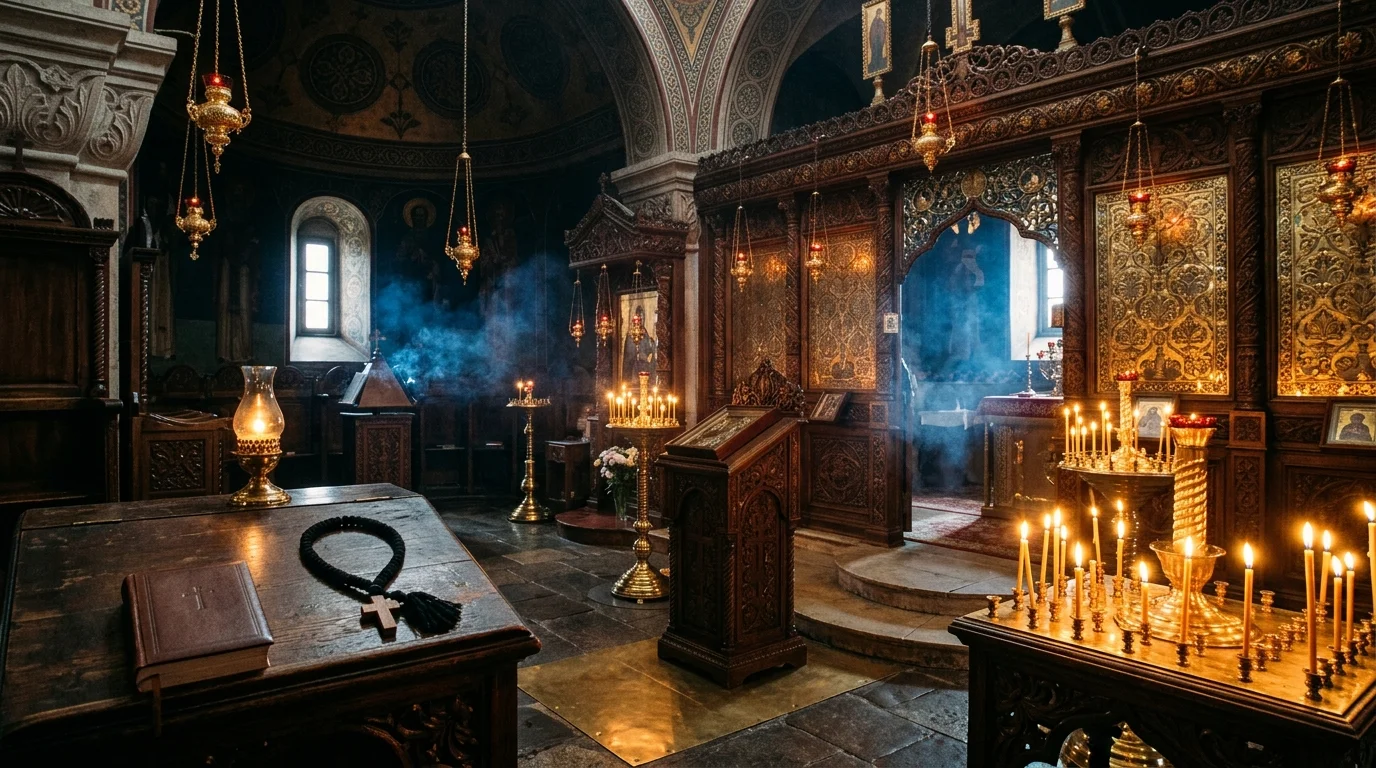
What strikes me about this topic is how often people treat it as a mechanical puzzle: which bead comes first, how many times do I repeat this line, am I doing it wrong. I understand the impulse. But when I speak with catechumens and inquirers who come from a Catholic background, I find that most of them are not asking out of curiosity about liturgical correctness. They are asking because they are sincerely looking for a way to cry out to Christ for mercy, often at three in the afternoon with a dying parent in the next room, or at midnight when their own conscience will not let them sleep. That is the real entry point into this topic, and almost nobody writing about how to pray the Chaplet of Divine mercy online seems to address it directly.
What most articles about how to pray the Chaplet of Divine Mercy miss is that, in real pastoral life, the beads and the sequence are usually not the deepest issue. The deeper issue is whether a prayer trains the heart into humble repentance and life within the Church, or whether it becomes a private spiritual technique, detached from confession, Liturgy, and the guidance of a priest. I want to walk you through both: the practical sequence as Catholics pray it, and the Orthodox perspective on mercy-centered prayer that I live and teach every day in my parish in Munich.
✏️ By Father Victor Meshko | 📅 Updated: October 2026 | ⏱️ 21 min read
Quick Answer: The Chaplet of Divine Mercy is prayed on ordinary five-decade rosary beads, beginning with the Sign of the Cross and opening prayers, continuing through five decades of the "Eternal Father" offering and the "For the sake of His sorrowful Passion" petition repeated fifty times in total, and closing with the Trisagion-style prayer repeated three times; it is a Roman Catholic devotion, not an Orthodox liturgical prayer.
In This Article:
- When You're Falling Apart and Asking How to Pray the Chaplet of Divine Mercy
- What the Divine Mercy Chaplet Is and What It Is Not
- How to Pray the Chaplet of Divine Mercy Step by Step
- What Does Scripture Say About Praying for Mercy?
- An Orthodox Perspective on Prayer for Mercy
- Father Victor's Perspective: The Real Spiritual Question Behind the Chaplet
- What Orthodoxy Recommends Instead
- Common Misconceptions About the Chaplet of Divine Mercy
- Practical Guidance for Seekers, Catechumens, and the Curious
- About Father Victor Meshko
TL;DR: Key Takeaways
- The Chaplet of Divine Mercy uses standard rosary beads through five decades, with fifty repetitions of the short mercy petition and a closing Trisagion-style prayer said three times.
- It is a Catholic devotion tied to St. Faustina Kowalska, not an Orthodox service, though its themes of mercy and intercession are deeply familiar to Orthodox ears.
- Orthodoxy already prays for mercy constantly through "Lord, have mercy," the Jesus Prayer, Psalm 50, and the Trisagion, so the real question is not whether to pray for mercy but where that prayer is rooted.
- Repetition itself is not the problem; the question is whether it deepens repentance or becomes an anxious attempt to negotiate with God.
What the Divine Mercy Chaplet Is and What It Is Not
Let me say plainly what I tell inquirers at the cathedral: the Divine Mercy Chaplet is a Roman Catholic devotion associated with St. Faustina Kowalska, a twentieth-century Polish religious sister, according to FaithCommon's guide to the Divine Mercy Chaplet and Catholic Repository. It is not an ancient prayer of the undivided Church, and it is not an Orthodox liturgical service. That does not make it less sincere or less Christian in its themes. It simply means we should call it what it is before we talk about how to pray it.

A Roman Catholic devotion, not an Orthodox liturgical service
The Chaplet developed within a specific twentieth-century Catholic framework connected to private revelations given to St. Faustina and later approved within Catholic devotional life. Orthodoxy has never incorporated it into the Divine Liturgy, the Horologion, or any official prayer book that I am aware of. This matters less for the sake of drawing a boundary and more for honesty. When a prayer's origin is clear, a person can approach it with open eyes rather than confusion about what tradition they are standing in.
How the Chaplet differs from the Rosary
The Chaplet is prayed on ordinary five-decade rosary beads, the same beads used for the Rosary, but it is not the Rosary itself. It has its own sequence of prayers centered on Christ's Passion and mercy rather than on the mysteries traditionally meditated upon in the Rosary. Beads, in this sense, are simply a counting tool. They do not define the theological content of what is being prayed on them.
How to Pray the Chaplet of Divine Mercy Step by Step
Since many readers come here precisely because they want the sequence, let me lay it out clearly, the way Catholic devotional sources present it.
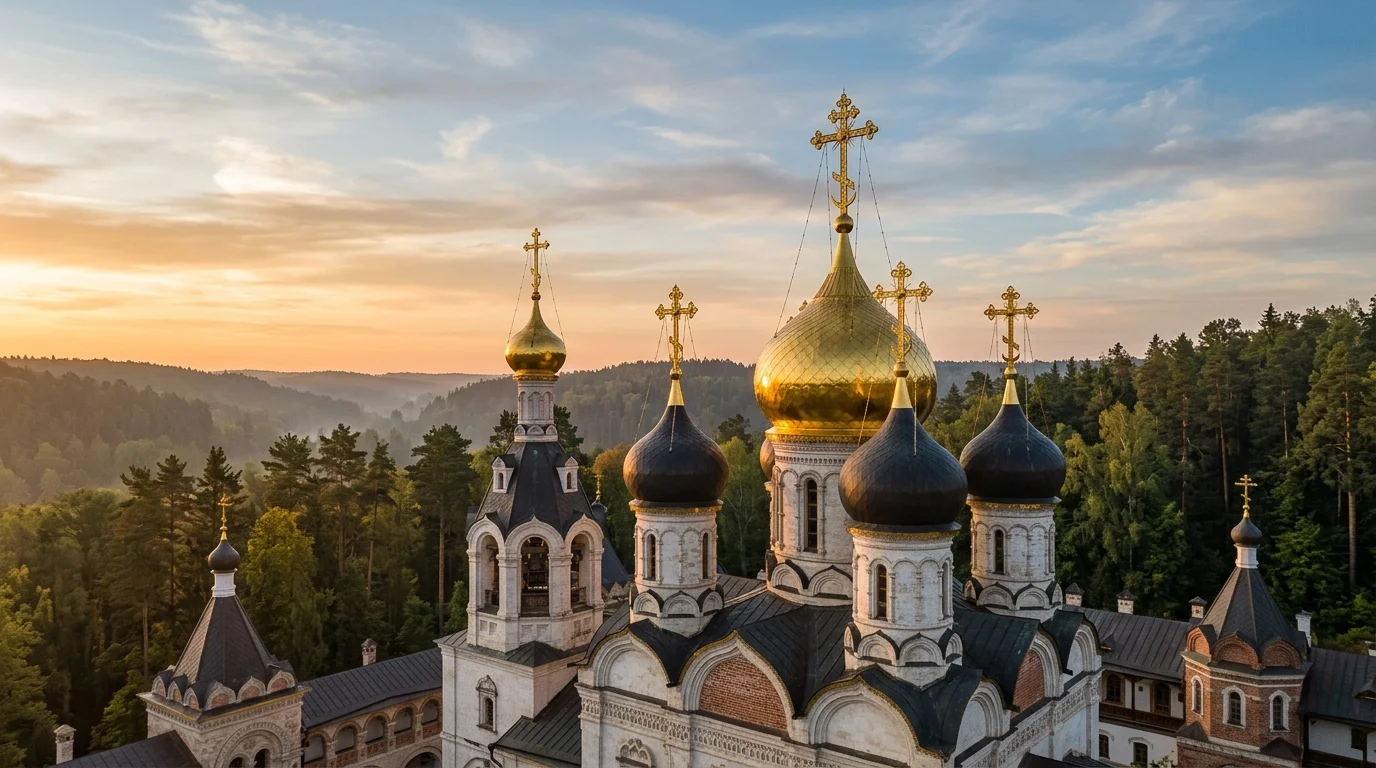
What beads are used
Standard five-decade rosary beads are used, the same beads familiar from the Rosary, according to FaithCommon.
The opening prayers
The Chaplet begins with the Sign of the Cross. An optional opening prayer beginning "You expired, Jesus" is sometimes recited three times, followed by the short invocation "O Blood and Water." Then come one Our Father, one Hail Mary, and the Apostles' Creed.
Before continuing, let me note something here that touches Orthodox spirituality directly. The Our Father is not a Catholic invention; it is the prayer Christ himself taught his disciples when they asked him how to pray (Matthew 6:9-13). Every Christian tradition that prays it is drawing from the same well. This is worth remembering whenever we compare traditions: Christian prayer begins with Christ's own words, not with any later technique.
The five decades
On each large "Our Father" bead, the person praying offers the longer petition beginning "Eternal Father, I offer you." On each of the ten small beads following it, the shorter petition "For the sake of His sorrowful Passion, have mercy on us and on the whole world" is repeated. Across five decades, this short petition is prayed fifty times in total, according to FaithCommon. Read more: How to Pray the Divine Mercy Chaplet: A Guide.
If you want to see the physical motion of this prayer on the beads, there is a short video that demonstrates the Catholic sequence clearly. I want to be clear that this video shows Catholic devotional practice, not an Orthodox service, but it may help you visualize what the written instructions describe if you are learning how to pray the Chaplet of Divine mercy for the first time.
[YOUTUBE_VIDEO]
The closing prayer
The Chaplet concludes with a Trisagion-style prayer, "Holy God, Holy Mighty One, Holy Immortal One, have mercy on us and on the whole world," traditionally repeated three times, according to FaithCommon and Catholic Repository. Orthodox readers will recognize this language immediately. The Trisagion, "Holy God, Holy Mighty, Holy Immortal," is one of the oldest and most frequently used prayers in Orthodox worship, appearing in nearly every service from Matins to funerals. The Chaplet borrows this ancient Christian form and places it within its own devotional framework.
What Does Scripture Say About Praying for Mercy?
I think it helps to step back from mechanics for a moment and ask what Scripture itself says about repeated, mercy-seeking prayer, because this is where both traditions actually meet.
Consider the parable Christ tells of the Publican, who stood at a distance and would not even lift his eyes to heaven, but struck his breast and said only, "God, be merciful to me, a sinner" (Luke 18:9-14). Christ says this man, not the self-assured Pharisee beside him, went home justified. There is nothing wrong with a short, repeated cry for mercy. The question Christ raises is about the posture of the heart, not the length or originality of the words.
Or consider the blind man near Jericho, who kept crying out, "Jesus, Son of David, have mercy on me," even as the crowd told him to be quiet (Luke 18:35-43). He did not stop. He repeated the same plea until Christ called him over. This passage is one reason the Jesus Prayer and the Orthodox habit of saying "Lord, have mercy" again and again are not considered mechanical repetition in our tradition. They follow the pattern of a man who refused to let go of Christ's attention.
Saint Paul urges "that supplications, prayers, intercessions, and thanksgivings be made for all people" (1 Timothy 2:1-6), which is exactly the spirit behind praying "for us and for the whole world," whether in the Chaplet's language or in an Orthodox litany. And the Letter to the Hebrews reminds us that we "have a great high priest who has passed through the heavens, Jesus, the Son of God," and so we may “Seeing then that we have a great high priest, that is passed into the heavens, Jesus the Son of God, let us hold fast our profession. For we have not an high priest which cannot be touched with the feeling of our infirmities; but was in all points tempted like as we are, yet without sin. Let us therefore come boldly unto the throne of grace, that we may obtain mercy, and find grace to help in time of need. ” (Hebrews 4:14-16, KJV). Both Catholic and Orthodox prayer for mercy rest on this same confidence: we come to God through Christ, not through our own worthiness.
An Orthodox Perspective on Prayer for Mercy
Kyrie eleison in Orthodox worship
If you walk into any Orthodox Divine Liturgy, you will hear the phrase "Lord, have mercy," in Greek Kyrie eleison, more times than you can easily count. It is not a marginal phrase tucked into a corner of the service. It is one of the Church's most frequent prayers, repeated in litanies, in Vespers, in the Panikhida for the departed, as seen in Orthodox service texts and prayer resources from Saints Peter & Paul Orthodox Cathedral's Vespers texts. Mercy-language is not something Orthodoxy needs to borrow. It breathes through our worship from beginning to end.
The Jesus Prayer, Psalm 50, and the Trisagion
In a study I wrote on St. Gregory of Sinai, the fourteenth-century hesychast monk who helped revive the practice of unceasing prayer on Mount Athos, I spent considerable time on his teaching about the Jesus Prayer: "Lord Jesus Christ, Son of God, have mercy on me, a sinner." Gregory did not treat this prayer as a formula or a meditation technique detached from repentance. He described it as a way of gathering a scattered mind back into the heart, drawing the whole person, thought by thought, toward stillness before God. He wrote that prayer, in its deepest sense, is not something we produce by our own effort but something God works within us, since "the Spirit Himself intercedes for us" even when our own words fail.
This is, I think, the closest Orthodox analogue to what a seeker is reaching for in the Chaplet's repeated decades. The words differ, but the instinct, a short phrase repeated with attention until it settles into the heart, is the same instinct that shaped centuries of Orthodox ascetical practice. Alongside the Jesus Prayer, Orthodox Christians turn to Psalm 50, the great penitential psalm, a prayer of confession, cleansing, and restoration that has formed the backbone of Orthodox morning prayers and preparation for confession for as long as the Church has prayed in Greek and Slavonic. And we return constantly to the Trisagion, "Holy God, Holy Mighty, Holy Immortal, have mercy on us," which appears in nearly every Orthodox service, including the memorial prayers for the departed, according to Orthodox memorial service resources for the Panikhida.
Why Orthodoxy distinguishes private devotion from liturgical prayer
Here is a distinction I try to explain carefully to catechumens: a private devotion is a prayer practice used personally, outside the Church's official services, while liturgical prayer belongs to the gathered worship of the Body of Christ. The Chaplet, in Catholic practice, belongs to the first category. This is not a criticism. Catholicism has its own developed theology of approved private devotions existing alongside the Mass. Orthodoxy simply organizes personal prayer differently, usually through what we call a prayer rule, a stable pattern of daily prayer given or approved with pastoral guidance rather than assembled as a self-designed spiritual project. Readers asking how to pray the Chaplet of Divine mercy from an Orthodox point of view usually discover that this distinction is more important than the counting pattern itself.
How the Divine Mercy Chaplet Relates to Orthodox, Catholic, and Protestant Prayer
[COMPARISON_TABLE]
Father Victor's Perspective: The Real Spiritual Question Behind the Chaplet
Here is what I have come to believe after years of hearing confessions and sitting with people in crisis: the real Orthodox concern about the Divine Mercy Chaplet is not the vocabulary of mercy. It is the risk that a portable, emotionally powerful private devotion quietly displaces ecclesial prayer, the prayer of the gathered Church, confession, and Communion, as the actual center of a person's spiritual life. A devotion can be sincere and still be the wrong center of gravity for a Christian's life of prayer. This is a different question from asking whether the words themselves are good or bad. See also: How to Pray the Divine Mercy Chaplet Prayer & More.

My training in psychology alongside theology has given me a second observation, one I rarely see addressed anywhere. Repeated prayer is healthy when it gathers the mind into repentance and stillness. It becomes unhealthy when it is used, often unconsciously, to negotiate with God, as if enough repetitions might guarantee an outcome we are desperate for. The same external motion, fifty repetitions on a string of beads, can either heal a scattered and anxious mind or feed that very anxiety, depending entirely on the posture of the heart offering it. I have sat with people who prayed beautifully formed words while quietly trying to bargain with God for a diagnosis to change, and I have sat with people who stumbled through half-remembered phrases while their hearts were genuinely surrendered. The second kind of prayer, however clumsy, is closer to what Christ commends in the Publican.
There is a third thing I want to name, because I think it is the most useful bridge for seekers moving between traditions. The Chaplet reveals that Orthodoxy is not suspicious of mercy-language or of repetition. We say "Lord, have mercy" more times in a single Divine Liturgy than most Catholics say the Chaplet's petitions in a week. What Orthodoxy asks is a different question entirely: not "are these words true," but "where is this prayer situated?" Is it rooted in the individual religious self, assembled privately and practiced alone, or is it rooted in the worshipping Body of Christ, received through the Church's tradition and a spiritual father's guidance? That question, more than any line-by-line comparison of prayers, is where the traditions actually differ.
What Orthodoxy Recommends Instead
If you are Orthodox, a catechumen, or someone exploring Orthodoxy who brought the Chaplet with you from an earlier chapter of faith, I would not tell you to feel ashamed of it. I would tell you what I tell parishioners in Munich: speak with your priest, and in the meantime, consider these as living Orthodox alternatives that carry the same cry for mercy within our own tradition.
- The Jesus Prayer: "Lord Jesus Christ, Son of God, have mercy on me, a sinner," prayed slowly, attentively, as often as you are able.
- Psalm 50, the great penitential psalm of confession and restoration, read daily or before confession.
- The Trisagion prayers, "Holy God, Holy Mighty, Holy Immortal, have mercy on us," familiar from nearly every Orthodox service.
- A standard morning and evening prayer rule from an approved Orthodox prayer book, received with your priest's guidance rather than assembled on your own.
- Intercession for the living and the departed through the Church's own memorial prayers, including the Panikhida.
Common Misconceptions About the Chaplet of Divine Mercy
"The Chaplet is Orthodox because Orthodox Christians also say 'Lord, have mercy' and use the Trisagion." Orthodoxy affirms God's mercy constantly and uses repeated mercy petitions throughout its worship, but the Chaplet itself is a Catholic devotion associated with St. Faustina, not an Orthodox liturgical prayer. The themes are deeply Christian and familiar to Orthodox ears, but the Chaplet as a structured devotion belongs to Catholic practice.
"If a prayer uses rosary beads, it is essentially the Rosary." The Chaplet is prayed on ordinary five-decade rosary beads, but it is not the Rosary and not an Orthodox service. The beads are a tool for counting and attention; they do not define the theological content of what is prayed.
"Praying the Chaplet at exactly 3:00 p.m. is spiritually mandatory." The 3:00 p.m. association comes from Catholic Divine Mercy devotion and recalls the hour of Christ's death, according to Catholic Repository's overview of Divine Mercy devotion. If 3:00 p.m. helps you remember Christ's Passion with reverence, that can be spiritually useful, but it is not an Orthodox commandment, and Orthodox Christians are not failing spiritually by missing it.
"Repeating a prayer a fixed number of times guarantees a result or compels God to act." Orthodox spirituality treats repetition as a means of repentance, attention, and perseverance, not as a mechanism of control. The Church blesses repeated prayer, but only when it remains humble and relational rather than a kind of sacred mathematics.
"Because the Chaplet is mercy-centered, it can replace confession, Liturgy, or Communion." No private devotion replaces the sacramental and ecclesial life of the Church. Personal prayer is valuable, but Christianity, in the Orthodox understanding, is never lived as a solo devotional project.
"Orthodox Christians reject the Chaplet because they reject mercy language." Orthodoxy is saturated with prayers for mercy, for all people, and for the departed. Orthodoxy does not reject mercy; it asks how mercy is prayed, and within which tradition of worship and doctrine. See also: A Prayer for Friend: Simple Words That Connect.
Practical Guidance for Seekers, Catechumens, and the Curious
If you came to this article at three in the afternoon because someone you love is dying, or because guilt will not let you breathe, please hear this first: pray. Pray badly if that is all you have. Pray distracted, pray through tears, pray the Chaplet if that is the only form your hands remember, while you also begin asking where this fits in a fuller life of faith. I will not pretend this is a simple matter to sort out alone. Many of us wrestle with exactly this question, how to honor the prayers that first opened our hearts to God while also growing into the fuller inheritance the Church offers.
My honest pastoral advice, especially for Orthodox Christians, catechumens, or anyone transitioning from another tradition, is to bring this question directly to a priest rather than deciding it alone online. Some priests will encourage a gradual transition toward Orthodox prayers; others may advise stopping a non-Orthodox devotion right away in favor of the Jesus Prayer, Psalm 50, or a standard prayer rule. This is a matter of pastoral application and local guidance, not a doctrinal disagreement within Orthodoxy itself. What remains constant across every jurisdiction I know is the conviction that prayer is meant to be received within the life of the Church, under guidance, rather than assembled entirely alone. And if you came here wondering how to pray the Chaplet of Divine mercy, I hope you leave with something more important than a sequence: a clearer sense of how mercy, repentance, and prayer belong within the living worship of Christ's Church.
About Father Victor Meshko
I was raised Catholic and knew that tradition well before encountering Orthodoxy and, eventually, being received into the Church. I was ordained a priest in 2013 by Metropolitan Mark (Arndt) and now serve at the Cathedral of the Holy New Martyrs and Confessors of Russia in Munich. I hold a Doctorate in Theology from the Institute for Orthodox Theology at LMU Munich, where my dissertation examined the life and work of Archbishop Filaret (Gumilevskij) of Chernigov, and a diploma thesis on the prophetic-eschatological character of the Book of Revelation. I also hold a Master's degree in Psychology, which shapes how I think about prayer, repetition, and the human heart in moments of crisis.
Frequently Asked Questions
What is the opening prayer for the Divine Mercy Chaplet?
The Chaplet typically opens with the Sign of the Cross, an optional prayer beginning "You expired, Jesus," the short invocation "O Blood and Water," and then one Our Father, one Hail Mary, and the Apostles' Creed, according to FaithCommon. These opening prayers set the Chaplet within the broader Catholic framework of the Passion and divine mercy before the five decades begin. Orthodox readers will recognize the Our Father immediately, since it is the same prayer Christ himself taught his disciples (Matthew 6:9-13) and which Orthodox Christians pray in every Divine Liturgy.
Can I pray the Divine Mercy Chaplet for myself?
Yes, the Chaplet's central petition explicitly asks mercy "for us and for the whole world," which includes the person praying it. From an Orthodox perspective, praying for yourself is entirely consistent with Christian prayer, as long as it flows from humble dependence on God rather than an attempt to control or bargain with divine grace. The Publican's simple cry, "God, be merciful to me, a sinner" (Luke 18:9-14), is the biblical model for exactly this kind of personal plea.
How do you pray Divine Mercy at 3 o'clock?
In Catholic practice, 3:00 p.m. is associated with the Hour of Great Mercy, recalling the hour of Christ's death, and the Chaplet may be prayed at that time as a daily devotion. Orthodox Christians deeply honor Christ's Passion as well, but there is no Orthodox obligation tied to a 3:00 p.m. Chaplet; if the hour helps you remember Christ's death with reverence, you might instead use it for the Jesus Prayer, Psalm 50, or a brief "Lord, have mercy," offered quietly wherever you are.
How many times should I pray the Chaplet of Divine Mercy?
The standard Chaplet is prayed once per recitation, consisting of five decades and fifty repetitions of the short mercy petition, though Catholic devotional practice sometimes encourages praying it daily. There is no fixed Orthodox number for anything like this, and repetition should never be treated as a formula that forces an outcome from God; a short prayer offered attentively is spiritually worth more than a long one recited mechanically.
About the Author
Father Victor Meshko is an Orthodox priest of the Russian Orthodox Church Abroad (Diocese of Berlin and Germany), serving at the Cathedral of the Holy New Martyrs and Confessors of Russia in Munich since 2013. He holds multiple degrees in philosophy, theology, and psychology, including a Diplom in Theology and a Doctorate in Theology (Dr. theol.) from LMU Munich's Institute for Orthodox Theology, and he is the published author of a book on Archbishop Filaret of Chernigov. For Find to God, he writes from both scholarly formation and daily pastoral experience.
Researched and written by Father Victor Meshko. AI tools were used during the research process.
Lorem ipsum dolor sit amet, consectetur adipiscing elit. Suspendisse varius enim in eros elementum tristique. Duis cursus, mi quis viverra ornare, eros dolor interdum nulla, ut commodo diam libero vitae erat. Aenean faucibus nibh et justo cursus id rutrum lorem imperdiet. Nunc ut sem vitae risus tristique posuere.
Lorem ipsum dolor sit amet, consectetur adipiscing elit. Suspendisse varius enim in eros elementum tristique. Duis cursus, mi quis viverra ornare, eros dolor interdum nulla, ut commodo diam libero vitae erat. Aenean faucibus nibh et justo cursus id rutrum lorem imperdiet. Nunc ut sem vitae risus tristique posuere.
Lorem ipsum dolor sit amet, consectetur adipiscing elit. Suspendisse varius enim in eros elementum tristique. Duis cursus, mi quis viverra ornare, eros dolor interdum nulla, ut commodo diam libero vitae erat. Aenean faucibus nibh et justo cursus id rutrum lorem imperdiet. Nunc ut sem vitae risus tristique posuere.


Help us bring the christian faith to modern seekers worldwide.
Godfinder relies on generous souls to sustain our multilingual platform, develop new tools like the Magic Cube, and support struggling believers. If our work has touched your heart, consider contributing to our nonprofit partner

Do you want to know More? Ask God’s Word!
Do you have questions, worries, or hopes? Feeling lost, burdened, or alone? “Ask God’s Word” brings you gentle guidance rooted in Scripture and the wisdom of the Church. Find hope and strength today!
