.avif)
Orthodox Religion Beliefs: Beyond Debates and Definitions
Every seeker who walks up to the doors of an Orthodox church eventually asks some version of the same question: is this the right one? When people begin comparing Orthodox religion beliefs with the claims of other churches, they often arrive expecting Orthodoxy to make its case the way everything...

The Question of Orthodox Religion Beliefs Orthodoxy Was Never Built to Answer
Every seeker who walks up to the doors of an Orthodox church eventually asks some version of the same question: is this the right one? When people begin comparing Orthodox religion beliefs with the claims of other churches, they often arrive expecting Orthodoxy to make its case the way everything else has. After the evangelical megachurch, after the Catholic parish down the street, after a few podcasts and a stack of comparison articles, people arrive expecting Orthodoxy to make its case the way everything else has. I have sat across the table from these seekers more times than I can count, and I have come to believe something that surprises people: Orthodoxy was never designed to win a debate about which church is correct. It was built to be prayed, sung, fasted, and lived. The comparison-shopping mindset so many of us bring from a consumer culture simply does not fit the shape of what we are looking at.

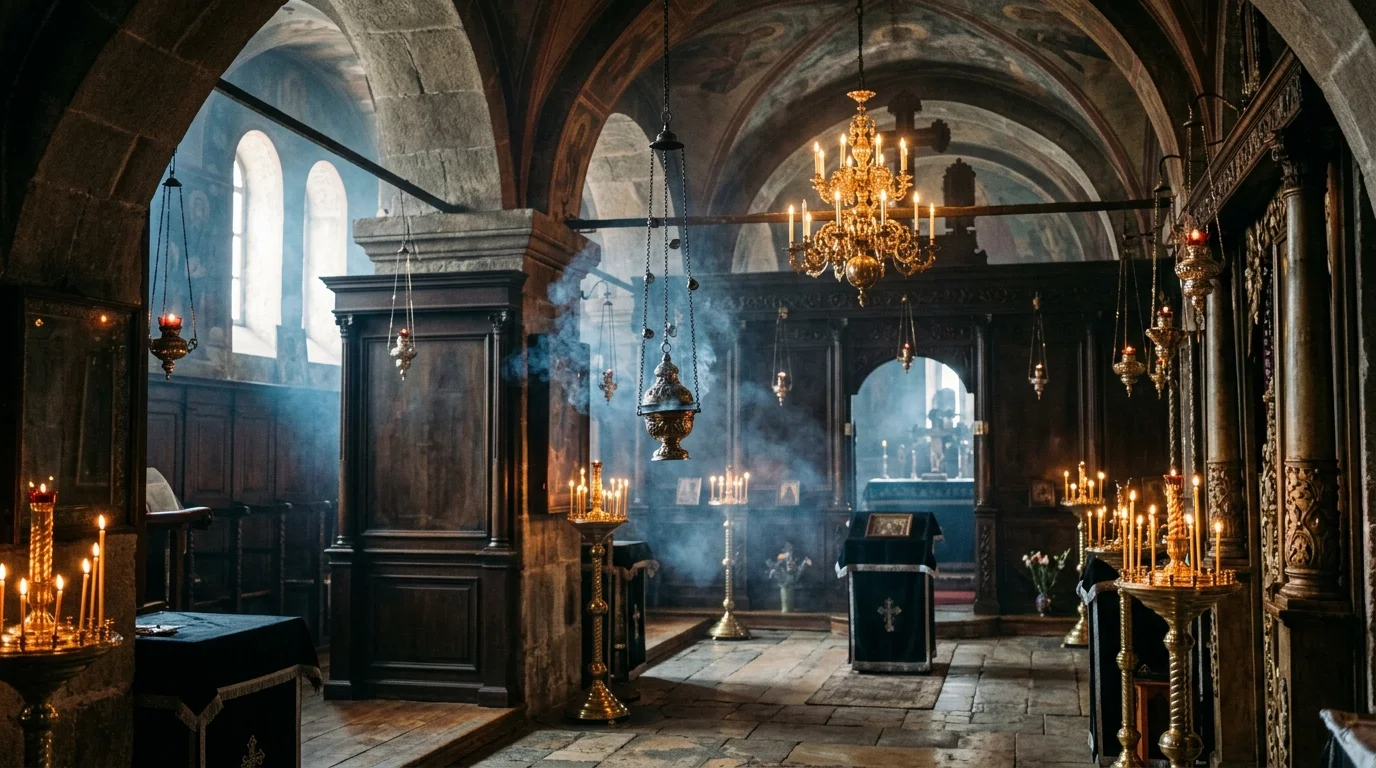
In my years of serving as an Orthodox priest since 2013, I have found that many seekers are not first asking about ancient history, but something much simpler: what do Orthodox Christians actually believe about God, Jesus, salvation, and daily life? When I studied theology at LMU Munich and later returned to these questions in parish conversations, I saw that Orthodoxy is often misunderstood when people encounter it only through arguments online instead of through worship and pastoral life. What most online articles about Orthodox religion beliefs miss is that in actual parish life, people usually do not learn the faith first through abstract definitions. They learn it by standing in worship, hearing the Creed sung rather than recited, watching a baptism, and sensing that doctrine here is something embodied before it is ever argued.
✏️ By Father Victor Meshko | 📅 Updated: October 2026 | ⏱️ 27 min read
Quick Answer: Orthodox Christians believe in one God in three Persons (Father, Son, and Holy Spirit), confess Jesus Christ as fully God and fully man, and understand salvation as healing and union with God through grace, all received within the Church's Holy Tradition and lived out through the Holy Mysteries, prayer, and worship.
In This Article:
- The Question of Orthodox Religion Beliefs Orthodoxy Was Never Built to Answer
- What Are Orthodox Religion Beliefs?
- Do Orthodox Christians Believe Jesus Is God?
- The Holy Trinity at the Center of Orthodox Belief
- The Bible and Holy Tradition in Orthodoxy
- What Orthodox Christians Believe About Salvation and Theosis
- The Church, the Holy Mysteries, and the Eucharist
- Mary, the Saints, and Icons
- How Is Orthodox Belief Actually Lived Day to Day?
- How Does Orthodoxy Differ from Catholic and Protestant Christianity?
- Father Victor's Perspective: Why Orthodoxy Is More Than a List of Doctrines
- How to Explore Orthodoxy for Yourself
- Common Misconceptions About Orthodox Beliefs
TL;DR: Key Takeaways
- Orthodox Christians absolutely believe Jesus Christ is fully God and fully man, the eternal Son and Word of the Father.
- Salvation in Orthodoxy means forgiveness, healing, and theosis, participation in God's life by grace, not becoming God by nature.
- Holy Tradition does not compete with Scripture; it is the apostolic life within which Scripture is received and understood.
- Many objections to Orthodoxy turn out to be objections to local customs or internet rhetoric, not to the Church's actual teaching.
What Are Orthodox Religion Beliefs?
The word "orthodox" comes from Greek roots meaning right belief and right worship, and in our tradition the two are never separated. We confess the faith in the Creed and we live it in the Divine Liturgy; one without the other would be incomplete. The Orthodox Church understands itself not as a new denomination founded at some point in history, but as the continuation of the community that gathered at Pentecost, received the Holy Spirit, and was taught by the apostles. In that sense, Orthodox religion beliefs are not a modern system assembled from preferences, but the living faith of the Church handed down and embodied in worship.
The Short Answer
Orthodox Christians believe in one God who is Father, Son, and Holy Spirit, confess Jesus Christ as fully divine and fully human, hold Scripture as received within Holy Tradition, and see salvation as a lifelong healing and union with God called theosis. The Church expresses this faith through the Divine Liturgy, the Holy Mysteries, veneration of the Theotokos and the saints, and the use of icons. For people trying to understand Orthodox religion beliefs in simple terms, that is the heart of it.
Do Orthodox Christians Believe Jesus Is God?
Yes, without qualification. This is probably the question I hear most often from visitors, and I always answer it directly before anything else, because it is the foundation everything else rests on. As Scripture tells us, "In the beginning was the Word, and the Word was with God, and the Word was God... And the Word became flesh and dwelt among us" (John 1:1, 14). Orthodox Christology confesses that the eternal Son of God took on real human nature without ceasing to be fully divine. So when people ask, Do Orthodox believe in Jesus or God, the answer is not either-or: Orthodox religion beliefs confess Jesus Christ as true God and true man.
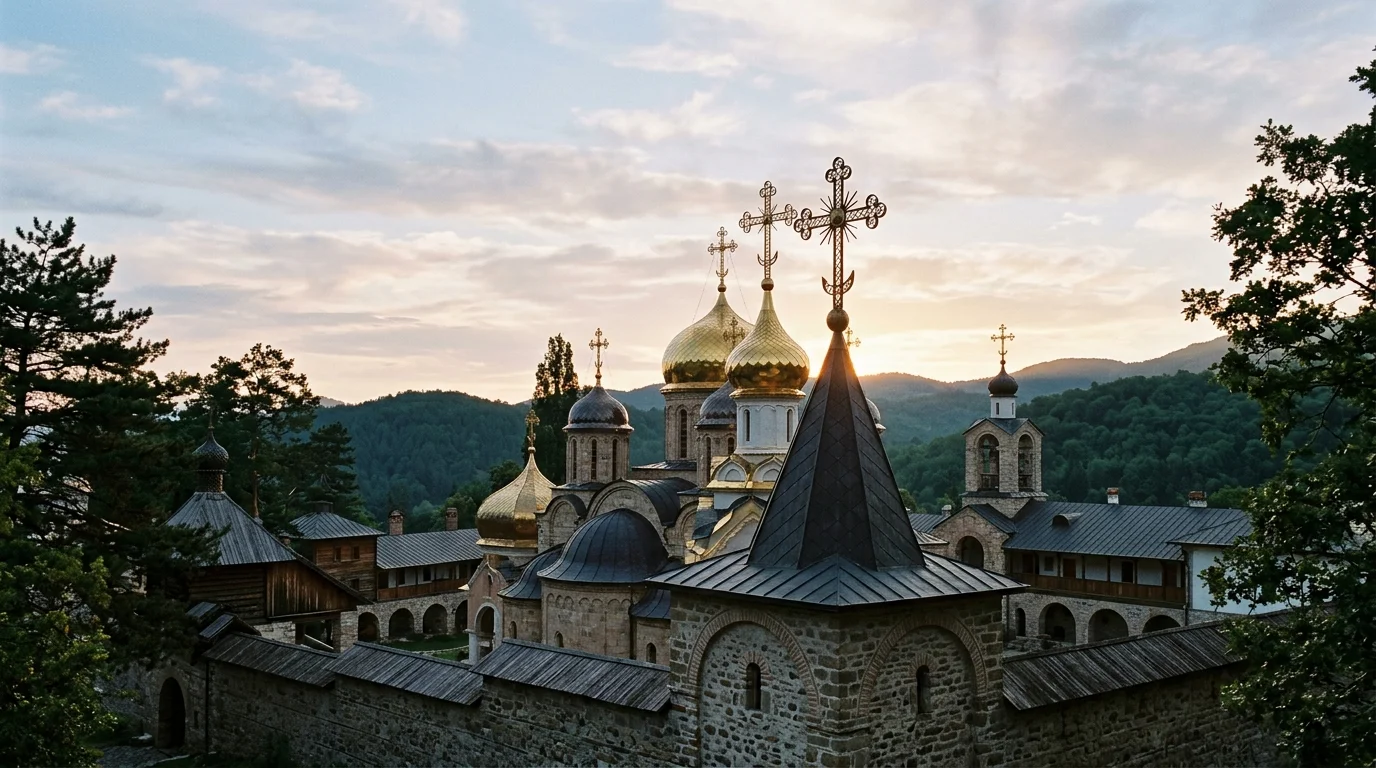
As St. Cyril of Alexandria states in his Third Letter to Nestorius, "We do not divide the one Lord Jesus Christ into two sons." This was not a minor theological point haggled over by distant councils; it protected the entire logic of our salvation. If Christ were not truly God, His death and resurrection could not heal humanity from within. If He were not truly man, our human nature would not actually be touched by what He accomplished. This is why Orthodox religion beliefs hold Christology so carefully and so reverently.
Christ in Orthodox Faith and Worship
I recall with gratitude how often I have watched a visitor from an evangelical background attend the Divine Liturgy for the first time and ask, almost startled, "Do you all really believe Jesus is God, and why do you also speak so much about Mary and the saints?" I explain first that the entire Liturgy centers on Christ as fully God and fully man, from the opening blessing to the final dismissal. Honoring Mary as Theotokos protects the truth that the One born of her is God incarnate; it does not compete with that truth. The saints are asked to pray for us, but worship belongs to God alone. Once a person sees that connection, the pieces usually fall into place together: Christology explains Mary's place, and devotion to the saints flows directly from belief in Christ's victory over death. For many seekers, this is the first time Orthodox religion beliefs begin to look internally coherent rather than unfamiliar.
The Holy Trinity at the Center of Orthodox Belief
Orthodoxy confesses one God in three Persons, Father, Son, and Holy Spirit, not three gods and not one Person wearing three masks. The Father is the eternal source within the Trinity, the Son is eternally begotten of the Father, and the Spirit eternally proceeds from the Father. Christ's own words ground our baptismal faith: “Go ye therefore, and teach all nations, baptizing them in the name of the Father, and of the Son, and of the Holy Ghost:” (Matthew 28:19, KJV). Every Orthodox baptism, to this day, is performed in these exact words, in the same Trinitarian form the Church has always used. At the very center of Orthodox religion beliefs is this confession of the Holy Trinity.

We confess this Trinity each Sunday in the Nicene-Constantinopolitan Creed, formed at the first two Ecumenical Councils. This is not an arbitrary formula; it is the Church's careful, hard-won answer to real questions that threatened to distort who God actually is. Anyone studying Orthodox religion beliefs soon discovers that theology here is inseparable from worship.
The Bible and Holy Tradition in Orthodoxy
This is where I think the most damage gets done by casual online summaries. People are often taught to picture "the Bible" on one side and "tradition" on the other, as competitors. Orthodoxy does not see it that way. Holy Tradition includes Scripture itself as received, read, and proclaimed within the worshiping Church, along with the Creed, the Ecumenical Councils, the liturgy, and the writings of the Fathers. Scripture is the heart of that Tradition, not an outside authority sitting in judgment over it. In explaining Orthodox religion beliefs, this point matters enormously, and readers looking for a concise overview from the Orthodox Church in America can find a helpful starting place there.
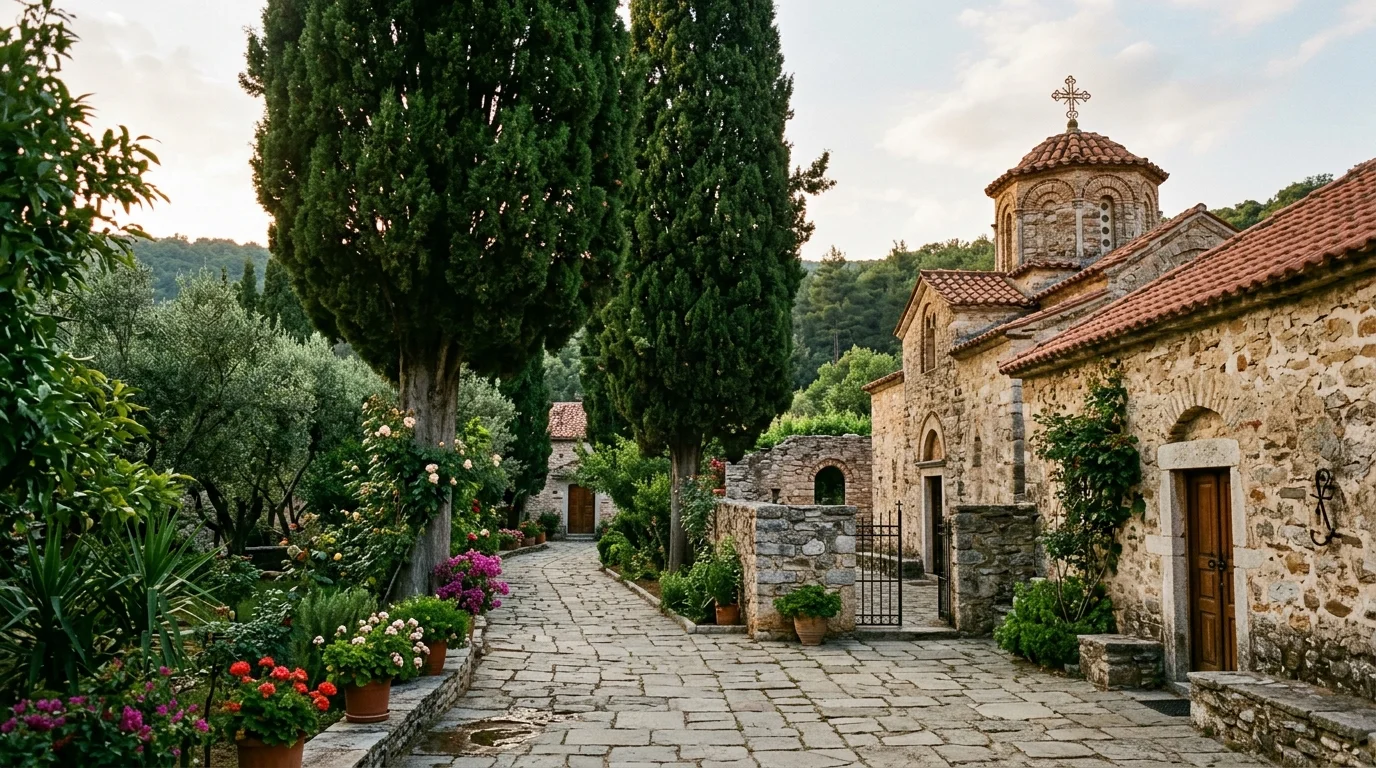
The book of Acts shows us the earliest Christian community doing exactly this: devoting themselves “And they continued stedfastly in the apostles’ doctrine and fellowship, and in breaking of bread, and in prayers.” (Acts 2:42, KJV). Doctrine, worship, and communal life were never separate activities for them, and they are not separate for us. This is one reason Orthodox religion beliefs cannot be reduced to isolated proof-texts.
Dogma, Doctrine, Discipline, and Custom
One of the clearest ways I have found to explain Orthodox beliefs to someone coming from a Protestant, Catholic, or secular background is to distinguish four layers that often get collapsed into one: dogma, doctrine, discipline, and custom. Dogma is the Church's binding confession, the Trinity, the Incarnation, the resurrection. Doctrine is the Church's authoritative theological teaching that explains and defends dogma. Discipline covers ecclesial regulation, like fasting rules or how often one goes to confession, which can be adapted pastorally by a priest. Custom is local or cultural practice, the language of the service, the particular way icons are arranged, which can vary widely between a Greek parish, a Russian parish, and an Antiochian parish without touching the faith itself. Many objections I hear from seekers are actually objections to custom or discipline, mistaken for objections to the faith itself. That distinction is especially important when people compare Russian orthodox beliefs and practices with the broader pattern of Orthodox religion beliefs across jurisdictions.
What Orthodox Christians Believe About Salvation and Theosis
Theosis in Orthodox teaching does not mean becoming God by nature; it means participating in God's life by grace through Christ in the Holy Spirit. St. Peter writes that through Christ “Whereby are given unto us exceeding great and precious promises: that by these ye might be partakers of the divine nature, having escaped the corruption that is in the world through lust.” (2 Peter 1:4, KJV), having escaped the corruption that is in the world. This is a striking claim, and it deserves to be explained carefully rather than left as a mystical slogan. Among Orthodox religion beliefs, theosis is one of the most beautiful and most often misunderstood teachings.

As St. Athanasius the Great writes in On the Incarnation, "God became man so that we might become god." Read without context, that sentence can sound shocking or even heretical to someone trained in a different theological vocabulary. Read within the Church's actual teaching, it means that the Incarnation opens a real, grace-filled participation in God's own life, not an identity swap between Creator and creature. As St. Irenaeus of Lyons teaches in Against Heresies, "The glory of God is a living man; and the life of man consists in beholding God." Salvation, for Irenaeus and for us, is relational and alive, not a legal transaction that happens once and ends. This is one of the places where Orthodox Christian beliefs vs Catholic and Protestant explanations of salvation can sound different in emphasis, even where there is meaningful overlap.
Salvation as Forgiveness, Healing, and Communion
My background in psychology has shaped how I present this pastorally. For a modern seeker, the question is rarely just "how am I forgiven?" It is also "how can my scattered desires, my restless mind, my wounded relationships actually be made whole?" Orthodoxy answers both at once. Genesis tells us we are made "in the image of God," male and female (Genesis 1:27), and that image is never erased by sin, only obscured. Theosis is the healing of that fragmentation, not an abstract theological achievement but the slow mending of a person through prayer, repentance, the Eucharist, and love of neighbor. In a paper I wrote on St. Gregory of Sinai and the hesychastic tradition, I found this same insight stated with remarkable psychological precision centuries before modern psychology existed: Gregory taught that after the fall, human attention and memory became scattered, broken into fragments, and that prayer, especially the continual Jesus Prayer, gathers the scattered mind back into unity and leads it to dwell in the heart. That is theosis in miniature, the healing of a fractured inner life through grounded, repeated communion with God. When Orthodox religion beliefs are seen this way, they become less abstract and more recognizably human.
The Church, the Holy Mysteries, and the Eucharist
Orthodox Christians usually speak of the "Holy Mysteries" rather than sacraments, a term that emphasizes God communicating divine life through visible, material, communal means. Baptism, chrismation, the Eucharist, confession, holy unction, marriage, and ordination are commonly named, though Orthodox theology has never treated sacramental life as a closed, numbered system. Anyone trying to understand orthodox beliefs and practices has to see how central these Mysteries are to ordinary church life.
Of these, the Eucharist stands at the center. Christ himself said, “I am the living bread which came down from heaven: if any man eat of this bread, he shall live for ever: and the bread that I will give is my flesh, which I will give for the life of the world.” (John 6:51, KJV). We believe this is not a metaphor but a real participation in Christ's Body and Blood, received by baptized and chrismated Orthodox Christians who have prepared through confession and fasting. If you visit a Liturgy and are not yet Orthodox, you will not be turned away coldly; you will be welcomed, and the priest will gladly explain why communion works the way it does. This sacramental realism is essential to Orthodox religion beliefs.
As St. Ignatius of Antioch writes in his Letter to the Smyrnaeans, "Wherever the bishop appears, there let the multitude of the people also be; even as wherever Jesus Christ is, there is the Catholic Church." For Ignatius, writing at the very start of the second century, the Church was never an invisible idea. It was a visible, Eucharistic, gathered community around a bishop, and that is still how Orthodoxy understands itself today. For a broader overview of Orthodox teaching and church life, readers may also consult the Greek Orthodox Archdiocese of America, which offers accessible material on worship and doctrine.
Mary, the Saints, and Icons
We honor Mary as Theotokos, "God-bearer," precisely to protect the truth that the One born of her is truly God. The saints are honored, asked for their prayers, but never worshiped; worship belongs to God alone. As St. John of Damascus explains in On the Divine Images, "I do not worship matter, I worship the Creator of matter, who became matter for my sake." Because the Son of God truly took on flesh and became visible, Christians may depict Him, and the Seventh Ecumenical Council affirmed exactly this distinction: honor shown to an icon passes to the person depicted, not to the wood and paint itself. Here again, Orthodox religion beliefs are often misunderstood because outward gestures are seen before their theology is heard.
How Orthodox Beliefs Compare with Catholic and Protestant Christianity
[COMPARISON_TABLE]
How Is Orthodox Belief Actually Lived Day to Day?
Again and again in parish life, I have watched people relax when they discover that Orthodox belief is not a collection of cold doctrines, but a living path in which prayer, repentance, and communion with Christ belong together. What the Church confesses about the Trinity, Christ, and salvation becomes, quite practically, the shape of someone's morning. It appears in the sign of the cross before meals, in a short rule of morning and evening prayer, in Scripture read slowly rather than skimmed, in preparation for confession, and in showing up at Liturgy even on a tired Sunday. To understand Orthodox religion beliefs, it helps to see how they become habits of life.
Prayer, Fasting, Sobriety, and Repentance
Fasting exists to free a person for prayer and mercy, not to prove spiritual superiority. Traditionally this means abstaining from meat and, during stricter periods, dairy and eggs, though the concrete rule is almost always adapted pastorally by a priest for someone's health, age, or circumstances. I have had conversations with people recovering from genuinely harmful church experiences who ask me plainly: does Orthodoxy just hand out rules, or is there room for healing and conscience? I tell them honestly that Orthodox teaching is both truthful and therapeutic. The Church holds clear moral teaching, but pastoral care takes into account weakness, wounds, addiction, and personal history. Repentance is not humiliation; it is healing and reorientation toward Christ, met in confession as a real encounter with mercy rather than a courtroom proceeding. This is also why Orthodox Christianity rules make little sense when detached from the larger spiritual purpose of Orthodox religion beliefs.
Alcohol is treated with similar pastoral nuance. Orthodoxy does not universally prohibit it; wine has its place in liturgical and daily life, and moderate use is distinguished from drunkenness, which harms the person and those around them. Someone recovering from addiction may rightly abstain entirely, and no priest worth his calling will shame that decision.
How Does Orthodoxy Differ from Catholic and Protestant Christianity?
I knew the Catholic tradition quite well before my conversion, having been raised within it, and I want to be honest that Orthodoxy and Catholicism share an enormous amount in common: the Trinity, Christ's divinity and humanity, apostolic continuity, sacramental worship, honor for Mary and the saints, and belief in Christ's real presence in the Eucharist. The major differences concern papal authority, certain later doctrinal developments, and aspects of how theology is done. With Protestant traditions, we share belief in the Trinity, Christ's divinity and humanity, the resurrection, the authority of Scripture, and the call to holiness. Differences often concern the relationship between Scripture and Tradition, the nature of the Eucharist, the intercession of saints, icons, and how salvation relates to the life of the Church rather than only an individual's faith. This is usually what people mean when they search for Orthodox Christianity vs Christianity or Orthodox Christian beliefs vs Catholic teaching.
What makes Orthodoxy distinct is its refusal to separate doctrine from worship, or theology from how we actually live. It does not present Christianity mainly as an idea system to be agreed with intellectually, but as participation in the life of the crucified and risen Christ within His Church. This is part of why comparison-shopping religion, treating Orthodoxy like one option on a menu of competing doctrinal claims, tends to leave seekers unsatisfied. Orthodoxy does not resist comparison because it has something to hide. It resists comparison because comparison was never the category it was built to answer. That is one of the deepest features of Orthodox religion beliefs.
Father Victor's Perspective: Why Orthodoxy Is More Than a List of Doctrines
What strikes me about this, even after more than a decade of ordained ministry, is how often a seeker understands Orthodoxy more clearly by watching the Creed become prayer than by reading ten online debates about it. I have seen this happen in my own cathedral in Munich: a visitor who could not follow a single theological argument about the filioque will stand through a Divine Liturgy and leave saying, quietly, "I think I understand now what you believe about Christ." That is not an accident. Orthodoxy preserves doctrine precisely by praying it, Sunday after Sunday, generation after generation, rather than only defining it on paper. This is one reason Orthodox religion beliefs are better encountered in worship than in polemics alone.
This connects to something I discovered in my own research on the hesychastic tradition of St. Gregory of Sinai. Gregory did not invent a new doctrine when he revived the practice of unceasing prayer on Mount Athos in the early fourteenth century; he recovered something already ancient, reaching back through St. John Climacus to Evagrius Ponticus and Mark the Hermit. His biographer records that when Gregory arrived on Athos around 1300, he found only three hermits who still retained any real memory of the Jesus Prayer. A single generation later, by the time of the Hesyschast controversy around 1340, virtually every Athonite ascetic had signed the document defending this same practice. What strikes me about that history is how it mirrors the question every modern seeker faces: Orthodoxy does not need to be reinvented to remain alive; it needs to be recovered, prayed, and practiced, which is a very different thing from being argued into existence.
I also think theosis deserves better than the vague, mystical slogan it often becomes online. In my pastoral conversations, I try to translate it into something concrete: theosis is the healing of a fragmented person, the gathering of scattered attention, wounded relationships, and disordered desire back toward communion with God. That is not watered-down doctrine; it is the same doctrine St. Athanasius taught, spoken in language that meets someone where they actually live. And finally, one of the clearest tools I use with seekers from Protestant, Catholic, and secular backgrounds alike is the distinction between dogma, doctrine, discipline, and custom. So many objections to Orthodoxy are not objections to the Church's actual faith at all, but to a parish's local habits or to something said carelessly on the internet.
How to Explore Orthodoxy for Yourself
If any of this has stirred something in you, I would gently say: do not try to resolve it entirely in your head first. Visit a Divine Liturgy. Sit quietly, even if you do not understand every movement or word. Ask the priest afterward whatever question feels most pressing, even an uncomfortable one. Read the Gospel of John slowly. Consider beginning a small daily prayer rule, even five minutes, morning and evening. This is an invitation, not a command, and I will not pretend that encountering an unfamiliar liturgical tradition, a specific parish's ethnic customs, or jurisdictional complexity is always comfortable for a newcomer. Many of us wrestle with exactly that discomfort. But discomfort is not the same as error, and curiosity is allowed to take its time.
For context, Pew Research Center's religion coverage and its broader work on American belief remain useful methodological benchmarks when discussing the wider religious landscape. The 2023–24 Religious Landscape Study, based on 36,908 U.S. adults, remains the strongest current benchmark for American religious data, though Orthodox-specific figures were not fully available within that research. A secondary summary attributes roughly one percent of U.S. adults to Orthodox Christianity, a number worth treating cautiously until verified against Pew's primary tables, since different jurisdictions count membership differently. The same research places overall Christian identification in the U.S. at 62 percent, with 29 percent religiously unaffiliated and about 33 percent attending services monthly, numbers that help explain why so many seekers approach Orthodoxy today with little or no prior catechetical background.
Common Misconceptions About Orthodox Beliefs
"Orthodox Christians are not really Christian, but a separate religion with exotic rituals." Orthodoxy is fully Christian, confessing the Trinity, Christ's divinity and humanity, His death and resurrection, Scripture, and the Church He founded. This misconception usually arises because seekers first meet Orthodoxy through unfamiliar liturgy or ethnic parish labels without any theological explanation. A kind way to put it: Orthodoxy may look unfamiliar at first, but its center is the same Jesus Christ confessed in the ancient Creed.
"Orthodox Christians do not believe Jesus is God." They absolutely do. The Church's worship, Creed, feasts, and sacraments are all built around that confession. This misconception often comes from confusing Orthodoxy with groups that deny Christ's divinity, or simply from never having heard an Orthodox Christian explain the faith directly.
"Orthodox Christians worship icons, Mary, or the saints." Worship belongs to God alone. Icons are venerated, Mary is honored as Theotokos, and the saints are asked to intercede, but none receive divine worship. From the outside, bowing or kissing an icon can look like worship if the theological distinction between honor and adoration is unfamiliar. Orthodox Christians honor persons God has glorified; they worship only the Holy Trinity.
"Holy Tradition means human additions that compete with the Bible." Holy Tradition includes Scripture itself as received and interpreted within the worshiping Church, along with the Creed, councils, liturgy, and the Fathers. Modern Christians are often taught to imagine a sharp Bible-versus-tradition contrast, which makes the Orthodox claim sound suspicious before it is carefully defined. Orthodoxy does not set the Bible against Tradition; it sees the Bible as the heart of the Church's living Tradition.
"Orthodoxy teaches salvation by rituals, fasting, and rule-keeping." Salvation is God's grace in Christ, received through faith, repentance, and sacramental life. Because Orthodox life is visibly disciplined, outsiders sometimes mistake ascetic practice for legalism. Orthodox practices are not payment to God; they are medicine for the heart and training in love, offered within His grace.
"Orthodox teaching on marriage and sexuality means contempt for LGBTQ people." Orthodox churches maintain a traditional teaching on marriage while affirming that every person bears the image of God and deserves dignity, honesty, and compassion. Online debates often amplify harsh rhetoric before people ever encounter real pastoral care. The Church has moral teachings it does not hide, but pastoral practice must never deny the dignity of the person standing in front of us.
Frequently Asked Questions
Do Orthodox believe Jesus is God?
Yes. Orthodox Christians confess Jesus Christ as the eternal Son and Word of God, fully divine and fully human, "God from God, Light from Light, true God from true God," as the Nicene Creed states. This confession stands at the center of every Divine Liturgy, feast, and sacrament in the Orthodox Church. Scripture affirms this directly: "the Word was God... and the Word became flesh and dwelt among us" (John 1:1, 14). Pastorally, I always encourage seekers to notice how often Christ's divinity and humanity appear together in Orthodox hymns; the two truths are never separated.
How does Orthodox Christianity differ from Christianity?
Orthodox Christianity is not a separate religion from Christianity; it is one of the oldest continuous expressions of it, tracing its life back to the apostolic Church at Pentecost. The difference people usually mean is how Orthodoxy differs from Catholic and Protestant expressions of the same faith, chiefly in church authority, the relationship between Scripture and Holy Tradition, and sacramental life. All three traditions share belief in the Trinity, Christ's divinity and humanity, and the resurrection. As a pastoral note, I would encourage any seeker to ask a priest directly rather than relying only on summaries, since real nuance differs by jurisdiction.
Is LGBTQ allowed in Orthodox Christianity?
Orthodox churches teach that marriage is a sacramental union between a man and a woman and do not bless same-sex unions as marriages, while also teaching that every person bears the image of God, as Genesis states: “So God created man in his own image, in the image of God created he him; male and female created he them.” (Genesis 1:27, KJV), and must be treated with dignity and compassion. These two truths are meant to be held together, not one without the other. In pastoral conversations, I distinguish clearly between the Church's teaching about marriage and any judgment on a person's worth, which the Gospel never permits. Anyone navigating this personally should speak honestly with a priest rather than relying on internet polemics.
Can Orthodox Christians drink alcohol?
Yes, in moderation; Orthodoxy does not universally prohibit alcohol, and wine has a long place in liturgical and daily Orthodox life. Drunkenness and loss of self-control, however, are inconsistent with Christian sobriety and are addressed directly in Scripture and the ascetic tradition. Someone recovering from addiction may rightly choose to abstain entirely, and this choice deserves full pastoral support rather than judgment. The underlying principle is freedom exercised responsibly, not a simple yes-or-no rule detached from a person's actual life.
Do Orthodox Christians worship icons?
No. Orthodox Christians venerate icons but worship only God; the Seventh Ecumenical Council explicitly distinguished the honor given to an image from the worship due to God alone. As St. John of Damascus wrote in On the Divine Images, "I do not worship matter, I worship the Creator of matter, who became matter for my sake." Icons function as theological proclamation and aids to prayer, connected directly to the belief that the Son of God truly became visible in the Incarnation.
Are Orthodox Christians allowed to pray to saints?
Yes. Orthodox Christians ask the saints to intercede for them, the same way one might ask a living friend to pray, because death does not sever communion with Christ. This is not worship, which belongs to God alone, but a request for prayer offered to those the Church believes are alive in Christ's presence. The practice grows directly out of belief in the resurrection and the communion of saints, not a separate devotion competing with faith in God.
About the Author
Father Victor Meshko is an Orthodox priest and theological advisor for Find to God, serving in the Russian Orthodox Church Abroad, Diocese of Berlin and Germany, at the Cathedral of the Holy New Martyrs and Confessors of Russia in Munich. Ordained to the priesthood in 2013, he holds multiple degrees in philosophy, theology, and psychology, including a Diplom in Theology and a Doctorate in Theology from LMU Munich's Institute for Orthodox Theology. He is also the author of the published book Erzbischof Filaret (Gumilevskij) von Cernigov und Nezin, bringing both scholarly depth and lived pastoral experience to questions about Orthodox Christian belief.
I do not wish to hide or bury in the ground the treasure, the joy, and the happiness that were granted to me. I wish to share this experience with you, leaving each person the freedom of personal choice. My message is simple and sincere: trust in God, open your hearts to Him, participate in the Holy Mysteries of the Orthodox Church, and He will surely comfort you and lead you to a life that is deeper, more whole, and more joyful. If you are still trying to make sense of Orthodox religion beliefs, begin not with argument alone but with prayer, worship, and honest encounter.
Researched and written by Father Victor Meshko. AI tools were used during the research process.
Lorem ipsum dolor sit amet, consectetur adipiscing elit. Suspendisse varius enim in eros elementum tristique. Duis cursus, mi quis viverra ornare, eros dolor interdum nulla, ut commodo diam libero vitae erat. Aenean faucibus nibh et justo cursus id rutrum lorem imperdiet. Nunc ut sem vitae risus tristique posuere.
Lorem ipsum dolor sit amet, consectetur adipiscing elit. Suspendisse varius enim in eros elementum tristique. Duis cursus, mi quis viverra ornare, eros dolor interdum nulla, ut commodo diam libero vitae erat. Aenean faucibus nibh et justo cursus id rutrum lorem imperdiet. Nunc ut sem vitae risus tristique posuere.
Lorem ipsum dolor sit amet, consectetur adipiscing elit. Suspendisse varius enim in eros elementum tristique. Duis cursus, mi quis viverra ornare, eros dolor interdum nulla, ut commodo diam libero vitae erat. Aenean faucibus nibh et justo cursus id rutrum lorem imperdiet. Nunc ut sem vitae risus tristique posuere.


Help us bring the christian faith to modern seekers worldwide.
Godfinder relies on generous souls to sustain our multilingual platform, develop new tools like the Magic Cube, and support struggling believers. If our work has touched your heart, consider contributing to our nonprofit partner

Do you want to know More? Ask God’s Word!
Do you have questions, worries, or hopes? Feeling lost, burdened, or alone? “Ask God’s Word” brings you gentle guidance rooted in Scripture and the wisdom of the Church. Find hope and strength today!
