.avif)
What Does Orthodox Mean in Christianity?
Someone told me last year that their coworker was "very orthodox" about his Baptist faith. A week later, a visitor to my parish asked if we were "the Orthodox, like the Greek kind." Same word. Completely different meanings. If you're wondering what does orthodox mean in christianity, you're not...

The Word That's Doing Three Jobs at Once: What Does Orthodox Mean in Christianity?
Someone told me last year that their coworker was "very orthodox" about his Baptist faith. A week later, a visitor to my parish asked if we were "the Orthodox, like the Greek kind." Same word. Completely different meanings. If you're wondering what does orthodox mean in christianity, you're not alone. And honestly, I don't think most people realize they're using the word three different ways depending on who's talking.
If you've heard someone called "orthodox" and you still can't tell whether they belong to an ancient Eastern church, whether they just take the Nicene Creed literally, or whether someone's subtly accusing them of being too rigid, you're not confused. The word itself is doing three jobs at once. I've watched this trip up seekers again and again in Munich, people who come to the Cathedral of the Holy New Martyrs genuinely unsure what box we even fit into. In other words, the question of what does orthodox mean in christianity is often much deeper than a dictionary entry.
In my years of serving as an Orthodox priest since 2013, I've found that many seekers first ask about Orthodoxy not because they want a label. They're searching for a Church that still worships and believes as the early Christians did. That's the real question underneath the confusion. So let's sort out what this word actually means, and why it matters more than a dictionary definition ever could.
✏️ By Father Victor Meshko | 📅 Updated: September 2026 | ⏱️ 9 min read
Quick Answer: In Christianity, "Orthodox" means both right belief and right worship, referring above all to the Eastern Orthodox Church, which understands itself as the continuation of the apostolic faith through Scripture, Holy Tradition, the sacraments, and the teaching of the first seven Ecumenical Councils.
In This Article:
- The Word That's Doing Three Jobs at Once: What Does Orthodox Mean in Christianity?
- What Does Orthodox Mean in Christianity? Right Belief and Right Worship
- What Do Orthodox Christians Actually Believe? What Does Orthodox Mean in Christianity in Practice?
- What Does "Orthodox" Look Like in Daily Christian Life?
- How Does Orthodoxy Differ from Catholic and Protestant Christianity?
- Father Victor's Perspective: Why "Orthodox" Still Matters for Seekers Today
- Common Misconceptions About Orthodox Christianity
TL;DR — Key Takeaways
- "Orthodox" comes from Greek words meaning right belief and right worship, held together, not separated.
- Orthodox Christianity traces itself to the apostles through unbroken sacramental and doctrinal continuity, not through ethnicity.
- The goal of Orthodox life isn't rule-keeping. It's theosis, union with God by grace.
- With roughly 220 to 290 million members worldwide, Orthodoxy is one of Christianity's largest and oldest communions, according to Pray Focus's global Christianity statistics.
What Does Orthodox Mean in Christianity? Right Belief and Right Worship
The Greek word behind all this is orthodoxia. It splits into two parts: orthos, meaning right or straight, and doxa, meaning belief or glory. Metropolitan Kallistos Ware put it simply: the word means both "right belief" and "right glory," showing that doctrine and worship can't really be pulled apart.
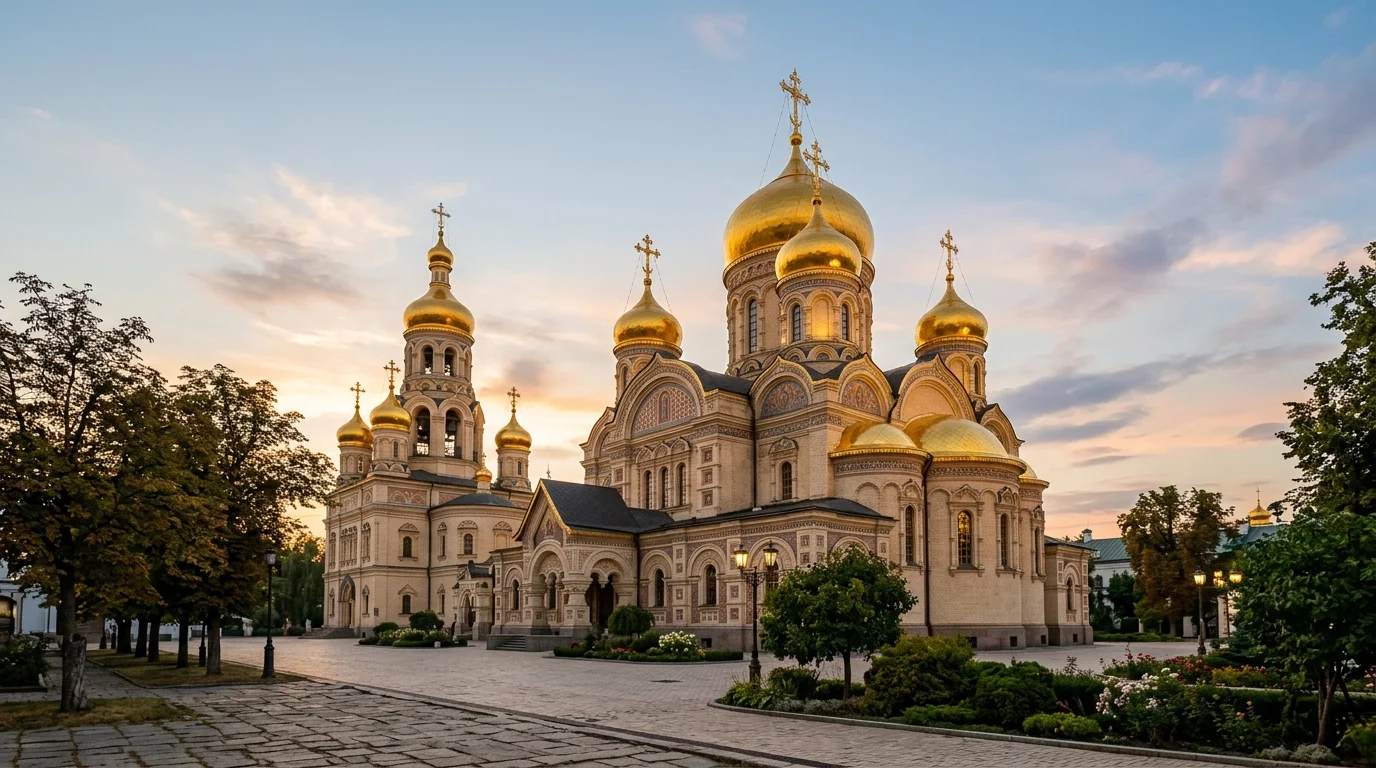
That's worth sitting with for a moment. Not just correct opinions about God. Right glory given to Him. If someone asks me plainly what does orthodox mean in christianity, this is where I usually begin: truth and worship belong together.
Why the Greek word matters
During my theological studies at LMU Munich, and in countless pastoral conversations here in Munich, I repeatedly saw people misunderstand "Orthodox" as meaning merely strict or old-fashioned. As if it were a synonym for rigid. But in Christian life it means something far deeper than that. For a helpful overview of Orthodox meaning in both common language and church usage, see this explanation of what Orthodox means.
Scripture itself points us toward this. Jesus tells the Samaritan woman that “But the hour cometh, and now is, when the true worshippers shall worship the Father in spirit and in truth: for the Father seeketh such to worship him. God is a Spirit: and they that worship him must worship him in spirit and in truth.” (John 4:23-24, KJV). Not worship separated from truth. Not truth divorced from worship. Both together, as one act of the whole person.
Why worship and doctrine belong together
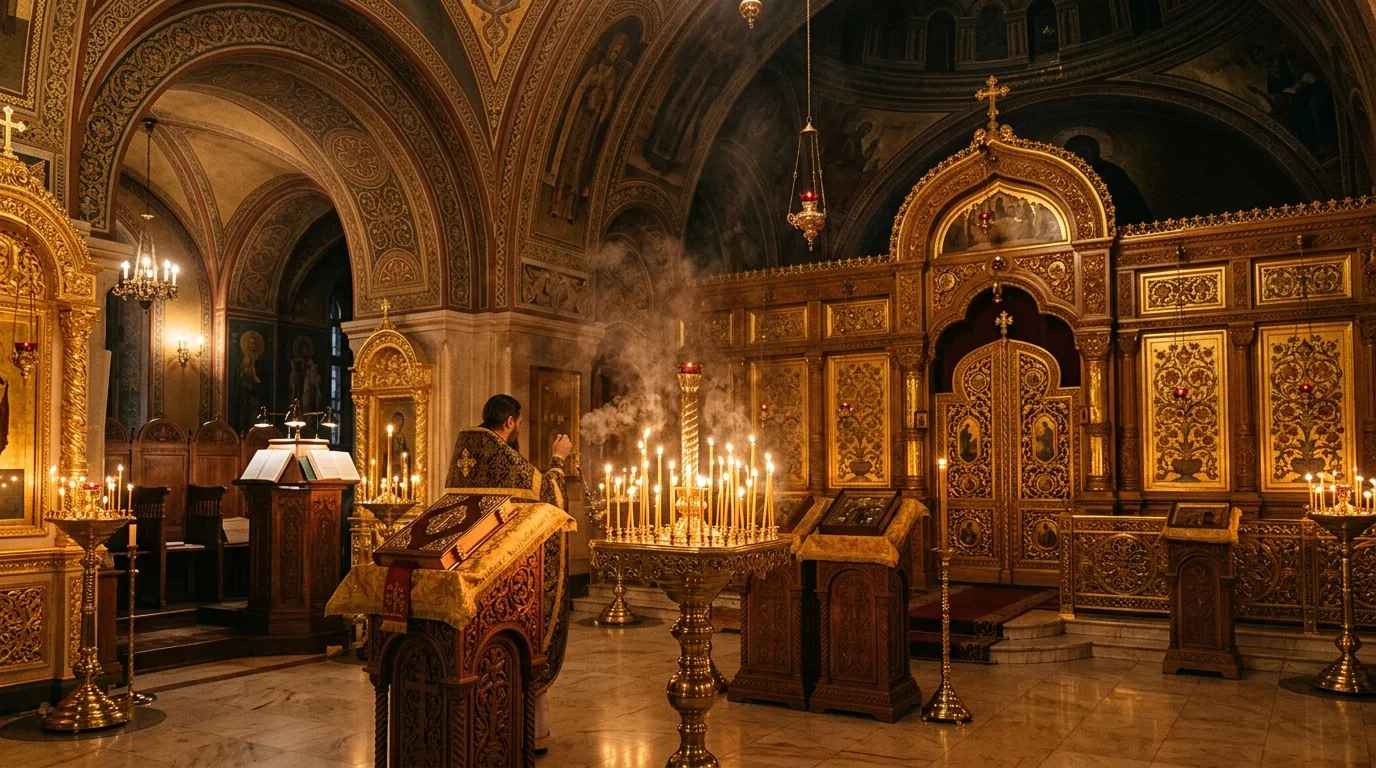
Here's what I've noticed after over a decade at the altar: nobody in my parish learned what "Orthodox" means from a definition first. They learned it standing through the Liturgy, hearing Scripture chanted rather than merely read, watching confession and communion actually shape a community over years. Doctrine gets remembered bodily, through repetition and incense and bowing, long before it gets remembered intellectually.
One of the most moving moments in parish life happens when a visitor realizes Orthodoxy isn't simply an idea to analyze. It's a living way of praying, repenting, and learning to love God with the whole person, not just the mind. That is part of what does orthodox mean in christianity in lived, not merely theoretical, terms.
What Do Orthodox Christians Actually Believe? What Does Orthodox Mean in Christianity in Practice?
Let me walk through the core convictions, because this is where a lot of online explanations stay too vague to be useful. Anyone exploring what does orthodox mean in christianity eventually has to ask what Orthodox Christians actually confess and how those beliefs are lived.
The Holy Trinity
Orthodox Christians confess one God in three Persons: Father, Son, and Holy Spirit. As St. Gregory the Theologian states in his Oration 40, the Orthodox faith confesses one God in Trinity and Trinity in unity. This isn't abstract math. It's the very shape of the God we pray to every morning and evening.
Jesus Christ as fully God and fully man
We hold that Christ is completely divine and completely human, one Person in two natures, without confusion or division. St. Maximus the Confessor teaches in his theological writings that the true and Orthodox faith confesses Christ as perfect in divinity and perfect in humanity. Get this wrong, and honestly, everything else falls apart with it.
Scripture and Holy Tradition
Here's where a lot of Protestant friends and I have had good, honest conversations over coffee. Orthodoxy doesn't treat Scripture and Tradition as competitors. St. Paul writes to the Thessalonians to “Therefore, brethren, stand fast, and hold the traditions which ye have been taught, whether by word, or our epistle.” (2 Thessalonians 2:15, KJV). Both the written and the spoken apostolic inheritance carry weight. Related: What is Orthodox Christianity Beliefs? Uncover Now.
As St. Basil the Great teaches in On the Holy Spirit, chapter 27, some doctrines are preserved in written form and others are received from apostolic tradition, handed down quietly within the Church's life. Scripture sits at the very heart of that Tradition, not apart from it. Readers who want a brief outside summary can also see this introduction to Orthodox Christianity.
For those beginning to explore these themes more deeply, you may also find our guide to Orthodox Christianity and our article on Holy Tradition and Scripture helpful as next steps.
The Church, sacraments, and apostolic continuity
Acts 2:42 describes the earliest Christians continuing "stedfastly in the apostles' doctrine and fellowship, and in breaking of bread, and in prayers." That's not a museum description. Orthodoxy understands itself as continuing that exact pattern, unbroken, through apostolic succession and the sacraments, which we call the Holy Mysteries.
Paul tells Timothy that the Church is “But if I tarry long, that thou mayest know how thou oughtest to behave thyself in the house of God, which is the church of the living God, the pillar and ground of the truth.” (1 Timothy 3:15, KJV). That's a strong claim, I know. But it's why Orthodoxy sees truth as something guarded and lived within the community of the Church, not something each individual reconstructs alone from a text.
Theosis: the goal of Christian life
This is the part that surprised me most when I first encountered Orthodoxy, coming from a Catholic background where I knew the tradition quite well. Salvation isn't only about forgiveness of past sins, though it's certainly that too. It's about becoming, in St. Peter's words, “Whereby are given unto us exceeding great and precious promises: that by these ye might be partakers of the divine nature, having escaped the corruption that is in the world through lust.” (2 Peter 1:4, KJV).
Dr. David Bentley Hart notes that Orthodox Christianity characteristically speaks of salvation in terms of theosis rather than only juridical categories. Not becoming God by nature. Never that. But being drawn, by grace, into real communion with Him. I don't fully grasp the depths of this mystery myself, if I'm honest, even after years of study and prayer. But I've watched it work quietly in people's lives, and that's enough to keep me returning to it. This, too, is central to what does orthodox mean in christianity: not mere correctness, but transformation.
What Does "Orthodox" Look Like in Daily Christian Life?
So what does this actually look like on a Tuesday morning, not just on a feast day? That's the question seekers really want answered.
Prayer, liturgy, fasting, confession, and almsgiving
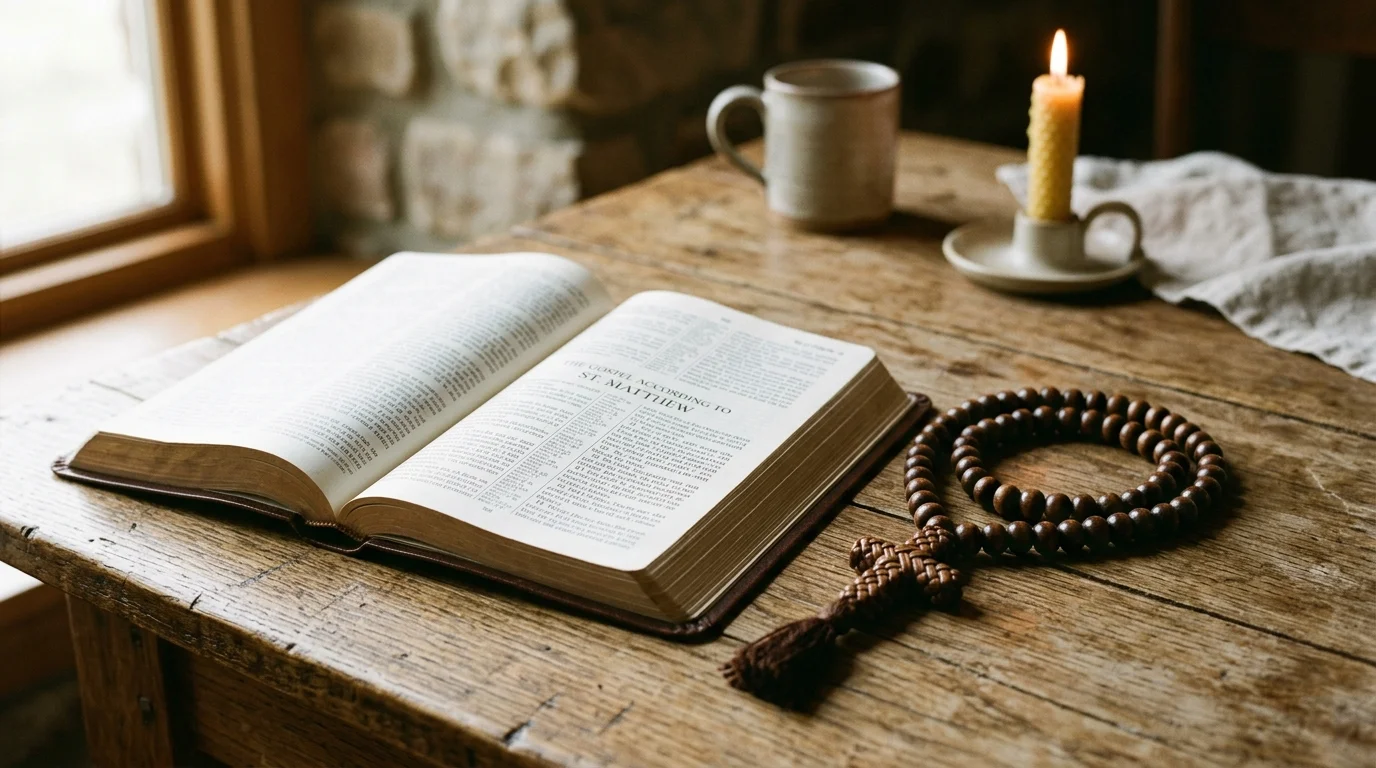
In my own life, this means the Jesus Prayer repeated quietly through the day, a morning and evening rule of prayer, regular confession, and the fasting seasons that punctuate the Orthodox calendar. Fasting (which can look extreme to outsiders) isn't about punishment. It's about freedom from what controls us. People sometimes search for phrases like Orthodox Christianity rules, but the heart of the matter is healing and training, not bare regulation.
I remember a young woman who came to me overwhelmed, barely into her twenties, completely burned out from constant notifications and racing thoughts. "Father," she said, "how am I supposed to pray without ceasing when I can't sit still for five minutes?" I've heard some version of that question more times than I can count. We didn't start with theology. We started with three minutes of silence and the Jesus Prayer, said slowly, twice a day. Small. Almost nothing. And yet, months later, she told me it had changed how she heard her own thoughts.
Why Orthodoxy is more than a label
What most articles about this word miss entirely is that people don't first learn what "Orthodox" means from a definition. They learn it by standing in prayer for two hours, by hearing Scripture chanted rather than skimmed, by watching an elderly babushka weep quietly before an icon. Doctrine gets remembered through the body long before the mind catches up. Not what I expected when I first walked into an Orthodox church myself, but true nonetheless. That helps answer what does orthodox mean in christianity far better than a detached slogan ever could.
How Does Orthodoxy Differ from Catholic and Protestant Christianity?
I want to be careful here. I knew the Catholic tradition well before my conversion, and I have deep respect for Catholic and Protestant friends who love Christ sincerely. These are real differences, not insults. People often frame this as Orthodox Christianity vs Catholic, or even Orthodox Christianity vs Christianity, though that second phrase can be misleading, since Orthodox Christians understand themselves to be fully and historically Christian.
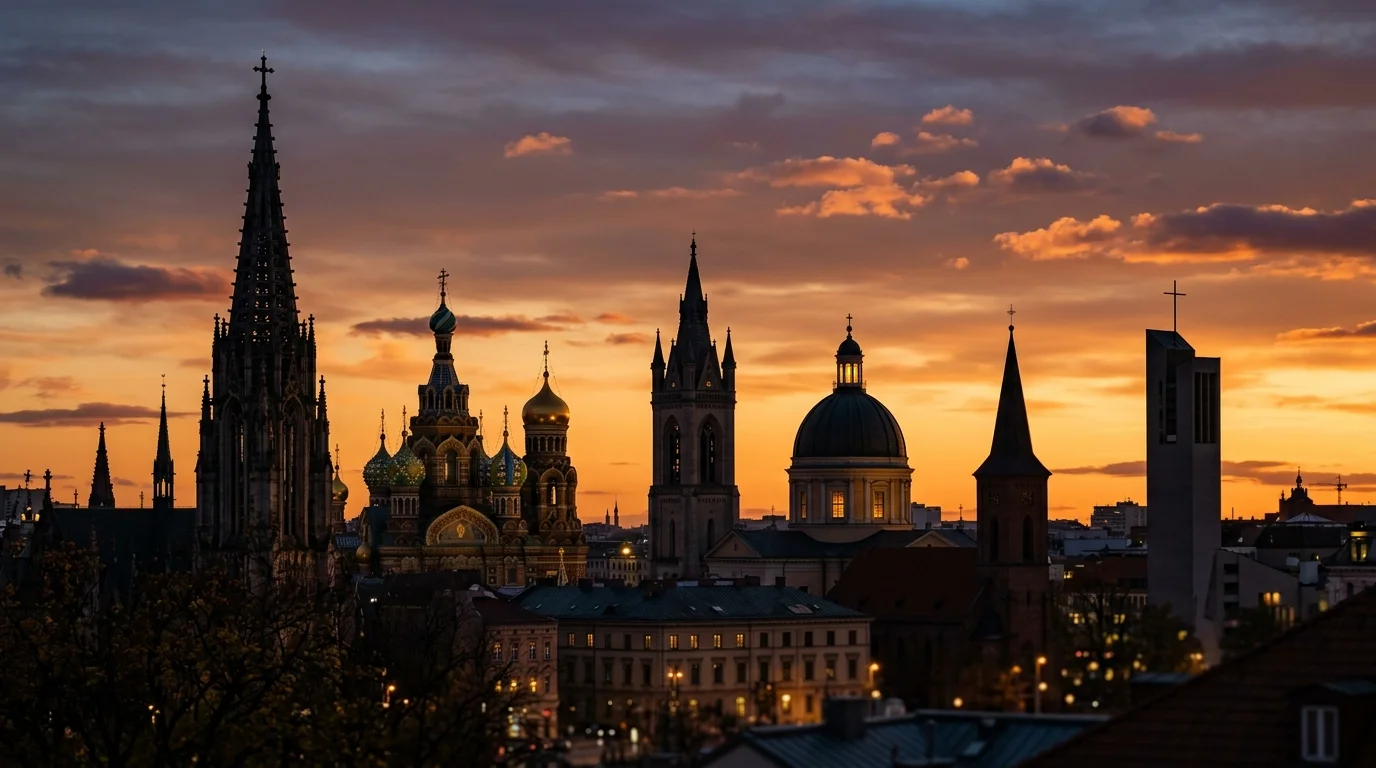
What 'Orthodox' Means Across Major Christian Traditions
[COMPARISON_TABLE]
Catholics and Orthodox share an enormous amount: ancient liturgy, apostolic succession, sacramental life, reverence for the saints. The real divergence sits in ecclesiology, papal authority, the Filioque addition to the Creed, and some later doctrinal developments, according to The Bible Christian's comparison of Orthodoxy and Catholicism. So if someone asks, Is Orthodox Christianity Catholic, the honest answer is no, though the historical and sacramental kinship is very real.
Many Protestant traditions use "orthodox" more loosely, meaning basic adherence to the Trinity, the Incarnation, and the Resurrection. Fair enough, as far as it goes. But Protestantism generally places Scripture alone as the highest authority and often understands church structure quite differently from how we do.
Father Victor's Perspective: Why "Orthodox" Still Matters for Seekers Today
Let me offer something I haven't seen in the standard explanations of this word, drawn from years of hearing confessions and my background in psychology as much as theology. See also: What Is a Lutheran Church? Discover Its True Meaning.
I've come to think of "Orthodox" not only as a boundary word but as a healing word. Right worship and right belief aren't there to exclude people or win arguments. They're ordered toward restoring the human person in Christ. Truth, in this sense, is medicinal. When someone confesses to me and I offer the words of absolution the Church has used for centuries, that's not procedure. It's therapy for the soul, applied with precision because the Church learned, over two thousand years, what actually heals and what only papers over the wound.
Here's my second observation, and I've gone back and forth on how to say this clearly. Modern people tend to separate belief, identity, and practice into different compartments. You believe one thing privately, perform an identity publicly, and practice habits that may not connect to either. Orthodoxy refuses that split. It holds belief, worship, and daily life together as one integrated whole. In that sense, Orthodoxy functions as a kind of school for the fragmented self, a place where a person stops being three different people and starts becoming one.
And third: the deepest meaning of "Orthodox" isn't simply "we kept old things around." That's not quite right, actually, let me put it more precisely. It's that we receive Christ through the very same sacramental and doctrinal life that formed the saints themselves. Continuity here isn't historical survival, like an artifact in a museum case. It's sanctifying participation. The same fire that warmed St. Seraphim of Sarov is offered to the person standing next to me at the chalice this Sunday.
Our analysis of recent Orthodox parish trends shows something else worth mentioning. Reports from Cornerstone Magazine describe a noticeable rise in interest among young men in the West toward Eastern Orthodoxy in particular. I've seen this firsthand in Munich, young men in their twenties and thirties, often disillusioned with either strict secularism or thin, consumer-style religion, drawn to something that asks more of them, not less. I won't pretend I fully understand every reason behind this trend. But I welcome it with gratitude.
Common Misconceptions About Orthodox Christianity
Let me address a few things I hear constantly, both from strangers and from people who've been coming to my parish for years.
"Orthodox just means conservative or strict." I understand why people think this. In everyday English, "orthodox" often means conventional or old-fashioned, so that meaning gets carried over into church talk. But capital-O Orthodox refers to a specific Christian communion and a theological vision of truth held together with worship, not merely an attitude toward rules.
"Orthodoxy is basically an ethnic religion for Greeks and Russians." I hear this one often from visitors here in Munich, and I get why. Parish names, languages, customs, they can look exclusive to a newcomer standing at the door for the first time. But the faith itself belongs to every people and language. A person doesn't become Orthodox by ethnicity. They become Orthodox by entering the life of Christ in His Church, through baptism, regardless of where their grandparents were born.
"Orthodox Christians worship icons." Not quite. St. John of Damascus explains in On the Divine Images that Christians don't worship matter, but the Creator who took on matter for our salvation. Think of it like kissing a photograph of your grandmother. You're not honoring the paper. You're directing love through a visible sign toward the person it represents. Worship belongs to God alone.
"Orthodoxy adds human tradition on top of the Bible." Actually, Scripture sits at the very heart of Holy Tradition, not beneath it or beside it. Orthodoxy reads the Bible within the worshipping community that first received, preserved, and canonized it. We're not lowering Scripture's authority. We're locating it where it was always meant to live.
"Orthodox Christianity is just Catholicism without the Pope." There's real truth in the family resemblance, both traditions are ancient, sacramental, and episcopal. But the differences in ecclesiology, papal authority, and the Filioque are substantial, not cosmetic. Worth understanding rather than flattening. See also: What Is Orthodox Christianity? Discover Its Depth.
"Being Orthodox is just about holding correct doctrine intellectually." This one troubles me most, honestly, because the word itself sounds so cerebral. But Orthodoxy includes prayer, repentance, fasting, almsgiving, and love of neighbor just as much as doctrine. The mind matters enormously in our tradition. But the goal is a changed heart in communion with God, not a passed exam.
And perhaps that is the simplest way to answer what does orthodox mean in christianity: not a cold label, not an ethnic badge, and not mere strictness, but the living continuity of right faith, right worship, and a life slowly healed in Christ.
Frequently Asked Questions
What does "orthodox" mean in simple terms?
In simple terms, "Orthodox" means right belief joined to right worship. It comes from Greek words meaning "straight" or "correct" (orthos) and "belief" or "glory" (doxa). In Christianity, it usually refers to the Eastern Orthodox Church, which sees itself as continuing the apostolic faith unchanged through Scripture, Holy Tradition, and the sacraments.
Do Orthodox believe in Jesus?
Yes, absolutely and centrally. Orthodox Christianity exists specifically to confess Jesus Christ as fully God and fully man, one Person in two natures. This confession, defended by Fathers like St. Maximus the Confessor, sits at the very core of everything Orthodox worship and doctrine expresses.
Does Orthodox Christianity believe in the Trinity?
Yes. Orthodox Christians confess one God in three Persons, Father, Son, and Holy Spirit, exactly as expressed in the Nicene-Constantinopolitan Creed. St. Gregory the Theologian called this confession of Trinity in unity the very substance of the Orthodox faith itself.
Is Orthodox the same as Catholic?
No, though they share a great deal. Both trace their roots to the apostolic Church, both are sacramental and liturgical. But they differ on papal authority, the Filioque clause in the Creed, and certain later doctrinal developments, according to The Bible Christian's comparison of the two traditions.
Is Orthodox the same as Mormon?
No, not at all, and this is a common confusion for people encountering the word online. The Church of Jesus Christ of Latter-day Saints (Mormonism) is a 19th-century American new religious movement with distinct scriptures and doctrines. Eastern Orthodox Christianity is an ancient communion tracing back nearly two thousand years to the apostles and shares the Nicene Creed's confession of the Trinity, which Mormon theology does not affirm in the same way.
Do you have to be Greek or Russian to be Orthodox?
No. Local Orthodox parishes often carry Greek, Russian, Arabic, Romanian, or Slavic cultural customs, but the faith itself is universal. A person enters Orthodoxy through baptism and chrismation into Christ, not through ancestry or nationality. My own cathedral in Munich welcomes converts from dozens of backgrounds every year.
Is LGBTQ allowed in Orthodox Christianity?
Orthodox Christianity welcomes every person to the life of the Church, while its teaching on marriage and sexual ethics follows the Church's traditional understanding, expressed through Scripture and the Fathers. This is a pastoral and personal matter best discussed honestly and privately with a local Orthodox priest, who can offer guidance with compassion rather than a general online answer.
What does Orthodox religion believe in?
Orthodox Christians believe in one God in three Persons, in Jesus Christ as fully divine and fully human, in Holy Tradition alongside Scripture, in seven sacramental Mysteries centered on the Eucharist, and in theosis, communion with God by grace, as the ultimate purpose of human life.
About the Author
Father Victor Meshko is an Orthodox priest of the Russian Orthodox Church Abroad, serving at the Cathedral of the Holy New Martyrs and Confessors of Russia in Munich since his ordination in 2013. He holds multiple degrees in philosophy, theology, and psychology, including theological study at LMU Munich's Institute for Orthodox Theology, and is the published author of a book on Archbishop Filaret of Chernigov. For Find to God, he brings together academic Orthodox scholarship, pastoral care, and lived liturgical experience to guide seekers with clarity and warmth.
Researched and written by Father Victor Meshko. AI tools were used during the research process.
Lorem ipsum dolor sit amet, consectetur adipiscing elit. Suspendisse varius enim in eros elementum tristique. Duis cursus, mi quis viverra ornare, eros dolor interdum nulla, ut commodo diam libero vitae erat. Aenean faucibus nibh et justo cursus id rutrum lorem imperdiet. Nunc ut sem vitae risus tristique posuere.
Lorem ipsum dolor sit amet, consectetur adipiscing elit. Suspendisse varius enim in eros elementum tristique. Duis cursus, mi quis viverra ornare, eros dolor interdum nulla, ut commodo diam libero vitae erat. Aenean faucibus nibh et justo cursus id rutrum lorem imperdiet. Nunc ut sem vitae risus tristique posuere.
Lorem ipsum dolor sit amet, consectetur adipiscing elit. Suspendisse varius enim in eros elementum tristique. Duis cursus, mi quis viverra ornare, eros dolor interdum nulla, ut commodo diam libero vitae erat. Aenean faucibus nibh et justo cursus id rutrum lorem imperdiet. Nunc ut sem vitae risus tristique posuere.


Help us bring the christian faith to modern seekers worldwide.
Godfinder relies on generous souls to sustain our multilingual platform, develop new tools like the Magic Cube, and support struggling believers. If our work has touched your heart, consider contributing to our nonprofit partner

Do you want to know More? Ask God’s Word!
Do you have questions, worries, or hopes? Feeling lost, burdened, or alone? “Ask God’s Word” brings you gentle guidance rooted in Scripture and the wisdom of the Church. Find hope and strength today!
