.avif)
What Do the Orthodox Believe: Core Refusals Explained
If you grew up in any Western church, Protestant or Catholic, here's a strange way into Orthodox belief: don't start with what we affirm. Start with what we spent two thousand years refusing to accept. No sola scriptura. No papal infallibility. No penal substitution as the main lens for the cross....

What Do the Orthodox Believe? Starting With What We Refused
If you grew up in any Western church, Protestant or Catholic, here's a strange way into Orthodox belief: don't start with what we affirm. Start with what we spent two thousand years refusing to accept. No sola scriptura. No papal infallibility. No penal substitution as the main lens for the cross. No strict predestination the way some traditions teach it. And honestly? That list of refusals tells you more about Orthodox belief than any tidy checklist ever could.
In my years serving as an Orthodox priest since 2013, I've found that seekers rarely walk in asking abstract theological questions. They usually ask something much simpler: what do the Orthodox actually believe, and how does that shape a life? I remember my own path here, coming from a Roman Catholic background where I knew the tradition well. When I encountered Orthodoxy, with its mystical depth and its stubborn insistence on certain ancient categories, something in me recognized it before I could fully explain why. For many people, the search really begins with one question: what do the orthodox believe?
What most articles online miss is that in real parish life, belief gets learned through participation before it's ever fully grasped conceptually. A person stands through their first Divine Liturgy, watches a baptism, sits in confession for the first time, and only later realizes the creed they've been reciting has been shaping them the whole time. Not what I expected when I started this work. But true, every single time I watch it happen.
✏️ By Father Victor Meshko | 📅 Updated: September 2026 | ⏱️ 9 min read
Quick Answer: Orthodox Christians believe in the Holy Trinity, the full divinity and humanity of Jesus Christ, salvation as healing and union with God (theosis), and the Church as the one, holy, catholic, and apostolic body that has carried the apostolic faith without interruption since Pentecost.
In This Article:
- What Do the Orthodox Believe? Starting With What We Refused
- The Core Beliefs of the Orthodox Church: What Do the Orthodox Believe?
- What Do the Orthodox Believe in Daily Life?
- Father Victor's Perspective: Belief as Healing, Not Mere Information
- How Orthodoxy Differs from Catholic and Protestant Christianity
- Common Misconceptions About What Orthodox Believe
TL;DR — Key Takeaways
- Orthodox Christians believe Jesus Christ is fully God and fully man, and that salvation means real healing and union with God, not just legal pardon.
- Scripture and Holy Tradition function together as one living stream, not as competing authorities.
- The Church is one, holy, catholic, and apostolic, led through councils of bishops rather than a single universal head.
- Belief in Orthodoxy is lived through the Holy Mysteries: baptism, confession, and above all the Eucharist.
- Icons, fasting, and veneration of the saints all point back to one thing: Christ's incarnation and its healing power.
The Core Beliefs of the Orthodox Church: What Do the Orthodox Believe?
Our analysis of how seekers actually approach this topic shows something consistent: people don't want a museum tour of doctrines. They want to know if this faith holds together. So let's walk through it the way I'd walk a catechumen through it, slowly, with room to ask questions along the way. If you're asking what do the orthodox believe, these are the foundations that keep appearing in every serious Orthodox answer.
One God in Three Persons: The Holy Trinity
We confess one God in three Persons: Father, Son, and Holy Spirit. Not three gods. Not one God wearing three masks. One divine essence, three distinct Persons, eternally in communion with each other. The Father is the source within the Trinity, the Son is eternally begotten of the Father, and the Holy Spirit proceeds from the Father alone, a point Orthodox dogmatics have held onto carefully, preserving the original wording of the Nicene-Constantinopolitan Creed rather than adding to it later, according to Orthodox dogmatic analysis published in TA Journal.
Christ himself gives us the Trinitarian formula directly. As we read in Matthew 28:19-20, he sends the apostles to baptize "in the name of the Father and of the Son and of the Holy Spirit," teaching them to observe everything he commanded, promising to be with them always. That's not a philosophical abstraction. That's the foundation of every Orthodox baptism I've performed in Munich, going back to 2013. So if someone asks, do orthodox believe in god, the answer is yes, absolutely: one God in the Holy Trinity.
Jesus Christ: Fully God and Fully Man
Do Orthodox Christians believe Jesus is God? Yes. Without hesitation, without qualification. He's not a prophet who became divine, and he's not God merely appearing human. He's the eternal Word who took on real human flesh, real human suffering, real human death.
John's Gospel puts it plainly: “In the beginning was the Word, and the Word was with God, and the Word was God. The same was in the beginning with God. All things were made by him; and without him was not any thing made that was made. In him was life; and the life was the light of men. And the light shineth in darkness; and the darkness comprehended it not. There was a man sent from God, whose name was John. The same came for a witness, to bear witness of the Light, that all men through him might believe. He was not that Light, but was sent to bear witness of that Light. That was the true Light, which lighteth every man that cometh into the world. He was in the world, and the world was made by him, and the world knew him not. He came unto his own, and his own received him not. But as many as received him, to them gave he power to become the sons of God, even to them that believe on his name: Which were born, not of blood, nor of the will of the flesh, nor of the will of man, but of God. And the Word was made flesh, and dwelt among us, (and we beheld his glory, the glory as of the only begotten of the Father,) full of grace and truth.” (John 1:1-14, KJV). We ground our entire Christology in this. As St. Gregory the Theologian teaches in Letter 101, "What has not been assumed has not been healed." That line has stayed with me since my first year of theological studies at LMU Munich. If Christ didn't fully take on our humanity, our humanity never gets healed. It's that simple, and that serious. For anyone wondering, do orthodox believe in jesus or god, the Orthodox answer is not either-or. We confess Jesus Christ as God the Son, one of the Holy Trinity.
Salvation as Healing, Repentance, and Theosis
Here's where I think my training in psychology actually helps me explain something competitors tend to skip. Western debates often frame salvation as a courtroom scene: are you guilty or acquitted? Orthodoxy asks a different question entirely. Are you sick, or are you being healed?
I don't say this to dodge the seriousness of sin. I say it because it's more accurate to lived experience. Sin isn't only a line crossed; it's a wound that distorts how we love, how we see God, how we treat our own bodies and each other. Salvation, in our understanding, means God entering that wound and healing it from the inside, through Christ's incarnation, death, and resurrection. Contemporary Orthodox theology describes this as communion, sanctification, and deification grounded in synergy between divine grace and human freedom, according to the theological study New Life in Christ: Salvation in Orthodox Theology.
The word for this healing process is theosis, becoming like God by grace, never by nature. As St. Athanasius the Great writes in On the Incarnation, "God became man so that man might become God." That sentence sounds almost scandalous the first time you hear it. I remember pausing over it myself years ago. But Scripture backs it directly: 2 Peter 1:4 says we're called to become "partakers of the divine nature." Not metaphor. Real participation. This is one of the clearest places where what do the orthodox believe differs from the assumptions many people bring from Western debates. Learn more: What Is a Lutheran Church? Discover Its True Meaning.
Scripture and Holy Tradition Together
Orthodox Christians don't set the Bible against Church Tradition, as if they're rival authorities pulling in different directions. We understand Scripture as the heart of the Church's living Tradition, not something floating free of it. The same Church that received the Holy Spirit at Pentecost and gathered as a worshipping, teaching community, as we see in Acts 2:42-47, also preserved and canonized the Scriptures, defined the creed, and handed down the writings of the Fathers.
So when someone asks me, "Do you follow the Bible or the Church?" I usually smile and say the question doesn't quite work in our framework. The Church gave you the Bible. Worth sitting with, that one. If you're comparing Orthodox Christianity vs Christianity more broadly, this is one of those places where Orthodoxy insists it is not a new version of Christianity, but the historic Church's living memory.
For readers who want a concise outside summary of how Orthodox Christians understand the Church and other religious communities, this Orthodox overview from Apologia Library is worth reading alongside parish life and the Fathers.
The Church as One, Holy, Catholic, and Apostolic
We confess in the creed that the Church is one, holy, catholic, and apostolic. Metropolitan Kallistos Ware put this well when he described Orthodoxy as the continuity of the teaching of the apostles from Pentecost to the present day, historic Christian faith carried forward without a break. That's a claim about history, not just theology.
Authority in Orthodoxy isn't vested in one bishop over the whole Church. It's conciliar, meaning bishops gather in council, as they did at the seven Ecumenical Councils, to discern truth together. This is genuinely different from the papal model, and I'll be honest, it can look messy from the outside, especially with Greek, Russian, OCA, and ROCOR jurisdictions all under the Orthodox umbrella. But the doctrine holds steady even where jurisdictional lines get complicated. For people searching what do orthodox believe vs catholic, this question of authority is one of the most important differences.
The Holy Mysteries: Baptism, Eucharist, Confession, and More
We call the sacraments the Holy Mysteries, and there are seven: baptism, chrismation, the Eucharist, confession, marriage, holy orders, and anointing of the sick. Baptism and chrismation bring a person into Christ and into his Body, the Church. Confession restores what sin has damaged. And the Eucharist, well, that's the center of it all.
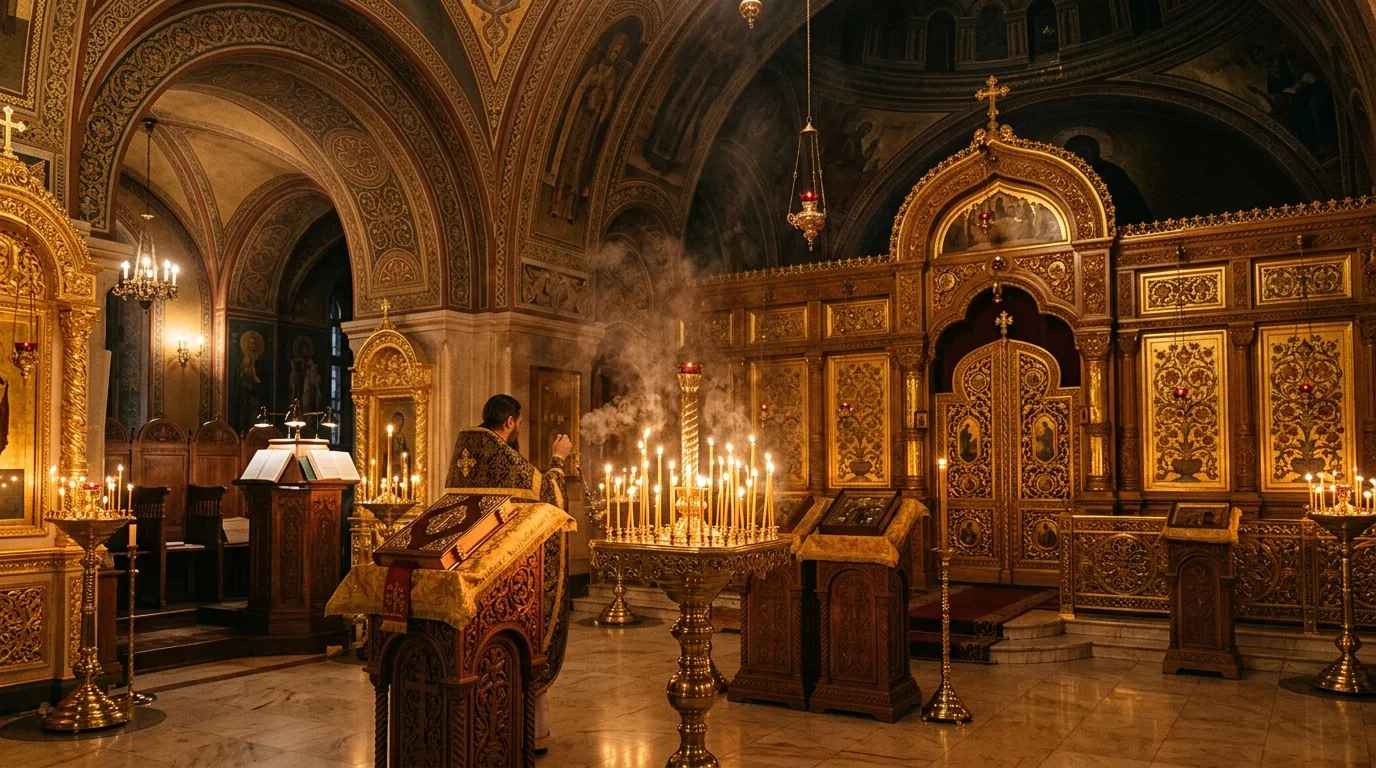
St. Paul writes about this directly in 1 Corinthians 11:23-29, describing the Lord's Supper as real participation in Christ's Body and Blood, something to be approached with real self-examination. We don't treat this as symbolic memory alone. We approach the chalice believing we receive Christ himself. Every single Liturgy I've served, that moment still stops me. If you want to see how Orthodox beliefs and practices fit together in worship, the Eucharist is where the whole vision becomes concrete.
Mary, the Saints, and Icons
Mary holds the highest place among the saints, honored as Theotokos, God-bearer, because of who her Son is. This title isn't really about Mary in isolation; it's about protecting the truth that the child she bore was truly God incarnate from the very first moment. So when people ask, does Orthodox believe in Mary, the better answer is that Orthodoxy honors Mary because of Christ and because the incarnation is real.
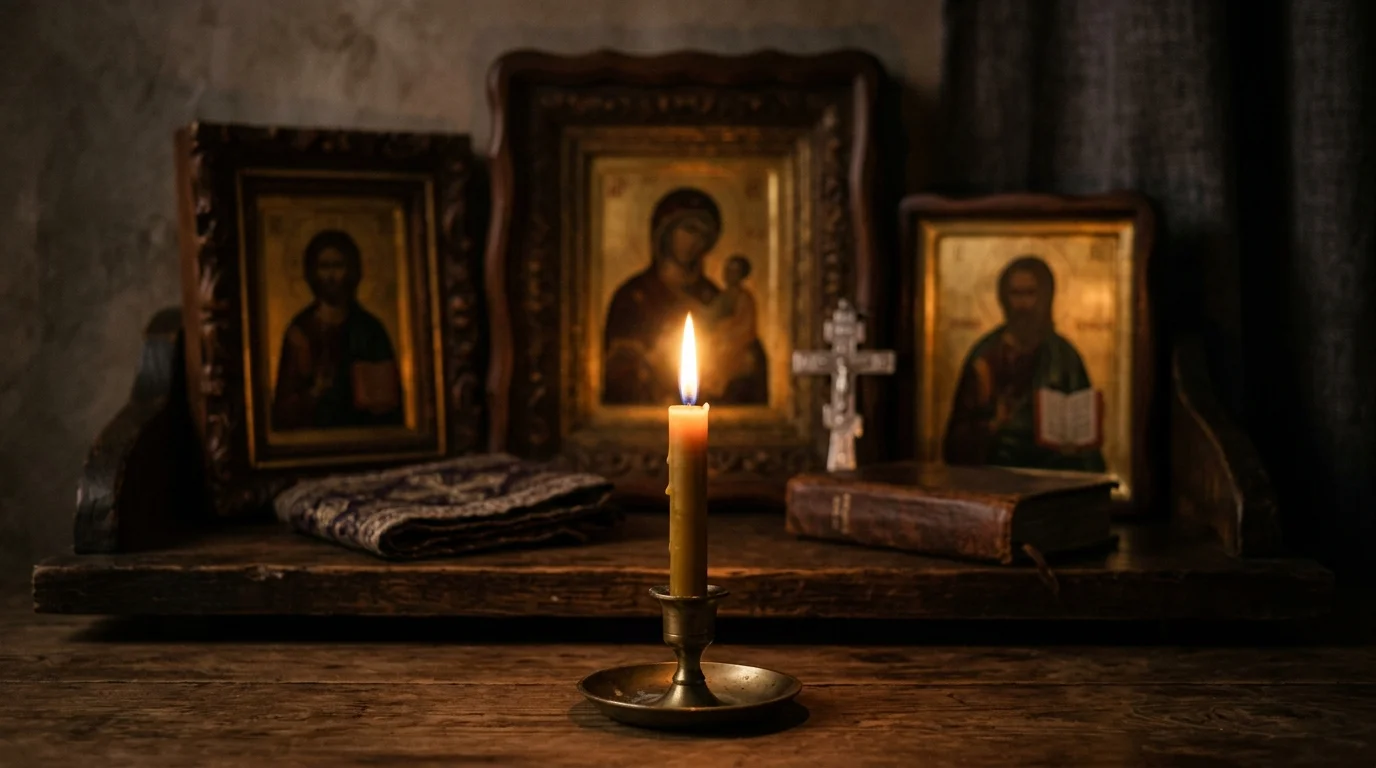
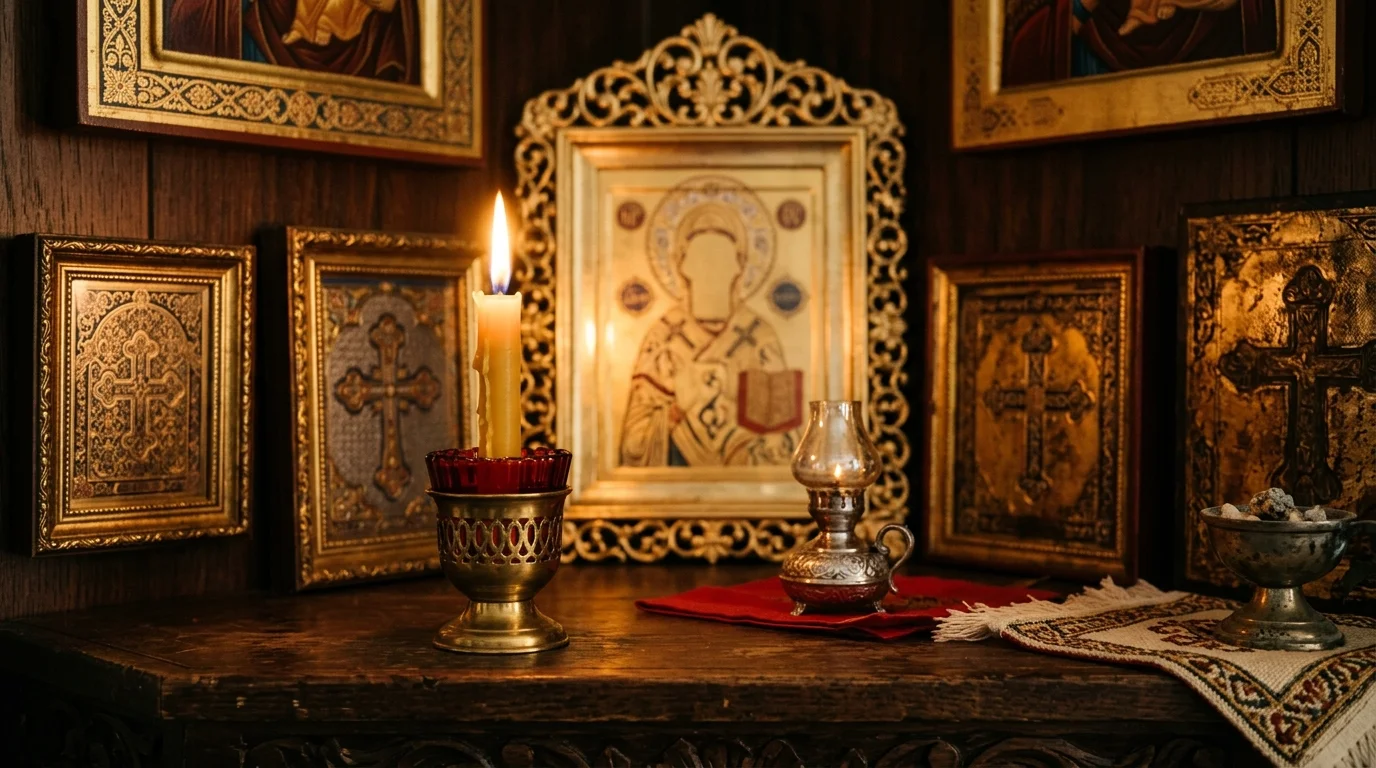
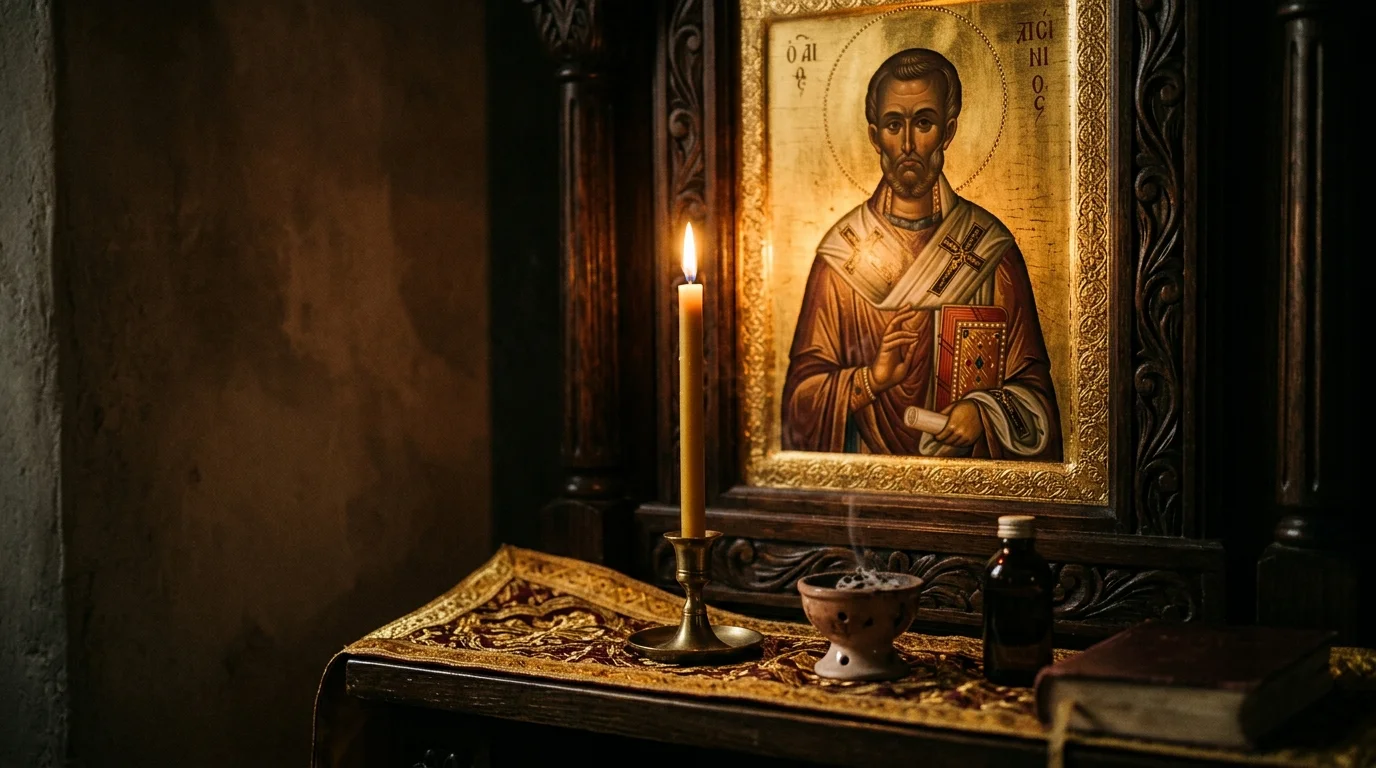
And the saints? We honor them the way you'd honor a grandparent's photograph, not confusing the photograph with the person, but recognizing something real in the image. As St. John of Damascus explains in On the Divine Images, "I do not worship matter; I worship the Creator of matter who became matter for my sake." Hebrews 12:1-2 and 12:22-24 speak of a great cloud of witnesses surrounding us in worship, joining the heavenly assembly. That's why icons and saints belong to Orthodox belief. Not decoration. Not optional extra. For a simple visual introduction, this short video explanation of Orthodox Christian worship and belief may help some readers who are new to these practices.
What Do the Orthodox Believe in Daily Life?
So what does this actually look like on a Tuesday morning, not just during Sunday Liturgy?
Last year, someone came to me, couldn't have been older than twenty-five, completely burned out from work and social media and the sheer noise of modern life. She said her mind never stopped racing. "Father, how am I supposed to pray without ceasing when I can barely sit still for five minutes?" I've heard some version of that question more times than I can count.
I told her what I tell most people: start small, and start with your body, not just your mind. The sign of the cross in the morning. A short prayer rule, even five minutes. The Jesus Prayer repeated quietly through the day, "Lord Jesus Christ, Son of God, have mercy on me, a sinner." As St. John Chrysostom says in his Homily on Prayer, prayer is a refuge for every worry and a source of constant joy. I don't fully understand why this simple repetition changes a person over time. But I've watched it happen, again and again, in my own parish in Munich. In other words, what do the orthodox believe is never only an idea; it becomes a way of praying, eating, repenting, and enduring. Explore: What is Orthodox Christianity Beliefs? Uncover Now.
If you'd like to read more about prayer and worship in parish life, see our guide to the Divine Liturgy and our introduction to the Jesus Prayer.
Prayer, Fasting, Worship, and Repentance
Orthodox fasting (which can seem extreme to outsiders) is really about freedom, not deprivation. We fast from certain foods on set days throughout the year, and I'll admit, when I first started keeping the full fasting calendar after my conversion, it felt like a lot. It still can. But the goal was never punishment. It's training the will to say no to something small so it can say yes to God in something larger. People sometimes frame this as what are Orthodox Christians not allowed to do, but that misses the inner purpose. The point is not rule-collecting. The point is healing freedom.
Confession, too, gets misunderstood. It's not a courtroom. It's a hospital visit. You come, you name what's wounding you, and a priest, standing as witness rather than judge, prays with you toward healing.
Why Orthodox Christianity Feels Ancient but Personal
I think this is what surprises seekers most. Orthodoxy feels old, undeniably old, incense and chant and centuries of unbroken worship. And yet it never feels distant. That's not a contradiction I can fully explain in a single paragraph. Hard to describe, but real once you've stood in it. Sometimes a brief introduction like this short video on Orthodox Christianity can help bridge the gap for those encountering it for the first time.
Father Victor's Perspective: Belief as Healing, Not Mere Information
Here's something I've come to see clearly through years combining theology, patristics, and pastoral counseling: Orthodox doctrine isn't abstract information about God floating somewhere above real life. It functions more like medicine. The Church defines dogma carefully, sometimes after painful centuries of controversy, because distorted belief eventually distorts the spiritual life of real people sitting in front of me every week.
What I wish more seekers understood is this: the most surprising Orthodox belief isn't icons, and it isn't fasting. It's that holiness is fundamentally relational. To believe rightly, in our tradition, is to enter a new way of loving God, your neighbor, your own body, time itself, even suffering. That's not a checklist you complete. That's a way of being remade, slowly, over an entire lifetime.
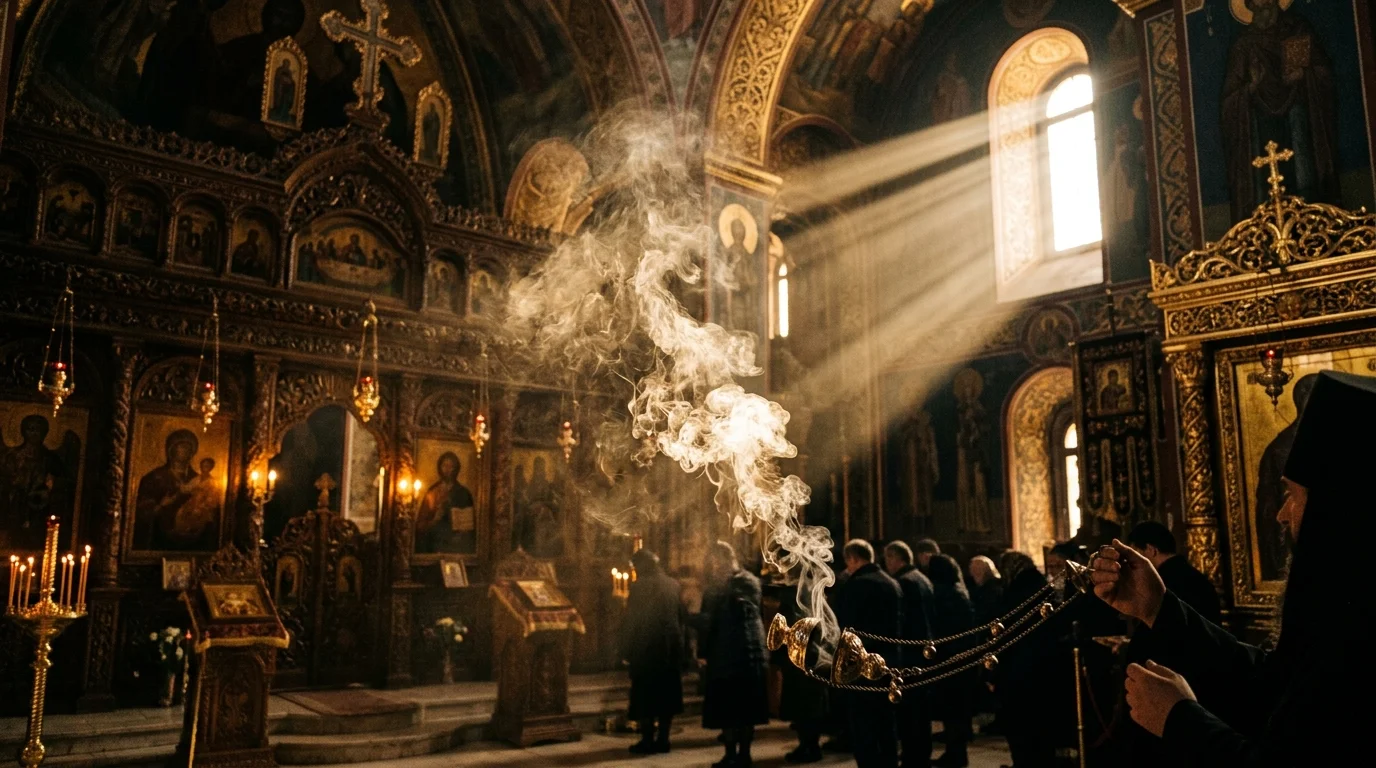
And here's the piece I find genuinely beautiful, even after all these years. The creed isn't just recited in Orthodoxy; it's inhabited liturgically. You see the Trinity confessed in the baptismal prayers. You see the incarnation defended in every icon on the wall. You see the Church as one Body in the Eucharistic assembly gathered around one chalice. You see resurrection hope, plain and unadorned, at every Orthodox funeral I've served. The creed isn't a document you memorize once. It's the air the whole community breathes.
How Orthodoxy Differs from Catholic and Protestant Christianity
I knew the Catholic tradition quite well before my conversion, and I want to be careful here. These traditions are close relatives in many visible ways: bishops, sacraments, ancient liturgy, reverence for saints. But they're not identical, and pretending otherwise doesn't help anyone searching honestly.
How Orthodox, Catholic, and Protestant Christians Commonly Understand Core Beliefs
[COMPARISON_TABLE]
Worldwide, there are about 291.6 million Orthodox Christians as of 2025, according to Gordon-Conwell Center for the Study of Global Christianity data summarized by PrayFocus, part of a global Christian population of roughly 2.65 billion. In the United States, Orthodox Christians make up only about 1 percent of adults, according to Pew Research Center data summarized by PrayFocus, which explains why so many Americans encounter Orthodoxy for the first time only as adults. Yet Orthodoxy remains the dominant Christian tradition across much of Eastern Europe and the Middle East. Not a small footnote. A major historic branch of the Christian world, even where it stays quiet in the English-speaking imagination. For those searching what do the orthodox believe, this wider context matters: Orthodoxy is both globally significant and locally unfamiliar to many readers.
Common Misconceptions About What Orthodox Believe
Let me address a few things I hear constantly, some from strangers online, some from people sitting across from me at coffee after Liturgy.
"Orthodox Christians mainly believe in rituals and tradition rather than in Jesus Christ." Not true. Orthodoxy is radically Christ-centered. Every icon, every fast, every liturgical gesture points back to the confession that Jesus Christ is fully God and fully man, crucified and risen. Outsiders often meet the incense and the icons first, and mistake the form for the center. Understandable mistake. Still a mistake.
"Orthodox Christians worship Mary, saints, and icons." We worship God alone. Full stop. Mary and the saints receive honor because of what God did in them, and icons receive veneration, not worship, as witnesses to the incarnation. Just as you'd honor a Bible without worshipping the paper it's printed on, we honor holy images without confusing them with God himself. Related: What Do Orthodox Christians Believe? The Main Truths of Our....
"Orthodox salvation is works-based." Salvation is God's gracious work in Christ, received through faith and lived out through repentance, sacramental participation, good works, and cooperation with grace, with theosis as the goal, as the Orthodox Reflections editorial team puts it well. Orthodoxy doesn't ask whether grace or transformation matters more. It sees transformation as exactly what grace does.
"Orthodoxy is just Catholicism with different music and vestments." They share ancient roots, genuinely. But they differ on papal authority, on the filioque clause added to the Western creed, on frameworks of sin and salvation, and on later Western dogmas like the Immaculate Conception. Close relatives, not identical twins.
"Orthodox Christians think nobody outside Orthodoxy is a real Christian." Orthodoxy confesses itself as the fullness of the apostolic faith, and that's a strong claim. But strength shouldn't be mistaken for contempt. The best Orthodox teachers I know combine real conviction with real humility toward sincere believers in other traditions.
"Orthodox belief is vague because everything gets called a mystery." Actually, Orthodoxy has quite clear dogma on the Trinity, Christ, the Church, and salvation. Mystery, for us, means reverent realism: we state clearly what's been revealed, and we stay humble about what still exceeds full human comprehension. That's not vagueness. That's honesty.
Frequently Asked Questions
Do Orthodox think Jesus is God?
Yes, unequivocally. Orthodox Christians confess Jesus Christ as fully God and fully man, one Person with two natures united without confusion, as summarized in John 1:1-14 and defended by the seven Ecumenical Councils. This isn't a minor point for us. It's the center everything else stands on.
Does Orthodoxy support LGBTQ people?
Orthodox teaching holds to traditional Christian sexual ethics, understanding marriage as between a man and a woman, while affirming the God-given dignity of every human person regardless of their struggles or orientation. The Church calls all people, without exception, toward repentance, love, and holiness. As St. Maximus the Confessor teaches in the Four Hundred Texts on Love, love of God necessarily opens into love for every human person. I'd add, gently, that pastoral care here is genuinely complex, and I'd encourage anyone wrestling with this personally to speak directly with a local priest rather than relying only on internet summaries.
Is Orthodoxy stricter than Catholicism?
Orthodoxy can appear stricter in visible practice, especially regarding fasting rules and frequency of confession before Communion. But strictness isn't really the right lens. Fasting, confession, and liturgical discipline function as medicine for the soul, not religious performance, and local priests regularly adjust guidance based on age, health, or spiritual maturity.
What are the main issues or challenges people see in Orthodox Christianity?
Seekers often struggle with jurisdictional diversity (Greek, Russian, OCA, ROCOR, and others), differing calendar practices, and the sheer unfamiliarity of Byzantine worship compared to Western services. These are real adjustments. I won't pretend they aren't. But the core doctrine, the Trinity, the incarnation, salvation as theosis, stays remarkably consistent across all these jurisdictions, according to an educational summary of Orthodox teaching consistent across jurisdictions. And if you're still asking what do the orthodox believe, the simplest answer is that across those external differences, the same apostolic faith continues to be prayed, confessed, and lived.
About the Author
Father Victor Meshko is an Orthodox priest of the Russian Orthodox Church Abroad, serving at the Cathedral of the Holy New Martyrs and Confessors of Russia in Munich since 2013. He holds a Diplom in Theology from LMU Munich's Institute for Orthodox Theology, has pursued PhD studies there, and is the published author of Erzbischof Filaret (Gumilevskij) von Cernigov und Nezin. With additional training in philosophy and psychology, he brings both scholarly depth and pastoral sensitivity to explaining Orthodox Christianity for seekers.
Researched and written by Father Victor Meshko. AI tools were used during the research process, and this article was reviewed by Father Victor in line with EU AI Act transparency expectations.
Lorem ipsum dolor sit amet, consectetur adipiscing elit. Suspendisse varius enim in eros elementum tristique. Duis cursus, mi quis viverra ornare, eros dolor interdum nulla, ut commodo diam libero vitae erat. Aenean faucibus nibh et justo cursus id rutrum lorem imperdiet. Nunc ut sem vitae risus tristique posuere.
Lorem ipsum dolor sit amet, consectetur adipiscing elit. Suspendisse varius enim in eros elementum tristique. Duis cursus, mi quis viverra ornare, eros dolor interdum nulla, ut commodo diam libero vitae erat. Aenean faucibus nibh et justo cursus id rutrum lorem imperdiet. Nunc ut sem vitae risus tristique posuere.
Lorem ipsum dolor sit amet, consectetur adipiscing elit. Suspendisse varius enim in eros elementum tristique. Duis cursus, mi quis viverra ornare, eros dolor interdum nulla, ut commodo diam libero vitae erat. Aenean faucibus nibh et justo cursus id rutrum lorem imperdiet. Nunc ut sem vitae risus tristique posuere.


Help us bring the christian faith to modern seekers worldwide.
Godfinder relies on generous souls to sustain our multilingual platform, develop new tools like the Magic Cube, and support struggling believers. If our work has touched your heart, consider contributing to our nonprofit partner

Do you want to know More? Ask God’s Word!
Do you have questions, worries, or hopes? Feeling lost, burdened, or alone? “Ask God’s Word” brings you gentle guidance rooted in Scripture and the wisdom of the Church. Find hope and strength today!
