.avif)
Why I Left the Methodist Church: Personal Insights
Nobody split a denomination over me. That's the part nobody tells you. I didn't leave the Methodist Church because of a General Conference vote or a theology essay I read at three in the morning. I left, in part, because I stopped mattering to the people in the pews around me, and honestly? That...

Why I Left the Methodist Church: A Short Orthodox Answer
Nobody split a denomination over me. That's the part nobody tells you. I didn't leave the Methodist Church because of a General Conference vote or a theology essay I read at three in the morning. I left, in part, because I stopped mattering to the people in the pews around me, and honestly? That was reason enough. No one called when my grandmother died. The potluck committee argued for forty-five minutes about tablecloths the same week I was quietly falling apart. Sound familiar?
In my years of serving as an Orthodox priest since 2013, I have met people who did not leave Methodism because of a single argument, but because they slowly felt that the ground beneath their faith had become unstable. Some of them can point to the sexuality debates. Many can't point to anything at all, just a slow drift, a feeling of being unseen. I want to be honest about that from the start, because most articles about this topic assume everyone left for the same culture-war reasons. They didn't. And I didn't, either, not entirely. When people search for why i left the methodist church, they are often trying to put words to that quieter ache.
What most online articles about why people leave the Methodist Church miss is that many seekers are not mainly asking for a sharper argument about sexuality or denominational politics. They're asking something quieter: where can I entrust my soul without renegotiating the faith every few years? That question is ecclesial, sacramental, and deeply personal, all at once.
✏️ By Father Victor Meshko | 📅 Updated: September 2026 | ⏱️ 9 min read
Quick Answer: Most people leave the Methodist Church not because of one doctrinal fight, but because doctrinal instability, institutional fatigue, and relational neglect combine until faith itself starts to feel negotiable, which is exactly the wound Orthodoxy's understanding of the Church, as a visible, sacramental, apostolic body, is meant to heal.
In This Article:
- Why I Left the Methodist Church: A Short Orthodox Answer
- Why I Left the Methodist Church and Why So Many People Are Leaving the United Methodist Church
- The Deeper Question in Why I Left the Methodist Church: What Is the Church?
- Why Are Some Former Methodists Drawn to Orthodoxy?
- Common Misconceptions About Leaving the Methodist Church
- Father Victor's Perspective: Leaving a Denomination vs. Finding the Church
- What Should You Actually Do If You're Considering Orthodoxy?
TL;DR — Key Takeaways
- People leave the UMC for doctrine, governance fatigue, and often plain relational neglect, not sexuality debates alone.
- Orthodoxy teaches the Church is one, holy, catholic, and apostolic, a communion carried through bishops and Holy Tradition, not a conference vote.
- A healthy departure includes grief, gratitude, and repentance, not just relief or anger.
- About 7,600 UMC congregations, roughly a quarter of the denomination, disaffiliated between 2019 and 2024, according to The Dallas Morning News citing UM News data.
Why I Left the Methodist Church and Why So Many People Are Leaving the United Methodist Church
The numbers are not small. According to reporting by The Dallas Morning News citing UM News data, about 7,600 United Methodist congregations, roughly one in four U.S. UMC churches, disaffiliated between 2019 and 2024. That's not a rumor. That's a quarter of a denomination walking out the door in five years. When people ask what is going on with the methodist church or Methodist Church split Explained, those numbers help explain why the question feels so urgent.
But statistics don't capture what it feels like sitting in a pew watching your church argue itself into pieces. I've talked with people who describe years of low-grade anxiety before they ever left, the sense that next year's conference might change something they thought was settled. And once you learn that doctrine can move, a strange thing happens. You start wondering what else might move. For many, why i left the methodist church becomes less a slogan than a painful spiritual inventory.
Doctrinal and Moral Disputes
Most coverage centers on LGBTQ+ inclusion, same-sex marriage, and ordination standards, especially after the 2024 General Conference changes. Traditionalists often left, many joining the newly formed Global Methodist Church, because they felt Scripture's authority was being reinterpreted to match culture rather than the reverse. Progressives, meanwhile, sometimes left earlier out of frustration that restrictions remained in place too long. Both sides, in their own way, were responding to the same underlying instability.
Authority of Scripture and the Problem of Interpretation
Here's the deeper issue, and I don't say this to score points against Methodism, which I genuinely respect for its missionary zeal and its heart for the poor. When a denomination's teaching on marriage, ordination, or morality can be revised by conference vote, a believer eventually has to ask: who actually has authority to say what Christian truth is? Is it the majority in the room that year? The Wesleyan quadrilateral, balancing Scripture, tradition, reason, and experience, is rich and thoughtful. But when those four sources pull in different directions, something has to give. And often, what gives is confidence. This is one reason stories titled Why I am not leaving the United Methodist Church and why i left the methodist church can sound so different while still circling the same authority question.
Institutional Fatigue, Governance, and Spiritual Burnout
Then there's the exhaustion nobody puts in the press release. Property disputes. Judicial Council rulings. Endless committee meetings about closure versus exit. I've had conversations with former Methodist laypeople who weren't following the theology fights closely at all. They were just tired. Tired of the meetings mattering more than the mourning. Tired of feeling like a volunteer resource instead of a soul someone was shepherding. One woman told me, almost in passing, that she stopped attending not because of a doctrinal crisis but because after eleven years of serving on the altar guild, not one person noticed when she stopped showing up. That's not a theology problem on the surface. But underneath? It's the same wound. If you've ever read a Why I left the Methodist church reddit thread or posts from people who feel spiritually abandoned, including reflections like this discussion about leaving church after feeling uncared for, you know how common that wound is.
The Deeper Question in Why I Left the Methodist Church: What Is the Church?
So here's where I think the conversation needs to go, and where most articles stop short. The real question underneath all of this isn't which Methodist faction is right about marriage or ordination. It's what the Church actually is.

Christ prayed for something specific the night before He died. "That they all may be one," He said, praying for His disciples and "for them also which shall believe on me through their word" (John 17:20-23). That's not a vague wish for niceness among Christians. It's a prayer for visible, real unity, the kind that reflects the very unity of the Father and the Son. When I read that passage now, I can't unsee how far our fragmentation has drifted from it.
Scripture Foundations for Unity and Truth
St. Paul urges believers to walk "with all lowliness and meekness, with longsuffering, forbearing one another in love; endeavouring to keep the unity of the Spirit in the bond of peace," reminding us there is "one body, and one Spirit... one Lord, one faith, one baptism, one God and Father of all" (Ephesians 4:1-6). One body. Not fifty competing conferences with fifty different Books of Discipline. Learn more: What Does Methodist Beliefs Mean in 2026?.
Paul also tells Timothy how to behave "in the house of God, which is the church of the living God, the pillar and ground of the truth" (1 Timothy 3:15). The Church herself, not a private reading of Scripture alone, is entrusted with guarding the truth. And Jude urges believers to "contend for the faith which was once delivered unto the saints" (Jude 1:3), a faith received, not perpetually reinvented.
What the Early Church Fathers Say
As St. Ignatius of Antioch writes in his Letter to the Smyrnaeans, wherever the bishop is, there the faithful should gather, just as wherever Christ is, there is the Church. That's a striking image. The Church, for Ignatius, wasn't an idea you agreed with. It was a place you stood, visibly, under a bishop, in communion with other believers.
As St. Irenaeus of Lyons teaches in Against Heresies, the Church, though scattered across the whole world, guards the faith received from the apostles as though she had one soul, one heart. As St. Basil the Great teaches in On the Holy Spirit, some doctrines come to us through written Scripture and others through the unwritten Tradition of the apostles, handed down in mystery. This is precisely what St. Paul meant when he told the Thessalonians to "stand fast, and hold the traditions which ye have been taught, whether by word, or our epistle" (2 Thessalonians 2:15).
And as St. Cyprian of Carthage writes in On the Unity of the Catholic Church, no one can have God as Father who does not have the Church as mother. Strong language, I know. But it comes from a real conviction that belonging to the Church was never optional decoration on top of personal faith. It was the faith, lived in communion. If you'd like a concise Orthodox overview of that continuity, this introduction from the Orthodox Church in America is a helpful place to begin.
Why Are Some Former Methodists Drawn to Orthodoxy?
I want to be careful here, because I've watched converts, myself included in my earlier years, speak with more triumphalism than humility. So let me say plainly: Orthodoxy is not a magic fix, and it's certainly not a bigger, better denomination waiting to swoop in. It's something else entirely.
Historical Continuity
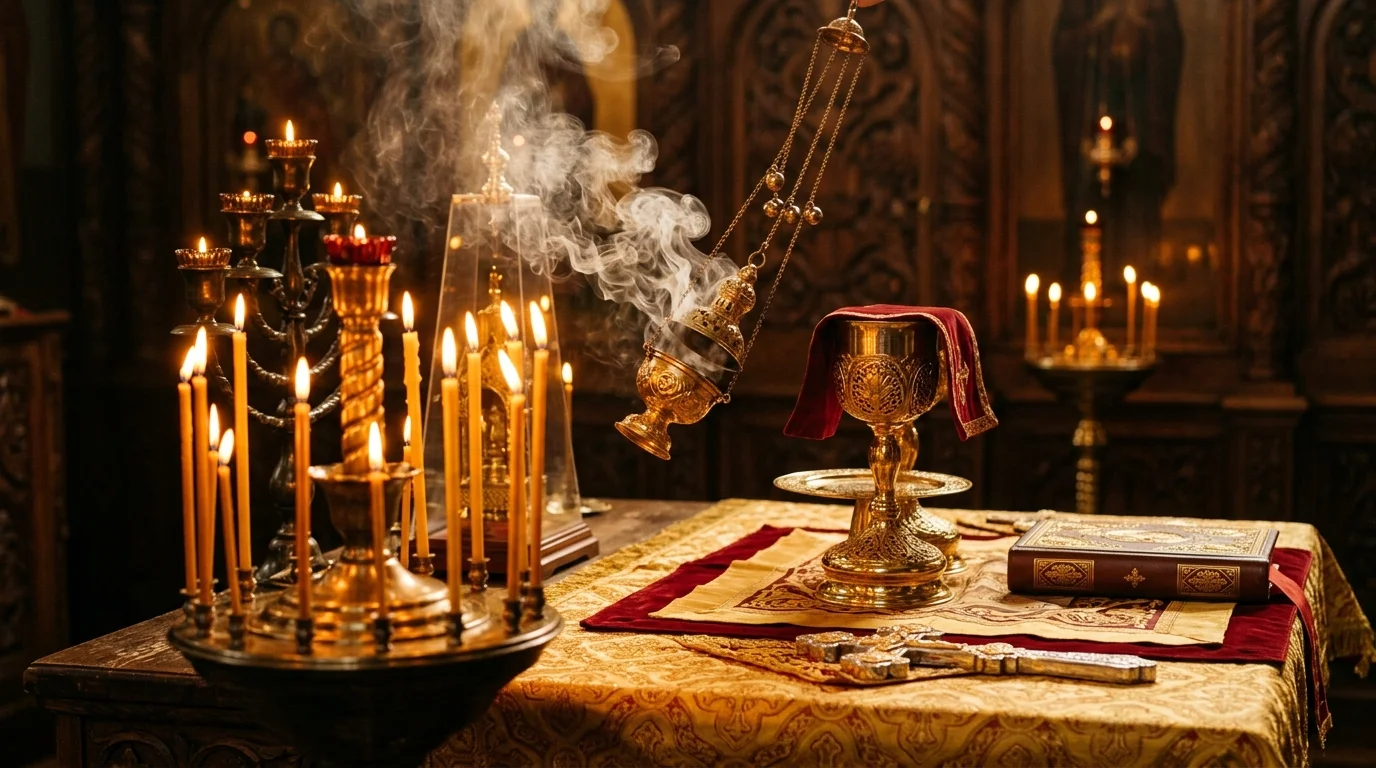
What draws people, in my pastoral experience, is continuity. The same Liturgy, in its bones, that St. John Chrysostom celebrated in the 4th century. The same understanding of bishops as successors to the apostles. Acts describes the earliest Christians as continuing "steadfastly in the apostles' doctrine and fellowship, and in breaking of bread, and in prayers" (Acts 2:42-47). Not a conference every four years reworking doctrine. A living, breathing continuity across two thousand years. If your question behind why i left the methodist church is really about continuity, this is often where the Orthodox claim begins to make sense.
Sacramental Life and Theosis
Here's something I've noticed over and over. Many who leave Methodism are not ultimately searching for stricter rules. They're searching for what I'd call sacramental realism, a Christianity where grace isn't mainly discussed as a concept in a sermon but encountered, physically and really, through Liturgy, confession, fasting, and the Eucharist. As St. Athanasius the Great writes in On the Incarnation, the Son of God became man so that we might become god, meaning not that we become divine in essence, but that we're invited into real participation in God's life through grace. Orthodoxy calls this theosis. It's not primarily an idea to accept. It's a life to enter. For readers wanting a fuller explanation, you may also find our guide to theosis in Orthodoxy and our introduction to Orthodox worship and icons helpful.
Healing Instead of Endless Reaction
And this matters more than people admit. A former Methodist, now Orthodox layman named Kenneth describes finding in Orthodoxy the one place where he actually saw the discipleship of Jesus lived out as healing rather than endless argument. I hear versions of that testimony often. Hank Hanegraaff, the Christian apologist, has spoken similarly about being drawn to Orthodoxy's historical Christianity, sacramental depth, and authentic community. As Fr. Alexander Schmemann put it, the Church is not an institution with mysteries, it's a mystery with institutions. That distinction changes everything, once you actually sit with it. Even informal testimonies, like this conversation among converts to Orthodoxy, show how often the movement is less about winning an argument and more about finding healing.
How Different Christian Traditions Understand Leaving a Church and Finding Stability
[COMPARISON_TABLE]
Common Misconceptions About Leaving the Methodist Church
"People only leave over LGBTQ+ debates." Moral disputes are real and painful, but they're often the visible symptom of a deeper question about who has authority to define Christian teaching. I mean, the sexuality debate gets the headlines because it's easy to report. The ecclesiology question underneath it rarely makes the news.
"Becoming Orthodox means my Methodist past was fake." Not at all. Orthodoxy invites gratitude for every real step toward Christ, even the ones taken in a Methodist Sunday school decades ago. Conversion should deepen humility, not erase memory. I've watched converts speak too absolutely in their first excitement, and I understand why, but it's worth correcting gently.
"Orthodoxy is just another denomination to shop for." In our modern religious marketplace, that assumption is everywhere. But Orthodoxy doesn't ask which style fits you best. It asks a different question entirely: what is the Church Christ actually founded?
"Orthodox Christians see Methodists as enemies." Never. Doctrinal difference is real, but contempt has no place in Christian life. I've known deeply sincere Methodist believers, and I say that with real gratitude for what God has done in their lives. Learn more: Protestant vs Orthodox: Discover Real Faith.
"Joining the Global Methodist Church solves the underlying problem." It may address immediate moral concerns. But does it answer questions of apostolic succession, sacramental fullness, and continuity with the patristic Church? I'm honestly not sure that question gets asked enough, even by sincere people making that move.
"Orthodoxy guarantees a conflict-free church." It doesn't, and I won't pretend otherwise. Orthodoxy offers doctrinal continuity, not perfect human administration. Parishes can still disappoint you. People still sin. But the faith itself doesn't shift with the culture.
Father Victor's Perspective: Leaving a Denomination vs. Finding the Church
Let me offer three things I've come to see clearly, partly through theological study and partly through years of sitting across from hurting people.
First, the Methodist crisis isn't only a dispute about ethics. It exposes something deeper, an ecclesiological wound. When doctrine can be repeatedly renegotiated through conference process, many believers start to suspect the Church has been reduced to procedure rather than received as an apostolic inheritance. That's a heavy realization. It was for me, too, decades ago, though in a Catholic context rather than Methodist. A lot of what gets packaged online as Methodist Church exposed is really this deeper wound of authority and identity, not just scandal language.
Second, and I think this is the part competitors miss entirely: many who leave Methodism aren't ultimately chasing stricter rules. They're chasing sacramental realism, a faith where grace is encountered, not just discussed. That's what pulled me toward Orthodoxy after years in the Catholic tradition, which I knew well and still respect. When I first encountered the Orthodox understanding of the Liturgy as heaven touching earth, and I say this as someone who studied theology formally at LMU Munich, something in me settled that years of argument never had. In other words, why i left the methodist church was inseparable from why I began searching for the Church as sacramental reality.
Third, and this is where my training in psychology comes in alongside my priesthood: a spiritually healthy departure from Methodism should include grief work, gratitude, and repentance. If someone converts purely out of reaction, out of anger at a conference vote or a pastor who let them down, they risk just changing buildings without letting Christ actually heal the heart underneath. I've seen this happen. A person arrives at an Orthodox parish still fighting the last war, still bitter, and the bitterness doesn't disappear just because the incense smells different.
Not what I expected to learn in seminary, honestly, but pastoral work teaches you things books can't. It also teaches you that questions like How many Methodist churches have closed, Methodist Church rules, or even Reasons not to join Global Methodist Church matter less in the long run than whether a person has found the Church as a place of healing before God.
What Should You Actually Do If You're Considering Orthodoxy?
Visit a Parish
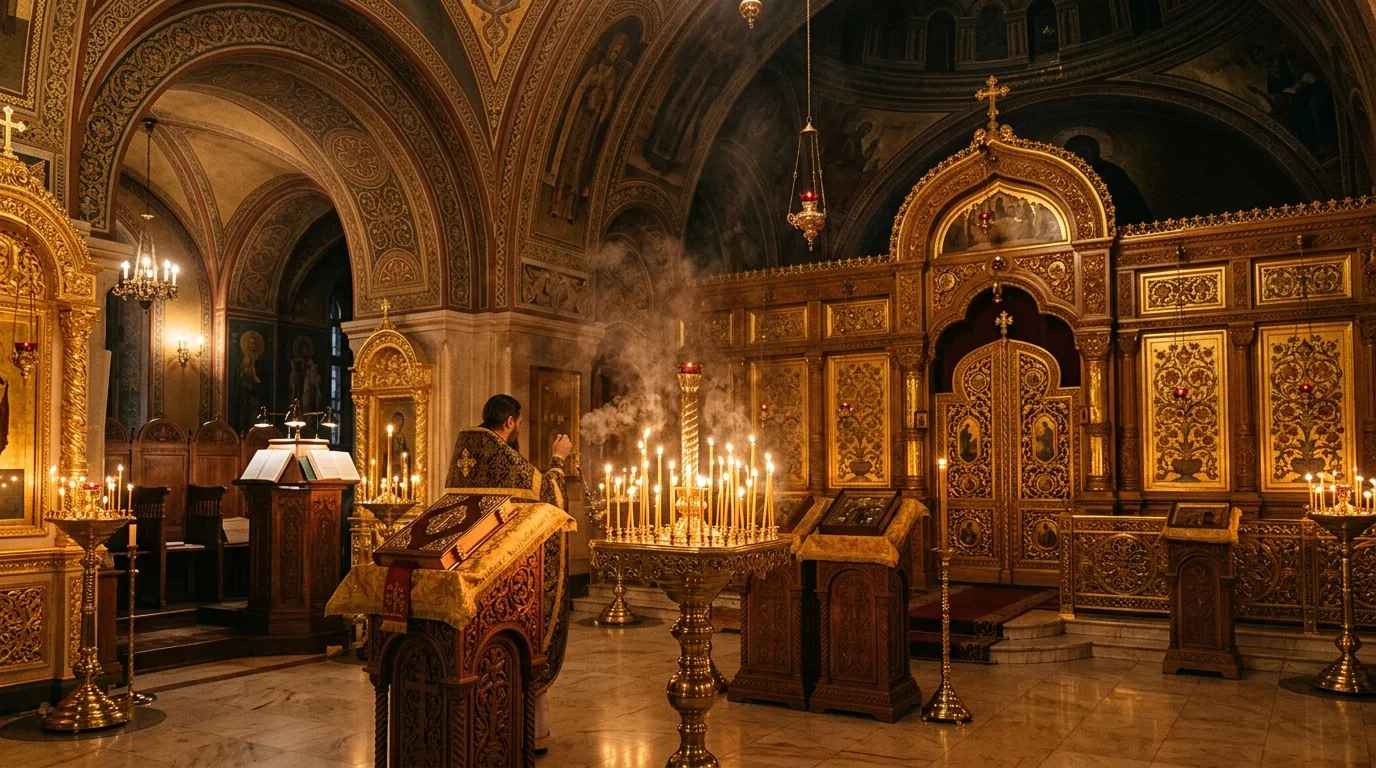
Start here. Not with a theology book, not with an online debate. Sit through a Divine Liturgy. Let it be unfamiliar. I've watched people in Munich stand through their first Liturgy looking completely lost, and I remember that feeling myself from years ago. Give it time. Learn more: Orthodox vs Protestant: Exploring Key Differences.

Begin Catechesis
Catechesis is a period of instruction, prayer, and formation before someone is received into the Church. It's not a formality. It's how you actually learn the faith rather than just adopting new opinions. Ask your local priest. Every parish handles the pace a little differently, and the exact process, whether reception happens by baptism or by chrismation, depends on your bishop and priest, so please don't assume one online story applies to your situation.
Discern Without Bitterness
This is the part I'd underline twice if I could. Pray. Read Scripture within the context of the Church's teaching, not alone in isolation. Talk to a priest regularly instead of making a hurried, reactionary decision. If you're leaving Methodism angry, give that anger to God first. Conversion should be a pilgrimage toward Christ, not a protest against your past. And if you have been trying to explain why i left the methodist church, let that explanation become prayer before it becomes a new identity.
Frequently Asked Questions
Why are so many people leaving the United Methodist Church?
Most leave due to a combination of doctrinal disputes over Scripture and sexuality, frustration with inconsistent enforcement of church discipline, and plain institutional fatigue. According to The Dallas Morning News citing UM News data, roughly 7,600 congregations, about a quarter of the denomination, disaffiliated between 2019 and 2024. Underneath the headlines, though, many ordinary members leave for quieter reasons: burnout, feeling unseen, or simply drifting after years of unresolved conflict.
Should I join the Global Methodist Church or explore Orthodoxy?
That depends on what's actually troubling you. If your concern is purely about moral teaching on marriage and ordination, the Global Methodist Church may address that directly. But if your deeper question involves apostolic succession, sacramental life, and continuity with the ancient Church, Orthodoxy asks a different and, I'd argue, more foundational question. I'd encourage you to name honestly which question you're actually asking before deciding anything.
What can you not do as a Methodist?
Historically, the UMC's Book of Discipline restricted things like the ordination of practicing LGBTQ+ clergy and the performance of same-sex marriages, though the 2024 General Conference repealed many of these restrictions. Beyond that, expectations vary by local congregation and conference. This is exactly the kind of shifting standard that leads some believers to ask deeper questions about who holds authority to define Christian teaching in the first place.
Which religion is losing the most members?
Among American Christian denominations, mainline Protestant bodies including the United Methodist Church have seen significant membership decline and disaffiliation in recent years. But it's worth noting that most people who leave don't join another tradition at all. According to PrayFocus's summary of the U.S. Religious Landscape Study, about 29% of U.S. adults are now religiously unaffiliated, which tells us that leaving Methodism often leads to no church rather than a new one.
Did John Wesley's wife leave him?
Yes. John Wesley's wife, Mary Vazeille Wesley, separated from him after a difficult marriage marked by his constant travel and disagreements, and she eventually left permanently, though they never formally divorced. It's a small historical footnote, but a human one, worth remembering that even the founder of Methodism carried real personal grief alongside his theological legacy.
About the Author
Father Victor Meshko is an Orthodox priest of the Russian Orthodox Church Abroad (ROCA), serving since 2013 at the Cathedral of the Holy New Martyrs and Confessors of Russia in Munich, in the Diocese of Berlin and Germany. He holds multiple theology degrees from the Uzhhorod Ukrainian Theological Academy, Carpathian University, and LMU Munich, where he completed a Diplom in Theology and pursued doctoral studies, and he is also trained in psychology. As the author of the published book Erzbischof Filaret (Gumilevskij) von Cernigov und Nezin and academic work on the Book of Revelation, he brings both scholarly depth and pastoral experience to questions about Church authority, tradition, and conversion.
Researched and written by Father Victor Meshko. AI tools were used during the research process.
Lorem ipsum dolor sit amet, consectetur adipiscing elit. Suspendisse varius enim in eros elementum tristique. Duis cursus, mi quis viverra ornare, eros dolor interdum nulla, ut commodo diam libero vitae erat. Aenean faucibus nibh et justo cursus id rutrum lorem imperdiet. Nunc ut sem vitae risus tristique posuere.
Lorem ipsum dolor sit amet, consectetur adipiscing elit. Suspendisse varius enim in eros elementum tristique. Duis cursus, mi quis viverra ornare, eros dolor interdum nulla, ut commodo diam libero vitae erat. Aenean faucibus nibh et justo cursus id rutrum lorem imperdiet. Nunc ut sem vitae risus tristique posuere.
Lorem ipsum dolor sit amet, consectetur adipiscing elit. Suspendisse varius enim in eros elementum tristique. Duis cursus, mi quis viverra ornare, eros dolor interdum nulla, ut commodo diam libero vitae erat. Aenean faucibus nibh et justo cursus id rutrum lorem imperdiet. Nunc ut sem vitae risus tristique posuere.


Help us bring the christian faith to modern seekers worldwide.
Godfinder relies on generous souls to sustain our multilingual platform, develop new tools like the Magic Cube, and support struggling believers. If our work has touched your heart, consider contributing to our nonprofit partner

Do you want to know More? Ask God’s Word!
Do you have questions, worries, or hopes? Feeling lost, burdened, or alone? “Ask God’s Word” brings you gentle guidance rooted in Scripture and the wisdom of the Church. Find hope and strength today!
